
A mixed-profile quote needs more than a blade-size check. A shop may cut a closed rectangular extrusion, a thin-wall channel, and a wide ribbed section on the same order, yet each can sit differently at the stop and under the hold-down. The JR-510CNC-3A-1S is described in Jiurun’s catalogue as an automatic CNC cross-cutting machine with a tail-pulling arrangement. That model identity is a starting point for a trial, not evidence that every profile in your schedule is qualified. Before ordering, ask for a representative trial that records the contact, cut result, handling, and accepted output for each section family.
This guide turns a mixed-profile job into a testable purchasing brief. It concerns section fit and changeover decisions. For the separate last-bar and remnant question, see our JR-510CNC-3A-1S tail-pulling quote test. No pictured sample or general equipment video below proves a result for your material; approval must come from your own drawings and witnessed cuts.
Start with the full part family, not an easy sample
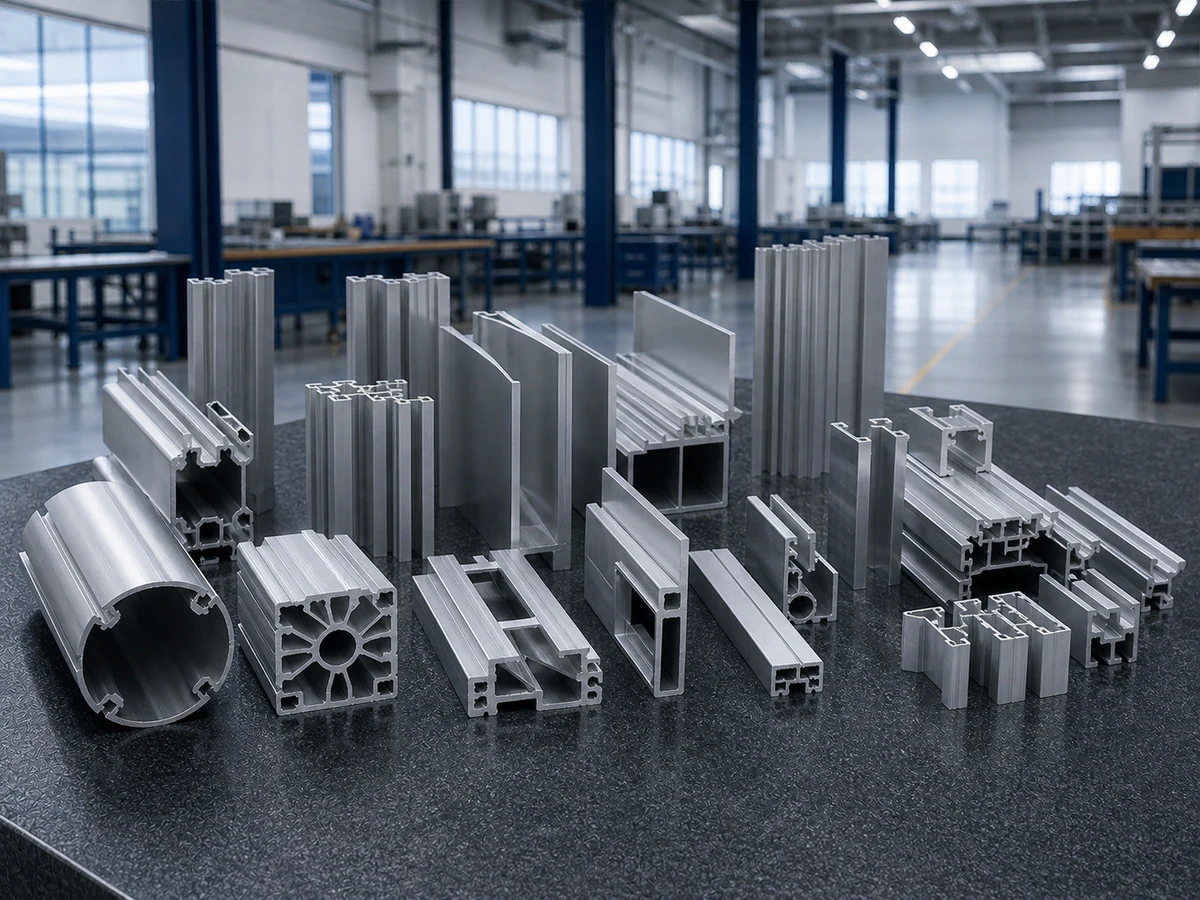
List every extrusion that the proposed saw is expected to process during a normal production period. Record the outside width and height, section drawing and revision, alloy and temper as supplied, minimum wall, features that may touch a clamp or fence, incoming length, required finished length, and normal batch quantity. Identify which members arrive straight, bowed, protected, or already surface-finished. The point is to expose the hardest contact and handling cases before a supplier chooses a demonstration piece.
Group parts by the support problem they create, not merely by nominal envelope. A closed box may present a stable outer face. A U-channel can flex or tip depending on orientation. A narrow lip, hollow cavity, offset rib, or unequal wall may change where the clamp can safely bear. Two profiles with the same overall dimensions therefore need not use the same support and hold-down arrangement. If an end will later mate with a connector, preserve that requirement as a separate acceptance criterion rather than hiding it inside a generic “clean cut” description.
Build a small but discriminating trial matrix
Choose a reference part, then add a sample for each distinct risk. A useful matrix might include the widest section, the most slender wall, the least stable contact face, and the part with the strictest end-use check. Do not substitute a photographed lookalike for the actual extrusion. Send the supplier a marked drawing and physical samples or a controlled sample specification for each case. If the purchase decision depends on more families than can be tested now, mark the remainder as unqualified and agree how they will be evaluated later.
- Incoming condition: section ID and drawing revision, measured stock dimensions, surface condition, straightness concern, protective film, and bar length.
- Planned cut: part length range, quantity, orientation and datum face, cut direction, and any end that must remain cosmetically protected.
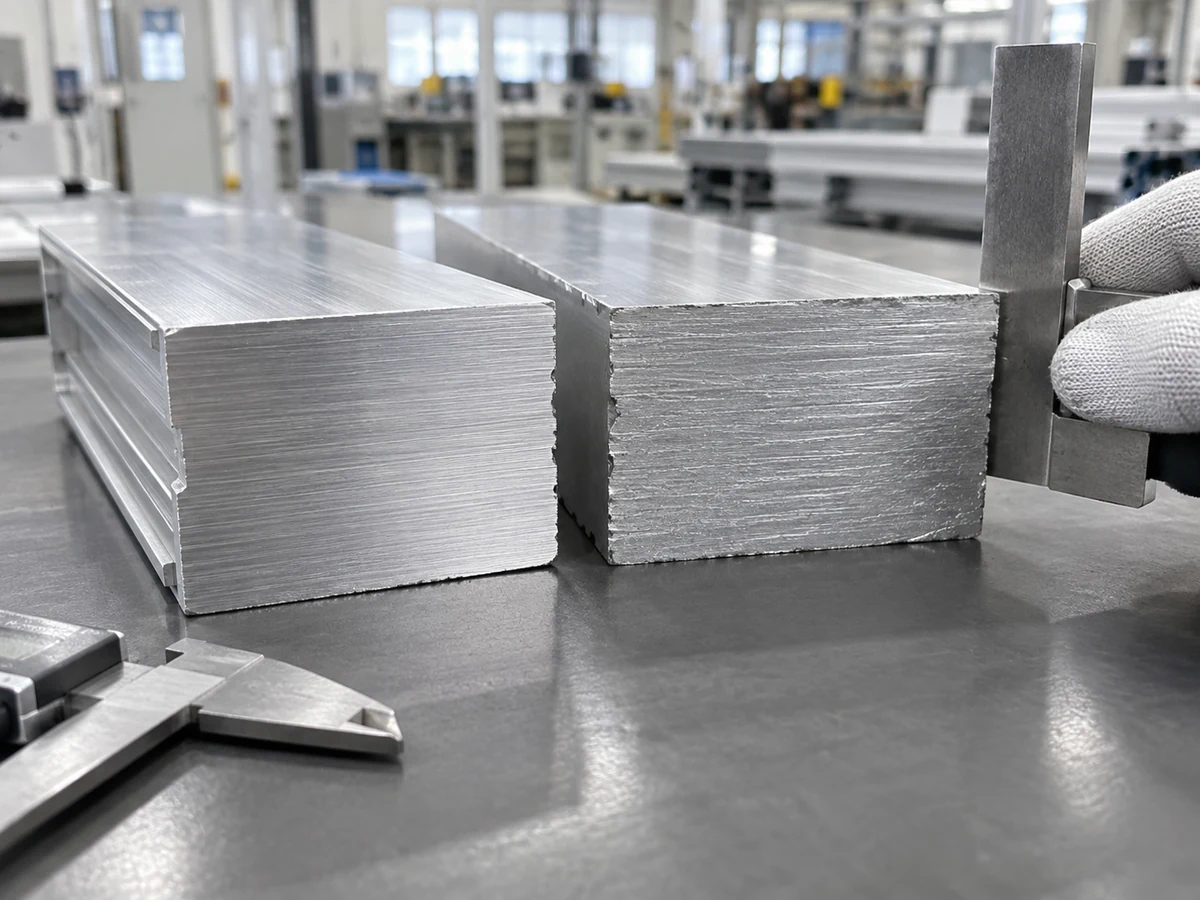
- Acceptance: where and how length is measured, end squareness or mating check, permitted burr or edge condition, visible marking, and whether secondary deburring is included.
- Handling: how each bar enters, how the last piece is supported, how accepted parts and offcuts leave, and who separates questionable output.
Write the acceptance method before the trial. “No burr” or “high accuracy” is too loose without a drawing, inspection instrument, sampling plan, and pass rule. The Aluminum Extruders Council’s fabrication guidance notes that extrusion cutting is commonly followed by deburring where the part and process require it. Therefore the trial should distinguish a saw-cut blank from a part that has already passed the buyer’s downstream finishing and assembly checks.
Observe contact and support through the whole cut
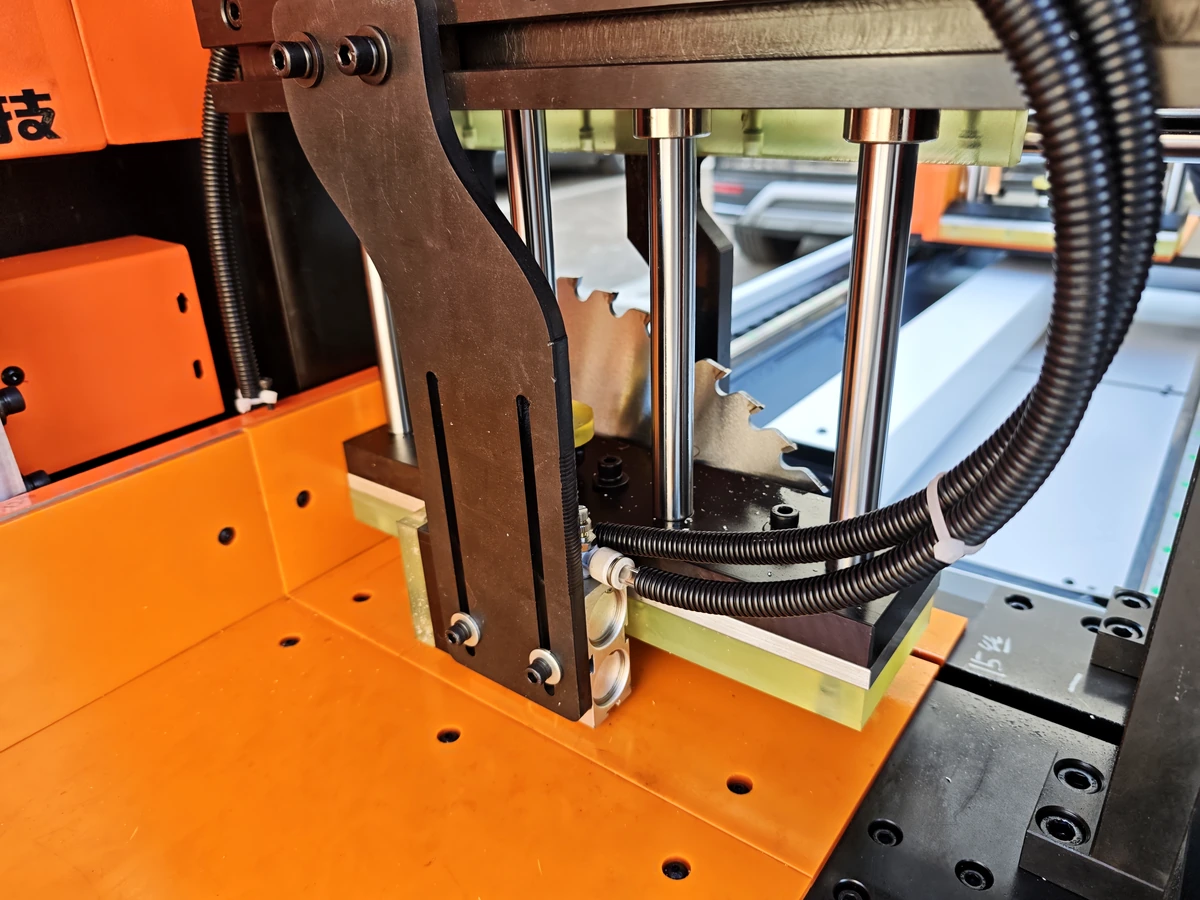
Ask the operator to show the setup for every section family: the chosen datum, support under the stock, hold-down contact points, blade clearance, infeed behavior, and part exit. Observe a normal restart as well as steady cutting. Record any spacer, sacrificial pad, customized jaw, fence adjustment, or manual intervention used during the demonstration. A trial that succeeds only with undocumented fixtures may still be useful, but those items must appear in the quoted scope and the repeatable work instruction.
Look for local wall marking, roll, vibration, or a short section that loses stable support after the cut. Inspect the actual faces that carry assembly or cosmetic requirements, not only the cut plane facing the camera. If a profile has an open channel, test the real loading orientation. If one family requires a different jaw or support, time the change with an ordinary operator and define the reset checks. Avoid extrapolating from a single favorable cut to all section and length combinations.
Record output as accepted parts, not just completed strokes
For each sample, preserve the setup sheet, sequence, cut count, inspection record, rejected or reworked pieces, and reason for any stop. Keep first-piece and later-piece results separate; a machine that produces one approved sample after careful tuning has not yet shown how the family behaves over a representative batch. Ask whether an operator must sort by eye, deburr, wash, label, or pack after discharge. These steps may belong in the production route even when they are outside the saw quote.
Compare like with like. If supplier A quotes saw-cut blanks and supplier B includes end finishing, calculate throughput and cost against the same accepted output condition. Do not compare feed-positioning figures with finished-part tolerance. A value measured at the feeding mechanism is not a guarantee of length, squareness, or connector fit on the finished part; those outcomes require part-level inspection under an agreed method.
Turn trial exceptions into a precise quotation
After the trial, create a family-by-family disposition: approved as tested, conditionally approved with specified fixtures or finishing, or still untested. Ask the supplier to identify the machine model and confirmed configuration, blade and clamping provisions, included infeed and outfeed supports, control or program setup, utilities, guarding, installation, training, spares, and who supplies trial fixtures. State which sample drawings and revisions the quote covers. Future profiles with a different contact problem should trigger a new review rather than silently inheriting approval.
Also define responsibility at each handoff. Who checks incoming extrusion variation? Who signs off the first piece after a changeover? Who measures accepted parts, handles burrs, and routes nonconforming pieces? Who confirms that the trial method is reproducible at installation? A good purchase order can refer to the agreed sample matrix, inspection record, and acceptance procedure rather than relying on a broad claim that the machine “cuts mixed profiles.”
What the equipment video can and cannot show
The channel video below is a general Jiurun automatic-saw equipment example. It shows a different saw in operation and can help a buyer discuss the sequence of feeding and cutting. It is not footage of this JR-510CNC-3A-1S configuration, these extrusion families, a customer installation, a witnessed mixed-profile trial, or any promised cut quality or throughput. Use it only to frame questions for a trial on your actual stock.
Send a trial package that a supplier can answer
For a useful JR-510CNC-3A-1S discussion, send the section drawings and revisions, a family list, stock and part lengths, required volumes, photos of critical faces, downstream mating or finish criteria, and the proposed inspection plan. Identify the most difficult family explicitly. Ask for a written response showing what will be tested, which fixtures and downstream steps are included, what remains unqualified, and how installation acceptance will repeat the successful trial. Contact JiurunCut with that package to request a configuration review and sample-cut plan.