
A quote for a JR-505CNC multi-head saw should describe the route taken by each accepted part, not merely the machine name or the number of saw heads in a photograph. If one extrusion must become several angle-cut blanks, the buyer needs to know which face locates the stock, which operation each planned station performs, how parts leave the machine, and where the finished features will be checked. This guide turns those questions into a representative trial and a written RFQ.
The decision is especially important because Jiurun brochure material uses the JR-505CNC name for more than one arrangement, including a multi-head angle-cutting route and a double-head route. Treat the exact configuration, head count, angular scope, part transfer, and included handling equipment as quote items for the specific project. A photograph or a shared model prefix cannot establish them.
JR-505CNC multi-head saw: define the part family before layout
Start with released drawings and physical stock samples. For every part number, record the extrusion section and revision, stock condition, datum face, visible or protected face, required end features, finished length reference, allowed burr or cosmetic condition, and the next assembly or machining operation. Mark left- and right-hand parts separately. A single drawing of one convenient straight blank is a weak trial if the purchase is driven by a mixed family of short angled pieces.
The buyer should also say whether the quoted saw must make both ends in one route, only prepare a first-end blank for a later operation, or make several distinct outputs from one bar. Those are different investment cases. Ask the supplier to draw the stock-to-part route and identify every manual handoff. Do not infer a one-pass process from the phrase “multi-head.”
- Input identity: section drawing and revision, alloy and temper if relevant to the cutting test, stock length range, and any surface film or finish that must survive handling.
- Orientation: the locating face, open side or cavity direction, and a simple mark showing the part’s required left/right hand.
- Operation map: the intended cut or trim at each quoted station, its angle convention, and whether the stock is repositioned between operations.
- Output identity: the part number, revision and destination for each accepted output, remnant and rejected piece.
- Acceptance method: which finished feature is measured, from which datum, with which gage and by whom.
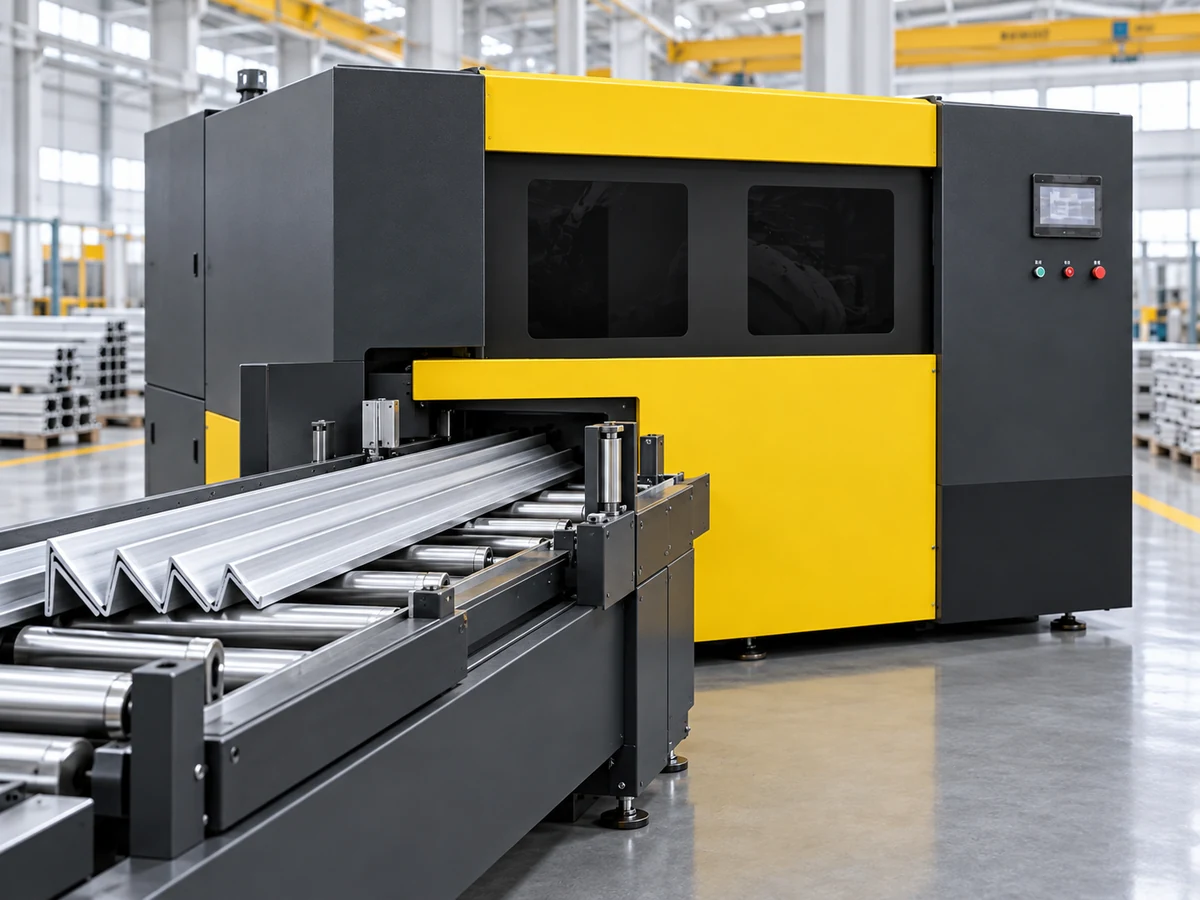
Trace one profile through the proposed stations
A station map is more useful than a headline cycle time. Put the released part drawing beside a route sketch. Number each planned cutting position; for every position, state the incoming condition, located datum, clamp contact, target feature, outgoing condition and next destination. If a station is optional, label it optional in the quote. If the part is turned or transferred by an operator, show that step explicitly and include it in the trial.
Consider an illustrative job with one asymmetric extrusion that yields two handed brackets. The first cut may establish a reference end, and a later angled cut may establish the opposite end. The buyer must decide whether the brackets are identified before they reach a common outfeed, whether a second handling step changes the datum, and whether either end still needs machining. This is a planning example, not a Jiurun customer job or a demonstrated machine cycle.
For each station, request a small annotated drawing showing the actual part pose and clamp-contact zone. A clamp that appears to touch a broad flat face in a machine photo may contact only a thin lip on the buyer’s section. The trial should record whether the contact protects the visible face, keeps the section stable, and allows the required angle without interference. Do not convert feeding repeatability or a catalog positioning number into a finished-part accuracy promise; inspect finished parts using the agreed drawing datum.

Build a trial that exposes the buying risk
Choose the representative trial from the job that could invalidate the purchase, not the easiest sample to cut. Include the widest or tallest section near the intended envelope, a thin-wall or open section if deformation is a concern, the shortest retained part, the most demanding angle pair, and any face whose marks would cause rejection. The exact set depends on the buyer’s drawings; the supplier should confirm feasibility before anyone books an acceptance run.
1. Agree the input and machine version
Write down the page, revision and configuration that the supplier is quoting. Jiurun brochure pages with the JR-505CNC label describe different arrangements; one multi-head page also presents angle information in ways that require clarification between descriptive copy and the parameter table. The signed configuration sheet should resolve the required angles and station functions for the actual machine. Do not carry a figure from the double-head page into the multi-head quote.
2. Freeze the drawing and measurement method
Release a controlled sample pack: stock section, part drawings, cut list, left/right identification and acceptance criteria. Define whether length is measured over the longest edge, a centerline, a datum plane or another drawing reference. State how the angle is checked and how a burr or visible-face mark is judged. A machine setting is only an input; the accepted output is the measured part.
3. Observe the full route
Run the defined stock through every quoted operation. Record first-off setup, steady production, an A-to-B part-family change and the return to A when changeover is central to the purchase. Track manually handled pieces as well as automated moves. Label the output of each stage so an incorrect part cannot be hidden by a correct overall count. Keep rejected parts and remnants in the record rather than presenting only a selected good sample.
4. Inspect a retained sample set
Keep a marked first-off, a middle-run part and a final part for each important route. Note the stock batch, drawing revision, machine configuration, fixture version, program identifier, operator and measuring method. Where a part moves to assembly or machining, have the receiving team check the interface that matters to them. Repeatability of a feed axis, a clean-looking photograph and the result from one hand-picked blank are not substitutes for these finished-part checks.
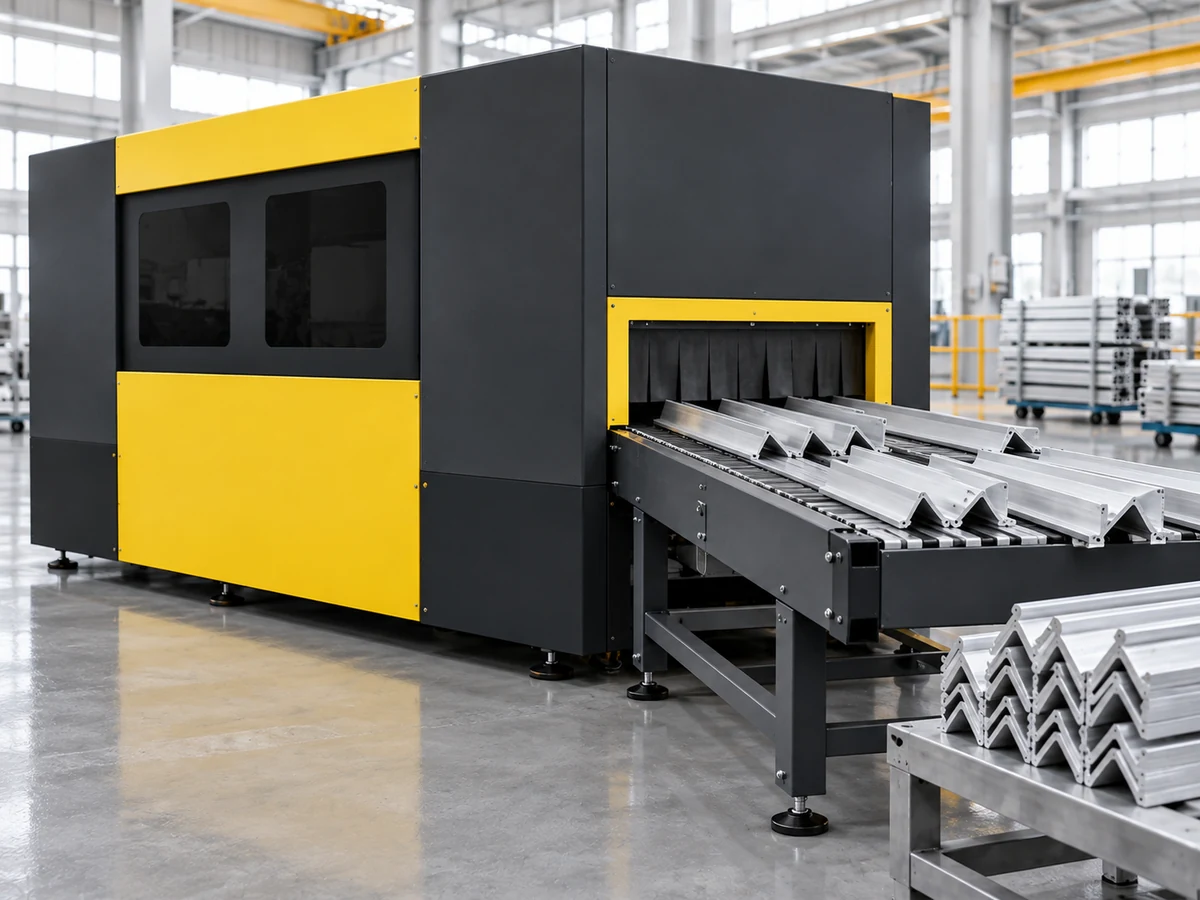
Compare throughput on accepted parts, not theoretical cuts
A supplier may show a short machine cycle for a favorable section. A purchaser needs the complete route time: loading, locating, cutting, any intermediate transfer, unloading, part identification, normal blade or fixture adjustments, and the changeovers expected in the real order mix. Compare candidate configurations using accepted parts per staffed period under the same assumptions. Keep scrap, rework and operator time separate so a fast cut is not mistaken for a low-cost process.
If the quote proposes a fixed number of heads, ask how much of the order mix can use all of them. A head that sits idle for most products still occupies space and may add setup or service burden. Conversely, a staged route may be justified if it removes a difficult second setup or protects a critical datum. The business case follows the mix of released parts and their accepted route, not the largest head count in a brochure.
Put the route into the RFQ and factory acceptance record
- Identify the exact JR-505CNC version, machine drawing, included head and station functions, and the written angle scope for each quoted operation.
- Attach the buyer’s controlled stock and part drawings, including datum, handedness, protected faces and downstream fit criteria.
- Show the planned stock support, loading and outfeed arrangement; distinguish quoted automation from operator actions and optional accessories.
- Specify who provides and approves clamps, contact pads, blades, programs, measuring fixtures and spare parts for the representative part family.
- Define the trial matrix, sample count, changeover sequence, inspection method, retained evidence and the disposition of nonconforming pieces.
- Set the site envelope, utilities, guarding access, service access, training and restart checks for the configuration actually ordered.
Use the resulting document as an acceptance boundary. If the supplier changes a station, fixture, material route or program after the trial, agree which affected parts must be rerun before release. For a separate double-head, both-end-length question, see the JR-505CNC double-head acceptance guide. The two routes should be compared from their complete quoted descriptions, not treated as interchangeable because their names share a prefix.
Video: general angle-saw equipment context
The following video is from Jiurun’s own channel and shows general automatic aluminum angle-saw equipment and its cutting area. It is not a demonstration of the multi-head JR-505CNC configuration in this article, this material, a customer job, a witnessed station-to-part trial, or any stated accuracy or output rate. Use the route map and a project-specific acceptance run to verify those points.
The purchasing decision
Request a quote only after the supplier can trace each representative input section to an identified accepted part through the proposed stations. If the route, version, angle scope or measurement method remains ambiguous, resolve that point in writing before comparing prices. Send Jiurun the released section and part drawings, the planned production mix and the required trial outputs; ask for a station map and a configuration-specific acceptance plan rather than a generic machine promise.