
An aluminum ladder saw trial should answer a purchasing question: can the proposed cutting station produce the approved rail-and-rung member set in a form that the next operation can identify, inspect, and assemble? A neat isolated cut is useful, but it does not show whether left and right rails stay paired through a changeover, whether short rung blanks can be handled consistently, or whether cut ends are suitable for the manufacturer’s following operations. This guide builds a trial around those handoffs, without treating a saw demonstration as a finished-ladder approval.
Set the boundary before asking for a demonstration
First identify the product family and the work the factory actually retains. A step ladder, an extension section, and a fixed access assembly can have different rail sections, rung or step sections, joining methods, and downstream processes. List which members arrive as stock, which arrive prepared, and which are bought as completed subassemblies. The saw supplier should be tested only on the raw members assigned to its station. Hole-making, swaging, riveting, welding, hardware installation, product testing, and regulatory conformity need their own processes and approvals.
If the purchase question is still whether to bring component cutting in-house at all, start with our ladder manufacturing saw purchase guide. This trial assumes the manufacturer has already defined an approved member package and wants evidence for a particular cutting route.
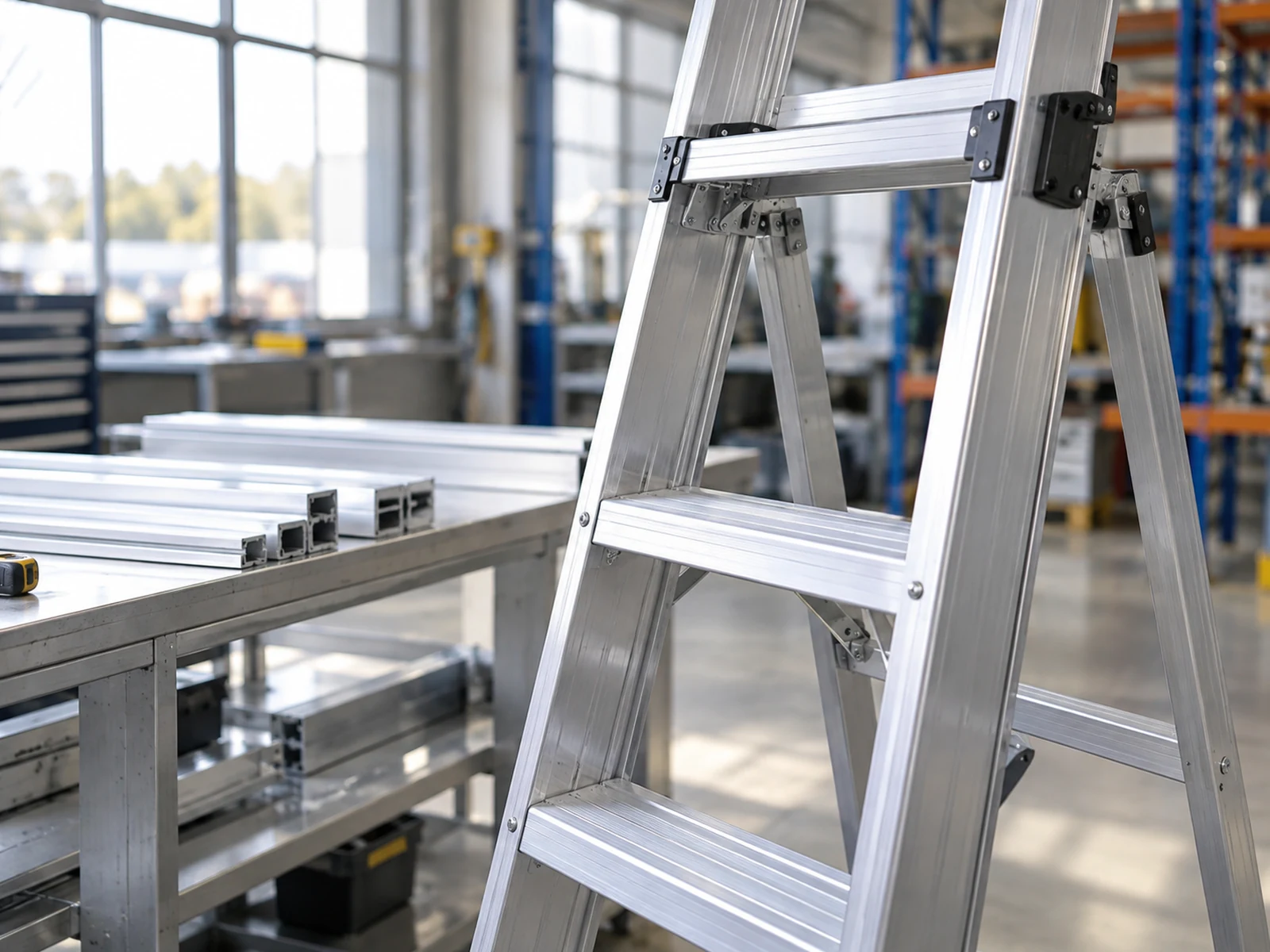
Aluminum ladder saw trial sample matrix: released members
Give each sample a drawing revision, material and temper, section identifier, stock length, required cut length reference, quantity, and next operation. Include the shortest and longest retained cuts, the heaviest or least stable section, and any left/right or top/bottom distinctions. Do not combine parts just because their outside widths look similar. A rail that will later receive rung holes and a rail that merely receives a cap may have different datum and end-face requirements.
- Paired side rails: supply approved left/right drawings, stock condition, cut datum, and kit identity. Observe long-stock support, orientation marking, paired output, and end condition.
- Rung or step blanks: supply the approved section, length reference, quantity per kit, and following joining method. Observe short-part clamping, discharge, counting, and protection of mating ends.
- Variant or accessory members: supply the released revision and a defined changeover order. Observe setup repeatability, variant segregation, and first-piece reapproval.
The matrix is a request for a representative sample, not an implied capacity claim. Ask the supplier to say which combinations it can demonstrate on the offered configuration and which would require tooling, support, automation, or another machine. Record that difference in the quotation.
Follow the datum from stock to the paired rail kit
A rail length measured from the wrong face can be individually plausible while the assembled pair is wrong. On the drawing, name the reference end and identify which end is reserved for subsequent machining or joining. At the machine, watch how the operator establishes that orientation, supports long stock, clamps without masking or damaging the needed face, and labels the resulting part. Then inspect both rails as a pair, using the customer’s approved inspection method and drawing limits. Record the actual measured results and the inspection tool; do not substitute a controller’s feed display for finished-part measurement.
Also inspect the cut face for burrs, wall deformation, and damage to a visible or mating surface. The buyer should agree whether deburring is part of the supplied station or a separate process. A clean-looking photograph cannot establish dimensional acceptance, and feed-position accuracy is not the same as finished-length accuracy.
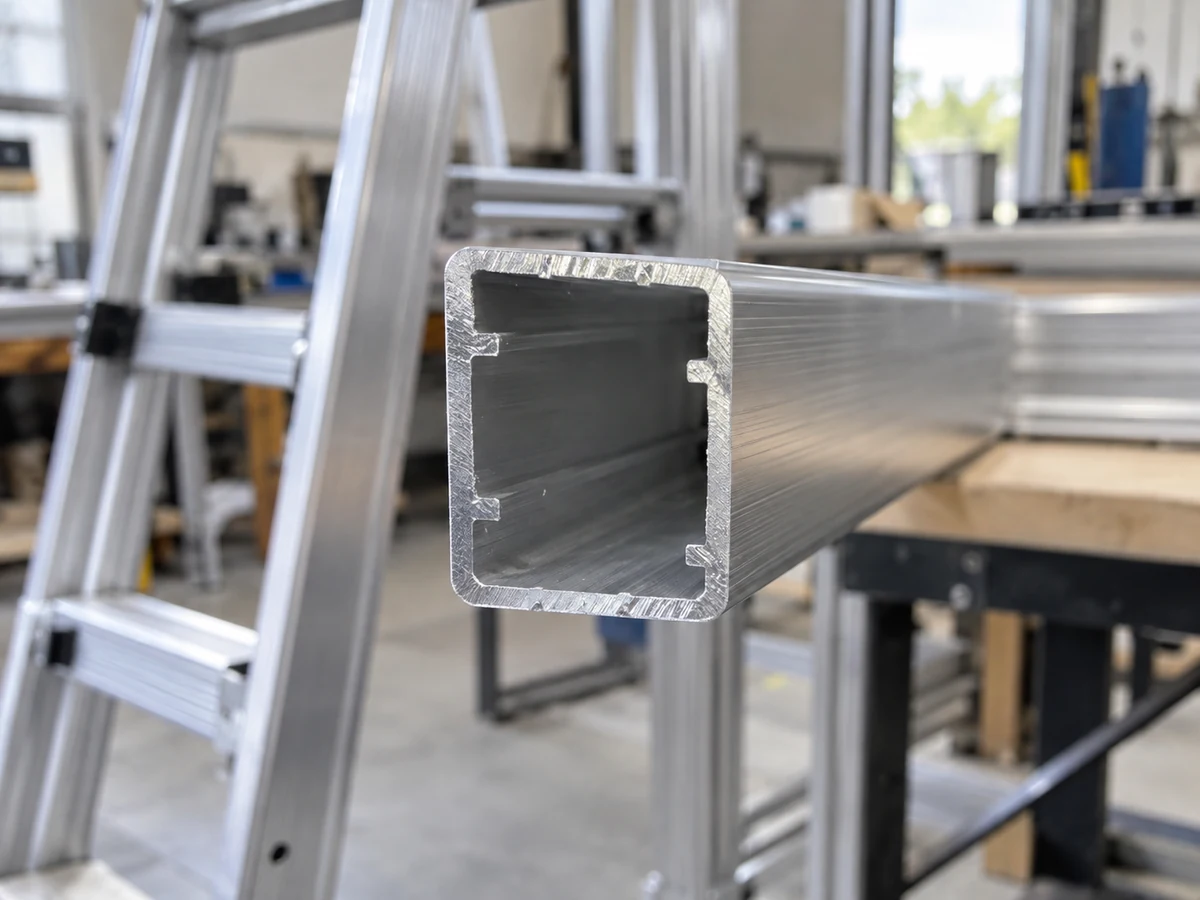
Keep short rung blanks traceable after discharge
Short parts can be lost, mixed, or marked after cutting even when the blade has made an acceptable cut. Observe the selected discharge route with the actual rung or step section. Does a short blank remain supported? Can the operator distinguish the two ends and the relevant variant? Is the count reconciled with the job traveler, and is a rejected part segregated before it reaches the joining station? If a tray, chute, catcher, or manual removal step is needed, include it in the offered scope and trial record.
Have the receiving operation check the cut blank against its approved interface, especially where a later hole, crimp, swage, fastener, or bracket depends on remaining material. The saw trial can show whether the blank arrives in usable condition. It cannot prove the strength of a rung-to-rail joint or the safety of a completed ladder.
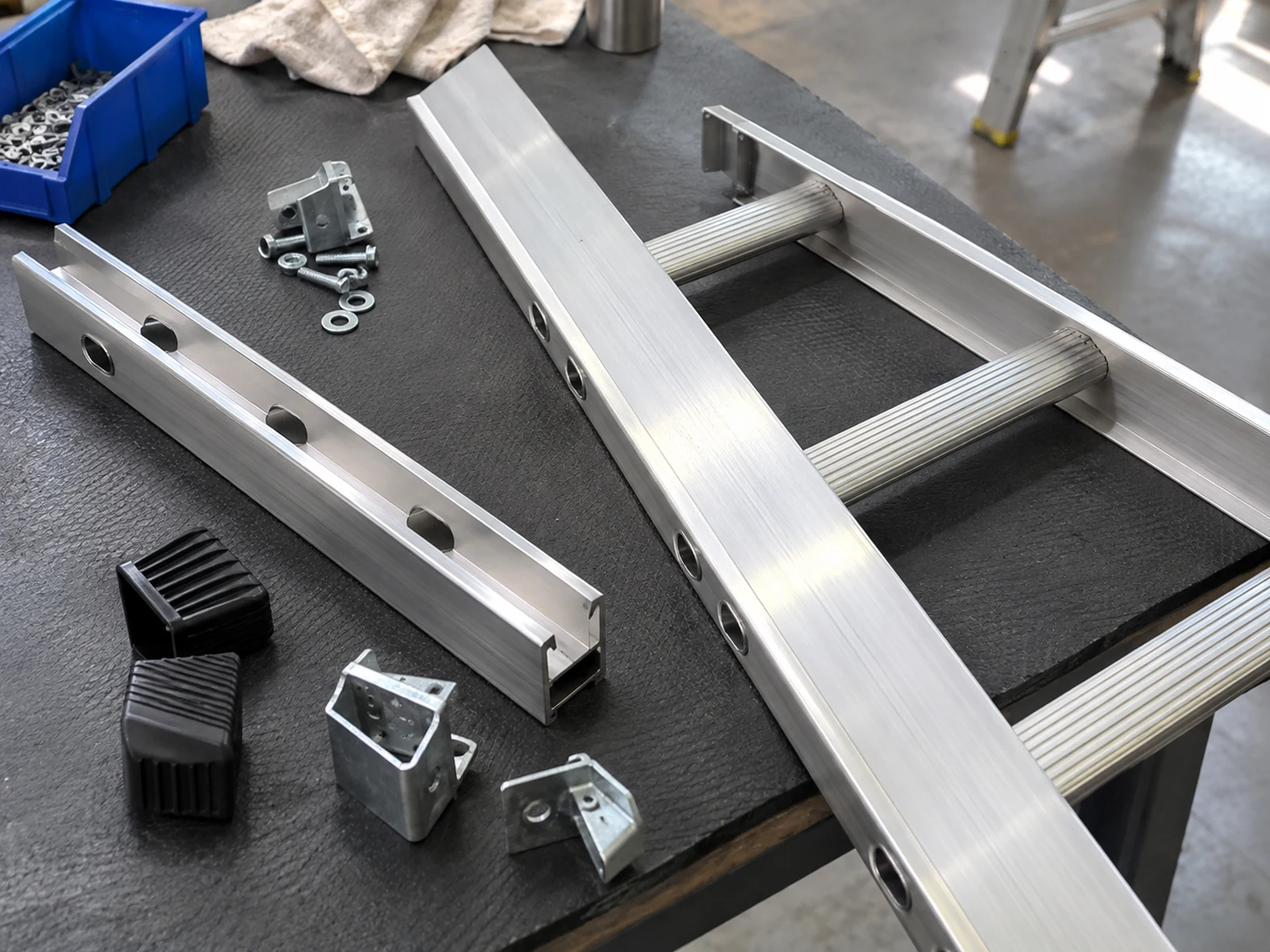
Run the changeover that matters to purchasing
A single successful first piece is not enough if production alternates between rail sizes or short rung blanks. Ask the supplier to run the agreed sequence: first approved family, change to the second family, then return to the first. Record setup steps, tooling changes, first-piece checks, rejected startup pieces, and the person responsible for release. A quoted cycle rate should be tied to the actual part mix and handling boundary rather than extrapolated from one straight cut.
For each sample, capture the source stock ID, program or setup revision, operator, cut-part ID, measured results, nonconformities, and disposition. If a part fails, document whether the cause is stock condition, drawing ambiguity, support, clamp marks, blade condition, setup, discharge, or downstream requirements. Agree on a retest condition before accepting a corrected run. The point is to make a buy/no-buy decision auditable, not to conceal a failed first attempt.
What does a pass actually release?
A pass releases the proposed saw configuration for the specific drawing revisions, sample set, inspection method, and operating boundary agreed in the trial. It should state any excluded profiles or operations. It does not approve every ladder model or certify a finished ladder. The applicable product design and safety checks must be handled by the ladder manufacturer under the rules of its sales markets. For example, the US OSHA ladder rule addresses finished-ladder and workplace requirements; a saw cut record is only one upstream manufacturing input.
Before issuing a purchase order after the aluminum ladder saw trial, ask for a written configuration list: saw, blade and clamping arrangement, long-stock support, short-part discharge, measurement method, changeover procedure, training, and acceptance boundaries. Compare the quotation against that list and the actual trial evidence. If a supplier cannot demonstrate a required member on the quoted setup, keep it as an open item rather than assuming it will work later.
See a general saw example, then request your own sample trial
The following video is from Jiurun Machinery’s YouTube channel and shows general equipment operation. It does not demonstrate the ladder sections, machine configuration, customer project, cut quality, dimensions, or performance discussed in this article. Your acceptance evidence must come from a trial with your released drawings and stock.
Ready to compare a saw against your ladder member package? Send Jiurun Machinery the released rail and rung drawings, stock samples, material and temper, member quantities, downstream joining route, and inspection limits. Request a trial plan that names the configuration, sample matrix, measurement record, changeover, and open items before you compare offers.