
An instrument enclosure extrusion saw trial should answer a specific buying question: can the proposed saw and fixture prepare your approved enclosure body so the cut ends, separate end plates and internal PCB slots remain usable at the receiving stage you specify? Agree the drawing revision, stock condition, length datum and inspection method before anyone cuts a sample. A clean-looking end alone does not establish end-panel seating or board clearance.
This is a buyer acceptance plan for a prospective aluminum circular-saw setup, not a report of a completed Jiurun test. A supplier must confirm a suitable machine and fixture for the actual section, material, finish, stock length, cut length and production mix. Do not infer an achieved tolerance, a tested model or a certified enclosure from the illustrative media on this page.
Instrument enclosure extrusion saw trial: define the acceptance matrix
The larger sourcing decision is whether to buy finished cases, prepared kits or extrusion blanks cut in-house. That comparison belongs in our instrument enclosure saw purchase guide. This trial starts only after the buyer has chosen an approved extrusion family and needs to decide whether a particular cutting arrangement can deliver accepted blanks. A broader overview of profile-cutting concerns appears in our extruded enclosure cutting guide; here the test focuses on how the actual cut blank relates to its end panel and PCB slot.
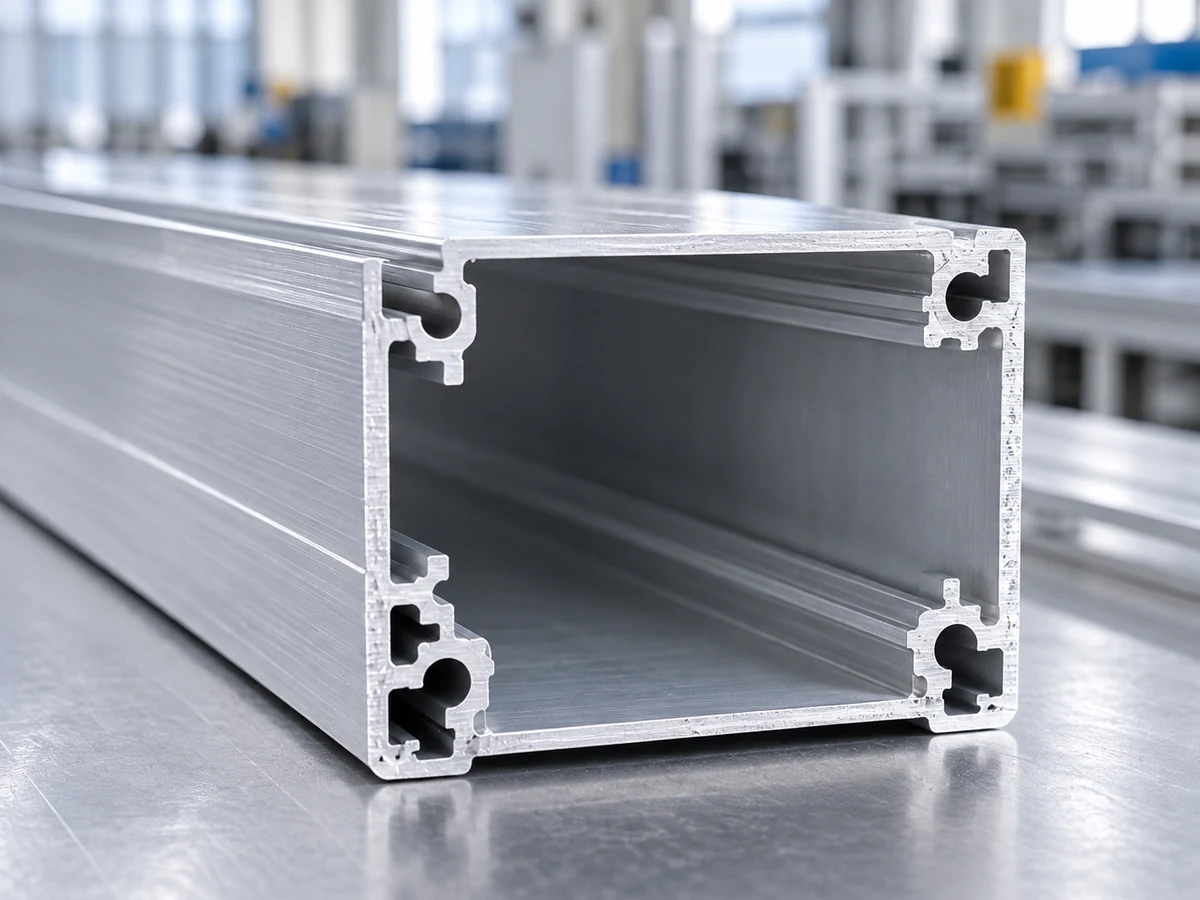
Commercial enclosure examples show why those interfaces deserve separate checks. Hammond describes an extruded body, removable aluminum end plates and internal slots used for PC boards in its 1455HD series. Takachi describes flanged end panels and internal PCB insertion grooves for its MXFC series. These are examples of enclosure architecture, not Jiurun sample cuts, endorsed applications or dimensions to copy into your own drawing. Your released design controls the trial.
Freeze the sample identity before requesting a cut
Send the supplier one released section drawing, material designation and condition, finish state, stock length, target blank length, expected cut orientation and drawing revision for each family. Mark which faces are visible after assembly and which faces or internal ledges are functional. Keep end-panel and board drawings separate from the saw-blank drawing. A product envelope, PCB outline or catalog enclosure length is not automatically the saw stop setting.
Ask who owns the datum: a stock end, the first trimmed face, a specified cut face or a downstream machined feature. Identify whether the length applies to the extrusion body only or to the assembled case including end plates. If panels, gaskets, screws or board supports are bought separately, record their revision and receiving owner. Otherwise a trial can pass a blank-length number while the assembly still cannot be built.
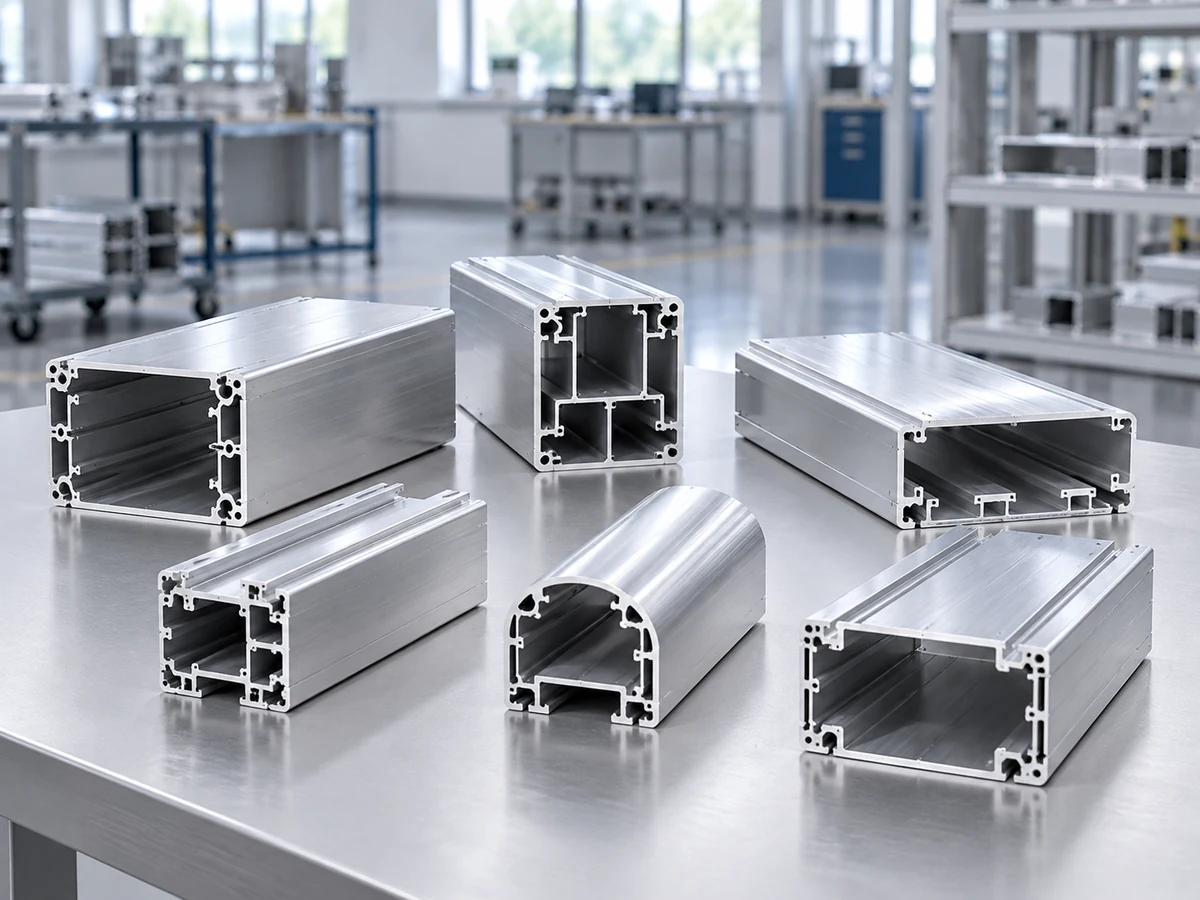
Use a small but representative sample family. Include the section with the narrowest available clamping face, a long or awkward stock length, the finish most sensitive to marking and the end-panel/board-slot combination that drives rejection. Those are selection criteria, not a claim that every enclosure design shares the same difficulty. If the quoted machine will process multiple approved sections, label each specimen so trial evidence cannot be transferred from a forgiving section to a difficult one.
A buyer sample matrix for the quotation
| Record | Buyer supplies | What the trial must return |
|---|---|---|
| Section and stock | Released cross-section, material/condition, finish, original length | Identified specimen and proposed support/clamp arrangement |
| Cut reference | Required blank length, datum and end orientation | Measured results against the agreed method, not an unqualified accuracy label |
| Visible faces | Protected surfaces and permitted contact zones | Photos of clamping and representative faces after cutting |
| End-panel interface | Actual matching panel, fasteners and drawing revision | Fit observation, interference location and owner of any remaining work |
| PCB-slot interface | Approved board or gauge and slot acceptance criteria | Clearance observation without claiming electrical or environmental approval |
For each row, write an acceptance limit and decision owner before the supplier trial. “Looks acceptable” is difficult to repeat. A useful record says which face was measured, with what suitable instrument, at what stage, and who may accept a deviation. If a criterion belongs to machining, finishing or final assembly rather than sawing, keep it in that later process instead of attributing it to the saw.
Check the cut end and length as separate acceptance decisions
The buyer should specify the measurement location and the allowed end condition. Record whether the required length is measured over one wall, at a designated corner or by another drawing-defined datum. Hollow sections can present different walls and internal ledges at the cut face; a single caliper reading without a location can conceal the feature that controls panel seating. Photograph the orientation and label the inspected face.
Ask for evidence of burr condition on exterior edges and internal grooves that the end plate or board may contact. Agree what counts as a saw-cut blank, what needs downstream deburring, and who performs that work. Do not promise burr-free edges or perfect squareness from a machine category alone. The correct limit and inspection tool depend on the buyer drawing and the accepted next operation.
Confirm the proposed cut sequence when the incoming stock has a damaged or uneven end. A first trim may change the usable datum and material allowance. Distinguish the first accepted piece from a setup piece, and record how rejected ends and leftover stock will be counted. This matters for a realistic quotation but does not justify a universal yield percentage.
Prove end-panel seating with the matching parts
Place the actual approved end panel on a labeled trial blank using the buyer-approved assessment method. Look for a gap, rocking, edge interference or contact on a protruding internal feature. Note whether screw holes, threads, seals or finishes are completed in a later operation. Sawing a body to length cannot by itself prove a tapped hole pattern, gasket compression, ingress protection or a finished enclosure fit.
When a panel does not seat, record the contact location and stage of manufacture before changing the saw. The cause may lie in a wrong panel revision, a profile supplied out of condition, an end burr, a downstream feature, or the cutting setup. A labeled photo and a simple fit/no-fit observation let the buyer allocate corrective work without making a false machine-performance claim.
Treat PCB-slot clearance as a distinct downstream check
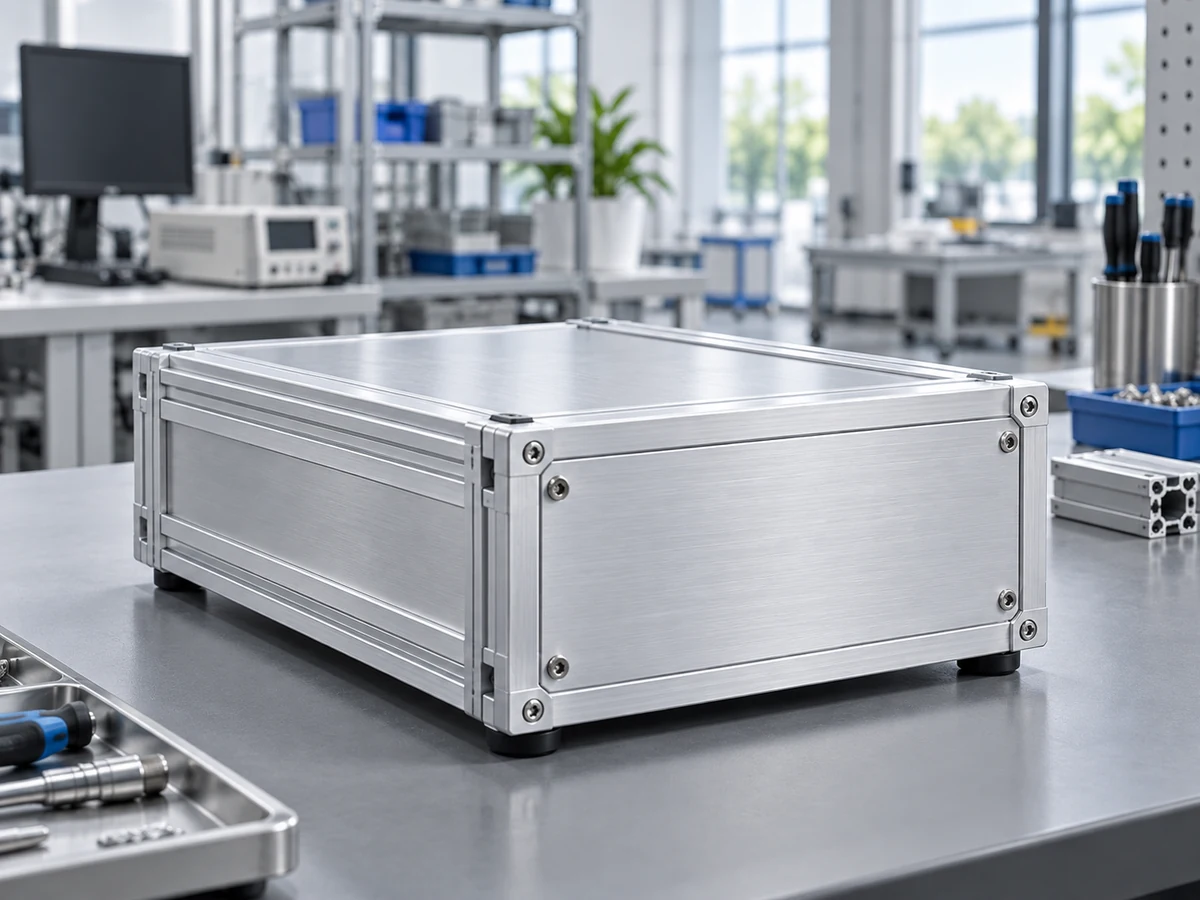
An enclosure can have a clean outside cut while an internal ledge or groove is left with a burr or distorted edge. If the approved design uses a sliding board, ask the enclosure owner to check the specified board or gauge through the intended travel and receiving condition. Record where motion stops or contact occurs. Keep any electrical, thermal, vibration or device-function assessment with the responsible product team.
This is also where mixed stock families matter. A profile with different slot depth, wall support or finish may need a different contact arrangement even if its outer width looks similar. Require a separate setup reference or changeover decision for each approved family; do not transfer one result to another by catalog name alone.
Inspect support, clamp contact and finish before judging the saw
Show the supplier the full original stock length and the shortest accepted blank. Ask where the long section is supported, how it is located, where the clamp touches and whether internal voids or thin walls require special attention. The proposed fixture must be evaluated on the real profile, not inferred from a generic rectangular block. Record any surface protection used during the trial and whether that protection is included in the quotation.
If the enclosure body is already anodized or otherwise finished, inspect the exposed faces in the same lighting and orientation agreed with the buyer. Marking from handling, support or clamping may be commercially important even when the length passes. Conversely, a photo of an unmarked surface cannot establish an unmeasured end-panel fit. Keep the observations separate.
Request evidence that makes the trial reproducible
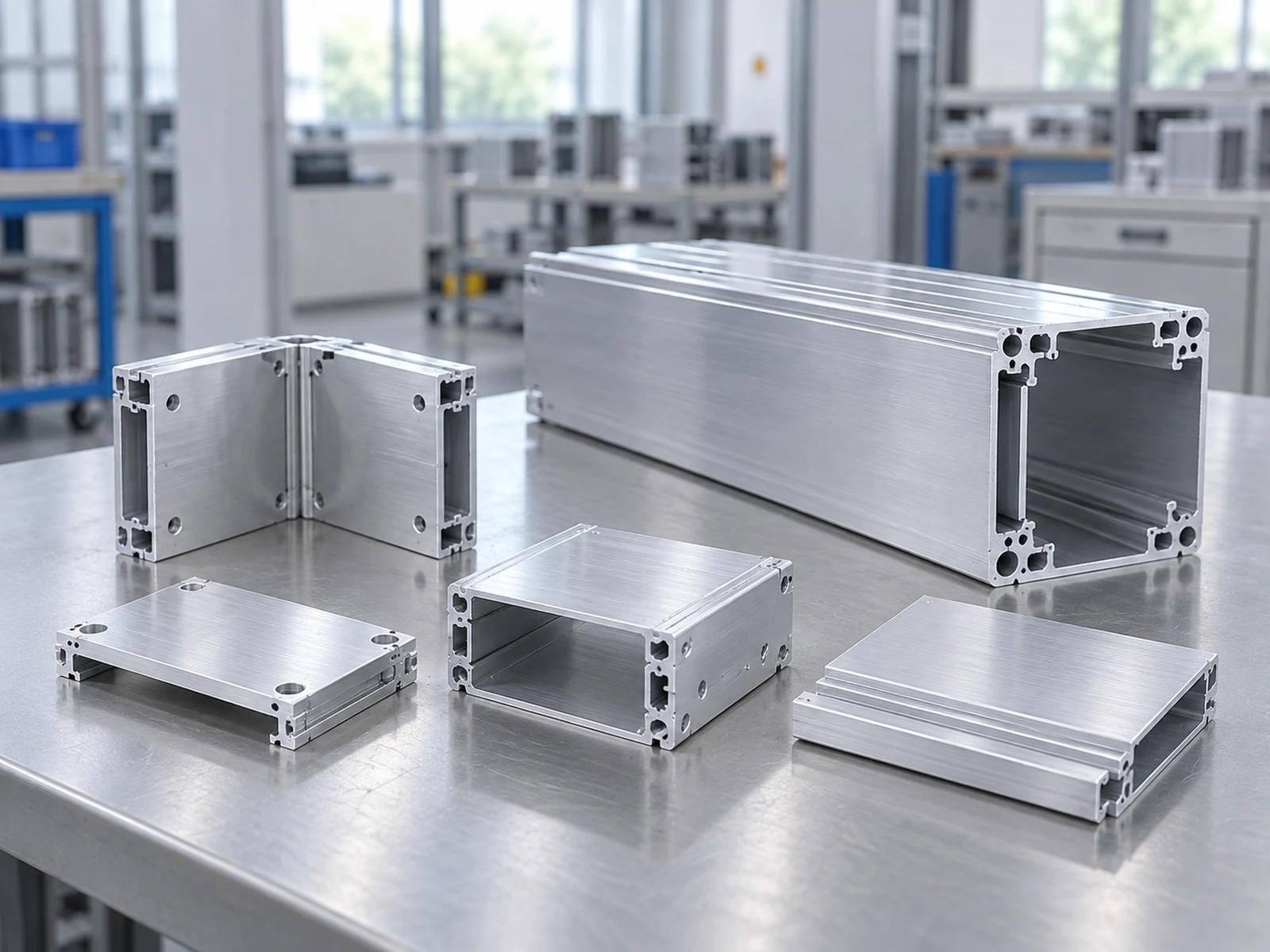
Ask for a trial sheet with specimen ID, drawing revision, incoming material and finish, blank length and datum, saw and fixture configuration offered, blade and support arrangement as actually used, setup-piece count, sample count, measured results and labeled photos. Request a record of panel seating and board-slot clearance only when those matching parts were supplied and assessed. A video or photograph of a different material is general equipment context, not evidence for this specimen.
Agree the decision rule in advance: which specimens must pass, who measures them, whether any rework is allowed, and what happens when a result is conditional. If the supplier changes clamp contact, blade, support or processing stage during the trial, identify the final quoted configuration. A passing result from an unquoted setup should not silently become a procurement assumption.
The following Jiurun channel footage shows general saw equipment operation. It is not a test of the enclosure material, end-panel arrangement, PCB slot, machine model/configuration, customer part or performance described in this article. Require a separate witnessed trial on your released samples for those decisions.
General Jiurun saw equipment footage only; no instrument-enclosure sample, model-specific setup, end-panel/PCB fit or cutting result is proven.
Turn the result into a machine-selection decision
Compare a supplier proposal against the accepted specimen matrix and the workload you actually retain. One arrangement may suit a single stable section; another may be justified only if the mixed profile and finish portfolio can be changed over, supported and inspected within your production plan. Count setup time, sample losses, fixture scope, downstream deburring or machining, inspection effort, bought end panels and the assembly handoff in the same evaluation period. A lower saw price by itself does not establish a lower cost per accepted enclosure body.
If the buyer will instead purchase complete cases or prepared kits, avoid counting those volumes as in-house saw demand. Use the buy-or-make guide linked above for that sourcing decision. For a retained cut-blank route, ask the vendor to state exactly which sections, lengths and finish conditions its proposed equipment covers, what requires a different fixture or option, and which criteria remain outside the saw quotation.
Questions to send with your RFQ
- Which released profile and end-panel revisions will be used in the trial?
- What is the blank-length datum, inspection method and acceptance limit for each section?
- Which visible faces and internal grooves must remain acceptable after support and clamping?
- Are end-panel seating and PCB-slot clearance part of the witnessed acceptance, and who supplies the matching parts?
- Which saw, blade, fixture, support and protection details used in the trial are included in the quotation?
- Which deburring, drilling, tapping, finishing and final enclosure checks are separate downstream work?
- How will setup pieces, rejects and changes between approved sections be recorded?
Send the approved section and panel for a specific review
For a useful Jiurun inquiry, send the released enclosure extrusion cross-section, material and finish condition, stock and required blank lengths, orientation, expected batch mix, protected visible faces, end-panel and board-slot drawings, and the acceptance sheet you intend to use. Ask for a proposed circular-saw configuration and, if feasible, a sample trial against those exact records. Send your drawing and cutting requirements to JiurunCut. The resulting proposal should identify the quoted equipment scope and any criteria still requiring downstream verification.
Source note: Hammond 1455HD and Takachi MXFC product pages are cited only to illustrate common enclosure interfaces; they do not describe Jiurun equipment or prove any trial outcome. All acceptance limits and product-function claims must come from the buyer’s released design and actual witnessed evidence.