
A round aluminum tube saw changeover should be specified against a family of real parts, not a single nominal outside diameter. A buyer may have four tube sizes, two wall ranges, visible finished surfaces and both long blanks and short pieces. A saw that cuts one display sample does not establish that the same locating, clamping and cut-end method works across the family. This guide turns that gap into a clear RFQ, change-parts list and witnessed trial.
The discussion concerns straight cutting of hollow round aluminum tube on an industrial saw. It does not assume a particular Jiurun model, included fixture, blade, tolerance or production rate. Those depend on the approved drawings and the configuration actually quoted. Keep the incoming extrusion specification separate from the saw’s finished-part acceptance.
Define the diameter family before choosing the machine
List every tube that the first purchase must process. For each part, record the approved drawing and revision, outside diameter, wall thickness, allowable ovality or profile variation, alloy and temper if specified, surface finish, delivered stock length, cut length range, batch mix and downstream receiver. Mark future possibilities as options. A family name such as “round tube” hides the boundary cases: the smallest diameter can fall below a proposed locator’s useful contact position, while the largest may need different jaw clearance or a different feed guide.
Use the drawing and representative stock, not a catalogue photograph, to agree what enters the saw. Hydro’s extrusion quality guidance treats dimensional requirements as drawing- and agreement-based. That is a useful purchasing discipline: identify which incoming variation the cutting trial must tolerate, and do not assign a stock defect to the saw without checking the input. State whether a tube arrives as bare extrusion, coated stock, or an already prepared member; surface-contact rules may differ.
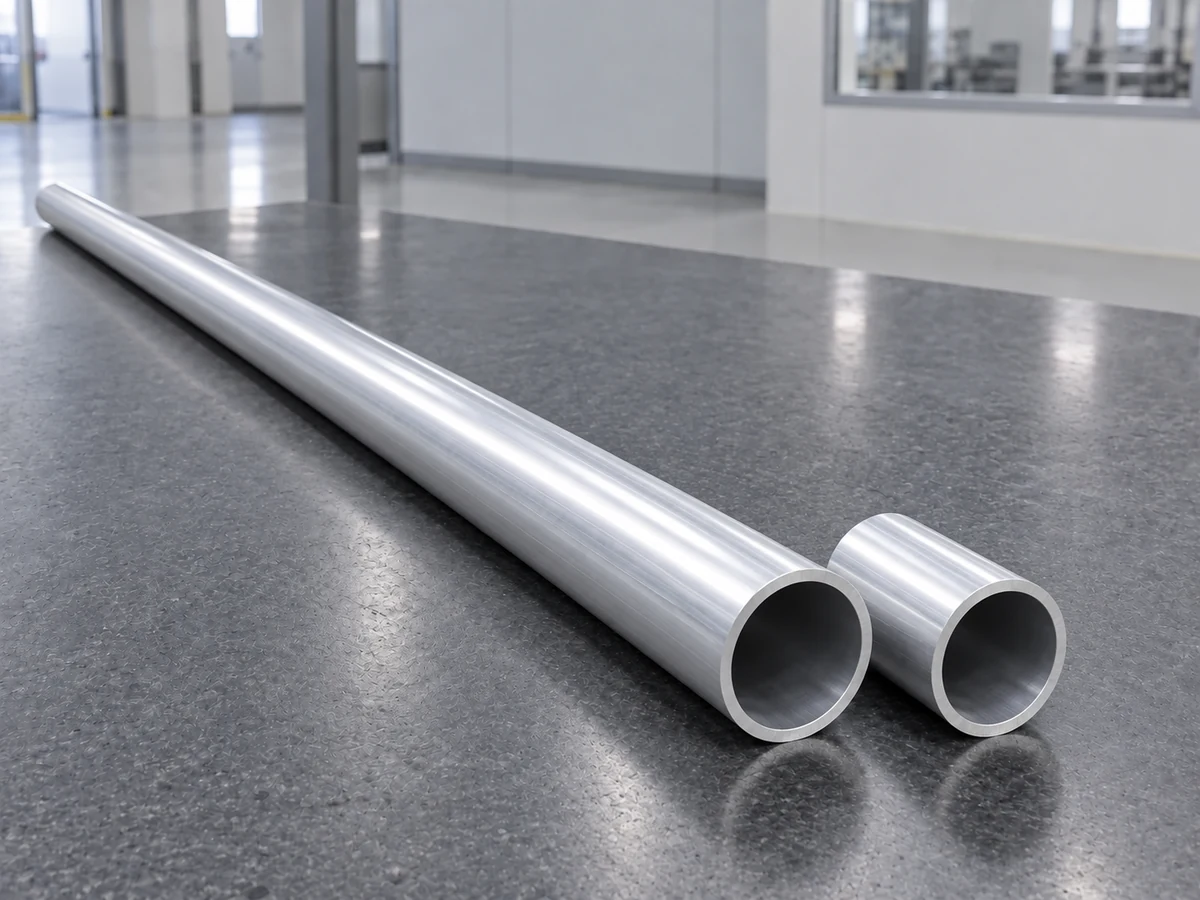
The featured image shows several tube diameters as an illustrative geometry comparison. It is not a customer’s part family, a supplied Jiurun fixture or evidence that any of those sizes passed a trial.
Ask for a contact map, not just a maximum capacity
For each diameter, require the supplier to mark where the stock rests, what prevents rolling, which face or centerline defines position, where the clamp acts, and what supports the tube near the blade. A maximum cutting envelope says little about repeatable contact on a much smaller tube. Carr Lane’s V-locator guidance explains the locating principle for cylindrical workpieces. It does not establish that a particular V block or jaw is installed on a Jiurun saw. Treat it as a question to ask of the quoted fixture and verify the answer on actual stock.
A V form can help reference a cylinder over a size range, but one contact layout need not suit every thin wall, finish or short piece. Ask what happens when the diameter changes: do the tube centerline and blade entry relationship move, do support heights change, and must a pad, insert or stop be exchanged? Carr Lane’s adjustable V-block example illustrates why a buyer should ask for adjustment range and positive setup references rather than assuming “universal” support.
Separate location from holding force. A clamp can prevent motion while still distorting a thin tube or marking a visible surface. The supplier should show the pad shape, contact width, backing support, force direction and release sequence at the minimum and maximum diameters. Ask whether the tube is judged while restrained, after the clamp opens, or after a downstream operation; those are different acceptance states. Do not infer a finished-part tolerance from a stated feeding repeatability figure.
Keep infeed and outfeed within the same changeover scope
A diameter change may affect more than the cutting-zone fixture. Show the stock from staging through the feed guide and into the blade, then follow the separated piece to its receiver. Check side guides, roller or trough contact, stock protrusion, cut-piece retention and safe operator access for the shortest required part. Our round-tube infeed guide focuses on long-stock support and rolling control. Here, the buying decision is whether each diameter can be changed over and accepted as a finished cut piece with a defined set of adjustments and parts.
Do not use a long easy tube to prove a short-part job. Ask the supplier to identify the shortest finished piece, the shortest permitted stock remainder and the point at which a separate receiver or handling method is needed. The stock-and-piece image below is an illustration of this length contrast. It is not a documented cut, a safety approval or dimensional proof.
Specify the change-parts and settings package
Request a size-by-size changeover sheet rather than a promise that an operator can “adjust the machine.” The sheet should name the supplied jaw or pad set, V supports, stops, guides, inserts and tools. It should show the reference marks or measured settings for each diameter, the sequence for removing and installing parts, and the checks before a guarded cutting cycle resumes. If an item is optional or customer-supplied, put that in the quotation. If one setup covers multiple diameters, ask for the tested range and the conditions that make it valid.
Software settings need the same clarity. Identify which program or recipe belongs to each tube family, who may edit it, what drawing revision it supports, and how a changed blade or fixture is reflected. The buyer should receive a controlled setup record that an operator can reproduce after a shift change. A trial performed after undocumented hand adjustments is difficult to turn into production acceptance.
Ask the supplier to quote training and retained samples separately from the hardware. A lower machine price may exclude extra jaw sets, setup gauges, a second trial, or the time needed to verify a new size. Compare offers on the same family and same acceptance scope, including exceptions. Do not assume the blade, feed configuration, guarding or cut-piece handling shown in a general video is the configuration being offered.
Write the RFQ as a family matrix
A compact matrix is more useful than a paragraph saying “various round tubes.” Give each variant a code and one row. Include the approved drawing revision, incoming diameter and wall range, finish-sensitive faces, stock and finished lengths, annual or batch demand as a planning input, the cut-end requirements and the proposed downstream inspection. Demand is a sizing assumption, not a machine-performance guarantee.
- Machine scope: identify the exact saw model, blade and feeding arrangement offered for the listed family, with any excluded diameter or stock condition.
- Fixture scope: show contact drawings for the smallest, largest and most delicate tubes; list each included change part and spare pad.
- Process scope: define loading, orientation, cut-piece retention, scrap handling and the owner of any deburring or further machining.
- Acceptance scope: identify the stock samples, piece lengths, trial quantity, measurement state, tools and people who approve results.
- Commercial scope: price optional diameter ranges, extra fixtures, new programs, future trials and training as distinct items.
Ask every bidder to return a marked exception list. “Within capacity” is not the same as “included, set up and accepted.” If a tube requires a dedicated support or cannot be held without unacceptable marks, record it before placing the order. That allows a buyer to compare a broad base offer with a narrower but well-proven configuration honestly.
Witness boundary sizes and inspect the released cut end
Agree the trial plan before the supplier optimizes a display cut. Use identified stock from the approved family and record drawing revision, incoming condition, blade, fixture revision, settings and measurement instruments. First inspect the stopped setup at the smallest and largest diameters. Then run representative boundary combinations: thin wall, thick wall, finish-sensitive surface, short part and long incoming stock where they belong to the actual job. Do not invent a universal sample count or tolerance; the buyer’s component requirements should set both.
For each size, inspect the released piece from the datum named in the drawing. Check length, squareness or angular requirement if specified, cut-end burr and edge condition, visible clamp marks, and any fit feature that the next operation needs. A gauge or mating component may answer an assembly question that a bare length reading misses. Record whether a measurement was made in the fixture, free after release, or under assembly restraint. Our inspection-state guide explains why those states cannot be silently interchanged.
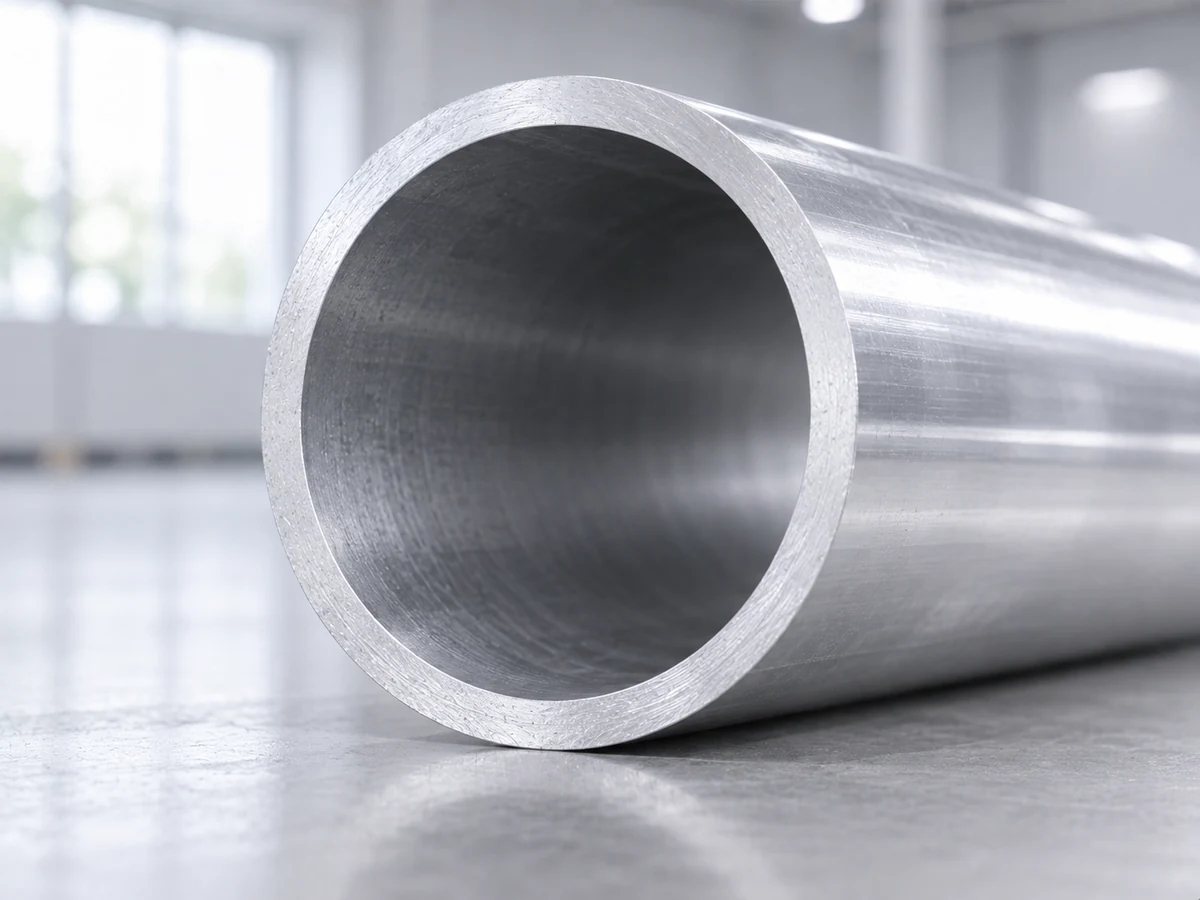
The cut-end image below is an illustrative close view of a hollow tube opening. It can help point to the edge, wall and bore that an inspector should discuss. It shows no measured burr, accepted tolerance or result from a Jiurun saw.
When a trial sample fails, preserve its stock identity and the separated piece. Record the failure and the exact change made to the locator, pad, support, blade or setting. Repeat the affected boundary case after a correction. One improved easy sample should not close a failure at another diameter. The final acceptance sheet should state the tested family, approved setup parts, measurement method, exclusions and evidence retained with the machine handover.
Use the video as a general equipment view
The following clip from Jiurun Machinery’s YouTube channel shows a JR-455Q saw and general aluminum-cutting operation. It is general equipment footage only. It does not prove that the video used this article’s round tubes, the proposed diameter-change parts, a particular quoted model configuration, a customer’s trial, or any cut quality or performance result. Request a witnessed trial on your own tube family before accepting the purchase.
General Jiurun equipment example only; it does not demonstrate this round-tube family, fixture changeover, trial or cut performance.
Ready to define a round-tube family?
Send the approved tube drawings, a representative stock list, diameter and wall matrix, cut-length range, surface limits and downstream inspection method through our contact page. Ask for a size-by-size fixture and changeover scope plus a witnessed acceptance plan. Keep confidential drawings in a controlled exchange rather than placing them in a public comment or open upload.