
An aluminum saw retrofit or replacement decision starts with the cutting job the factory must run next, not the age of the machine alone. An owned saw may still produce acceptable parts on today’s profile while struggling with a new length range, a different clamping surface or a revised order pattern. Conversely, a worn component does not automatically justify a new station. Put repair, assessed modernization and new equipment against one released future workload and one accepted output. The cost comparison becomes meaningful only after each route includes its interfaces, installation, downtime, training and verification.
This guide is a procurement framework for an owner of an industrial aluminum or approved nonferrous cutting station. It is not a repair instruction, a compatibility promise or an approval of a modified machine. The owner’s qualified engineers and responsible suppliers must assess the actual asset, proposed changes and applicable safety requirements.
Define the future job before assessing the current saw
Prepare a representative job package: section drawings and input-stock condition, material and finish, usable length range, cut-end requirements, batch sizes, changeover frequency, required handover stage and expected schedule. Identify the jobs that the present station handles acceptably and the jobs it cannot release without exceptional handling or downstream correction. Separate a demonstrated problem from a forecast. A sales target for next year should not be treated as a released cutting order.
Record observed output and stoppages with dates, part references and the operating configuration. Note whether a constraint is at the blade and clamp, stock support, feed, controls, extraction, part removal, inspection or staffing. A rejected part may originate after sawing; a slow dispatch may originate before stock reaches the station. Do not purchase a new saw to solve a problem that has not been assigned to the cutting step.
Take a baseline inventory of the owned asset: make, model, serial number, controls and software versions if available, installed options, maintenance and repair history, drawings, guarding and known changes. Photograph relevant interfaces for the assessing supplier. This is an evidence packet for a site-specific review, not a basis for promising a retrofit from a distance.
Separate repair, modernization and replacement
Repair or restoration returns an assessed item toward its approved operating condition. A bearing, sensor or wear component might be replaced under a defined service scope. It does not automatically add a new production capability. Quote the corrected fault, associated inspection, responsible technician, downtime window and acceptance test. Include any uncertainty discovered only after disassembly.
Modernization or retrofit changes an assessed part of the system while retaining other portions. The scope might involve controls, sensors, drives, positioning, guarding interfaces, material handling or mechanical assemblies. KASTO lists these as examples of modernization work on its own saws and systems; this is evidence that retrofit scopes vary, not evidence that a particular older Jiurun or third-party saw can accept those changes. Ask who designs and validates every retained-to-new interface.
New replacement buys a configured station for the future job and retires, redeploys or keeps the old asset under a separate plan. A new catalogue specification is not the final delivered scope. Confirm stock support, feeders, tooling, chip handling, electrical and data interfaces, installation, training and sample acceptance. Behringer describes repair, maintenance and retrofit as different service categories; a buyer should likewise request distinct scopes rather than a single vague “upgrade” price.
Keep the options open long enough to obtain credible assessments. If a qualified provider cannot verify the condition, documentation or supportability of the owned machine, record the uncertainty and price a diagnostic stage. Do not fill unknowns with an assumed residual life, downtime saving or universal retrofit compatibility.
Draw the boundary around retained hardware and changed interfaces
For a retrofit proposal, use a one-page boundary drawing or register. Mark each retained assembly, removed assembly, new component and unchanged external connection. Include power and controls, operator controls, emergency-stop chain, guarding, stock path, infeed/outfeed support, chip collection, foundation, upstream/downstream automation and data exchange. Assign the party responsible for design, installation, integration, testing and final documentation at each boundary.
The retained part may be the source of the most expensive risk. A new feeder that depends on the old clamp, a new control connected to undocumented wiring, or a new guard around unchanged material flow cannot be evaluated from the new component price alone. Request the condition findings that support reuse. Ask what happens if an additional defect appears during strip-down: who authorizes the change, how price and schedule are revised, and whether the owner can stop before committing to the full works.
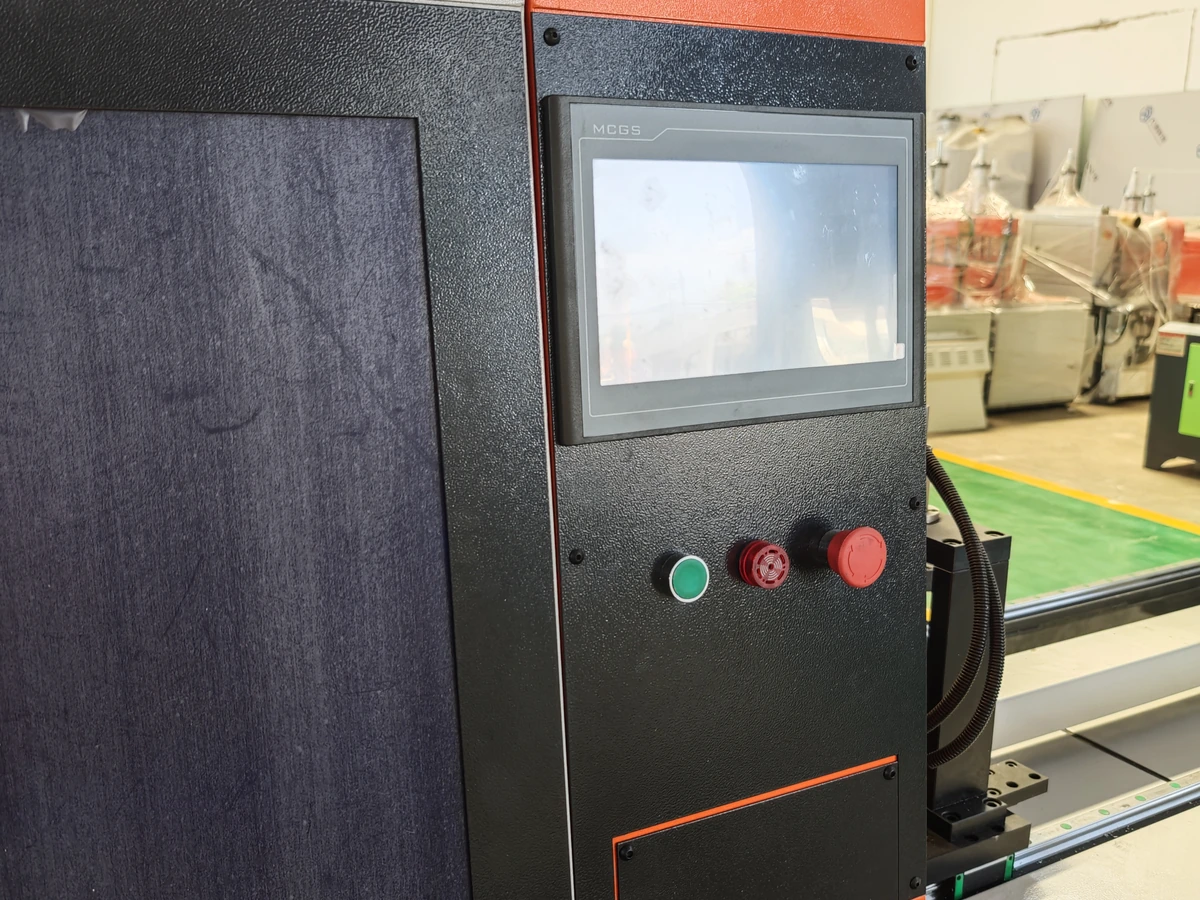
For a replacement proposal, mark which existing assets will really remain: roller tables, stock racks, electrical supply, extraction, floor position, programs, gauges and trained operators. Reuse is a separately proven line, not an automatic discount. Check physical height, transfer direction, usable support length, loading access and responsibility for integration before subtracting the cost of a table or utility from the new-machine quotation.
Compare the complete investment at the same handover
Build two cost sheets with the same job period and accepted output. The retrofit sheet should cover assessment, engineering, parts, labor, retained-component inspection, dismantling, transport if required, integration, safety review, commissioning, training, documentation, contingency for disclosed unknowns, downtime and post-start support. The replacement sheet should cover the configured machine, options, freight, installation, utilities, handling equipment, interface work, tooling, commissioning, training, documentation, removal or storage of the old machine, downtime and support. Do not compare a retrofit work order with the base price of a new saw.
Keep one-off capital spending separate from recurring operating cost. List expected staffing, blade and consumable use, planned maintenance, service access, scrap and changeover time only where measured or supported by a proposed configuration and job mix. If a quotation claims savings, ask for the measurement method and boundary. Do not turn a feed-position repeatability number into a finished-piece accuracy claim.
Time matters as well as price. Record when the current station can be released for work, how production is covered while it is unavailable, when a replacement can be delivered and commissioned, and whether a staged change is possible. A short planned outage is an offer to verify, not a guarantee. Compare risks using the same production calendar, not one supplier’s best-case schedule against another supplier’s fully detailed plan.
Test both routes with the same representative parts
Define a sample program before either supplier proposes acceptance. Include the demanding profile family, shortest and longest released pieces, surface that must remain protected, cut-end criteria, batch and changeover pattern, and the actual next operation. Record input condition, blade/tooling, clamping, support and inspection method. The outcome is a measured accepted part and a documented operating cycle for the stated configuration; a general demonstration video is not that evidence.
For a retrofit, verify the complete changed system after integration, including the retained assemblies that influence the result. For a replacement, verify the delivered configuration with its real stock path and interface points. Name the owner of safety review, electrical and mechanical checks, operator training, production trial and final handover documents. Qualified personnel must decide the required tests and approvals for the actual site and jurisdiction.

Send two comparable RFQs, not one open-ended request
- Which released future parts and volumes define the comparison, and what is explicitly outside scope?
- What observed fault or capability gap has been assigned to the present cutting station?
- What asset identification, drawings, maintenance history and site inspection are available?
- Which components are retained, changed or removed under the retrofit route, and who owns each interface?
- What exact model and options constitute the new replacement route, including handling and utilities?
- Which inspection and sample program will decide acceptance at the same cut-piece handover?
- How will unknown findings, change orders, production coverage, training and support be priced?
- Who signs off integration, final documentation and applicable safety requirements?
If the current station can be restored to the defined job with a bounded scope, that may be the better purchase. If modernization depends on undocumented retained interfaces or cannot cover the future job, a replacement may be easier to specify and accept. The answer depends on the assessed asset and released work, not a generic machine-age threshold. For planning the move after a replacement decision, see our replacement-order transfer guide; it addresses execution rather than this capital choice.
Video: general Jiurun equipment view
The following Jiurun Machinery channel video shows general cutting equipment. It is a visual example of a saw, not footage of an owned asset or a retrofit.
General equipment example only. The video does not prove the material, model configuration, customer installation, retrofit compatibility, sample cut or performance in this article.
Ask for a scoped new-machine alternative
If you are weighing a documented service assessment of an existing saw against a new aluminum-cutting station, send the future part drawings, representative stock, accepted cut-piece criteria, order mix and site interfaces through our contact page. Jiurun can discuss a new-machine configuration and sample-based evaluation for the applicable nonferrous cutting work. Assessment or modernization of an owned third-party machine requires the responsible qualified service provider; do not treat a new-machine inquiry as an offer to retrofit it.