
An instrument enclosure saw can be a sound investment when your team repeatedly cuts identifiable extrusion blanks before downstream machining and assembly. It is a poor answer when the real purchase is a finished enclosure with end panels, surface treatment, sealing and electrical integration. Start by naming the accepted item at your receiving dock. Then compare buying that item with making it from stock at the same accepted stage.
This guide is for instrumentation and electronics manufacturers weighing an in-house aluminum cutting station against purchased cases or prepared housing kits. It addresses procurement boundaries and evidence, not a promise that any particular saw can process your profile. For the physical cutting questions behind the decision, see our extruded aluminum enclosure cutting checks.
1. Define the instrument enclosure saw purchase boundary
“Enclosure” can mean a long hollow extrusion, a length-cut sleeve, a set of frame members, a prepared kit, or a finished case. These are different deliverables. A length-cut body may still need drilled or machined end features, panels, deburring, finishing, hardware, assembly, inspection and packaging. If your supplier is accountable for a completed case, replacing its first cut with a saw does not replace its remaining operations.
Manufacturer catalogs make the distinction visible. Hammond’s 1455 series describes an extruded body with internal card slots and end-panel options; Takachi’s UC series describes grooves for panels and PCBs and length customization. These are examples of enclosure construction and procurement stages, not evidence that a Jiurun saw cuts those proprietary products.
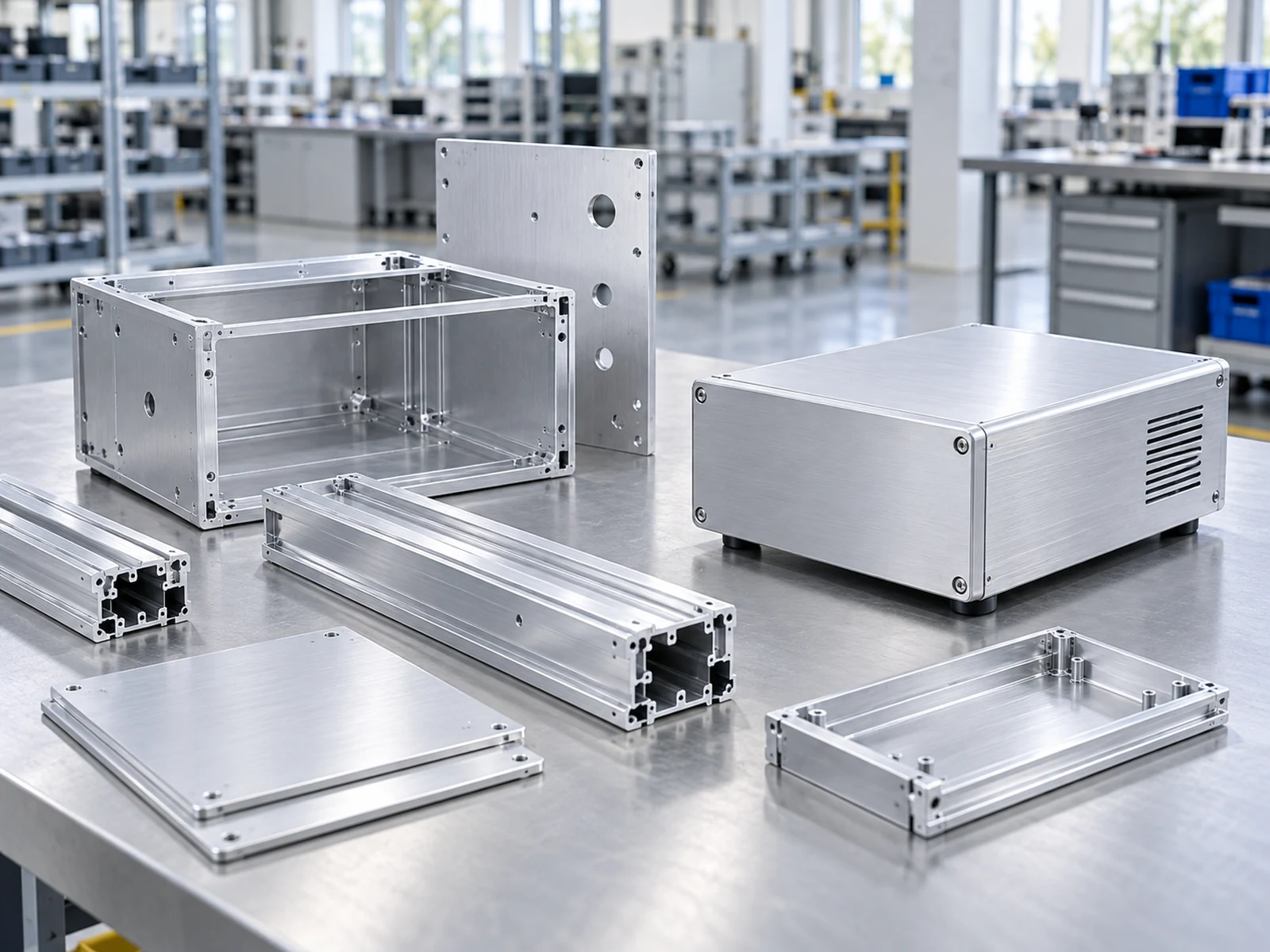
2. Map each route to the same receiving stage
Build three quotations for each released enclosure family: a completed case; a prepared kit or cut-to-length body from a supplier; and uncut extrusion plus your own sawing and downstream work. Record exactly what each price includes. If a bought case arrives inspected and packed, the make route must include the labor, fixtures, secondary machining, finish handling, assembly, inspection, scrap and time needed to reach that same condition.
- Finished-case route: specify the released drawing and revision, panels, holes, hardware, finish, packaging, incoming checks and supplier responsibility for nonconformance.
- Prepared-kit route: list every included member and operation. Who cuts to length, who prepares end faces, who machines openings, and who completes and checks the assembly?
- Stock-and-saw route: identify purchasable stock form and length, extrusion cross-section and wall features, cut orientation, clamping surfaces, cut list, downstream operations and inspection ownership.
A comparison that puts raw-stock cost beside the price of a tested enclosure understates the make route. Conversely, buying a complete case solely to obtain a simple length cut may hide an opportunity if the rest of the work is already under your control. Compare total accepted output, not the first invoice line.
3. Build the released family matrix before choosing a saw
One sample body rarely represents a product family. Make a row for each released enclosure size and revision, with the corresponding physical stock, annual and batch demand, cut length range, smallest supportable offcut, cut face requirements, visible finish concerns, later machining datum and receiver. Separate extruded sleeves from flat cover panels and from joined frame profiles. A saw RFQ should state which rows are genuinely in scope.
Ask for a cross-section drawing or an approved physical sample for each profile group. Hollow sections can present thin walls, internal ribs and open grooves; those features change how a workpiece can be supported and clamped. An assembled enclosure photo is useful for interface context but cannot substitute for the stock drawing. Never infer capacity, achievable tolerance or finished-product accuracy from a picture. The machine supplier must assess actual stock and an agreed acceptance plan.
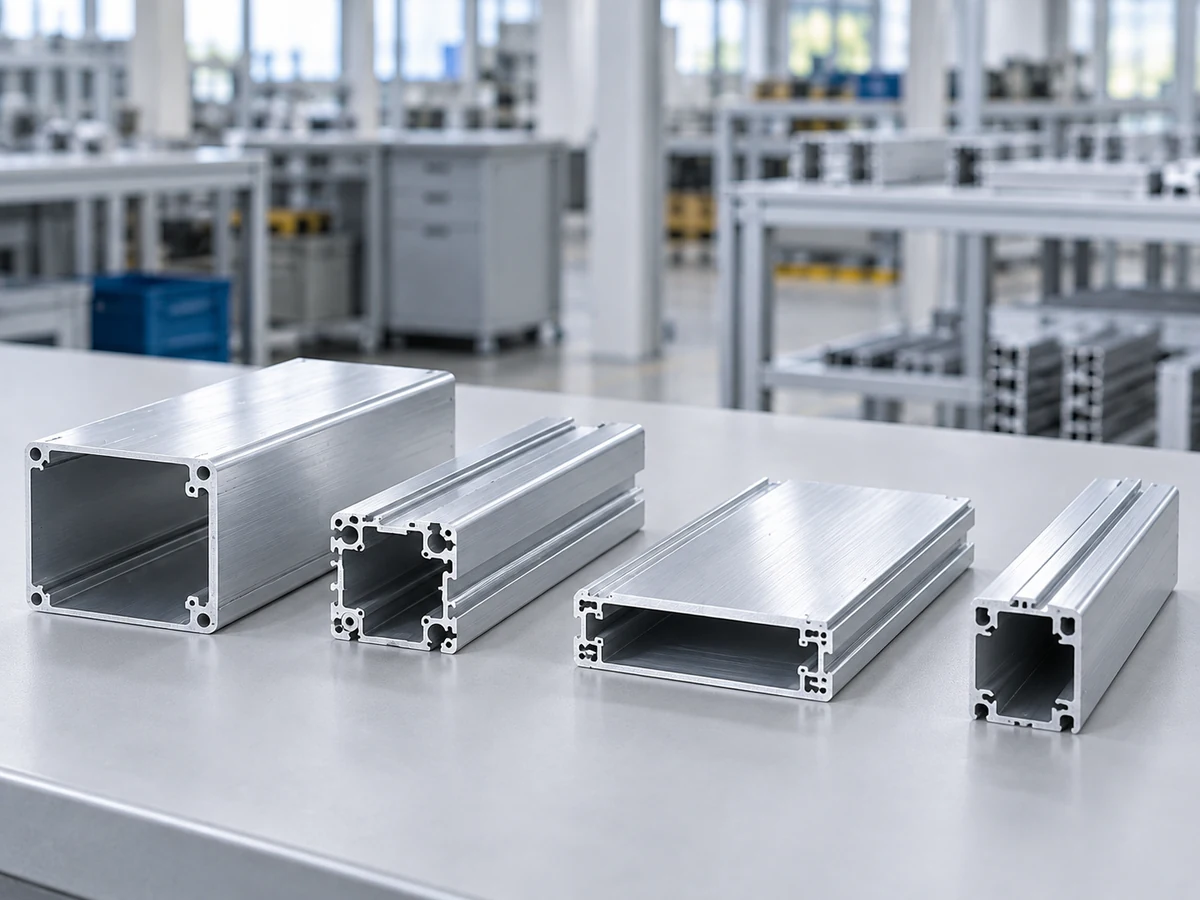
4. Test the decision with difficult and ordinary jobs
Request a trial plan for a representative ordinary job and the most demanding released profile that is within the proposed machine scope. Give the seller stock drawings, alloy and temper if known, incoming length, cut list, batch size, burr and surface requirements, measurement method and the downstream datum. Ask the seller to state any fixtures, blade or feed arrangements included in its proposed configuration. If a row is outside the assessed envelope, exclude it explicitly instead of assuming the sale covers it.
Evaluate the cut blank at the point where your own process takes custody: measured length and squareness against the approved drawing, cut-face and burr condition, visible damage at clamping points, material identification, and repeatability across the agreed sample quantity. Then follow at least one blank through the next real operation. A blank that measures well but cannot be located for drilling, end-panel fitting or finishing does not create accepted enclosure output. Treat a vendor demonstration as trial evidence only for the material and configuration actually shown, under the recorded conditions.
The video below is general Jiurun equipment footage. It shows a saw table and clamping arrangement, not an instrument enclosure, the specific material or profile in this article, a proposed machine configuration, a customer’s job, a trial result or performance evidence.
5. Compare cost and capacity at accepted-case level
Use a time horizon appropriate to your purchasing decision and include actual machine price, approved tooling and fixtures, stock yield and kerf, operators, maintenance, floor and handling costs, inspection, secondary work, rejects and schedule exposure. Compare those with supplier quotations for equivalent released cases or kits and their order quantities, lead times, revision-change charges and incoming inspection burden. Keep uncertain demand as a range; avoid turning a forecast into an assumed machine utilization rate.
Run a low-demand and a high-demand scenario. Ask whether the internal saw would be used for multiple compatible product families or only a narrow sleeve that a supplier already delivers competitively. A production cell can be justified by response time or change control as well as unit cost, but write those benefits as measurable requirements: for example, a maximum acceptable time to obtain a revised blank, with stock availability and downstream capacity verified. Do not count a faster first cut as a faster finished enclosure when finishing, panels or assembly remain the bottleneck.

6. Put the handover and responsibility in the RFQ
For the stock route, name who owns incoming extrusion defects, cutting waste, cut-face acceptance, deburring, secondary machining, identification, finish protection, and final fit. For the kit route, identify missing hardware or panels and who resolves fit discrepancies. For the finished-case route, specify how the supplier proves compliance to the released revision. The useful RFQ is a comparison of accepted items and accountable operations, not three prices headed “enclosure.”
Before approving capital spending, require a written machine configuration, profile-by-profile scope, fixture and tooling list, sample acceptance method, training and service arrangements, and a plan for the jobs the machine will not take. Review warranty and support terms in the actual quotation. Do not assume a feeding specification equals completed-part accuracy or that a catalog example is a performance guarantee.
When each route usually deserves a closer look
- Buy finished cases when enclosure design and finish are stable, downstream work is outside your capability, or accountability for complete delivery matters more than control of the first cut.
- Buy prepared kits when final assembly and customization belong in-house but the supplier can handle complex blank preparation or low-volume variants more efficiently.
- Evaluate a saw when several released designs use compatible, available stock, enough work remains under your control, sample cuts pass an agreed inspection, and the accepted-case economics hold across realistic demand.
Next step: send Jiurun your released profile drawings, stock form, family cut list and acceptance criteria through our contact page. Request a written scope and proposed trial plan for the actual blanks. Keep the finished-case and prepared-kit quotations alongside it so the buying decision remains comparable.