
A cutting shop can count perfect aluminum parts and still ship the wrong unit. The buyer may expect a protected, identified bundle ready for receiving, while the supplier has priced only a wrapper or a packing station. When comparing an aluminum cut-part packaging line with manual packing or a mixed arrangement, start at the customer’s accepted shipping unit and work backward through every handoff. This turns a vague automation request into an investment decision that can be tested.
Aluminum cut-part packaging line: define the shipping unit
Ask the receiving customer for an approved package example or a written acceptance specification. Record the part numbers and revision, count and arrangement, permissible mixed parts, exposed surfaces to protect, orientation, identification fields, lifting method, handling equipment and destination. Separate requirements imposed by the customer from choices your plant can change. A packed length that fits a machine does not automatically fit the customer’s rack or receiving process.
The comparison unit should be a complete shipping unit, not parts per minute at one machine. Draw its path from accepted cut components to collected groups, protection, package formation, label, dispatch and receiving. Identify who owns damage checks and who signs off a revised pack. If the customer has not approved the package, mark it as an open qualification item rather than treating a supplier demonstration as approval.
Map the real input to packaging
Do finished cut parts arrive singly, in preformed groups, or in returnable carriers? List the maximum and minimum job mix by product family and the parts that wait between cutting and packing. Some components leave the saw with burrs, swarf, oil, film or temporary labels requiring separate controls before a finished package can be made. Do not assume the packaging line removes these conditions. Write down the inspection release point and the person who authorizes a batch to enter the packaging flow.
Distinguish a stable repeat family from short runs and late order changes. A high-volume profile family may suit a defined pack recipe; variable cut lengths and mixed kits may need an operator decision or a separate station. Include the actual held-part inventory and the changeover burden in the comparison. A quoted cycle for one tidy stack is useful evidence for that stack only.
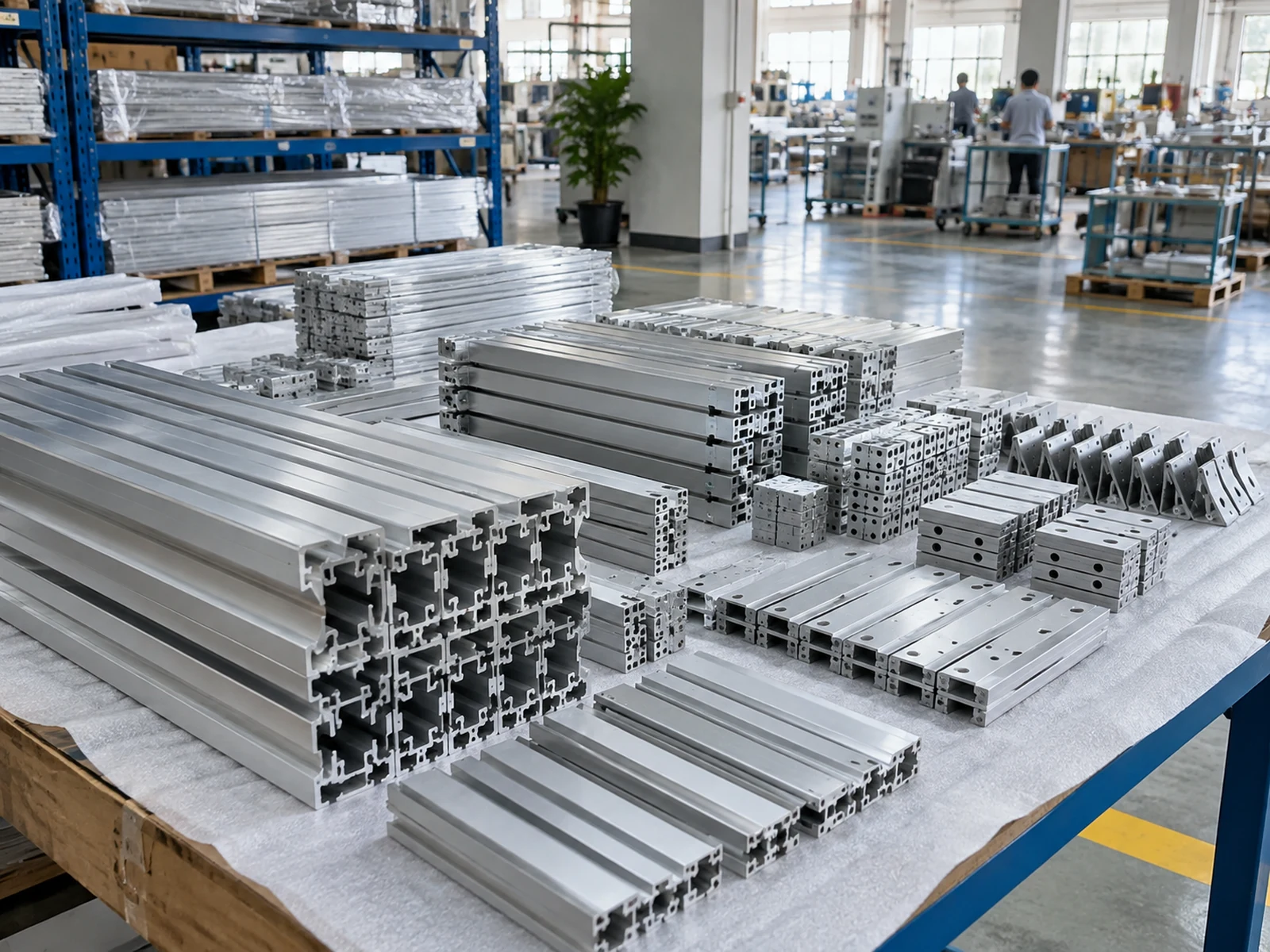
Compare three viable scopes
Retained manual packing: operators collect, protect and identify a shipping unit at existing stations. Quote labor by real order mix, consumables, floor space, ergonomic aids, inspection and peak-day capacity. Manual work can be the right baseline when jobs are highly variable, but a quoted low capital cost must not hide recurring rework or dispatch bottlenecks.
One or more focused stations: keep grouping and exception handling with people while mechanizing a repeat operation such as conveying or wrapping. Confirm where each station starts and stops, how units are transferred, and which steps remain under an operator’s responsibility. Measure the entire unit leaving dispatch, not the station’s isolated pace.
Integrated packaging line: quote collection, transfer, protection, package formation, identification and discharge as one defined system. Ask which tasks are genuinely automated, which require an attendant, and how nonstandard orders are routed. Suppliers of packaging equipment describe conveyors and wrapping as distinct possible elements; aluminum-profile examples also show that wrapping and additional protective material can be combined. Those examples indicate possible categories, not a proven configuration for your parts. Compare the proposed line against the same accepted shipping unit used for the other options.
Protect parts according to the actual failure mode
Surfaces, corners, finish and geometry decide where separation or support may be needed. Ask how the proposed pack keeps parts from contacting one another during the customer’s normal handling chain, and who validates that proposal. The answer may involve spacers, sleeves, trays, film, board or returnable carriers, but none should be specified from a generic photograph. Record package-material ownership and any customer restrictions on waste, labeling or unpacking.
Request a trial plan using representative finished parts and the intended handling route. Observe collection, protection and unpacking; photograph any exposed contact points; record damaged or displaced components by order and pack revision. A supplier’s filmed machine cycle cannot establish transport performance, customer approval or a damage rate for your product. Those claims require your own agreed inspection and shipping evidence.

Build a complete quotation boundary
Request a line-item RFQ using the same product mix and package definition for every bidder. Include infeed and accumulation, handling of held parts, group formation, protection material, packing machine or station, printing and label verification, outfeed, controls, guarding, service access and rejected-pack route. State who supplies compressed air, power, network connections, floor preparation, lifting equipment, consumables, training and spare parts. If an upstream saw or deburr process must change, quote that interface explicitly. Do not let either party silently place it outside the project.
Ask for proposed capacity by product family and by completed shipping unit, including expected operator tasks and changeovers. Set a separate acceptance method for quality, identification accuracy, availability and rework. Compare recurring materials and labor alongside capital cost; a low machine price can leave an expensive manual collection step. At the same time, automation is not automatically economical for low or irregular demand. Keep the decision tied to measured volumes, exceptions and accepted packages.
Use a receiving test, not only a factory demonstration
Before ordering, agree which representative jobs will be run at the supplier’s site and which will be repeated after installation. Include the smallest, largest and most awkward approved families, plus normal mixed-order and held-part situations. Record the setup, operator intervention, finished-unit count, rejects, label checks and remaining manual work. A live trial should establish only what it directly demonstrates; site utilities, shipment handling and the customer’s receiving checks still need separate sign-off.
At factory receiving, verify that the delivered scope matches the quoted boundary, that operators can recover from a stopped or misidentified unit, and that dispatch can distinguish accepted packs from holds. Retain a package revision and sample record so purchasing, production and the customer all inspect the same thing. If acceptance depends on transport testing, include a written plan and owner rather than assuming a successful line run proves delivery.
Video: a general equipment scene
The following video is from Jiurun Machinery’s own channel and shows general saw equipment operation. It is included only to provide equipment context. It does not show or prove the packaging line, the parts or materials discussed here, a particular model configuration, a customer job, a trial, or any shipping or performance result.
Eight questions for your procurement team
Put these questions on one page for every option: What is the customer-approved shipping unit? Which product families and order patterns are included? What enters the first station and what leaves the last? Which jobs need manual exceptions? Where are protection, identity and quality checked? Who supplies materials, utilities and site work? What is the full unit cost at the measured mix? Which tests remain before customer acceptance? If a bidder cannot answer a question, record it as an exclusion or unresolved interface, not as a zero-cost assumption.
For an aluminum cut-part packaging line quotation discussion, send JiurunCut your released cut-part families, a representative pack specification and the retained cutting steps you want to compare. We can discuss the upstream aluminum-cutting boundary and the information your packaging-line bidders need. Packaging-line suitability, customer pack approval and delivered-part performance must be verified for the specific project.
For a narrow count-based example, see our 60-part aluminum cut-part packaging comparison. That example does not replace the whole-line scope and receiving test above.
Further reading: Itipack’s packaging-line categories and an aluminum-profile packaging example from Embalitec illustrate available process categories; they do not validate this article’s proposed scope for a given buyer.