
An aluminum saw for conveyor manufacturing should be purchased for the aluminum work your factory actually retains. Complete conveyor modules, prepared frames, loose side-guide extrusions and raw roller tubes are different inputs to a manufacturing business. Define which of them enter the saw station, and what must leave it, before comparing equipment.
The purchase should connect an approved conveyor model and order to the member drawings used by cutting. Nominal belt width, overall conveyor length and the number of finished conveyors are useful commercial descriptions, but they do not establish the required raw member lengths, end preparation or workload at the saw. This guide explains how to build a complete proposal across frame, guide and roller-tube families while keeping assembly and conveying performance separate.
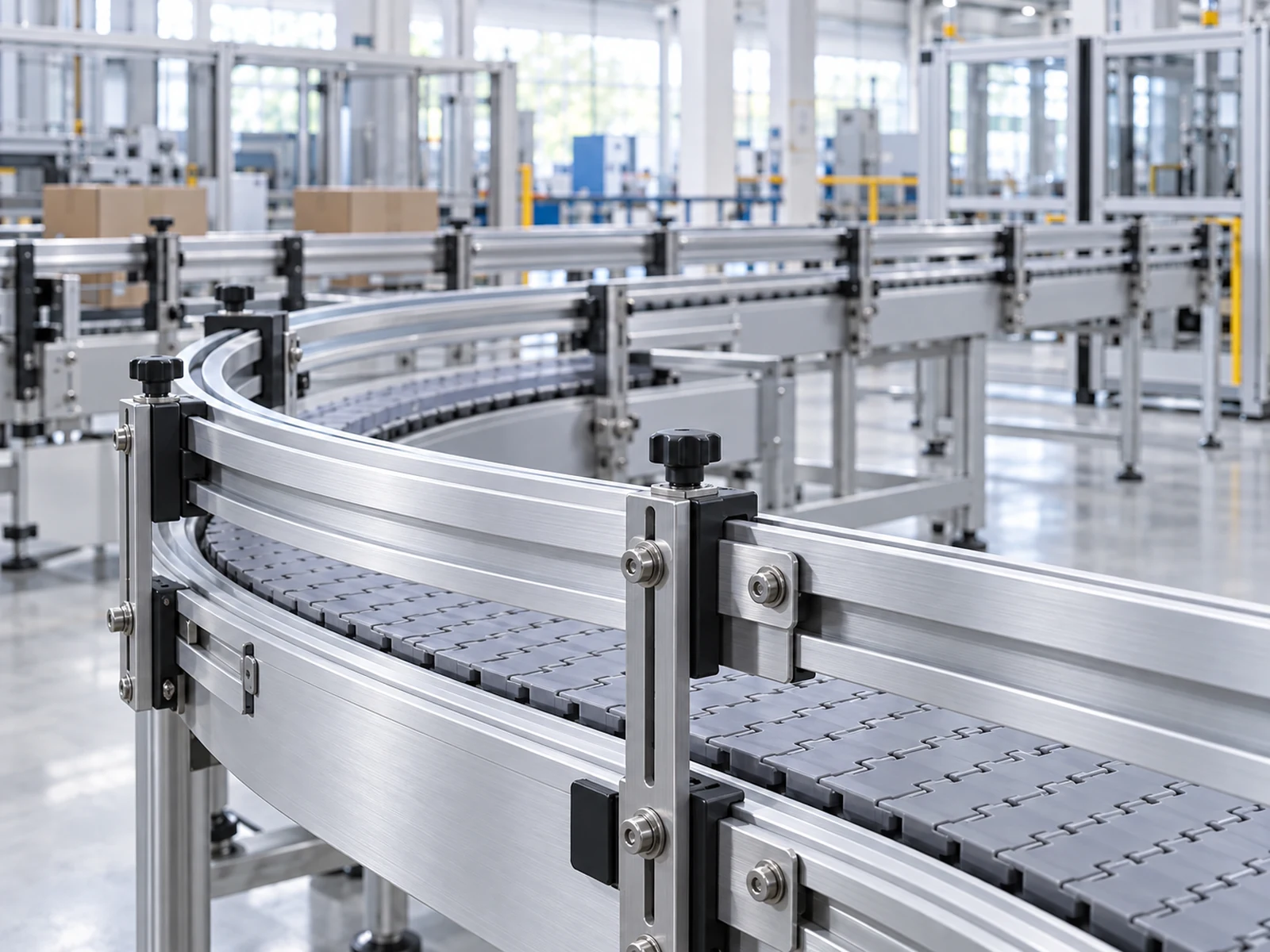
Define the scope of an aluminum saw for conveyor manufacturing
List the complete modules and prepared components arriving from other suppliers. Then list the aluminum members made from incoming stock in your workshop. Identify which frame sections, guides, supports or roller tubes require sawing, and which already arrive cut or fully prepared. A machine quotation should cover the retained tasks rather than all metal visible in a finished conveyor.
For application context, Dorner’s 2200 Series product sheet describes several conveyor arrangements and guiding options, including aluminum side guides. It identifies anodized aluminum tubes with steel bearings in a gravity-roller option. These examples show why the materials and preparation state of a component matter; they do not establish a JiurunCut cutting configuration or the performance of your conveyor.
Separate a raw tube cutting task from work on an assembled roller containing other materials. Likewise, distinguish a loose frame extrusion from a purchased drive module, a complete conveyor bed or an assembly with installed accessories. Identify the actual cutting input in the quotation. Do not infer that a saw intended for aluminum stock also covers a mixed-material assembly.
Where the conveyor design uses a curved or formed member, identify its approved fabrication route separately. A saw proposal does not establish forming capability or turn an assembled curved conveyor photograph into a cut drawing. Show which straight stock preparation remains within the retained saw task and which later operation creates the required form.
Record who owns the approved frame and component drawings. The equipment supplier can review a proposed cut task, while the conveyor designer supplies the required geometry and manufacturing acceptance basis. A saw purchase does not validate belt tracking, transfer behavior, guarding, electrical integration or the finished conveyor’s rated operating performance.
Compare three equipment purchasing boundaries
A manufacturer buying complete conveyor modules may retain only support or accessory member cutting. Its saw inquiry should identify those retained members and their order mix. Count module receiving, integration and testing separately; they should not be included as cutting output merely because the modules contain aluminum.
A manufacturer buying prepared frames but making guides or roller tubes retains a different group of operations. Identify whether the frame supplier delivers finished lengths, prepared ends and interfaces. Keep the retained guide or tube families in the saw review, and make the purchased frame’s acceptance and delivery responsibilities visible in production planning.
A manufacturer building frames and components from stock needs a proposal covering the whole retained range. This may include long frame members, shorter accessory sections and raw tube blanks, each with different contact, end and receiving-operation requirements. Ask the supplier to address these families explicitly rather than confirming one familiar extrusion and leaving the others implied.
| Purchased input | Retained cutting scope | Comparison boundary |
|---|---|---|
| Complete modules | Specified support or accessory members | Member cutting remains separate from module integration |
| Prepared frames | Specified guide and raw tube families | Prepared frame interfaces versus retained component operations |
| Loose stock | Approved frame, guide and tube members | Complete stock-to-accepted-member route for the released range |
Keep the make-or-buy decision consistent throughout the comparison. If the scope changes during purchasing, update the member list and supplier response. A proposal reviewed for accessory work should not become acceptance of full conveyor-frame production through an informal summary.
Translate conveyor size into approved member drawings
Use the released manufacturing list for each model or order. The overall conveyor length and selected belt width can help identify the product variant, but the saw needs the individual member dimensions. End modules, joining features and other interfaces may create a different relationship between the product envelope and the cut member. Have that relationship resolved in the approved drawings.
Do not use belt width as a universal frame cross-member length or conveyor length as a universal side-member cut length. Record the actual references defining each cut, including whether opposite ends have different requirements. Where two visually similar members differ by a detail, use distinct part identifiers so production does not rely on memory.
For guides and accessory profiles, identify the actual section, cut length and end form. Explain the relationship to the conveyor model without turning an application photograph into a production drawing. The existing conveyor side rail drawing checks can support that member-level record; the equipment purchase also needs the other retained families and the complete manufacturing boundary.
Keep revisions tied to the released order. A new drive arrangement, guide option or frame detail can change the retained member work without changing the general conveyor name. State which revision the supplier reviewed and which later cases remain open.
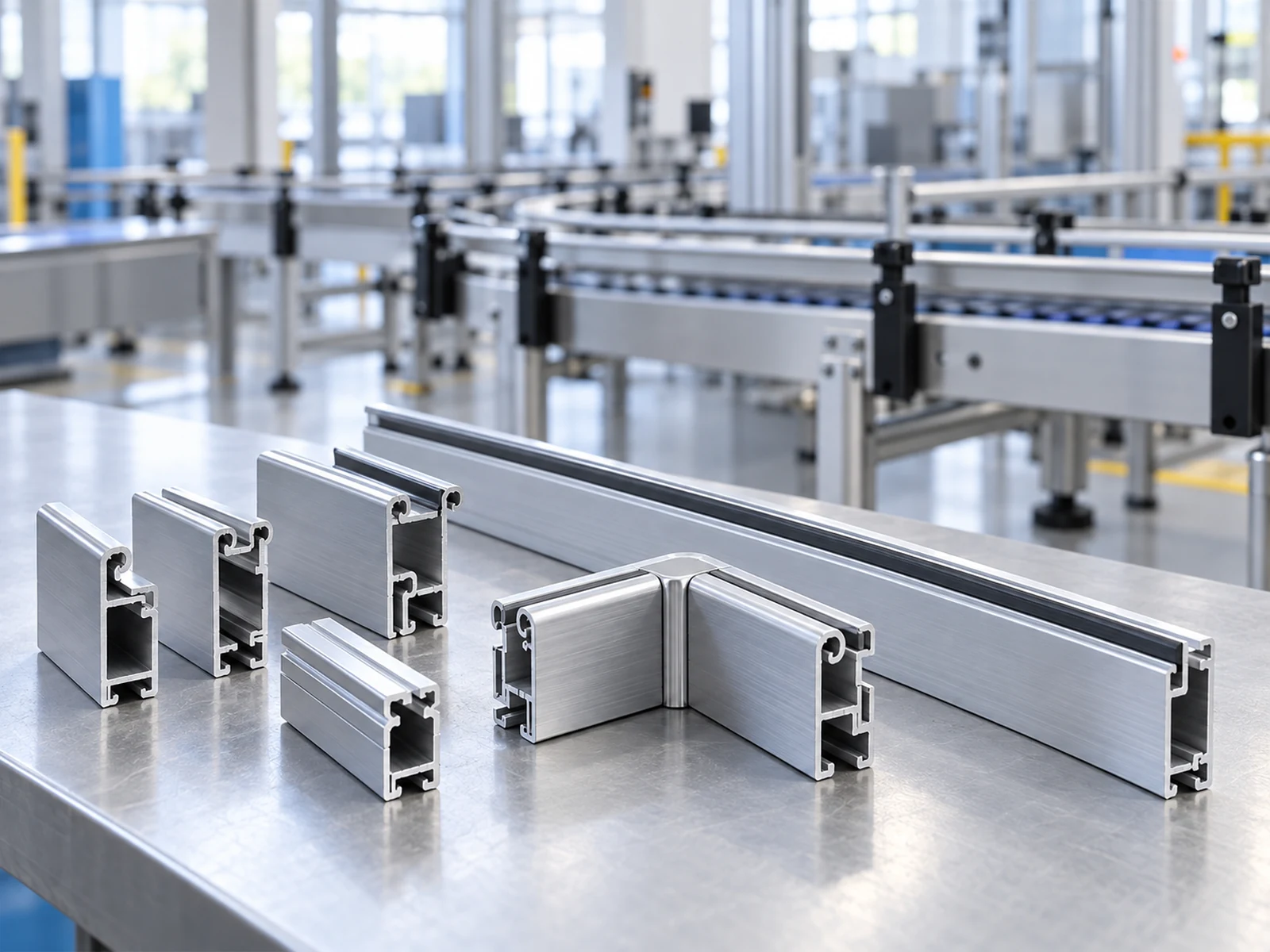
Review sections, finishes and contact restrictions
Supply the actual material designation, section dimensions, stock length and incoming condition for each family. Include photographs of the production stock with its orientation identified. Where long frame profiles and short tube blanks have different preparation or transfer needs, describe those differences rather than reducing the inquiry to a maximum outside dimension.
Ask the supplier how the proposed arrangement supports and holds representative sections. Identify the relevant contact faces, grooves, mating features and finished surfaces. If a surface is already treated, give the appearance or damage acceptance requirement from your manufacturing record. A sample’s attractive appearance does not confirm that it matches the normal incoming stock or proves a production result.
For open, asymmetric or grooved profiles, show the section orientation and end reference. For raw tubes, provide the actual outside and wall dimensions. Do not transfer acceptance from one profile shape to another solely because their outside sizes look similar. Have the supplier identify the reviewed case and any additional sample required.
Describe the handling boundary as well as the machine. Record how stock arrives at the station, what preparation the buyer supplies, what supports are included, and where cut members are collected. A machine-only proposal and a complete cutting route may have different inclusions. Clarify them before comparing prices.
Separate sawing from the next component operation
State what the next operation must receive. A frame member may require subsequent hole making or joining; a guide may need an identified orientation at assembly; a raw roller tube may need further end preparation before other components are added. Include these interfaces in the inquiry while keeping each operation’s equipment and responsibility separate.
A cut-to-length tube is not a finished roller. Ask the receiving process owner to define the cut reference, end condition and inspection requirement needed for the following operation. Record any required machining, assembly or finishing separately. The saw quotation should neither omit a necessary handoff condition nor imply that unrelated operations are included.
Distinguish section size from finished-member acceptance. Published feeding information is not proof of finished-part accuracy for your specific sections. Use the JiurunCut aluminum cutting equipment range to discuss possible equipment, then request the actual proposed model, configuration and sample review basis for the retained work.
Where a quotation uses terms such as automatic or ready for assembly, ask what actions and output conditions are included. Material loading, length changes, inspection and collection can still belong to the buyer. Preserve the stated scope rather than filling those gaps with assumed capability.
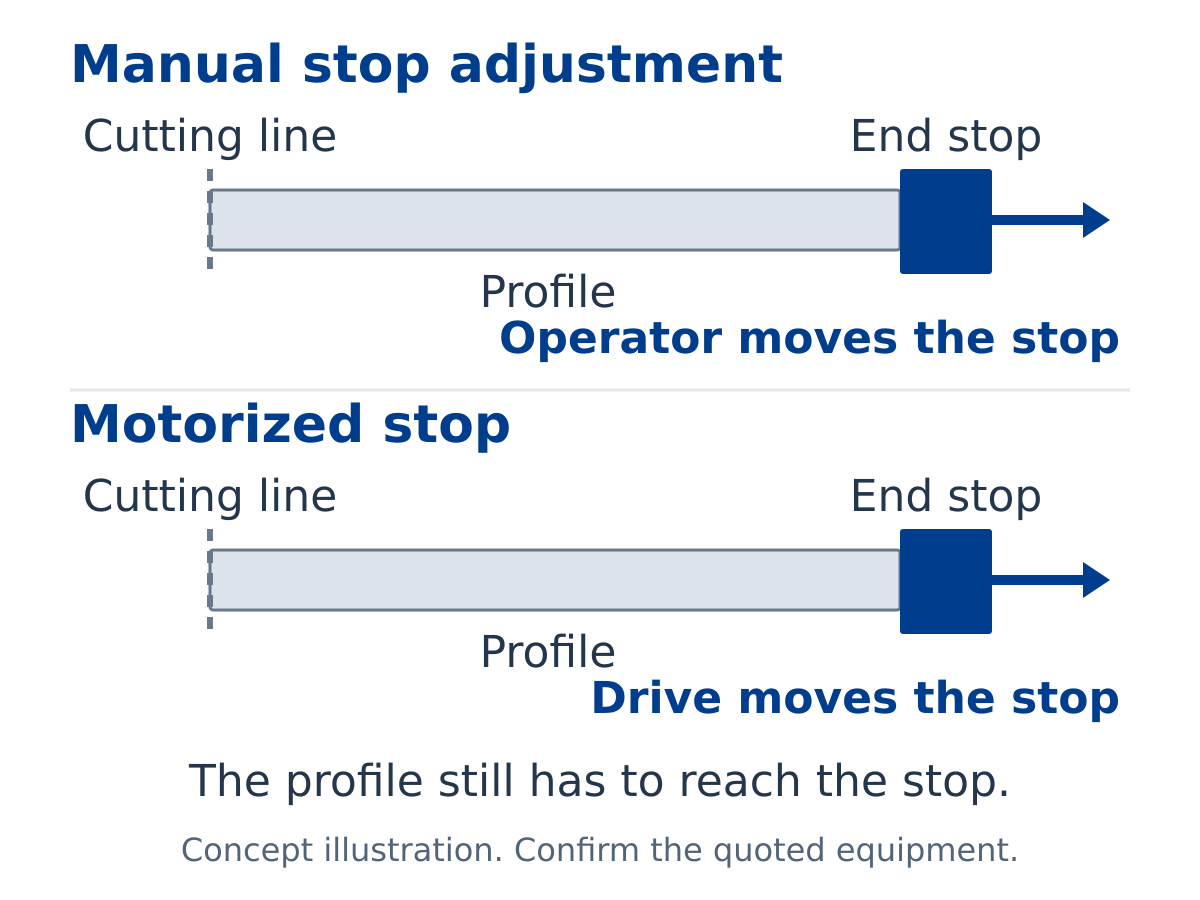
Compare the actual order mix and length changes
Provide representative released orders, not only an annual conveyor count. A run of identical long side members differs from alternating several model lengths, accessory profiles and roller-tube orders. Show the quantity, family, length and next operation for each relevant job.
In a hypothetical workload, thirty members all sharing one section and cut requirement are a different scheduling case from six members in each of five distinct families. Both contain thirty pieces. The latter also requires review of the changes between cases and their material and identification work. These invented counts explain the comparison; they are not machine output, staffing or cycle-time claims.
Ask how length requirements will be entered, checked and changed in the proposed working arrangement. If a quotation includes a positioning or feeding option, have it identified as part of the configuration. Do not equate a general description of length positioning with a verified complete batch or assume that a function shown on one machine is included in another offer.
Review the complete station work: preparation, setting changes, cutting, replenishment, identification, inspection and handoff where applicable. Keep the observed cutting cycle separate from accepted order output. That distinction prevents a short demonstration from being used as evidence for the entire manufacturing mix.
Release members against their receiving operation
Define how completed cutting work is reported. Your factory may release individual accepted members, a frame-member set or a tube batch for a following operation. The record should connect that release to the approved part identifiers and order. Members awaiting inspection should remain visible as held material rather than being counted as accepted output.
Keep frame-member completion separate from the completion of a conveyor. An accepted set can still await a bought drive, belt, bearing or other assembly item. Similarly, an accepted tube batch can still require its next process. Record these dependencies so that delays outside the saw station do not become unsupported conclusions about cutting capacity.
Use the material and revision traceability your actual manufacturing system requires. Similar appearance does not establish that two stock batches or nearly identical model members are interchangeable. Include identification and transfer in the proposal review, using methods compatible with the specified finish and receiving process.
Choose trial samples that settle the quotation
Build the trial around the retained scope. Include a representative frame profile, a guide section creating a different contact situation and a raw tube case if tube cutting is part of the proposal. Select the length or end variation that resolves an open purchasing question. Explain why each sample is included instead of choosing only an easy section for demonstration.
Use the sample cutting trial checklist to record the material, part drawing, requested output and acceptance basis. Identify the actual model and configuration used. Record measured member results, relevant surface observations, exclusions and unresolved cases. Do not describe a requested requirement as an achieved trial result.
Where the demonstrated arrangement differs from the quotation, ask the supplier to explain the relationship. A result for one sample should remain tied to that sample and configuration. It does not confirm every conveyor variant, downstream operation or finished conveyor’s performance.
See JiurunCut cutting equipment in operation
This JiurunCut equipment video provides inquiry context. It is not a trial of the proposed conveyor members or proof of finished conveyor performance. Agree actual stock, configuration and acceptance records for your retained cutting work.
Send a complete conveyor manufacturing inquiry
For an aluminum saw for conveyor manufacturing, send the retained-versus-purchased record, approved frame and component drawings, actual material and stock dimensions, finishes, cut references and end requirements, released order mix and receiving-operation conditions. Identify the sample cases and unresolved questions.
Contact JiurunCut with your conveyor member cutting requirements and request a proposed model and configuration, included support and length-positioning scope, exclusions and a documented trial plan. Comparing that complete retained route makes the saw purchase useful to the conveyor manufacturing business.