
An aluminum saw for sign fabrication should be selected against the profiles and end shapes in your approved sign system, then assessed as part of the complete manufacturing route. Repeated square-cut members, changing mitered frames and curved sign cabinets place different demands on the cutting stage. A machine that produces one attractive corner sample has not yet demonstrated your whole order mix.
Start with the signs you intend to manufacture, identify which components actually require extrusion sawing, and separate that work from panel production, graphic preparation, joining and electrical assembly. This guide is for an industrial sign manufacturer preparing an equipment purchase. It does not approve a sign design, establish outdoor structural adequacy or prescribe an electrical installation.
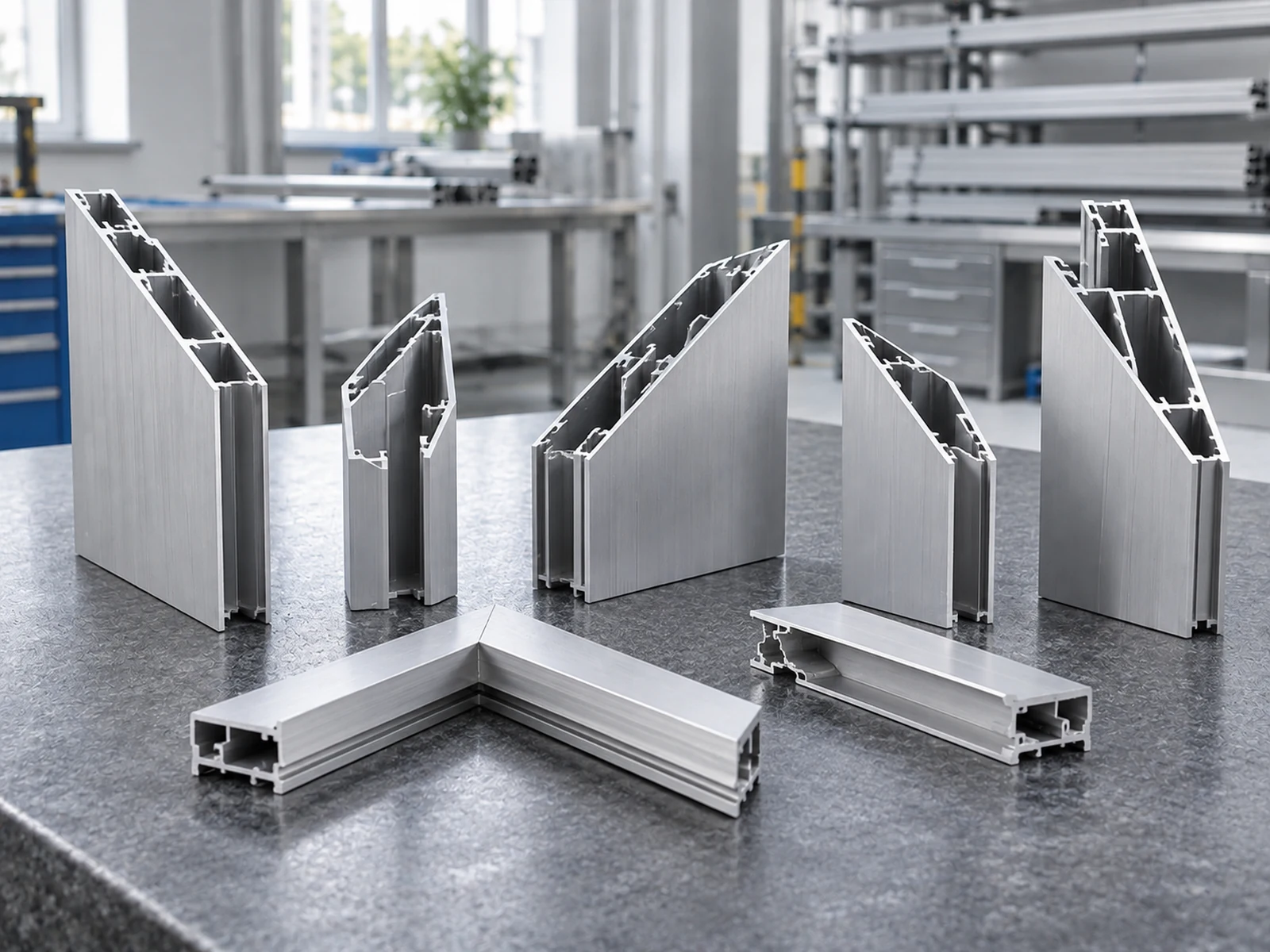
1. Define the sign system for an aluminum saw for sign fabrication
“Sign frame” is too broad to be a machine specification. A rigid sign face, a flexible graphic and a cabinet with an opening face can require different supplied components. Record the approved product family, its material list and how the sign will be assembled and accessed for service. Treat each product family as a defined manufacturing job rather than assuming one standard frame covers the catalog.
Excellart’s sign-kit selector distinguishes face type, number of visible faces, cabinet depth, frame type, trim style and kerf-cutting needs. Those are useful prompts for identifying the product being manufactured. They are choices within that supplier’s systems, not evidence that a particular Jiurun saw can produce every resulting component.
For your own approved system, name the extrusion used for the main frame, each retainer and any separate hinge or cover component. Identify purchased corners and accessories. A two-sided sign may share components or use a different cabinet construction; do not create its cutting requirement by simply doubling a one-sided bill of materials.
The purchasing question is which of these members the proposed saw will deliver in an acceptable condition for the next operation. If a supplied assembly already arrives at final length, keep it outside the cutting workload. If a part needs a local opening or a curved shape, retain that requirement in the manufacturing plan while asking whether a separate process is needed.
2. Translate the assembly into controlled cut-part records
Use released component drawings to define cut lengths and end geometry. The overall advertised sign size, visible graphic area and receiving space for the face are different references. Do not ask the machine supplier to infer all member lengths from a marketing dimension.
Eagle Aluminum’s sign-extrusion guidance specifically distinguishes overall frame size from the dimensions of the inserted sign material. It also describes system components including permanent and removable corners and extrusions that receive sign material. Use the approved details of your actual system to establish the cutting records.
For each member, supply its profile identifier, section drawing, stock condition, required finished length and stated measuring reference. Show both ends with a consistent viewing direction. Mark the surfaces intended to remain visible, the features that must face the sign interior and the permitted contact areas. Record which requirements are checked after cutting and which can only be checked after assembly.
| Component or operation | Information the buyer should release | Scope to obtain from the equipment supplier |
|---|---|---|
| Main extrusion member | Actual section, material, finished condition and both end definitions | Suitability of the offered cutting configuration for that exact input |
| Retainer or removable member | Its own drawing and approved access or assembly relationship | Separate assessment where its geometry or accepted length differs |
| Purchased corner or hinge | Part identity and manufacturer-approved mating arrangement | Which required end operations are included or excluded |
| Face, graphic or cover | Approved material and separate manufacturing route | Explicit separation from the extrusion-saw quotation |
| Curved cabinet or local feature | Approved final shape and required manufacturing sequence | Whether further assessment or a separately quoted process is needed |
This record prevents a broad “aluminum capacity” statement from standing in for a response to a thin retainer, an asymmetric cabinet extrusion or a particularly short member. An unresolved component remains unresolved even when the main frame fits the nominal cutting envelope.
3. Compare repetitive straight cutting with changing-angle work
For a stable family of square-ended parts, examine whether automatic feeding can reduce the repeated measuring and presenting work in the proposed process. The buyer still needs an agreed input condition, replenishment method, accepted output and operator-work assessment. Automatic feeding describes an action in the machine; it does not by itself establish finished-order output or unattended operation.
For a changing mix of mitered frames, compare the offered angle-setting arrangement and the sequence required to produce both ends. Include changes between product families, actual stock presentation, collection and checking. Ask the supplier to explain how the quoted configuration handles the agreed part mix, including the shortest and longest required members. A long straight production run and many small angled orders should not share an unexplained output promise.
The company-provided Jiurun brochure identifies JR-455CNC as a 90-degree cutting model and JR-550Q as an angle-cutting model. These are starting points for a discussion, not interchangeable answers. Request a current, configuration-specific response to your drawings before selecting either route. Confirm the supplier’s angle convention rather than converting a drawing’s miter notation directly into a machine-setting assumption.
If an offer includes double-head or automatic angle functions, ask which released members and end combinations they cover. Do not assume simultaneous end cutting, every cabinet depth, or every required minimum length from a category name. An excluded member needs a separate production route; it cannot disappear from the purchase comparison.
Compare eligible offers on the same boundary: released stock at the agreed entry point through accepted, identified cut components at collection. An offer measured only while the blade cuts and one measured through loading, changes and checking describe different work. Keep that difference visible before comparing output, staffing or cost.
4. Keep the complete manufacturing route in the quotation
The saw is one production stage. Your sign may also require holes, local notches, joining, surface treatment, face production, graphics, purchased accessories and separately controlled electrical work. Allocate each required operation to its actual provider or workshop stage. An extrusion cut to length is not automatically a finished cabinet.
A curved sign deserves particular attention. Confirm the approved process route and the delivered stock state with the responsible suppliers. Do not interpret a catalog’s kerf-cutting option as permission to improvise repeated slots, bend a profile or change its section. The selected saw’s proposed role must be described explicitly, including any work it cannot perform.
Write the scope of supporting equipment alongside the cutting machine. Specify where full-length stock is stored, how it reaches the agreed entry point, who presents it, where accepted members are collected and how they pass to assembly. Ask whether quoted racks, supports, fixtures and collection equipment are included, separately priced or buyer-provided.
Keep special fixtures configuration-specific. The supplier should assess the actual section and approved task. A general workshop photograph, another customer’s sign or a familiar model name does not establish that a suitable fixture is included. Request the offered item’s identity and its relationship to the demonstrated job.
Use a scope register with one line for each required component family and operation. Mark the response as confirmed, conditional, excluded or separately supplied. Do not turn a conditional reply into acceptance while it still depends on missing drawings or samples. This is particularly useful when comparing a saw-only offer with a larger cutting-cell proposal.
5. Define acceptable appearance and a usable assembly handover
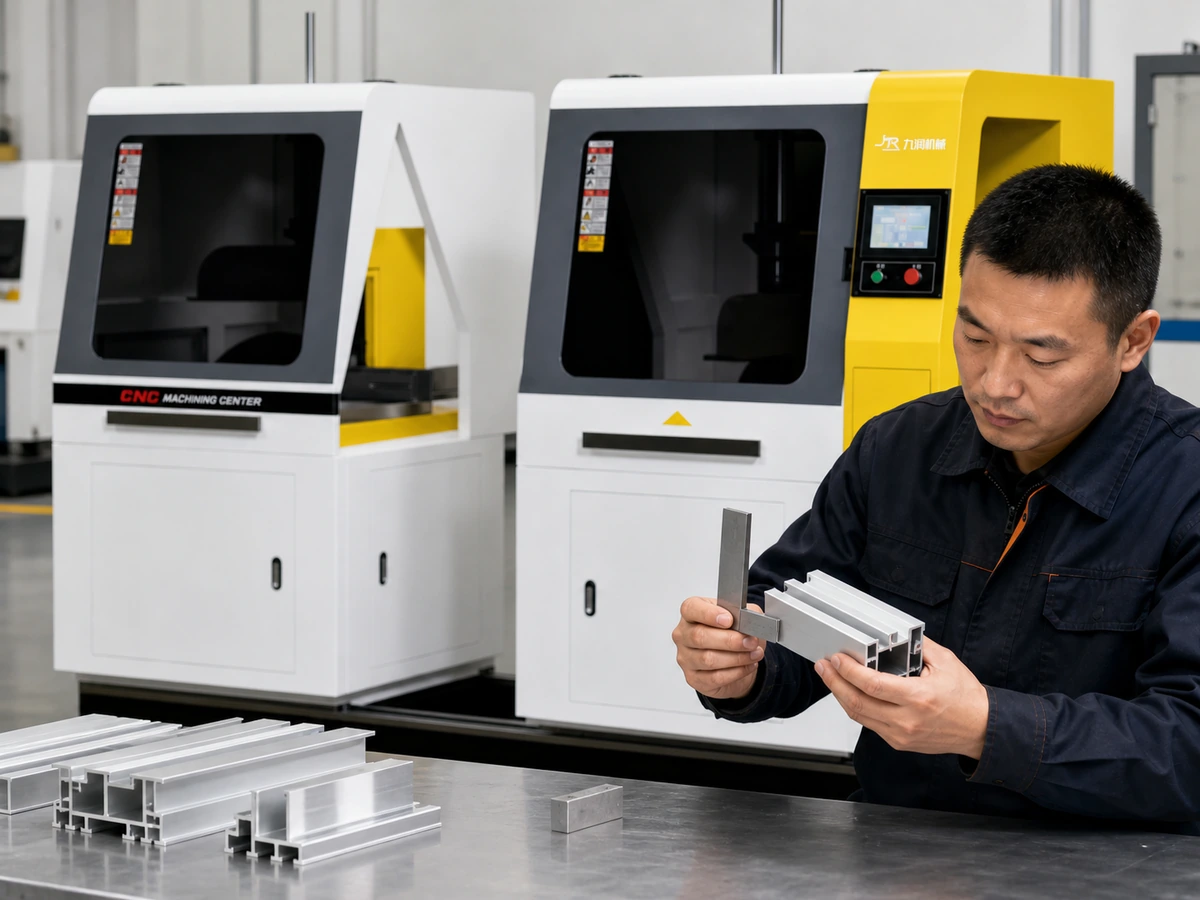
Sign frames are seen as complete products, so identify the acceptance condition at the cutting handover. State which finished surfaces are visible and what handling condition is required. Obtain the responsible supplier’s proposed assessment for those surfaces and the actual incoming finish. Do not convert “clean cut” into an unstated guarantee that subsequent handling or assembly cannot mark the part.
Separate cut-stage length and end checks from complete-sign checks. The saw supplier can be asked to respond to released part requirements; a usable opening face or removable member also depends on its approved mating parts and subsequent assembly. Specify who checks that relationship and at which stage. A failure observed in the assembled sign needs evidence before assigning its cause to cutting.
Collect members with their product-family identity and required orientation preserved. Retainers and frame members may look similar while serving different roles. A collection method should allow the next operator to distinguish them without reconstructing the order from loose, unlabelled pieces. Define how an incomplete or held component set will be identified so it is not mistaken for an assembly-ready sign.
Where graphics or faces are intended to be changed, retain the approved replacement and service-access arrangement in the assembly acceptance record. Do not claim that a saw-cut member alone proves convenient future access, weather performance or electrical safety. Those conclusions belong to the complete product and its responsible assessment.
Build an order mix that separates the equipment routes
Prepare a quotation comparison with one row for each released sign family, rather than one row for each machine model. For each family, list the extrusion members the saw must produce, the accepted end shapes, the number needed per order and the route for work outside the saw. Include the retainer or removable member when the product needs it. A quotation covering the main cabinet extrusion alone may leave a substantial part of the manufacturing requirement with the present workshop.
Use that comparison to test three possible arrangements: one offered station covering the assessed mix, separate confirmed straight-cut and angle-cut routes, or a deliberately limited purchase with selected components supplied pre-cut. These are purchasing alternatives, not recommendations that any named machine can perform an unassessed task. Ask each bidder to state its supported families and exclusions before comparing the commercial totals.
A separate route can be reasonable when it is defined. It becomes a scope gap when an offer relies on another machine, purchased finished member or factory operation that has not been included in the production plan. Record who supplies that remaining work, what output it delivers and what evidence supports the required handover. Also show the changes between the sign families that the proposed equipment must cover. An explanation based on a long run of one profile does not settle a workshop dominated by varied short orders.
Use order-level evidence rather than a total cut count
Invented purchasing example: a released family A order needs four main frame members and four retainers per sign. A family B order needs four different main members and two separately defined access members per sign. Twelve A signs require 48 main members plus 48 retainers, or 96 accepted components. Eight B signs require 32 main members plus 16 access members, or 48 accepted components. The combined workload is 144 components across those defined families, not 144 copies of one convenient profile.
If all 80 main members are ready but only 40 A retainers and 12 B access members have passed the specified release checks, the available quantities support at most ten A sets and six B sets on this deliberately simplified list. The other main members remain unmatched. The result is an upper bound for the identified cut-component handover; it says nothing about complete sign assembly, face availability, structural suitability or electrical approval.
Ask the supplier to explain how its proposed arrangement addresses this mix and the required release order. Preserve the actual end requirements, input sections and inspection conditions in that explanation. Time observed for one simple component should not be multiplied into a claim that all 20 signs will be ready in the same period. The inquiry needs an assessed route for every required component, including held work and work performed elsewhere.
Resolve two purchase questions before choosing a configuration
Must every operation be included with the saw? No. A limited cutting station can be an appropriate purchase when the buyer explicitly retains the remaining stages and confirms their handovers. Compare the price against that agreed limited scope. Do not call the offer a complete sign-production solution when faces, graphics, local features or assembly remain outside it.
Can one successful miter sample settle the selection? It can support the particular assessed component under the recorded conditions. It does not resolve a different retainer, another visible face arrangement or an untested order mix. Request the remaining evidence that changes the purchase decision, and keep the conditional families separate from confirmed production scope.
Request representative evidence for the proposed order mix
Select a manageable group of released jobs that exposes the actual purchasing risks: a repetitive straight member, a changing-angle frame, a different retainer and a member with a difficult agreed handling requirement. Include a component that needs another process so the exclusion and handover can be checked. Explain why these jobs represent the intended production mix.
Before reviewing a demonstration, agree its configuration, supplied stock, required results, collection boundary and acceptance checks. Record what was observed and what remained outside the exercise. A sample may support a limited component assessment without establishing a whole-day production result.
For workload evidence, retain quantities by part family and order rather than only a total number of cuts. Record the time boundary and included work: presenting stock, changing the task, cutting, collection and checking. A count of blade actions cannot establish that all parts for the required signs were accepted and ready for assembly.
Compare the demonstration configuration with the actual offer. If a fixture, support or collection arrangement used for the evidence is absent from the quotation, resolve the gap before using that evidence to justify the purchase. Preserve unassessed work openly and request the missing assessment; do not extrapolate from a successful simple member to the whole catalog.
6. Prepare a focused sign-fabrication equipment inquiry
Send the approved product families, component drawings and material records, with quantities and required release dates. Include stock lengths, both end shapes, measuring references, agreed tolerances, visible-surface requirements and the proposed cutting-to-assembly handover. Identify separately supplied faces, graphics, connectors and other manufacturing stages.
Ask for a response that names the offered machine and configuration, maps each required component to a confirmed or conditional scope, lists exclusions and identifies the evidence needed to resolve them. Request the complete supporting-equipment boundary and a representative workload assessment. These answers make an aluminum saw for sign fabrication comparable as a production purchase.
Contact Jiurun with your actual sign profiles and released cut-part records to request a configuration assessment. Describe the whole cutting job and the output your assembly stage needs. Suitability, trial arrangements and any unresolved requirements need specific confirmation; this guide does not promise that one machine covers every sign system.
See the equipment stage in context
This Jiurun equipment video provides general cutting-stage context. It does not demonstrate the sign families in the invented example or establish that the shown configuration is included in your offer.