
Aluminum ceiling profile cutting needs a more precise inquiry than “a machine for metal baffles.” A ceiling product may be described by its visible appearance while the saw supplier needs the actual workpiece construction, material, section and required cut. Without those inputs, a quotation can refer to an attractive finished product without establishing how its parts will be manufactured.
Begin with the ceiling system that has been selected for the project and the work your factory will undertake. Identify the components supplied as aluminum stock for cutting, the items received finished and the operations carried out elsewhere. Then compare the proposed saw with the approved cutting requirements. This avoids treating the ceiling’s completed appearance or acoustic description as a specification for the cutting machine.
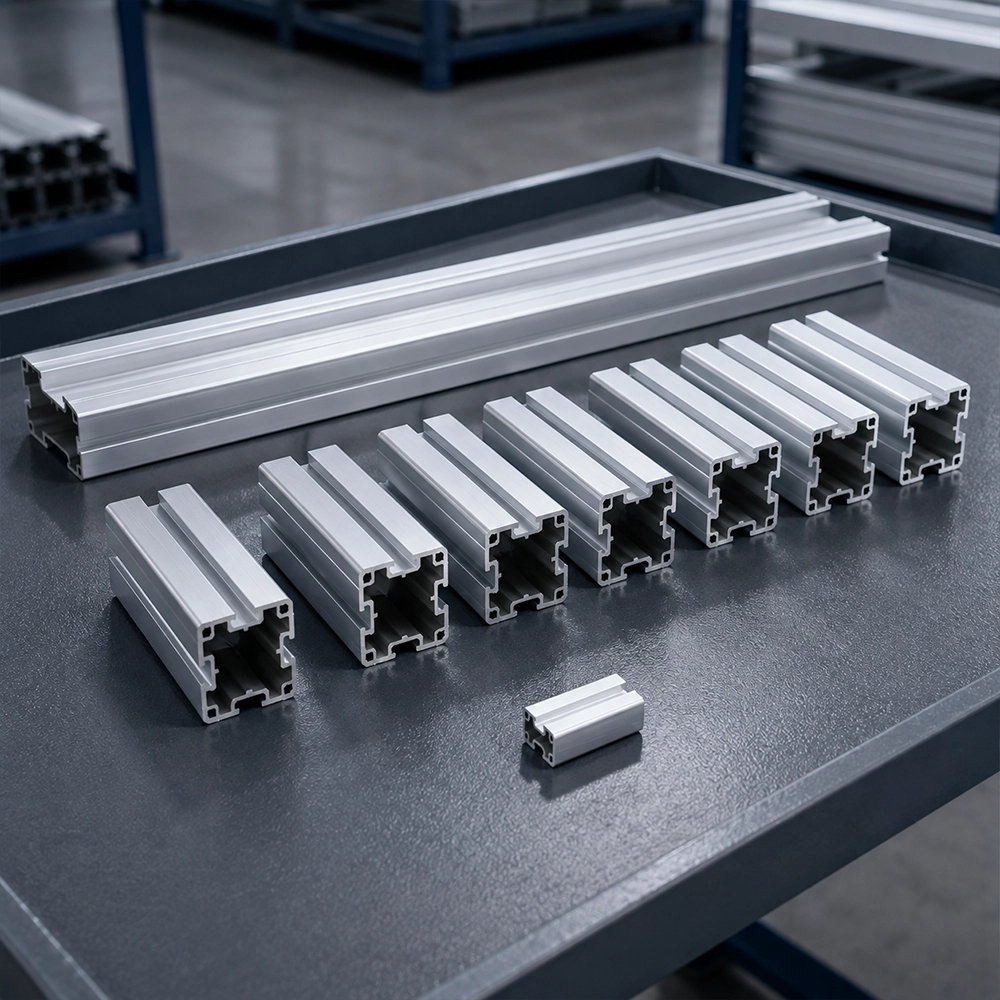
Define aluminum ceiling profile cutting from the actual baffle input
Product names do not reliably identify machine input. The Hunter Douglas Tavola Straight range, for example, lists aluminum or steel and different product options. This illustrates why a metal-baffle name does not define one material or one supplied workpiece. Obtain the actual stock information for your own approved ceiling component.
For your inquiry, state the actual component construction. Provide a section drawing, material information and the form in which it reaches the cutting stage. If it is extruded aluminum stock, identify that stock rather than sending only a photograph of the installed ceiling. If the intended item has another construction or material, keep it visible as a separate requirement; do not assume an aluminum saw quotation covers it.
Record any separate pieces associated with the baffle. A cover, carrier, end closure or other item may have its own manufacturing or purchasing route. Ask which of these will actually be cut on the proposed equipment. A complete ceiling component list and a cutting-machine work list serve different purposes, and both should remain understandable.
Where the incoming form is not yet decided, ask for a conditional response based on clearly stated inputs. Resolve the material and section before treating the quotation as confirmed. A similar finished outline is not proof that another construction can be fed, held and cut in the same proposed arrangement.
Translate the approved ceiling layout into individual part requirements
The ceiling layout shows where components belong. The cutting schedule defines what each individual component must become. A room dimension, a spacing between baffles and the length of a supplied profile are different records. Do not convert every architectural dimension into a saw setting without the applicable part definition.
Obtain the approved length and end requirements from the responsible ceiling-system or project parties. Record the part identity, revision, reference surfaces and quantity. If several components share the same section but have different lengths, list those lengths explicitly. Identify any unresolved end detail rather than letting it disappear inside a general statement such as “cut to site size.”
Project-specific layouts can introduce a production mix that a single repeated sample does not represent. One order may use repeated lengths, while another approved schedule contains several distinct lengths or destinations. Show both types of work if they are part of the intended purchase. Ask the supplier to explain which requirements its proposal confirms, not simply whether it can cut a familiar profile.
Keep site changes separate from the released manufacturing schedule. If a project party revises a dimension, obtain the applicable updated component requirement. A changed room measurement does not automatically authorise a particular cut or alteration of other component features. The cutting team needs a released record, not an interpretation of an informal site message.
Make exposed ends and decorative surfaces explicit in the comparison
A ceiling profile can be viewed from several positions in the completed room. Identify which surfaces and ends are exposed under the selected design. State their required condition using the applicable part and finish information. Do not assume that an end hidden in one layout will be hidden in every order using that stock.
Where an end closure is specified, obtain its applicable interface information. The cut length, end face and closure are related through the actual product detail, not through a universal allowance. Ask the responsible product party to resolve that detail before assigning a machine requirement. A cut face that appears neat does not, by itself, demonstrate the selected closure’s fit.
Record whether cutting occurs before or after the specified finish. Include actual coating, decorative surface and protective-film information where relevant. Ask the supplier to describe contact points, support and output handling for representative material. A proposal should distinguish confirmed handling scope from conditions that still require a sample or clarification.
Use agreed observations rather than broad promises such as “no marks on any finish.” Keep the actual stock, finish condition and machine arrangement with any demonstration record. A satisfactory observation for one material does not automatically extend to another finish or section. The separate guide to protecting visible aluminum surfaces during cutting provides a focused handling discussion.
| Buyer requirement | Information needed for comparison | Assumption to resolve |
|---|---|---|
| Visible profile faces | Actual finish and exposed-face references | Which machine and transfer contacts are proposed? |
| Visible end | Approved end geometry and appearance requirement | Is later end treatment part of the route? |
| End closure | Selected component and applicable interface drawing | Which requirement defines the profile length? |
| Destination-specific part | Controlled identity and released length record | How is its association preserved after cutting? |
Worked example: a clean sample face does not settle a decorative stock requirement
Consider another invented comparison. The supplier reviews an uncoated extrusion sample, while the intended order uses the same approved section with a decorative finish. The sample can help explain the section geometry and a limited cut observation. It cannot show whether the proposed stock contact and transfer arrangement meets the purchaser’s decorative-face requirement.
Identify the material condition associated with each item of evidence. Ask whether the quoted proposal assumes cutting before finishing or cutting already finished stock. Show which faces are exposed in the applicable component record and identify the observations still needed for the intended material. Do not turn an attractive photograph into a universal promise of mark-free output. Request an applicable confirmation or an explicit information gap.
The two offers may also end at different boundaries. One might cover cutting only, with later end treatment and destination identification assigned to the buyer. Another might include a stated output-handling arrangement. Reconcile those inclusions before comparing their prices. A better surface observation on one sample does not automatically close the missing downstream scope in either offer.
Use the purchasing record to distinguish section suitability, observed cut-face condition, decorative-face handling and the remaining work. Each needs its own applicable basis. If a finish requirement remains unresolved, retain it as an open row rather than claiming that the entire ceiling product has been accepted. The selected ceiling-system parties continue to determine product and project requirements.
Assess the saw against the real section and the length mix
Provide the full section geometry and actual dimensional requirements. Include stock lengths, the range of finished cut lengths, end angles where specified and expected quantities. Ask for a response tied to the proposed model and configuration. Neither a CNC label nor a photograph establishes that the quoted arrangement covers every family in your schedule.
Request confirmation of how the actual section would be supported, fed and held. If profiles have different internal or external features, show those differences instead of grouping them only by overall width and height. The same bounding dimensions do not establish identical workpiece behaviour in the proposed process.
Describe the shortest and longest planned outputs, including their transfer to the next stage. The machine’s stated cutting scope and the proposed support arrangement should answer those requirements together. Record handling equipment or work excluded from the offer, so an apparently complete quotation is not compared with another that explicitly includes those items.
Consider an invented scheduling example: an order contains 30 repeated-length components for zone A and 30 components with several approved lengths for zone B. Both zones require 30 pieces, but the second schedule cannot be demonstrated by repeating the first zone’s setting. These are illustrative quantities, not an actual ceiling plan or an output-rate claim.
In that example, a useful proposal identifies how the released length records are used and how completed pieces remain associated with their destinations. Ask whether the offered functions support that work and what remains an operator or documentation responsibility. Do not infer a project-file import or automatic identification function unless it is explicitly confirmed.
Worked example: thirty pieces are not necessarily the same demonstration
Extend the invented zone comparison with a released zone B schedule containing eight B1 pieces, twelve B2 pieces and ten B3 pieces. The three controlled records specify different lengths, while the section is the same. Thirty pieces made only to the zone A requirement still produce a total of thirty, but demonstrate none of the three required zone B quantities. These identifiers and numbers are a planning illustration, not recommended ceiling dimensions.
The buyer can use a family-level comparison to make the purchasing question clear. Ask the supplier which released records are included in the proposed demonstration, which output quantities will be observed and how each result will retain its part identity. If the demonstration addresses only one row, record that limited scope. Do not describe a thirty-piece run as proof of the complete project mix merely because its aggregate quantity matches.
Compare the proposed way of working with the factory’s actual responsibility. A supplier may offer an operator-entered length process while another describes importing a schedule. Neither description establishes that the proposed equipment can interpret this buyer’s file format or preserve destinations. Request confirmation of the offered function using the actual proposed inputs, and list manual preparation or record work that remains outside it.
The buying decision includes the handover after the observed cuts. The next stage needs the right controlled lengths for the right destinations, with disputed pieces kept visible. An unresolved B2 result should not be relabeled B3 to make a count complete. Ask how the proposed arrangement records that distinction and who receives the cutting observations. This is a process-scope question; it does not prescribe operating steps or demonstrate a production rate.
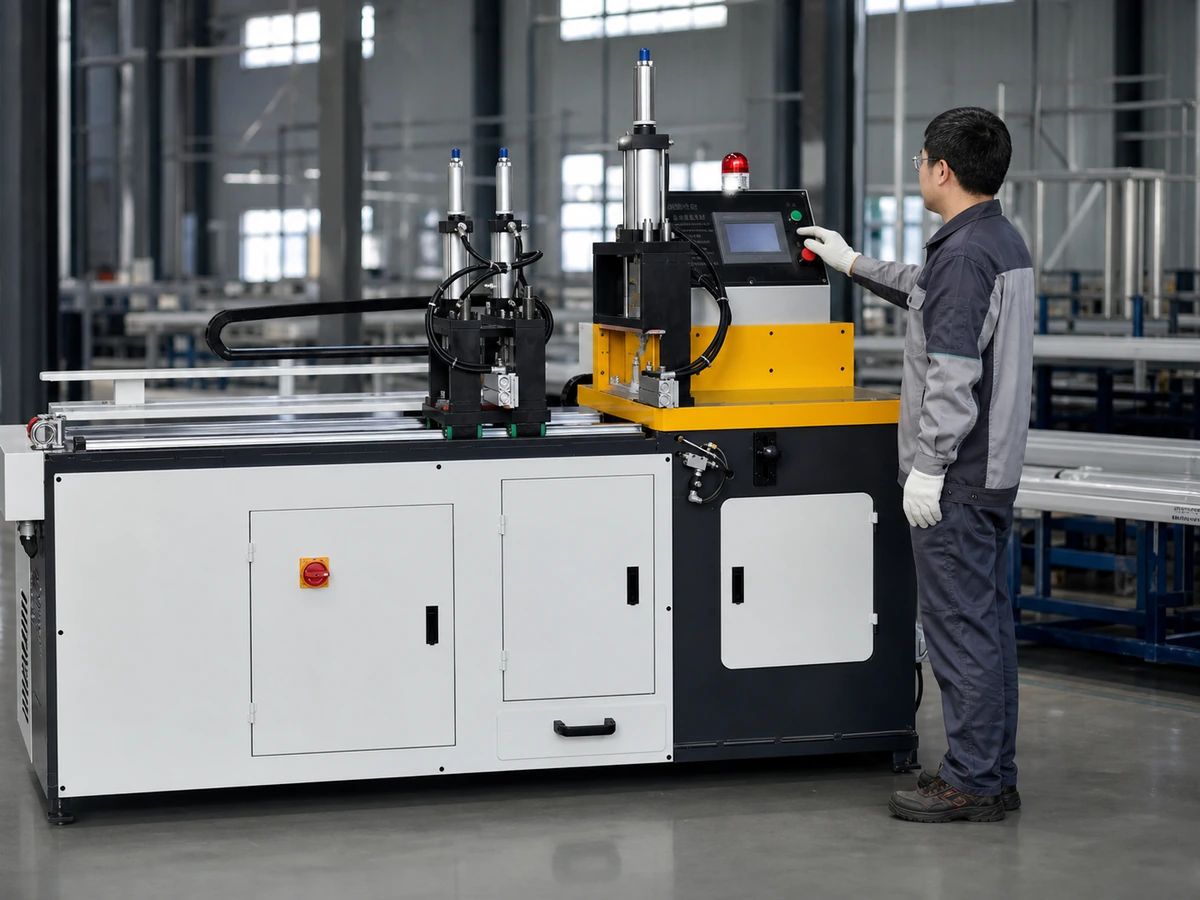
Keep cutting evidence separate from ceiling-system performance
A cutting demonstration can establish observations about defined parts under its stated conditions. It does not demonstrate the completed ceiling’s acoustic behaviour, fire performance, suspension requirements or installation suitability. Keep those requirements with the selected ceiling system and the responsible project parties.
The Tavola product information includes different perforation and acoustic-material options. That is another reason to specify the actual product configuration rather than treating a cut aluminum length as a complete acoustic solution. Do not transfer a performance description from one configuration to another or assign it to a cutting machine.
List further manufacturing operations separately. If the component requires openings, perforations, additional features or assembly after sawing, identify the process responsible for them. A supplier’s confirmation of cutting should not silently become confirmation of those later operations. Likewise, a finished purchased component should not be counted as work performed by the saw.
Select representative material and lengths that resolve the open purchasing questions. Agree how observations will be recorded against the approved part requirements and retain the actual drawing revision, configuration and conditions. Separate dimensional checks, surface observations and any subsequent interface decision. Feeding repeatability alone is not the finished component’s accuracy.
If an observation is unresolved, record what remains to be clarified and who must respond. A conditional proposal with a clear information request is more useful than an unsupported assurance that the machine produces every ceiling baffle. Use the demonstration to close defined manufacturing questions, not to approve the architectural system.
Build a ceiling profile cutting inquiry around the actual stock and released work
Send the selected ceiling component information together with the cutting-only schedule. Include actual section and part drawings, material and construction, revisions, finishes, stock lengths, required cuts, quantities and the expected mix of repeated and changing lengths. Identify exposed surfaces, end details and the destination record required for each family.
Ask the quotation to specify the proposed machine model and configuration, confirmed cutting families, support and transfer scope, optional functions, exclusions and unresolved inputs. Keep other materials, purchased items and later manufacturing operations separate. This allows offers to be compared against the same factory task.
Send Jiurun your aluminum ceiling profile cutting requirements with the actual stock drawings and released component schedule. Request a proposal for the defined aluminum cutting work. The strongest inquiry connects the equipment to the parts your factory will make while preserving the ceiling system’s separate product and project requirements.
Use an equipment video to discuss the cutting stage
This Jiurun cutting video provides equipment context. It does not demonstrate the approved ceiling stock, decorative surface requirement or completed ceiling-system performance for your project.