
A faster saw is a useful investment when its additional usable cutting capacity helps the factory deliver the required finished output. It can be a poor capacity investment when the same parts must still pass through a slower receiving operation. Aluminum saw bottleneck analysis asks where the purchase changes the result of the whole production route, rather than which machine has the most impressive cycle figure.
Start with one named part family, an agreed production period and a defined completion point. Compare the current route with the proposed route on that same basis. The examples below use invented numbers to show the purchasing logic. They are neither Jiurun machine ratings nor forecasts for an actual factory.
Define the output your purchase must improve
“More capacity” needs a unit and a destination. A saw may deliver individual blanks while assembly delivers kits containing several different blanks. Inspection may release a batch rather than every piece immediately. Counting all three as parts per hour can create a false comparison even when each department reports its own number correctly.
For your decision, specify the required accepted output: for example, one particular blank ready for an agreed receiving operation, or one complete product ready for shipment. State which operations lie inside the comparison. Keep quality criteria, material, drawing revision and product mix fixed unless a proposed change explicitly includes their reassessment.
The Lean Enterprise Institute’s discussion of company bottlenecks highlights the difference between improving an individual function and improving the broader system’s output. It also asks what will limit the business after an existing constraint is improved. These are useful questions for a saw purchase; they do not identify the limiting operation in your factory.
Separate output from other valid purchase purposes. Replacing unsupported equipment, meeting an independently established part requirement or reducing a particular workload may justify investment even without a higher line-output limit. Name that purpose instead of presenting every equipment purchase as extra production.
Put aluminum saw bottleneck analysis on a comparable basis
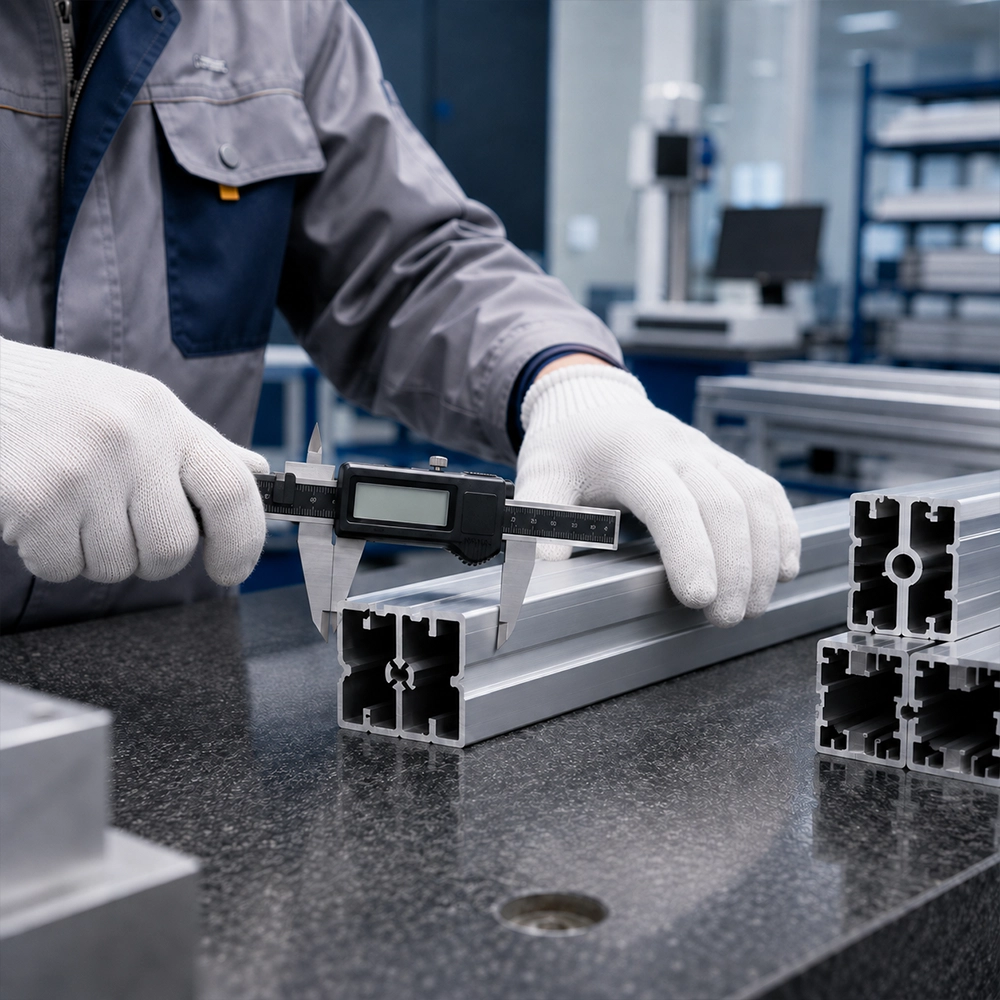
List the actual route from available stock to the defined accepted output. Depending on the job, it may include stock preparation, cutting, an agreed finishing step, inspection and release. Do not add a deburring or cleaning operation merely because a generic diagram includes one. Use the buyer’s approved route and make unresolved operations visible.
For each relevant step, record the quantity processed, usable time, required setup work, interruptions and accepted output during the same representative period. A supplier’s isolated demonstration, a machine’s nominal cycle and your plant’s shift result have different boundaries. A count of completed cutting cycles does not establish the number of accepted blanks delivered onward.
Then identify shared resources. Two machines might need the same loading person, inspection station or downstream fixture. Adding their separate maximum outputs assumes simultaneous access that may not exist. A scheduled outside service also needs its actual receiving and return conditions; it cannot automatically be treated as a continuously available in-house station.
Use consistent batch-output measurements for the cutting input. Leave missing information unknown. An unexplained empty cell must not become unlimited capacity simply because the saw supplier has supplied a more detailed quotation.
A faster saw may leave the same output limit
Consider an invented route for one unchanged part. Every finished part requires one accepted saw blank, one finishing operation and one inspection. Assume independent stations, ample stock, no rejects, no shared resources and steady operation. The stated hourly capacities use the same available-time basis. Under these deliberately simplified conditions, the smallest station capacity gives an upper bound on sustained route output.
| Illustrative route | Saw blanks/hour | Finishing parts/hour | Inspection parts/hour | Route upper bound/hour |
|---|---|---|---|---|
| Current | 120 | 100 | 150 | 100 |
| Faster saw only | 180 | 100 | 150 | 100 |
| Finishing change only | 120 | 140 | 150 | 120 |
| Both changes | 180 | 140 | 150 | 140 |
The saw-only proposal raises the cutting figure by 60 blanks per hour but leaves this model’s finished-output limit at 100. Changing finishing alone raises the limit to 120, where the unchanged saw becomes the limiting station. Changing both raises the limit to 140; finishing then limits this particular route again.
These are mathematical upper bounds, not achievable production promises. They omit starting inventory, transfer timing, finite batches, setup conflicts, variation and rejects. Multiplying an upper bound by a shift length does not prove that the resulting quantity will be completed or released by that shift’s deadline.
The comparison helps identify the next evidence request. It does not authorize a buyer-designed machine modification or establish that the hypothetical finishing option is available. Each proposed configuration and connected production route still needs assessment against the actual job.
Worked shared-resource check: two saws are not automatically independent
This separate example is invented and does not describe a supplied machine or a permissible staffing arrangement. Suppose two candidate cutting stations each have an isolated upper bound of 180 accepted blanks per hour for the same part. Adding those figures gives 360 only if the conditions needed by both stations can be met simultaneously. Now assume the defined route also needs one shared preparation resource, with 60 minutes available in the same hour.
Under an invented assumption of 0.4 minute of exclusive preparation-resource work per accepted blank, that resource has an arithmetic upper bound of 60 ÷ 0.4 = 150 blanks per hour. If finishing and inspection remain at the earlier invented 140 and 150 capacities, respectively, the route upper bound is the smallest of 360, 150, 140 and 150: 140 accepted parts per hour. Adding a second saw has not made the shared preparation work disappear.
Change only the invented preparation assumption to 0.6 minute per accepted blank. Its upper bound becomes 60 ÷ 0.6 = 100, reducing this simplified route limit to 100. Neither calculation proves that the stations can achieve their upper bounds or that the preparation can safely be performed as described. The assumptions deliberately omit other tasks, transfers, conflicts, rejects and variation. They are a mathematical reason to obtain a complete shared-work record, not to set a staffing target.
For a real proposal, identify the work the shared resource actually performs and the evidence for its exclusive occupancy. Keep overlapping machine time separate from work that truly requires the same resource. Ask the responsible technical and site parties to assess the proposed arrangement. Until that evidence exists, a sum of isolated demonstrations remains an unsupported claim about simultaneous route output.
Check whether a visible queue identifies the real constraint
A pile of blanks beside a finishing station is a reason to investigate. It is not, by itself, proof of a permanent capacity problem. The pile could have arrived as a large batch, the next operation could be waiting for release, or a different product could be occupying a shared resource. Observe the associated timing and work rather than interpreting one photograph as a production diagnosis.
Likewise, a saw that is idle may be short of stock, waiting for an approved instruction, blocked by unavailable outfeed space or awaiting another resource. A faster cutting cycle addresses none of those explanations automatically. Record the observed reason and whether it recurs in the workload relevant to the proposed purchase.
A simple invented inventory illustration makes the boundary clear. If a saw actually releases 160 accepted blanks and the next station consumes 100 of those same blanks during an hour, with no other inflow, outflow or losses, the intermediate quantity rises by 60. That accounting identity does not prove either station’s maximum rate, prescribe a buffer size or show which investment is best.
Keep the investigation connected to the decision: what evidence would show that extra saw capacity becomes extra accepted output? If the answer depends on a downstream change, include that dependency in the proposal. Do not hide it inside an optimistic machine-output headline.
Repeat the comparison for the relevant product mix
A capacity comparison for one part cannot be carried unchanged into a different mix. A station may have very different work content for another profile, cut length or receiving requirement. The same total quantity can require different setup frequency and resource occupancy. Keep the required processing route explicit for each family.
Use a manageable set of actual purchasing scenarios: the current recurring mix, the confirmed new requirement and a clearly labelled uncertain case if one matters to the decision. For each, ask which resource becomes limiting under the current and proposed arrangements. Avoid averaging away a job family that cannot use a quoted route at all.
For example, a new saw proposal may benefit a family whose cutting workload currently limits output, while offering little additional finished output for another family constrained by inspection. That possibility calls for separate evidence, rather than a universal assertion that more saw speed has no value or that automation always solves the constraint.
Relate the result to the required cut-part demand, but keep the two questions distinct. Demand describes the output sought. Your route evidence describes what currently prevents delivery and what the investment might change. Neither substitutes for the other.
Compare investment alternatives against the same gap
Compare the current route, a saw-only proposal, a separately assessed downstream proposal and a coordinated proposal when those are real alternatives. Include retaining the current equipment where it is a legitimate option. Do not assume that every investigation must end in buying a new saw.
For each alternative, state the purchase purpose, which limiting workload it addresses, what remains outside scope and which result still requires evidence. A cheaper offer that does not address the required output gap is not automatically better value. A higher-capacity offer may have another useful purpose, but that purpose needs its own comparison.
Also identify changed dependencies: staffing availability, approved input preparation, receiving access, inspection resources and the timing of other planned investments. A coordinated proposal that depends on an unapproved downstream project is conditional. Buying the saw now does not make that other project happen.
Keep the financial appraisal separate from the capacity screen. An upper-bound difference is not proven additional sales, margin or payback. Where investment approval requires money figures, use the buyer’s actual costs and independently supported commercial assumptions; do not convert hypothetical parts per hour directly into guaranteed earnings.
Use a purchase record that exposes the dependencies
| Record field | What the buyer needs |
|---|---|
| Output boundary | Named part or complete kit, acceptance state and completion point |
| Workload basis | Period, material, drawing, product mix and required quantities |
| Current limiting evidence | Observed quantities, available time, recurring waiting reasons and shared resources |
| Proposed change | Exact quoted configuration and the workload it is intended to change |
| Remaining constraint | Next limiting station or unresolved resource after the change |
| Dependent commitment | Other investment or buyer action, its approval status and timing |
| Decision status | Confirmed finding, assumption, missing evidence and next responsible action |
Attach the underlying observations rather than just a red or green label. Identify who can confirm downstream workload and who can assess the proposed cutting configuration. If an input changes, revisit the affected comparison. A completed worksheet records a decision basis; it is not an engineering approval or production guarantee.
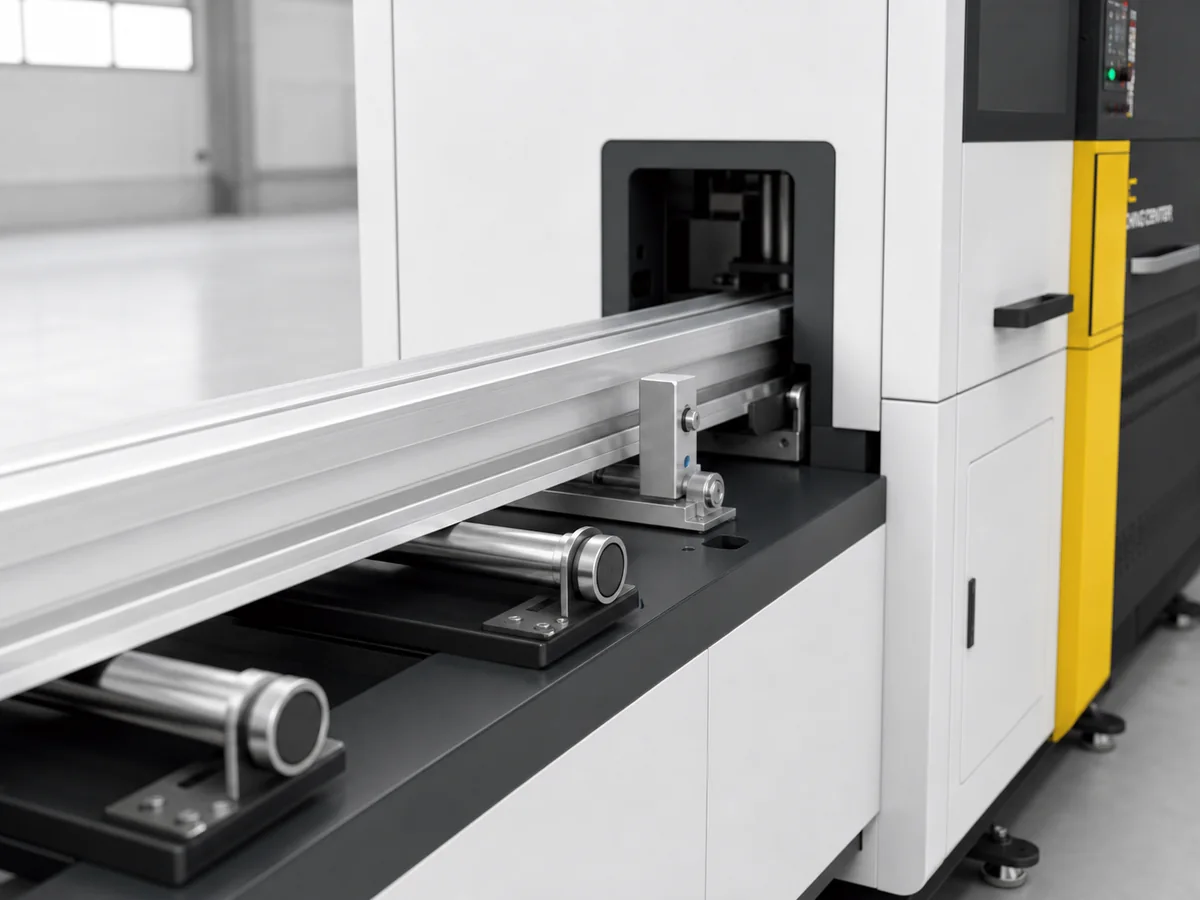
Equipment context for the capacity evidence request
This Jiurun equipment video provides context for discussing the cutting task. It does not validate the invented capacities, shared-resource assumptions or a finished-output improvement for the buyer’s production route.
Send the supplier the cutting job and the purchase purpose
A useful inquiry explains both what must be cut and why the buyer is considering new equipment. Provide the authorized section drawing, alloy and condition, incoming stock lengths, required cut lengths and angles, accepted part tolerances, surface restrictions and quantities by relevant family. Identify which values are actual observations and which are proposed requirements.
Add the production-route context: the defined output point, the current cutting workload, the suspected limiting resource and separately planned downstream changes. Ask the supplier to state the basis and limitations of any proposed saw-output evidence. Do not ask a saw quotation to guarantee the capacity of independently supplied finishing or inspection equipment.
Discuss your aluminum cutting requirement with Jiurun using that record. Request evaluation of the cutting task and quoted scope, while keeping unresolved whole-route assumptions visible. A useful next step is a comparable, evidenced purchase decision—not an unqualified promise that the fastest saw will increase finished production.