
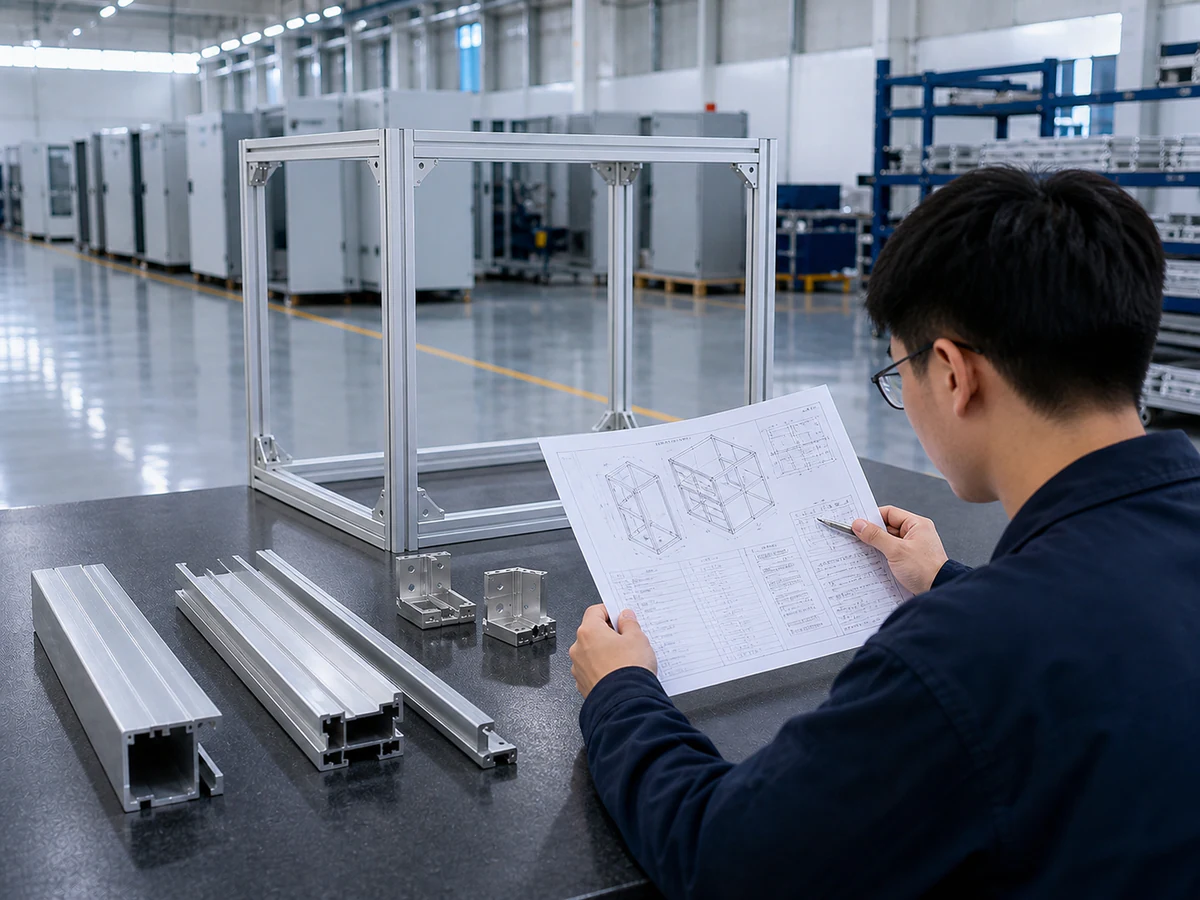
Send the aluminum alloy and temper of the stock at the point it will be sawed. Pair that designation with the profile section, finished-part drawing and the order or sample it describes. If the material is unconfirmed, say so. An inquiry can start with missing information, but the machine proposal should identify which material assumptions still need checking.
A drawing may identify a channel or hollow extrusion perfectly while saying little about the material delivered to your workshop. Conversely, an aluminum alloy and temper certificate may identify the material without showing how the profile will sit in a saw. Purchasing needs both records connected to the same job. This guide explains how to build that connection and keep it valid when stock, suppliers or processing stages change.
Table of Contents
What aluminum alloy and temper actually tell you
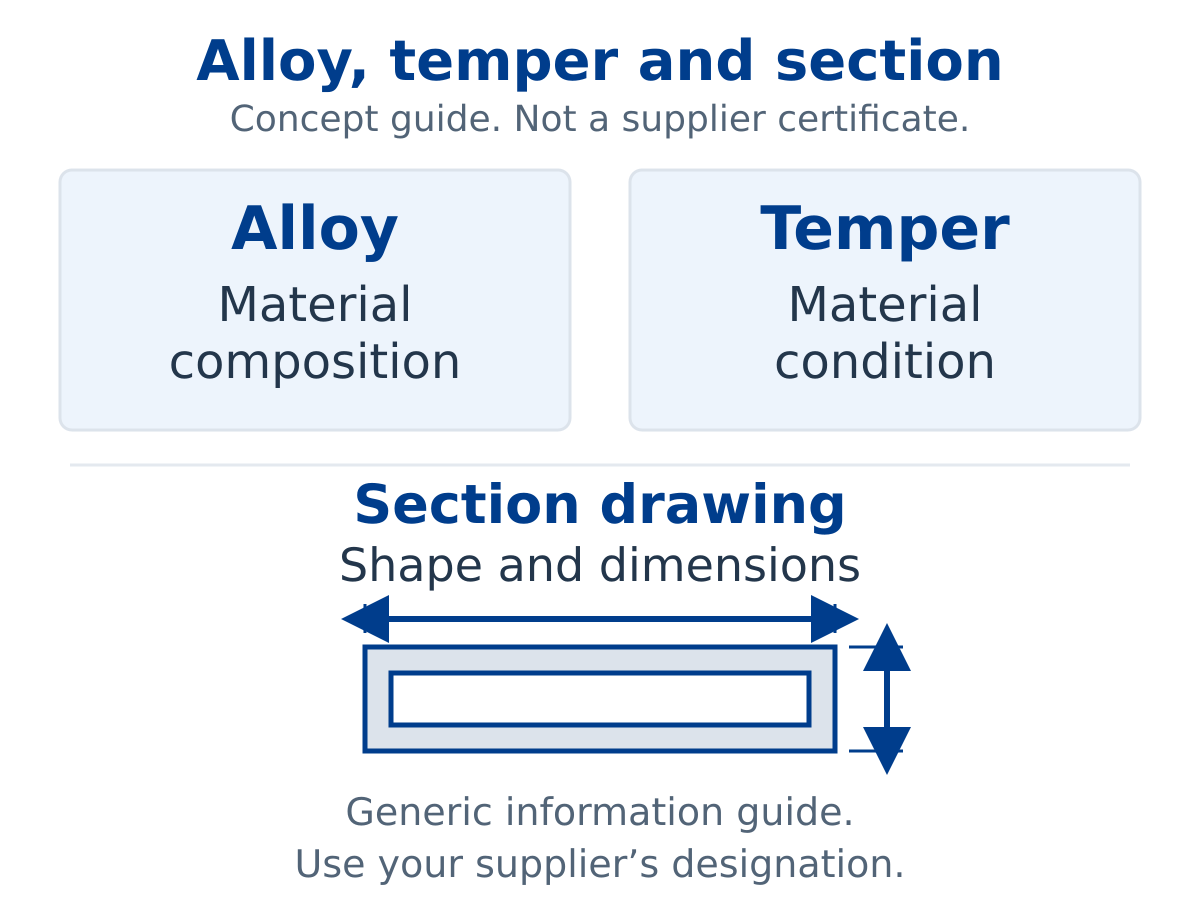
An alloy designation identifies a specified composition. Temper identifies the condition produced by mechanical or thermal treatment. For example, the two parts of 6063-T5 belong together: 6063 identifies the alloy, while T5 identifies its temper. The Aluminum Extruders Council overview explains the distinction and uses this designation as an example.
The Aluminum Association standards overview describes the alloy and temper designation system covered by ANSI H35.1/H35.1(M). A designation is useful because it carries defined material information. It should come from the material specification or supplier records, rather than from an assumption about the profile’s appearance.
T4, T5 and T6: useful examples with limits
These temper examples help you read a supplier’s material description. They are not a recommendation to substitute one material condition for another.
| Temper | Treatment sequence, in plain language | What to keep in the inquiry |
|---|---|---|
| T4 | Natural aging follows solution heat treatment. | The complete alloy designation and the condition at cutting. |
| T5 | Artificial aging follows cooling after a hot shaping operation. | The supplier’s actual designation, including any additional suffix. |
| T6 | Artificial aging follows solution heat treatment. | The supplied temper and any planned treatment before or after sawing. |
The definitions above are paraphrased from page 1 of Hydro’s EN AW-6063 technical datasheet, revision 4, March 2023, which references EN 515:1993 for temper designations. Its mechanical-property table separates tempers and wall-thickness ranges, and labels hardness figures as typical information. This illustrates why an isolated hardness number or the word “T6” cannot replace the complete stock specification.
The datasheet concerns that alloy and extruded product form. Its figures are not a universal rule for all aluminum, and they do not prescribe saw speed, blade selection or a guaranteed cut finish. Those choices need review for the actual material, section and machine configuration. For alloy comparison as a separate purchasing question, see our 6061 vs 6063 cutting review.
1. Confirm aluminum alloy and temper at the cutting stage
A finished-part specification and a saw inquiry can describe different moments in the production route. If stock will receive heat treatment after cutting, the final required temper does not by itself identify the condition entering the saw. Describe the route in order and ask the material supplier to confirm the condition at that step.
For example, an inquiry could say: “The final part drawing specifies 6063-T6. Please confirm the material condition supplied for sawing; further processing follows the cut.” This is an illustrative wording example, not a report of a Jiurun customer process. If the stock already arrives in its final specified temper, state that instead and attach the applicable material record.
Include surface condition separately: mill finish, anodized, painted or another supplied finish. A finish name does not identify the alloy or temper. Explain which faces need protection during handling and which cut ends will be visible or processed later. Keep requirements for the finished component with the person responsible for its design and material approval.
2. Connect aluminum alloy and temper records to stock
Ask the extrusion mill, stockholder or other material supplier for the aluminum alloy and temper record applicable to the stock you intend to cut. The goal is to connect a material description to an identifiable delivery. A general catalog sheet describes an offered product; it does not establish which stock is in your warehouse.
- Complete designation: copy the alloy, temper and any additional suffix exactly as supplied.
- Product and reference: identify the extrusion or other stock form, supplier part number, section drawing and revision.
- Order connection: retain the order, delivery, batch or lot reference available from the supplier, together with the label or material document.
- Processing stage: say whether the record describes stock before sawing or a condition reached later.
- Unresolved fields: mark missing or conflicting information and name who will confirm it.
If a certificate is supplied, ask your material supplier to explain which delivery it covers. Do not assume that a document found with an older bundle covers today’s sample. When you only have a bundle label or purchase order, send it as available evidence and describe its limits. You can redact unrelated commercial information while retaining the identifiers needed to understand the material.
3. Resolve conflicting aluminum alloy and temper details
Begin with what is known: the supplier, profile dimensions, section drawing, stock length and intended finished part. Write “alloy unconfirmed” or “temper awaiting supplier confirmation” in the inquiry. An unlabelled photograph can show a section and surface condition, but it cannot establish the aluminum alloy and temper designation.
If the drawing says one temper and the delivery document says another, share both and describe the conflict. Ask the material supplier and the person responsible for the part specification to resolve it before treating the stock as approved. Changing the document to match the easiest assumption hides a purchasing problem; it does not solve one.
A preliminary discussion can still establish the part geometry, handling needs and likely machine family. Ask the saw supplier to state which conclusions are provisional until the material is confirmed. This keeps the inquiry moving while making the boundary of the proposal visible.
4. Make the sample represent the material you will buy
When arranging a cutting review, identify the sample’s material designation and the order it represents. Also identify its supplied finish and condition at cutting. A convenient offcut with no material record can support an initial discussion, but say clearly if it does not represent the planned production stock.
Ask the saw supplier whether a representative sample is needed to review the proposed setup. If your production includes several material conditions, list them individually and ask which combinations need evaluation. Do not turn a successful cut on one identified sample into an assumption about every alloy, temper or profile.
For arranging and recording the cutting review itself, use our aluminum sample-cutting trial checklist. Here, the key task is material identification: the sample, material record and proposal should refer to the same combination.
5. Define aluminum alloy and temper in the proposal
Ask the supplier to name the material and profile combination reviewed, identify the proposed machine configuration, and list material assumptions still awaiting confirmation. The alloy and temper are inputs to that review; they do not establish cutting capacity, angle range, finished-part tolerance or production output on their own.
When the material supplier changes, compare the new records with the original proposal. A change of supplier alone does not prove that the material has changed, but a familiar section shape does not prove that it has stayed the same. Send the updated designation, delivery information and any revised processing route. Ask whether the proposal remains applicable and whether further review is required.
Keep the approved aluminum alloy and temper specification, sample identification and machine proposal together in the purchase file. This makes later questions easier to answer: which stock was reviewed, what was still provisional, and what information needs revisiting for a new order?
A reference video of a Jiurun machine
This video from Jiurun’s channel provides a machine and operation reference. It does not verify an alloy or temper, document a material-specific trial or establish cutting results for your stock. Ask the supplier to review your actual material and proposed configuration separately. Watch on YouTube.
Discuss your material and profile with Jiurun
Send the aluminum alloy and temper information you have, your section and finished-part drawings, and the condition of the stock when it reaches the saw. Mark any missing fields. Ask Jiurun to review the proposed machine configuration and explain which material information or representative samples are still needed.