
Cutting anodized aluminum creates a new face at the end of the profile. That face does not carry the existing anodized finish from the stock’s outside surfaces. Agree which cut ends need a finish and when finishing will take place, then discuss the incoming stock and finished parts with Jiurun.
Cutting anodized aluminum changes the end face
Hydro’s anodizing guide notes that cutting after anodizing leaves the newly exposed surfaces without the anodized treatment. Include the cut-end requirement with the member drawing.
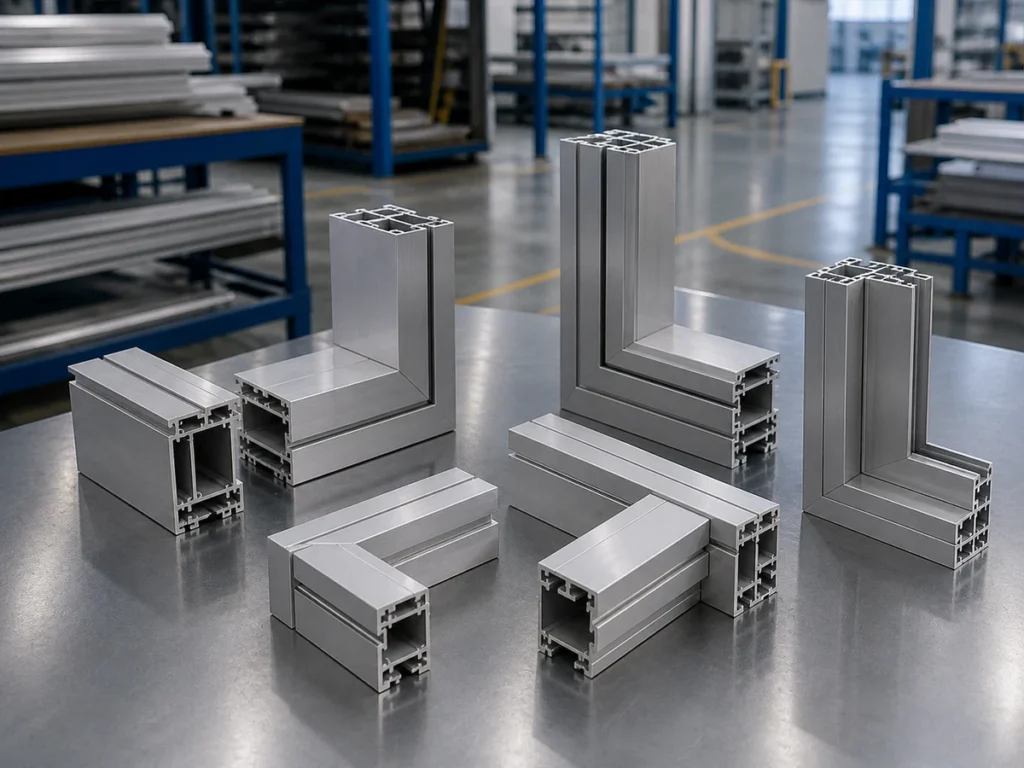
Does the cut end remain visible in your product?
Share the end-face requirement with the profile section and the assembled view.
Route 1: cut stock that already has its anodized finish
Tell the saw supplier the condition in which the profile arrives. Identify the finished outside faces and the end shapes that will be produced. Include any surface requirements that belong to handling and holding the stock.
Then ask the responsible designer and finisher what is required on the newly cut ends. An end hidden inside a corner and an end left visible at the edge of a product may have different appearance requirements. Keep the agreed treatment or finish requirement clear for each face.
Cutting and anodizing address different requirements of the finished component.
Route 2: prepare the members before their final anodizing
If anodizing is planned after cutting, tell the saw supplier what condition the stock has during the cutting stage. Give the finisher the finished member drawings and agree on the requirements for the completed parts.
Agree acceptable rack-contact locations with the finisher. Hydro’s guide describes marks where parts contact the anodizing rack. Identify the faces the customer will see.
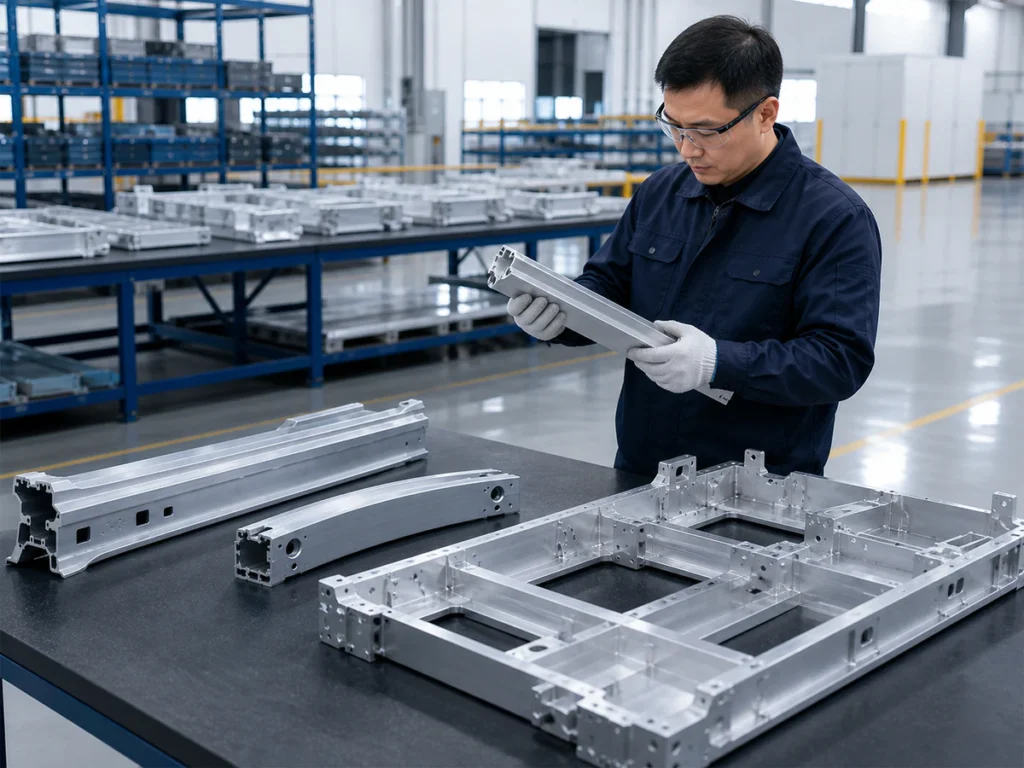
Have the designer and finisher define the final fit and appearance requirements. Keep those requirements attached to the member drawing rather than treating the finish as an unrelated later task.
Show the stock condition and the required final result
Tell Jiurun whether the profile is already anodized during cutting and what the completed member must meet.
The same frame can bring different cutting-stage requirements
Imagine a frame order in which one proposal starts from pre-anodized profiles while another finishes the members after cutting. The final frame drawing may be the same, but the surface condition at the saw and the work after cutting differ.
Ask the people responsible for the part design, finishing and cutting to agree on one sequence. Make it clear who defines the cut-end finish, who provides it and what result will be accepted. This keeps the saw inquiry connected to the completed component.
Our profile-surface guide helps distinguish visible faces from functional faces when discussing support and holding.
Bring the agreed sequence to the saw proposal
Send the profile section, incoming finish, finished lengths and end directions. Include the faces that must remain presentable and the required treatment of the cut ends. Ask Jiurun to review those parts with the proposed cutting arrangement.

Jiurun’s brochure identifies this model as an automatic corner-cutting machine. The multi-angle buying guide covers the wider machine inquiry.
Watch: Jiurun angle-saw demonstration
Use this machine reference when discussing the end shapes and surface requirements of your members.
Discuss cutting anodized aluminum with Jiurun
Start with the incoming profile finish and the cut-end requirements. A clear finishing sequence helps the cutting-machine discussion move forward.
Finish context: Hydro’s anodizing guide, physical PDF pages 5 and 6. Machine context: Jiurun brochure, physical PDF page 13, through Catalog & Downloads. The proposed saw arrangement and finishing sequence should be reviewed for your actual stock and finished parts.