
When choosing a saw for custom aluminum orders, describe what changes between jobs as well as how often the parts repeat. The order quantity alone does not define the workflow. Show Jiurun the finished parts, incoming stock and manual work you want to reduce so the equipment discussion matches your workshop.
Example: a workshop making changing frame orders
Imagine a workshop receiving a different frame order from each customer. The profile may stay the same while member lengths, end directions and quantities change. The finished drawings are known, but the next order brings a new part list.
This buyer needs the work between jobs to be clear. How will the operator prepare the next list, establish the required references and change the proposed setup? Ask the supplier to explain those tasks using representative orders, including the less common parts.
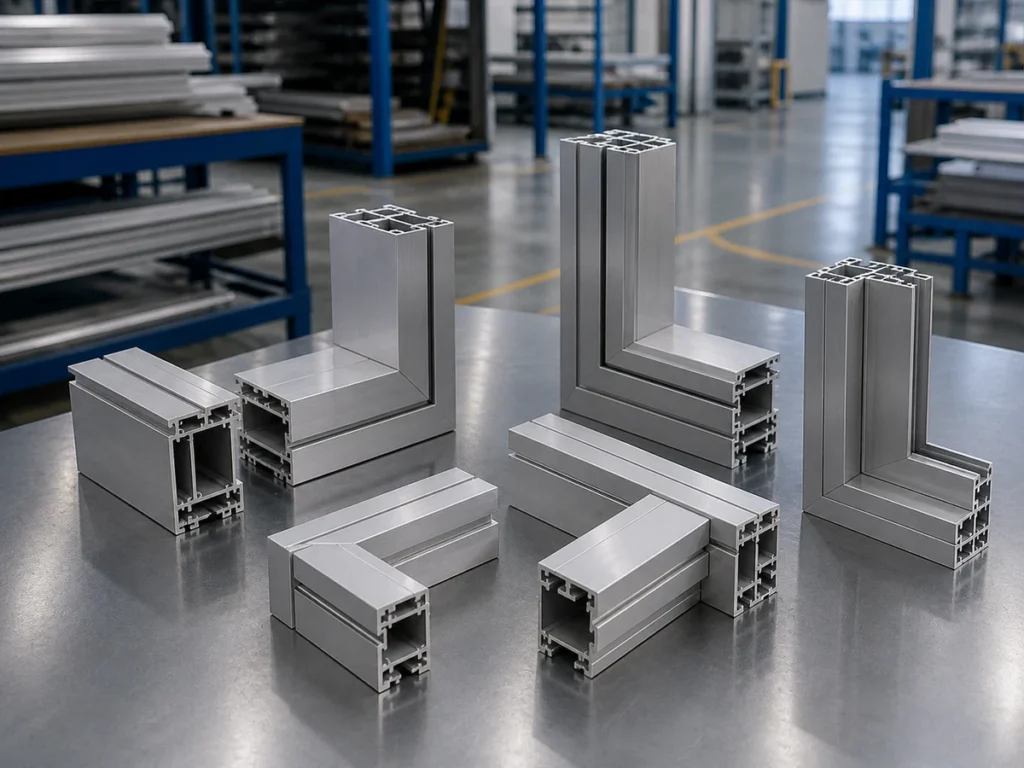
Does each customer bring a different part list?
Share representative orders and explain which preparation work you want the saw proposal to address.
Example: a workshop repeating an established part
Now imagine a workshop regularly producing the same straight member from one established profile. The part drawing stays the same, while the production order changes the number of pieces required.
This buyer may want to focus the discussion on repeated stock positioning and the route through the batch. Ask who loads the material, establishes the next cut position, starts the cycle and collects the finished pieces. Keep the whole order visible rather than comparing only the moment of cutting.
Jiurun’s catalog describes pedal-triggered clamping, oil spraying and cutting for JR-455Q. It separately lists servo automatic feeding and automatic clamping for JR-455CNC. These descriptions help you ask which tasks a proposed semi-automatic or CNC arrangement handles.
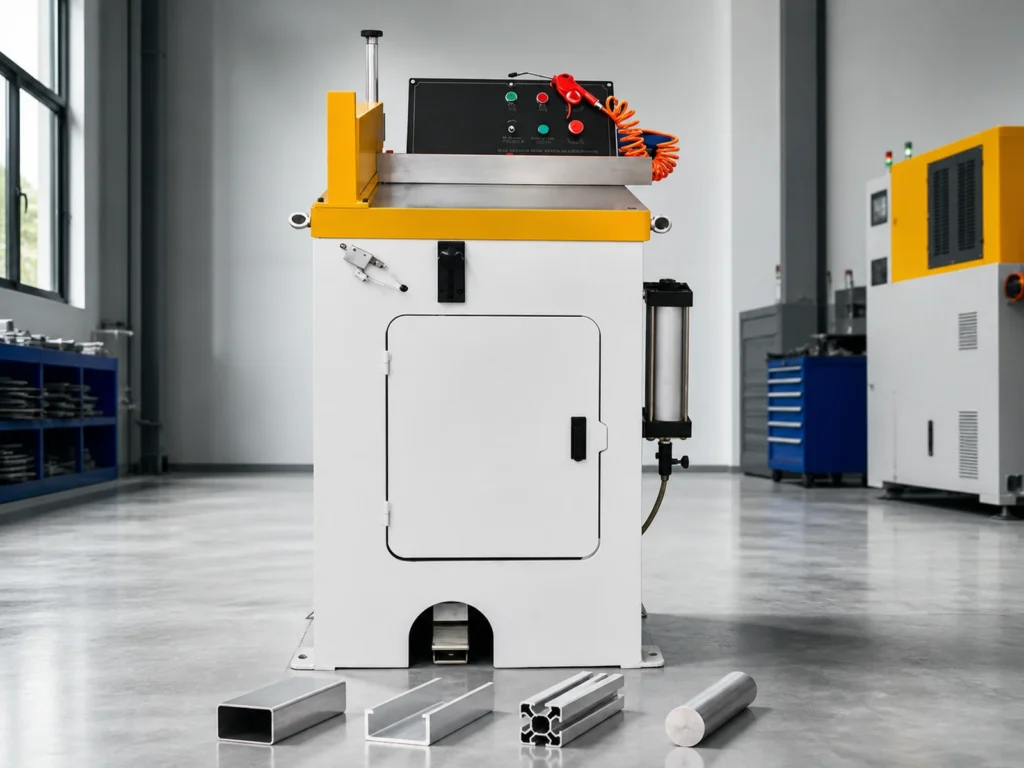
Watch: Jiurun JR-455Q semi-automatic saw reference
Use this reference when discussing the cutting cycle and the operator work around it.
Give the supplier the normal order mix
Include changing orders and recurring parts, rather than describing the workshop with one production-volume label.
Questions that help you choose the workflow
Do frequent changes rule out an automatic saw?
That cannot be decided from the word “custom.” Ask how the proposed equipment handles the actual parts and what the operator does between orders. A feature list alone does not explain job preparation or profile changes.
Does a repeating part make the whole batch automatic?
Repetition does not establish who loads, collects or changes the job. Ask for those responsibilities to be stated with the quote. Our clamping and feeding comparison explains why one automatic feature is not a complete workflow description.
Should the saw proposal cover only the most common order?
Include that order, then identify other confirmed parts the machine must serve. Keep possible future work separate so it can be discussed without assuming it is already covered. The profile-mix guide explains how to connect each section with its finished parts.
Bring the angled parts into the same decision
If the order mix includes angled members, provide their finished drawings and relative end directions. Jiurun’s brochure identifies JR-550CNC-CORNER as an automatic corner-cutting machine. Discuss the proposed arrangement for those members alongside the stock and job changes.

Ask the supplier to explain a representative changing order and a representative repeat order before choosing the workflow. Confirm the equipment and tasks covered by the final proposal.
Watch: Jiurun angle-saw demonstration
Use this reference when discussing the end shapes in your changing and recurring orders.
Discuss custom aluminum orders with Jiurun
Describe the normal mix and the operator work that matters most. Ask for a proposal connected to the parts your workshop needs to produce.
Catalog context: Jiurun brochure, physical PDF pages 6, 7 and 13, through Catalog & Downloads. Use the machine descriptions as a starting point for reviewing your orders and the quoted configuration.