
Toggle clamp holding capacity is a catalog rating that needs its stated conditions. Before approving a clamp for an aluminum fixture, ask which force the supplier is quoting, where it acts and which exact clamp arrangement the rating describes.
A large number printed beside a product photograph can be easy to remember and difficult to interpret. This guide gives purchasing teams a way to compare the supporting documents, rather than selecting a fixture from the largest number alone.
The distinction to make first
In DESTACO’s technical appendix, MC-TEC 3, holding capacity describes the maximum external force sustained by a closed clamp without permanent deformation. Exerting force describes the force applied during clamping. The manual mechanism uses connected levers and pivots.
The appendix explains that actual manual exerting force depends on operator input, handle position, linkage and the location at which it is measured. It also states that holding capacity decreases as the spindle moves farther toward the end of the clamping bar.
Those definitions apply to the documented clamp arrangements. They do not identify an unlabelled device in a workshop image or prove that a proposed JiurunCut machine uses a particular manufacturer’s clamp.
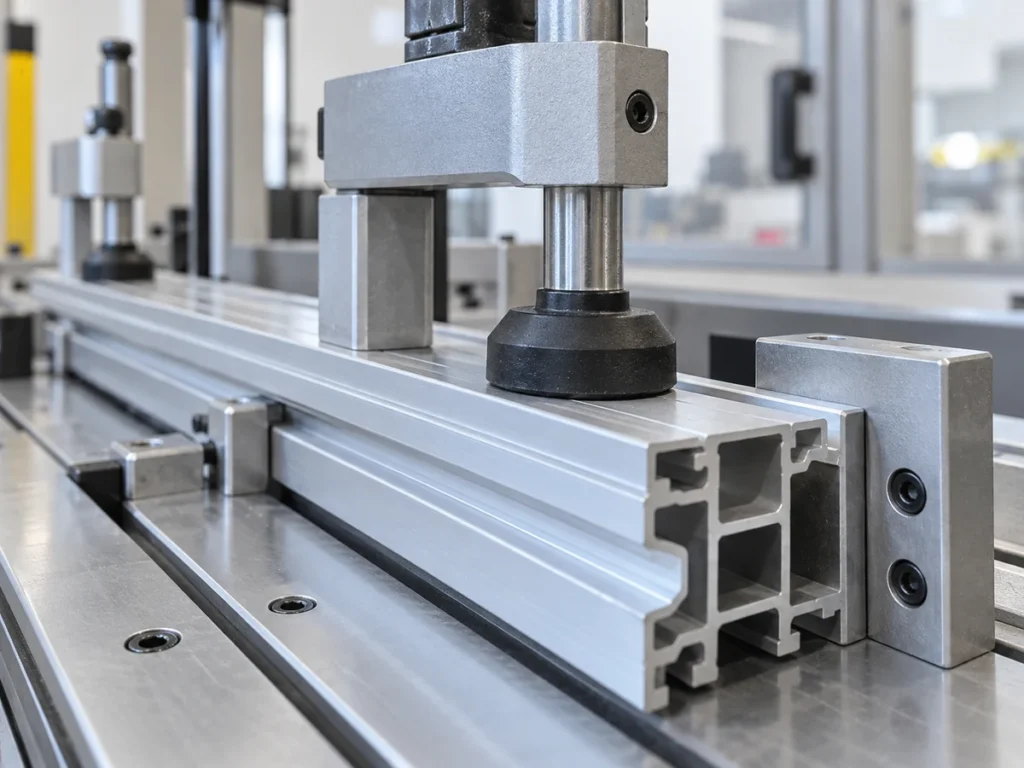
Four critical mix-ups in a quotation
Mix-up 1: comparing two different force entries
Keep the original label beside every value. A force entry should have its unit, product reference, source document and relevant test or rating condition. Ask the supplier to explain an abbreviation if the quotation has reduced a complete data-sheet heading to “capacity.”
Compare matching quantities across suppliers. If one offer gives a maximum rating and another gives an application measurement, mark them as different entries and request the missing information. Do not rank the offers until the engineering reviewer has a comparable basis.
Our pneumatic cylinder force guide addresses a separate component calculation. Keep any actuator information in its own row, with the supplier’s explanation of how it relates to the complete clamping arrangement.
Mix-up 2: omitting the location of the quoted value
For a toggle clamp holding capacity review, request the manufacturer’s reference sketch with the applicable point identified. Then ask the fixture supplier to mark the proposed contact position on its assembly drawing.
A drawing that includes both references is easier to review than a statement that the fixture has “the standard clamp.” The engineer can identify which condition needs confirmation without asking purchasing to reconstruct the arrangement from separate photographs.
Use a stable feature label such as contact C1. Keep it on the quotation sketch, supplier response and approved fixture drawing. If the contact location changes, retain the earlier answer and record which revision replaces it.

Mix-up 3: treating a changed assembly as an unchanged product
DESTACO’s appendix states that alterations to the bar, handle or added tooling can affect clamp performance. Its manual ratings are based on hand actuation. That makes a complete description of the supplied assembly useful to the quotation review.
Ask the supplier to list the clamp, contact item, mounting arrangement and any modification as separate identified items. Attach the relevant drawings. A purchasing team should be able to tell which proposed components match the manufacturer’s documentation and which need application-specific confirmation.
Leave adjustment and operating instructions with the responsible supplier. A buyer’s comparison sheet can request the approved documents, but it should not turn a catalog value into a shop-floor setting.
Mix-up 4: accepting the part from the clamp rating alone
The delivered aluminum part still has its own drawing and surface requirements. Request a review plan that names the representative parts, the observations to record and the acceptance owner. Keep these requirements beside the fixture scope in the order.
For fragile sections, the thin-wall profile clamping guide discusses contact and support questions. The broader aluminum saw clamping guide covers equipment scope. Use those separate reviews alongside the specific component data.
A fictional comparison: what is still missing?
Imagine an RFQ for fixture F-92. The following three responses are fictional. None establishes a suitable clamp or an accepted part, and the example provides no design load or operating instruction.
| Supplier response | Request before comparison |
|---|---|
| A: maximum capacity stated | The exact product, source heading and applicable reference position. |
| B: applied force recorded | The measurement arrangement, conditions and relationship to the requested feature. |
| C: extended contact arrangement pictured | The revised assembly drawing and documented approval for that arrangement. |
This table is a way to classify missing evidence. It does not say which supplier is better. Each response needs a supported answer to a different question before the purchasing team can make a fair technical comparison.
Include a column for status in your working RFQ file: answered, awaiting supplier information or awaiting engineering decision. Put a person’s name and a response date beside each open item so it remains visible during commercial negotiation.
Write a clearer request for toggle clamp holding capacity
Please identify the proposed clamp and supplied assembly, including contact items and modifications. Provide the manufacturer’s rating document, mark the applicable reference location, and explain how the proposed arrangement is supported. Supply the fixture drawing revision and planned part-review record for engineering approval.
Attach the aluminum section and finished-part drawings, the planned operation, quantity range and any surface requirements. State whether the inquiry concerns a new fixture, a replacement component or a changed job on existing equipment.
For a replacement, provide the existing identification and approved documentation when available. Ask the supplier to state any difference between the proposed item and the item being replaced. A similar outline in a photograph should lead to an identification question.
Questions about toggle clamp holding capacity
Can purchasing approve an unlabelled force value?
Request the label, unit and source before approval. A clear response should connect the value to an identified product and condition so the engineer can assess the intended application.
What if the supplier only sends a catalog page?
Ask for the proposed assembly drawing and a response to the application questions. The catalog can document the component; the order still needs a supported statement of what is being supplied for your job.
When is the quotation ready for release?
Release it when the required technical answers and commercial terms are documented, and the responsible reviewers have approved the scope. Preserve the same revisions in the order and handover package.
Discuss your aluminum stock and cutting requirements with JiurunCut. Include the proposed downstream fixture or part drawing so the machine inquiry and workholding discussion refer to the same job.