
Aluminum fracture toughness describes cracking resistance under a stated evaluation. When a specification asks for a particular toughness property, keep its symbol, test method, material condition and validity information together. A result becomes useful to purchasing when the responsible technical reviewer can connect it to the actual requirement.
This report-reading guide is for buyers coordinating aluminum stock, cut blanks and later component manufacture. It helps identify missing evidence before order release. It provides no alloy-specific toughness value, crack-size limit or component load rating.
On this page

Aluminum fracture toughness: read the method scope
The public scope of ASTM E399-24 describes linear-elastic, plane-strain fracture-toughness testing of metallic materials. Its KIc property concerns resistance to fracture with a sharp crack under specified constrained conditions in a neutral environment.
The standard’s public explanation emphasizes compliance with its validity criteria: starting a test does not assure that a valid KIc will result. It also calls for laboratory and service-condition differences to be considered when applying the property.
The purchasing implication is to keep the claimed property and the evidence supporting that claim together. Obtain the full applicable report and have its relevance reviewed. A reference to a method on a quotation line leaves the actual reported outcome unresolved.
This guide uses the public explanation to organize questions. The laboratory and responsible technical owner should define the complete evaluation, reporting requirements and application decision.
Check 1: identify the material represented by the report
Record the complete alloy and temper, product form, supplied dimensions and relevant material specification. Connect the report’s material identity to the stock being offered. Keep the released drawing and its revision with the requirement.
If the document identifies only a broad alloy family, ask the issuer for the exact represented material. A purchasing reviewer should be able to see which designation and delivered condition the evidence covers.
Also retain the specimen or sample identity and its relationship to the parent product. Request the reported orientation and the source location where the evaluation requires them. Keep unresolved fields visible to the technical reviewer.
State the manufacturing stage represented by the evidence. A supplied-stock report and evidence for a component after later operations have different scopes. Ask the responsible owner which information the project requires at each handoff.
Our material-certificate guide helps connect documents to a delivery. Identify the toughness report by its own purpose rather than assuming that any certificate attached to a material quote supplies it.
Check 2: preserve the reported property entry
Copy the complete property name and symbol as the issuer reports them. Retain the unit, numerical entry and any limiting or qualifying wording. Ask the laboratory to explain an unfamiliar symbol instead of silently relabeling it.
A brochure’s typical property, a specified minimum and a delivery-linked report should retain their individual labels. Before ranking offers, identify which type of evidence each supplier has provided.
The tensile and yield-strength guide addresses those separate property columns. Keep the actual toughness requirement visible in its own comparison field.
A fictional report review
Imagine request T-72 for 18 blanks that will later be machined. The project owner has requested a defined toughness evidence package. Offer A supplies a product brochure; Offer B supplies a report with an incomplete material reference. This example assigns no alloy, toughness result or acceptance threshold.
| Document question | What T-72 should resolve |
|---|---|
| Brochure from Offer A | Does it supply the evidence type required by the released purchase specification? |
| Report from Offer B | Which exact material and delivered condition does the issuer identify? |
| Property entry | What symbol, unit, method and qualification accompany the claimed result? |
| Release decision | Who reviews the evidence against the actual application requirement? |
Ask each supplier to close its particular gap. More pages or a larger-looking number should not replace that review. Preserve the complete documents alongside the shortened comparison.
Check 3: retain the validity decision
Ask the laboratory to state the result it is reporting and the applicable validity determination. If an evaluation does not support the property originally requested, keep that outcome accurately labeled and refer it to the technical owner.
A purchase request should identify the intended reporting deliverable before the evaluation is ordered. Give the laboratory the represented material and the application question. Have the laboratory and technical owner resolve feasibility and method scope together.
ASTM’s public E399 explanation also notes that residual stresses can bias the indicated toughness results. Their effect in an extracted specimen can differ from their effect in the original or finished product.
When relevant to the proposed work, ask the laboratory and material owner how the report addresses its product and specimen conditions. This is a reporting question for the responsible providers; the buyer should not diagnose a result from a workshop photograph.
Our residual-stress review guide organizes the separate manufacturing observation. Keep that observation and the laboratory’s stated result connected without assigning an unverified cause.
Check 4: connect the evidence to the application
Provide the design owner with the actual component, intended use and agreed requirements. Ask that owner to identify which report answers the application question and which conditions remain outside the evidence supplied.
Preserve the laboratory’s stated conditions when discussing the result. If a supplier presents evidence for a different material condition or product form, retain that difference and ask the responsible reviewer to determine its relevance.
Repeated-loading evidence has its own scope. The aluminum fatigue-strength guide helps prepare that separate inquiry. Avoid renaming a report to fit an unrelated acceptance field.

Make the cutting handoff clear
Send the cutting provider the released material identity, section drawing, blank dimensions, quantities and delivered-stage requirements. Include the agreed traceability, handling and document requirements for the cut delivery.
Keep responsibility for material qualification and component application with the named owners. Record what the sample-cut review covers and which separate evidence remains required before purchase release.
Send JiurunCut the aluminum stock and cutting requirements. Attach the material-document requirements relevant to the blank order so the proposal can state its scope clearly.
Buyer questions
Does a method reference alone establish a valid result?
Request the issued report and its applicable validity determination. Keep the actual outcome and conditions visible.
Can a stock photograph establish toughness?
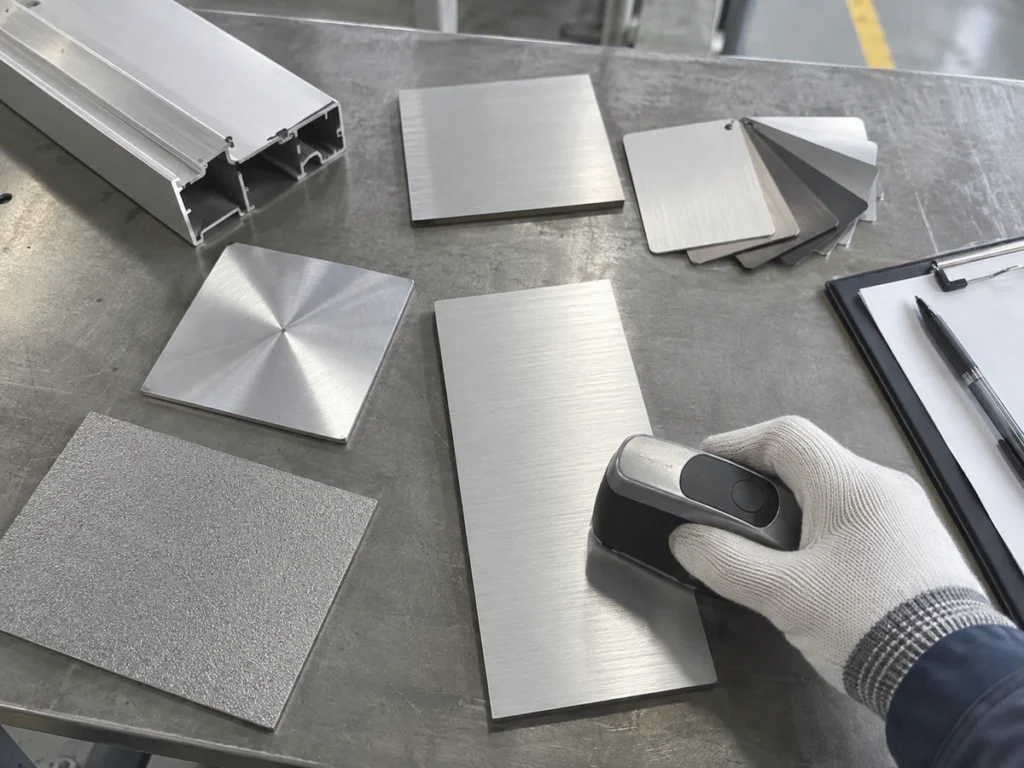
Use the image to identify the visible geometry. Obtain the material and evaluation evidence required by the project.
Who accepts the report for the finished component?
The responsible technical owner should connect the evidence to the application requirement and document the release decision.