
Powder coating orange peel describes an uneven, rippled appearance resembling the surface of an orange. For aluminum parts, first compare the observed texture with the ordered finish and identified reference sample. Then have the finisher investigate the actual coating process.
An intentionally textured coating and an unwanted appearance variation are different purchasing situations. A matching color code or gloss reading does not settle the texture question.
A practical review sequence
- Identify the intended finish and reference.
- Compare the relevant surfaces under agreed conditions.
- Record the finisher’s findings and authorized disposition.
On this page
1. Powder coating orange peel: was the texture intentional?
Find the order’s coating product, finish description and approved reference. A request for a smooth surface should remain a smooth-surface request. A request for a textured product needs its own identified appearance reference.
The IFS Effects range includes fine-texture finishes as well as smooth finishes. This shows that surface texture can be a deliberate product characteristic. It does not identify the coating applied to your delivery.
Ask the supplier which exact product was used. Preserve the manufacturer, product code and relevant batch information. If the offer or delivery substitutes a textured coating for a specified smooth finish, obtain an explicit review of that change.
Terms such as “slight orange peel” or “normal texture” are difficult to use without an agreed reference. Request the actual appearance basis rather than relying on a supplier’s general label.
Our powder coating color-match guide explains why color, gloss and texture need separate identification. A finish can repeat the requested color name while differing in another required appearance characteristic.
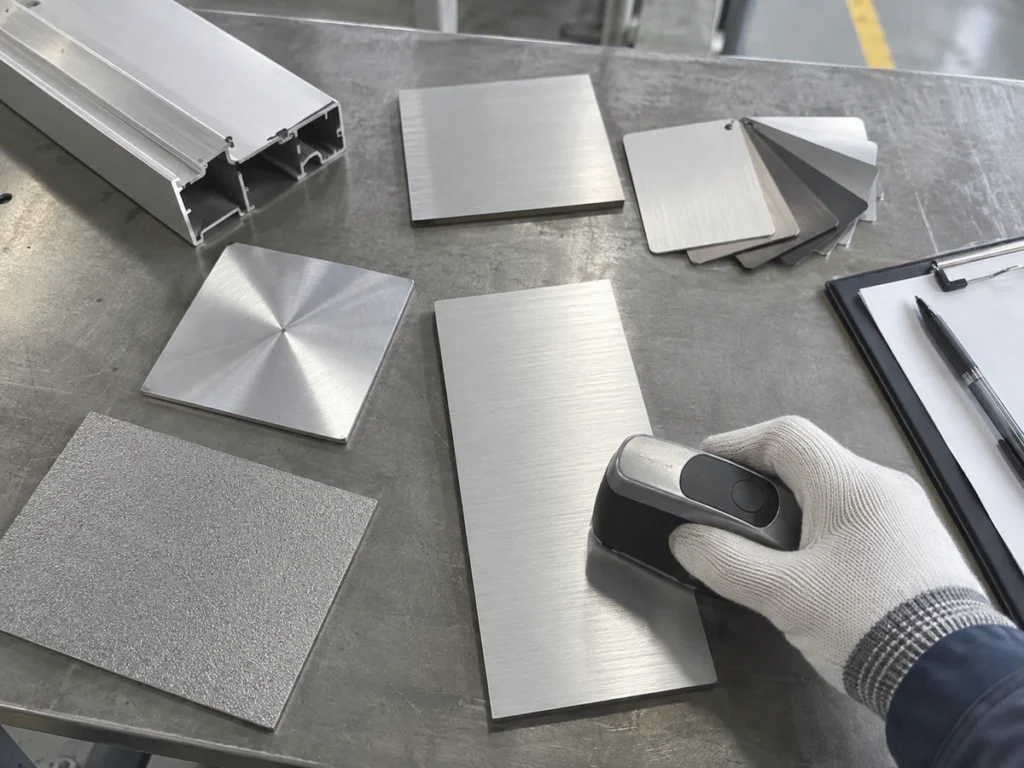
2. Compare surfaces under the agreed viewing conditions
Use the identified physical reference and the actual part. Confirm that both represent the relevant product, finish stage and visible face. A trial panel awaiting approval should not silently become the accepted master.
Retain the viewing conditions specified by the order or inspection plan. Where those conditions are missing, ask the responsible quality owner to define them before making an acceptance decision. This article supplies no universal viewing distance or allowable texture level.
Record where the variation appears: a broad face, an edge, around an opening or across several adjoining members. Keep a wider image for location and a closer image for the observation. Label the images so the reviewer can find the same area on the part.
A phone photograph is useful for communication. It is not a substitute for an agreed physical comparison or specified measurement method. Preserve both the reference and the affected pieces while the concern is reviewed.
Check color, gloss and texture against their own requirements. The gloss-level inspection guide covers reported gloss values and measurement geometry. A satisfactory gloss reading does not independently approve a visible texture difference.
Keep the surface map specific
For an aluminum frame, mark which rails and faces are seen together in the installed assembly. If the concern is at an edge or corner, show its location on the drawing. A comparison of an unrelated hidden face can leave the customer’s visible-face question unanswered.
Also record the stage at which the concern was observed. Keep the condition after coating distinct from the condition after later handling or assembly. Ask the responsible team to investigate changes; appearance alone should not be used to assign their cause.
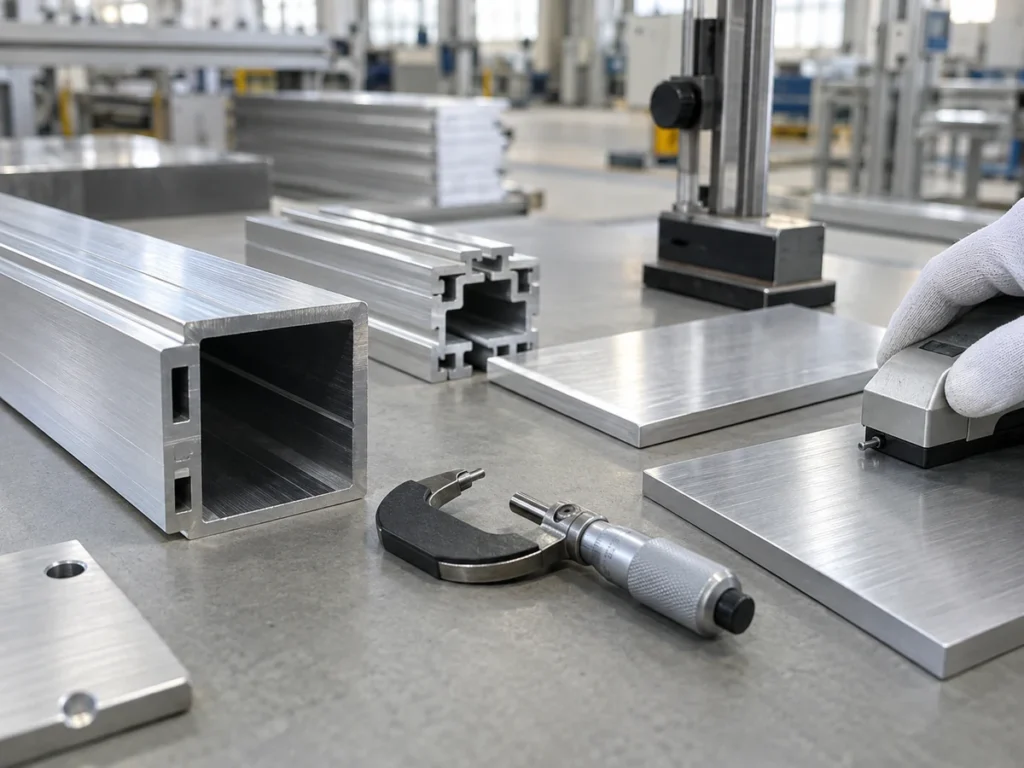
3. Ask the finisher to investigate the actual process
IFS’s appearance troubleshooting guide discusses poor flow and orange peel. It identifies excessive film build, grounding and application conditions among possible contributors, and refers to the coating’s technical data sheet.
Its separate picture-framing discussion describes thicker coating near edges or openings. That distinction makes the location useful in a supplier investigation. It does not establish the cause of a particular delivered part.
Send the finisher the part identity, powder product, reference and surface map. Request findings linked to the actual batch and supporting process records. Ask which proposed correction addresses the identified finding.
Leave application settings and any process adjustment with the qualified finisher and coating supplier. A generic voltage, temperature or film-thickness recommendation cannot replace the applicable product instructions and validated process.
Do not treat another coat as an automatic remedy. IFS warns that recoating a surface with mild orange peel can worsen the appearance. Have any proposed rework route reviewed for the actual coating system and ordered requirements.
Keep orange peel separate from small openings or other observations. The pinholes guide addresses a different surface concern. Record both if present; one defect name need not explain every feature in a photograph.
A fictional three-sample review
Imagine an order for smooth-coated display-frame rails. The buyer has approved physical reference S12. The sample identities and findings below are invented to illustrate review questions.
| Submitted sample | Question to resolve |
|---|---|
| A: correct color, rippled visible face | Compare the texture with S12 under the agreed conditions. |
| B: fine-texture product proposed | Review the finish substitution before accepting it. |
| C: unclear reference identity | Confirm which approved sample governs the order. |
Sample A needs an appearance comparison and, where necessary, a process investigation. Sample B presents a proposed change to the ordered finish. Sample C has a missing acceptance reference. Calling every case “orange peel” would hide those different actions.
None of these fictional samples is released by this table. Retain the responsible reviewer’s decision and any required follow-up evidence with the affected delivery group.
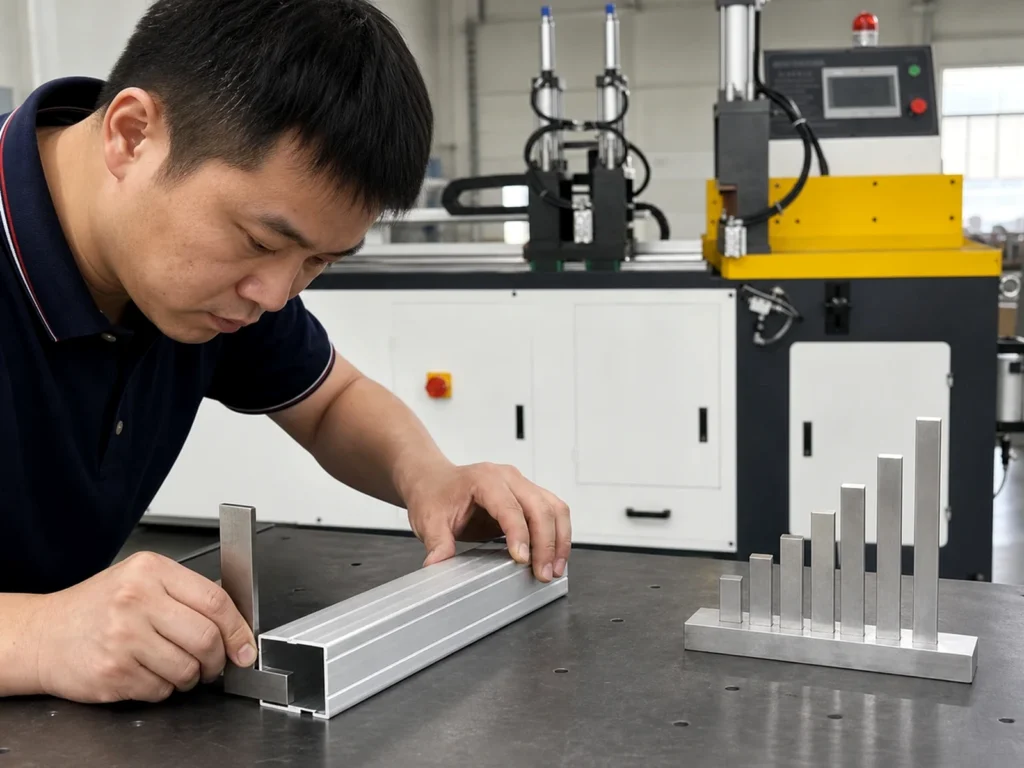
Close the order and cutting handoff
Before the next batch, retain the coating identity, intended texture, visible-face map and approved reference. Record the comparison conditions, reviewer and disposition. If rework is authorized, identify the required verification before release.
Appearance approval should remain distinct from any required coating-performance checks. Review adhesion or other specified properties through the appropriate plan. A visually smoother part alone does not demonstrate all performance requirements.
For a cutting inquiry, state whether profiles arrive coated or receive their finish after cutting. Identify how new ends, handling contacts and visible faces are treated. The cutting and coating sequence guide helps clarify that handoff.
Send JiurunCut the profile drawing and cut list with the relevant surface restrictions. Keep coating diagnosis and final finish acceptance with the appointed finisher and specification owner.
Common questions
Is every textured powder coating an orange-peel defect?
No. Some products intentionally create a textured finish. Compare the actual product and appearance with the ordered requirement.
Does matching gloss mean the texture is acceptable?
No automatic conclusion follows. Review texture against its agreed reference and conditions, separately from the gloss requirement.
Can I prescribe one process adjustment from a photo?
A photo documents appearance and location. Ask the qualified finisher to investigate the actual process and select the response.
Should an additional coat be the first remedy?
Have the coating supplier and finisher review the route. Recoating can worsen orange peel, and any rework needs the agreed verification.