
Aluminum extrusion vs roll forming starts with how the cross-section is made. Extrusion pushes a heated billet through a shaped die. Roll forming progressively bends sheet or strip through a sequence of roll stations. Compare the required section, material condition and finished supply scope before choosing a route.
A long, straight aluminum member could lead to either discussion. Its length alone does not identify the process. Start with a clear end view and identify the features that must continue along the member.
Three useful starting points
- A section with internal webs needs more than an outside-envelope comparison.
- A formed strip proposal must show bends, edges and any closure or joining operation.
- The selected production route and the later cutting requirement need separate reviews.
On this page
Aluminum extrusion vs roll forming: the process difference
Eagle Aluminum’s extrusion overview describes a heated billet pressed through a die, followed by operations such as cooling, stretching and cutting. The tooling defines the profile section. Its discussion distinguishes solid, hollow and semi-hollow die arrangements.
Voestalpine’s roll-forming overview describes sheet or coil passing through successive stations that progressively create the section. Aluminum is among the materials it identifies. The route uses formed sheet geometry rather than forcing a billet through a profile die.
These descriptions explain different starting materials and shaping methods. They do not approve a particular design or establish that one process always costs less. A supplier still needs to review the actual section and delivery requirements.
Also distinguish roll forming from bending an existing extrusion into a curved member. Those are different starting points. If the requirement is a curved rail made from a supplied profile, see the separate aluminum profile bending guide.
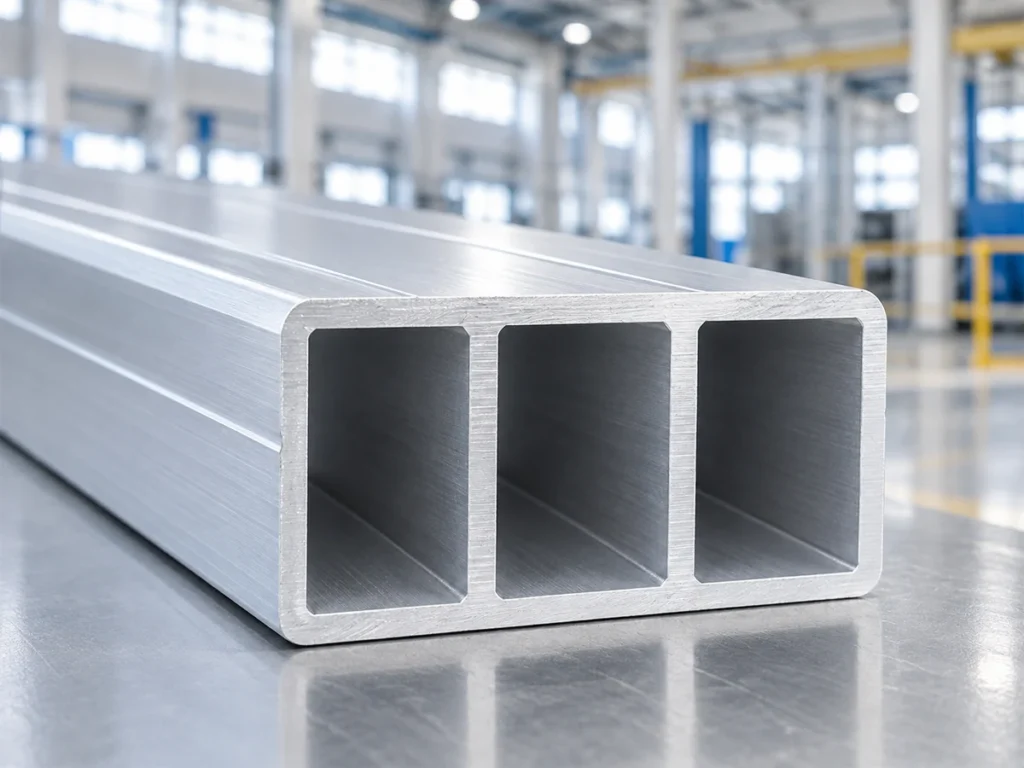
Three component scenarios to discuss with suppliers
1. A hollow member with internal webs
Suppose a straight rail needs several enclosed chambers and a continuous internal attachment feature. Begin with a complete section drawing. Mark which walls and features are functional rather than sending only a rectangle showing the outside dimensions.
Ask the extrusion supplier to review the section. If a formed-strip alternative is proposed, require its actual geometry and any added joining or assembly operations. An identical outside width does not establish equivalent internal features.
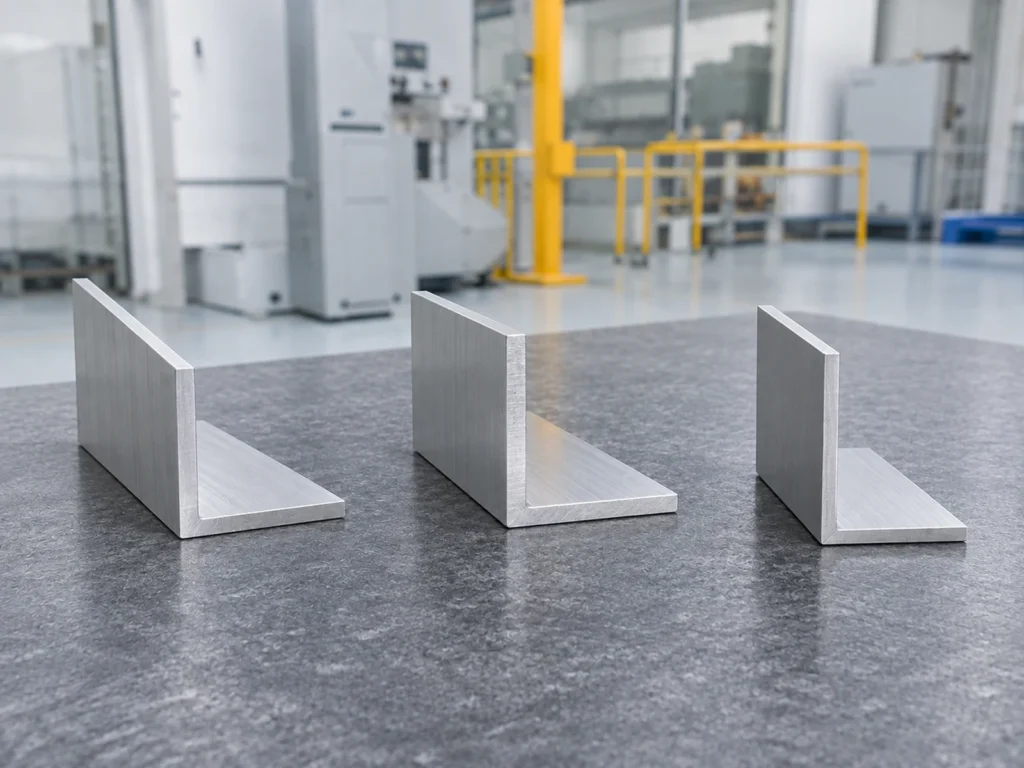
2. An open trim section made from a strip
Suppose the proposed part has a simple open shape with several bends and exposed strip edges. Ask the forming supplier to review the material, thickness, bend geometry and finished appearance requirements.
An extrusion proposal should show its own section dimensions and material requirement. Compare both against the same installation interfaces. Do not replace the approved section with a similar-looking alternative solely because both offers call it a channel.
3. A member with regularly spaced openings
Suppose a rail needs holes repeated along its length. Show their locations, end references and accepted condition on the finished-part drawing. Ask each supplier to identify the operation that creates them.
Roll-forming equipment may include integrated punching or other operations, as the Voestalpine overview explains. Availability on an actual proposed line still requires confirmation. For an extrusion offer, identify the subsequent hole-making scope instead of assuming holes are created by the section die.
These are fictional design discussions. They do not identify a JiurunCut forming line, an accepted customer part or a universal process recommendation.
Compare the actual cross-section, including its edges
Place the proposed section drawings beside each other. Identify enclosed spaces, wall changes, projecting features and all installation surfaces. Ask the responsible designer to mark any proposed differences that affect fit or function.
For the strip route, identify the starting thickness, bend references, free edges and any closure. Ask which dimensions describe the input strip and which describe the completed section. A thickness value alone cannot define the finished shape.
For the extrusion route, identify nominal walls and the drawing’s allowed variation. Our extrusion wall thickness guide explains the separate distinction between nominal, minimum and remaining wall requirements.
Keep lengthwise features distinct from local operations. A repeated section, a hole near one end and a later curved shape belong to different parts of the production description. Put each required feature into the proposed operation sequence.
Keep material and finish requirements explicit
Ask each route supplier to state the material designation, product specification and condition at the agreed delivery stage. Identify supplier-proposed alternatives for design review. Do not treat the word aluminum as sufficient evidence of equivalence.
Record the surface requirement and visible faces. State whether the quotation covers unfinished stock, finished profiles or completed parts. Ask how later forming, cutting and handling fit into the proposed finish sequence.
Define acceptance from the approved requirements. Similar color or section size does not establish equivalent mechanical behavior or appearance after processing. Use a documented review of the proposal and required samples.
Compare complete quotations for the same delivered part
Samco’s custom rollforming overview describes project scope that can include engineering, tooling, material sourcing, production and logistics. This is a useful reminder to ask what an offer includes. It is not a JiurunCut service or price commitment.
| Quotation field | Keep visible in both offers |
|---|---|
| Development | Drawing review, proposed changes, tooling and sample approval. |
| Production | Material, forming, cutting and any hole-making or joining. |
| Delivery | Finish, inspection, identification, packing and quantity. |
Separate recurring part charges from development charges using the actual quotation. Ask which changes require a revised offer. There is no universal break-even quantity provided here; it depends on the real project scope and supplier proposals.
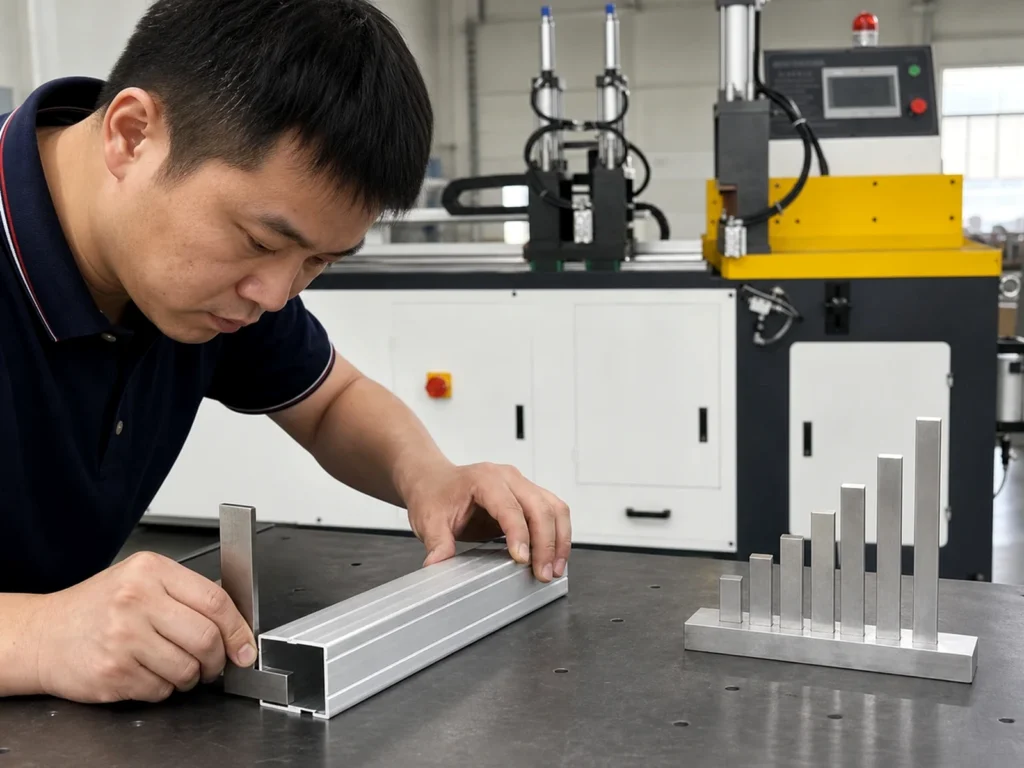
Define the cutting handover after selecting the route
Once the profile route is approved, identify the incoming section, material condition, stock lengths and required cut pieces. Include finish protection, cut references and the condition expected at the next operation.
A formed sheet section and a multi-chamber extrusion may require different locating and support arrangements. Ask the cutting supplier to review representative stock. Do not infer saw compatibility from the shared aluminum description.
Send JiurunCut the approved section and cutting requirement for a machine discussion. Include the route and remaining operations so the review addresses the correct stage of supply.
Buyer questions
Is roll forming the same as rolling an extrusion into a curve?
No. Here, roll forming creates a section from sheet or strip through successive stations. Curving an existing profile is a separate forming requirement.
Can both processes produce a channel shape?
Similar overall shapes can prompt both proposals. Compare the complete section, edges, material, tolerances and delivered scope before approving either.
Does one route always make a stronger part?
A process name does not establish the accepted component’s performance. The responsible designer needs to review the actual geometry, material condition and application requirements.
Does a forming quotation include final cutting?
Read the stated delivery stage and exclusions. Ask for the required lengths, end conditions and later operations to be included or clearly assigned.