
A pneumatic vs hydraulic aluminum saw comparison starts with the action being powered: clamping, blade feed or material positioning. Ask the supplier to identify each system, then compare its controls, site requirements and sample-cut evidence for your parts. The label alone does not establish accuracy, output or suitability.
A purchasing team can make a useful shortlist without guessing cylinder sizes or changing machine settings. These five checks turn a broad technology question into a clear request for a proposed configuration.
Start with three separate questions
- What holds the profile during the cut?
- What moves the blade through the material?
- What positions the stock for the next part?
On this page
Pneumatic vs hydraulic aluminum saw: map the actions
Pneumatic systems transmit power through gas, commonly compressed air. Hydraulic systems use liquid, commonly oil. The National Fluid Power Association overview explains this distinction and the use of different power-transmission technologies within an application.
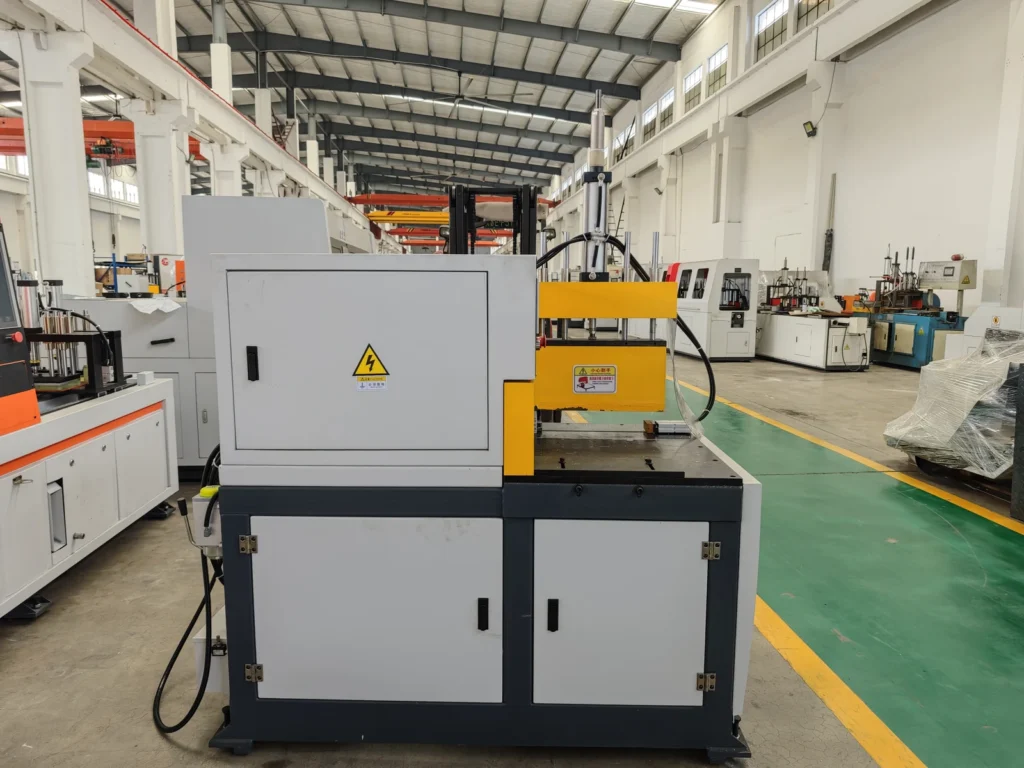
On a saw quotation, ask what the named technology controls. A pneumatic clamp does not tell you how the saw head advances. A hydraulic cutting function does not tell you whether stock loading is manual. Identify the blade motor, cutting stroke, clamp and positioning method separately.
Build a short action map with the supplier. It can be a marked photograph or a list beside the machine drawing. Use the same labels on both offers so your team compares equivalent functions.
| Machine action | Question for the quotation |
|---|---|
| Profile clamping | What powers it, where does it contact the section, and how is it controlled? |
| Blade cutting stroke | What moves the head or blade, and what adjustments are provided? |
| Stock positioning | Is it operator-led, stop-based or program-controlled in this offer? |
| Part release | Who removes the cut piece, and what support is included? |
Leave an unanswered item open for clarification. Do not fill it from a similar-looking machine in a video. The approved configuration should make the relationship between these actions clear.
2. Compare control at the cut
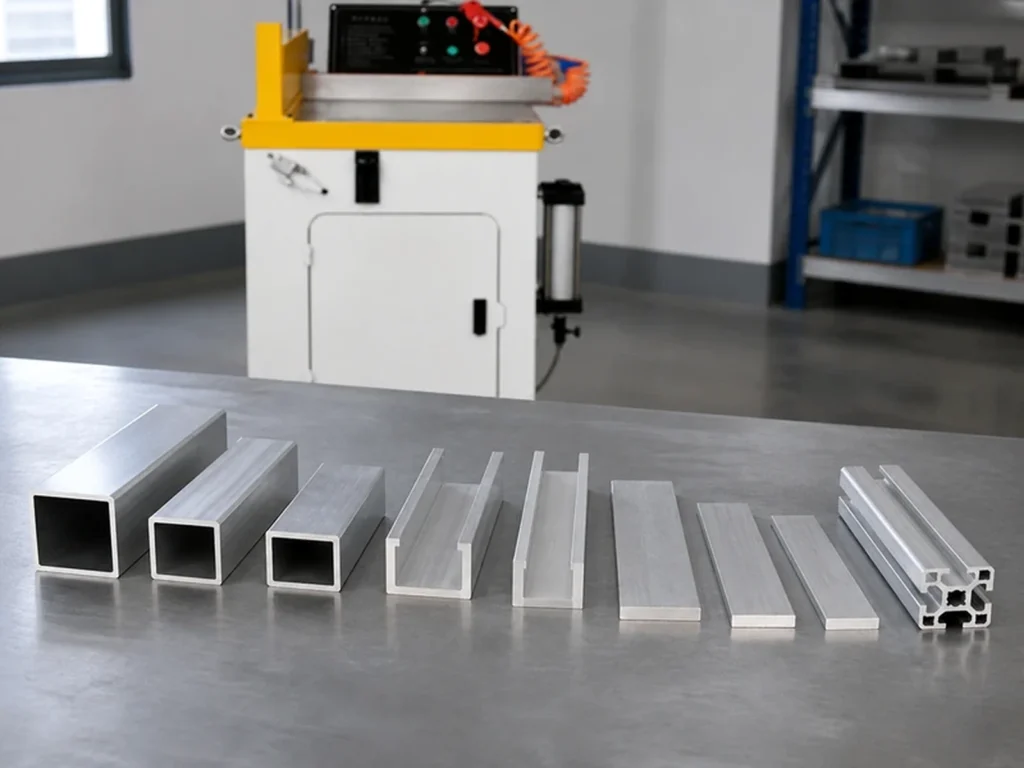
Describe the profile family before asking which drive is better. Include the cross-section, material, wall thickness, cut orientation and visible surfaces. Mark the faces that support the part and the areas that must remain clear for the cutting movement.
Ask how the proposed cutting stroke is started, controlled and completed. Identify which adjustments belong to the operator and which require authorized service. Request an explanation using the controls on the offered machine, with the operating documentation available.
Keep blade feed separate from blade rotation. A feed-control discussion does not set the correct rotational speed, blade geometry or lubrication for the material. These items belong in the complete cutting-process review.
For a thin section, include the support and contact points in the discussion. For several pieces loaded together, define the actual arrangement to be reviewed. Neither the pneumatic nor hydraulic label proves that a particular arrangement can be held and cut acceptably.
The supplier should explain how the proposed controls work with your fixture and job sequence. Our aluminum saw clamping guide helps organize the contact and support questions without treating pressure as a universal setting.
3. Check what the installation requires
Ask for the utility schedule for the exact machine version. Record the electrical supply and any compressed-air requirements separately. Where a hydraulic system is included, request the specified fluid, fill quantity and commissioning instructions from the supplier.
For pneumatic equipment, clarify the air connection, required condition and demand information. Festo describes valves as the components that control pneumatic actuators, including cylinders. Its pneumatic valve overview also distinguishes directional control from flow regulation.
Use the machine supplier’s requirements to check the available utility at the installation point. A compressor nameplate or a connection somewhere in the building does not complete that check. Give the supplier the site information it requests and resolve differences before delivery.
Include space for loading, unloading and routine service in the layout review. Identify where a technician needs access and where stock or carts will stand. A compact machine photograph cannot establish the usable working area.
If air preparation needs closer review, use the separate compressed-air installation checklist. Here, keep the comparison focused on whether each offer includes the utilities and preparation needed for the proposed job.
4. Review the service work your team can support
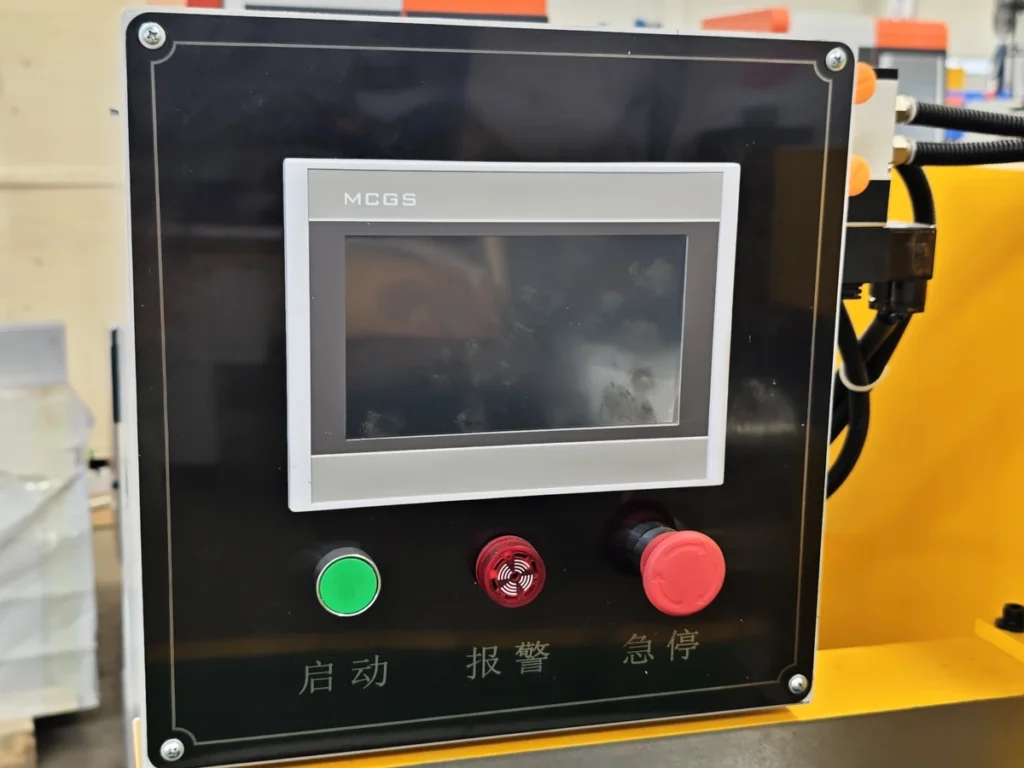
Ask for the maintenance schedule and a clearly identified parts list. Have your service team review the tasks, access points and documentation before purchase. Separate work assigned to trained operators from work reserved for qualified maintenance personnel.
For an air-powered function, request the relevant component identities and the specified air-treatment checks. For a hydraulic function, ask which fluid checks, filters, hoses and seals apply to the supplied system. These are questions for the actual circuit and manual, rather than a generic replacement schedule.
Compare how support is obtained. Who helps identify a failed component? What machine serial number, photograph or diagram reference will the technician need? Which proposed spares are included, and which are separate purchases?
Ask the supplier to explain the prescribed isolation and stored-energy procedure during training. Your authorized personnel should follow the machine documentation and applicable site rules. A purchasing comparison is not an instruction to disconnect a pressurized line or alter a protective function.
Keep the support conversation practical. A low purchase price with unclear service responsibility is difficult to compare with an offer that lists the included documentation and assistance. Record those differences in the quotation review.
5. Agree the sample-cut evidence
Choose representative material and state the part condition to be inspected. Agree the finished-length reference, cut orientation and required surface checks. Include any assembly requirement that will affect your decision.
Ask the supplier to record the tested configuration and job arrangement. The sample identification, fixture, loading method and control settings should be traceable to the evidence submitted. Request clarification if a demonstration uses a different section or workflow.
Evaluate the relevant results against your agreed criteria. A smooth-looking cutting stroke is not a length measurement. A completed sample is not a documented shift-output result. Keep each purchasing question tied to evidence that can actually answer it.
For output planning, request the full sequence including loading, positioning, cutting, unloading and inspection. State the batch and operator assumptions. Avoid transferring a short video cycle directly into a production commitment.
Use the factory acceptance review checklist to organize the requested records. The technology choice becomes useful when the offered configuration meets the needs of the real job.
Watch a JR-455Y machine example
JiurunCut’s semi-automatic machine overview identifies JR-455Y as a hydraulic cross-cutting route. The video below from Jiurun Machinery provides a visual example of the machine and operation. It does not establish every circuit detail or your part’s acceptance results.
While watching, note the stock support, operator access and part-handling sequence you want explained. Ask which features belong to the proposed version. Request a configuration-specific demonstration if the purchasing decision depends on a detail that is not visible.
Prepare one supplier brief for both offers
Send the same drawing revision and job information to each shortlisted supplier. Include the stock and finished lengths, batch quantities, cut orientation, inspection requirements and site utilities. Mark any unresolved item clearly.
Request the action map, included controls, utility schedule, maintenance documentation and proposed trial plan with the quotation. Ask the supplier to list exclusions and configuration changes rather than leaving them in a later conversation.
In a pneumatic vs hydraulic aluminum saw review, choose the complete configuration that can be supported and assessed for your work. To discuss the machine route, send JiurunCut your profile drawing and cutting requirements.
Buyer questions
Does a hydraulic saw automatically load the stock?
No. Hydraulic describes a power or control function. Confirm the loading and positioning method separately in the proposed configuration.
Can I select a saw from the pneumatic label alone?
No. Identify which action uses air, then review the fixture, cutting controls, utilities and evidence for your actual profile.
Which technology gives better cutting accuracy?
Evaluate the complete proposed process against your defined inspection criteria. The technology label alone does not establish a finished-part accuracy result.
What should I ask before ordering?
Request a function-by-function description, site requirements, service documentation and a representative trial plan linked to your drawing and acceptance criteria.