
Complete aluminum extrusion sample approval against a named drawing revision, a defined sample condition and a written list of checks. State exactly what the review approves. A short section that shows the profile shape does not automatically approve full-length geometry, finishing or a later cutting setup.
Before releasing a production order, separate the profile review from the finish review and any secondary-operation trial. Five checks make the approval record understandable to the buyer, extruder and downstream fabricator.
Define the approval boundary
- Identify the drawing and the physical samples being reviewed.
- Record which dimensions, surfaces and conditions were actually checked.
- Keep open items and later production checks visible.
On this page
Aluminum extrusion sample approval: start with drawing identity
Record the profile number, drawing revision and relevant order or trial reference. Ask the extruder to link the supplied samples to those documents. A physical section without its identity leaves the reviewer guessing which requirement it represents.
Compare the approved drawing with the drawing attached to the measurement report. Check whether both use the same units and feature references. If a design change occurred during the tooling review, resolve the revision before making an approval decision.
A manufacturer’s development description provides useful context. Yuh-Field’s custom die development article distinguishes drawing sign-off, trial extrusion, dimensional checking and sample approval. That is its described process, not a mandatory procedure for every supplier. Ask your extruder to explain the stages used for the actual order.
Keep a die-opening drawing distinct from the finished-profile requirement where the supplier uses both. Ask which document is the acceptance reference for the supplied extrusion. Do not assume that reviewing a tooling document replaces reviewing the finished component.
Give each physical sample an identifier. Record where that identifier appears on the sample, packaging and report. Use the same reference when discussing a question remotely so the buyer and supplier can point to the same item.
Check 2: material and process condition
Ask what condition the submitted sample represents. Record the stated alloy, temper, finishing condition and relevant processing stage. A sample sent for an early shape review may have a different scope from a finished-part sample intended for assembly approval.
Retain the material documentation supplied for the trial. If the order requires a particular certificate or report, identify it in the approval plan and confirm what has been provided. The appearance of a profile does not establish its alloy or temper.
State whether the sample has been cut, straightened, aged, machined or finished, as applicable to the actual route. Ask the supplier to explain any remaining operations. Do not infer those operations from a familiar surface appearance.
If the trial condition differs from the intended delivery condition, ask what additional review is needed. Record the supplier’s answer and the buyer’s decision. Avoid using an early sample to approve an unreviewed final condition.
The material certificate guide covers linking material information to the relevant stock. Keep the sample approval focused on what the submitted pieces and documents can establish.
Check 3: measurement scope and representative length
Agree which features need measurement and how the results will be reported. Use the actual drawing requirements. Keep the feature reference, requirement, measured result and sample identifier together instead of accepting a report headed only “dimensions OK.”
Distinguish local section geometry from features assessed along a length. A short end sample may help review a slot, chamber or outside dimension. Ask whether the submitted sample and method support the requested straightness, twist or other length-related check.
Request the measurement basis when a result is unclear. This can include the datum, sample orientation, instrument or method used, and the locations examined. Do not calculate a pass decision from a photograph of a caliper display without the necessary context.
Ask how samples were selected from the trial and how the supplier will inspect the later production batch. A sample approval and a production inspection plan answer different questions. Keep both references in the order rather than allowing one to silently replace the other.
Hydro’s custom-made die overview describes die design, correction and performance research as part of its extrusion work. This illustrates why tooling development is a process rather than a single photograph. It does not establish the dimensions or production performance of your sample.
Check 4: surface and assembly scope
Mark the visible faces and functional interfaces on the drawing. State whether the review covers the as-extruded surface, a representative finished surface or both. If a separate finish sample is used, record how it relates to the profile being approved.
Ask whether the physical sample is suitable for the proposed mating-part check. Identify the mating component, its revision and the condition of each surface. A successful informal fit cannot replace a drawing requirement that the sample review did not measure.
Keep the conclusions narrow. A trial assembly may establish that particular pieces can be assembled under the recorded conditions. It does not automatically prove service life, structural performance or interchangeability of every future part.
If a fit or appearance question remains, describe it with the feature reference and evidence. Ask the responsible parties to resolve it before broad approval. Avoid a general rejection that leaves the supplier unable to identify the actual issue.
Check 5: release decision and unresolved items
Write the decision in plain language. Identify what was reviewed, which items were accepted and which remain open. Name the person authorized by the buyer to make the release decision under the actual purchasing process.
Where an item is accepted with a limitation, describe the limitation explicitly. For example, a geometry-only review should not be recorded as approval of an unreviewed finish. Decide with the responsible parties whether the open item requires a revised sample or another defined check.
Ask the supplier to identify changes after the reviewed trial. A change to the drawing, material requirement or relevant process scope should be visible in the order record. Determine the necessary further review instead of assuming that the old approval covers every later version.
Keep the approved sample or its agreed record identifiable. Record its storage location and reference if it will be used for comparison. A retained physical item needs a clear relationship to the drawing and acceptance decision.
Prepare a one-page approval record
The outline below is a buyer coordination tool. Adapt it to the project; it is not a universal inspection standard or a substitute for the agreed requirements.
- Identity: profile, drawing revision, trial reference and sample identifiers.
- Condition: stated material, processing stage and finish status.
- Evidence: applicable reports, measured features and review methods.
- Decision: accepted scope, unresolved items and responsible reviewer.
- Next step: corrections, further samples or the agreed production inspection reference.
Attach the relevant report and annotated drawing. Keep superseded versions identifiable so they do not reappear as the active production instruction. The revision control guide explains the downstream handover for cutting documents.
Handover the approved profile to a cutting review
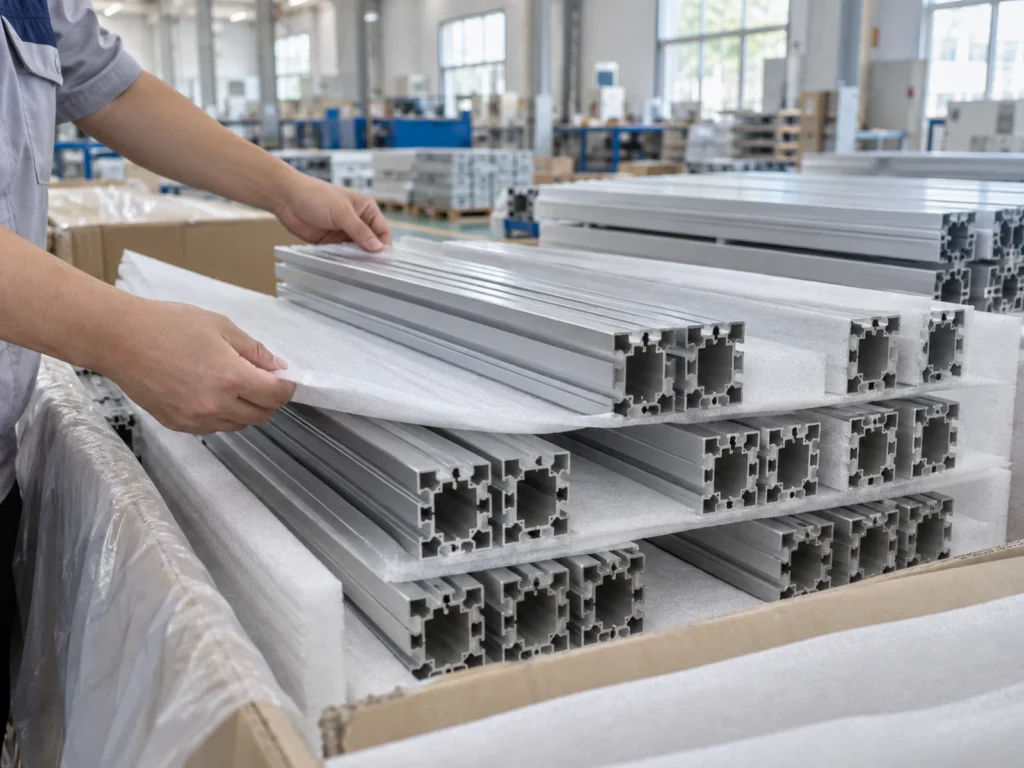
Send the cutting team the relevant profile drawing, actual representative stock and finished-part requirements. Include orientation, required cut lengths and the condition of visible surfaces. Retain the sample or batch identity through that handover.
Keep the two decisions separate. Extrusion approval concerns the supplied profile and its agreed scope. A sample cutting trial examines the proposed cutting job and its acceptance criteria. One review does not automatically establish the result of the other.
For a JiurunCut enquiry, provide these details through the contact page and request a cutting review for the actual material. This guide does not promise extrusion tooling, laboratory testing or a particular machining result.
Buyer questions
Can a short sample approve full-length straightness?
Ask whether the sample length and measurement method support the specified check. Record what was actually examined. Do not expand a local section review into an unperformed length-related inspection.
Is drawing approval the same as sample approval?
Keep their purpose clear. A drawing defines requirements; a sample review evaluates submitted material against a defined scope. Record both references and the decision attached to each.
Should production inspection stop after a sample passes?
Retain the agreed production inspection plan. A reviewed trial sample does not describe every subsequent piece. Confirm the batch checks and records required by the actual order.
What if the sample report uses an earlier drawing?
Resolve the revision mismatch before approving the affected scope. Ask the supplier to identify which requirements were checked and what further review the current drawing needs.