
Aluminum saw blade tooth geometry needs more detail than a tooth count or the word “aluminum.” A complete tool proposal identifies the tooth configuration, hook angle, product code and intended application. Buyers can then ask the tool and machine suppliers to review the same blade for the same job.
This guide explains five traps in reading a quotation. It helps you turn vague descriptions into clear questions before ordering a replacement blade or approving a machine package. It does not prescribe a universal tooth grind, angle or cutting setting.
Before you compare the price
- Request the exact tool code and its current technical sheet.
- Keep tooth count, tooth configuration and hook angle in separate fields.
- Review the intended material, workpiece and machine arrangement together.
On this page
- Trap 1: count becomes a geometry description
- Trap 2: a short code becomes a full specification
- Trap 3: one angle becomes a universal rule
- An incomplete quote comparison
- Trap 4: “aluminum” becomes the whole application
- Trap 5: replacement becomes an unrecorded change
- Questions to send with your drawing
- Buyer questions
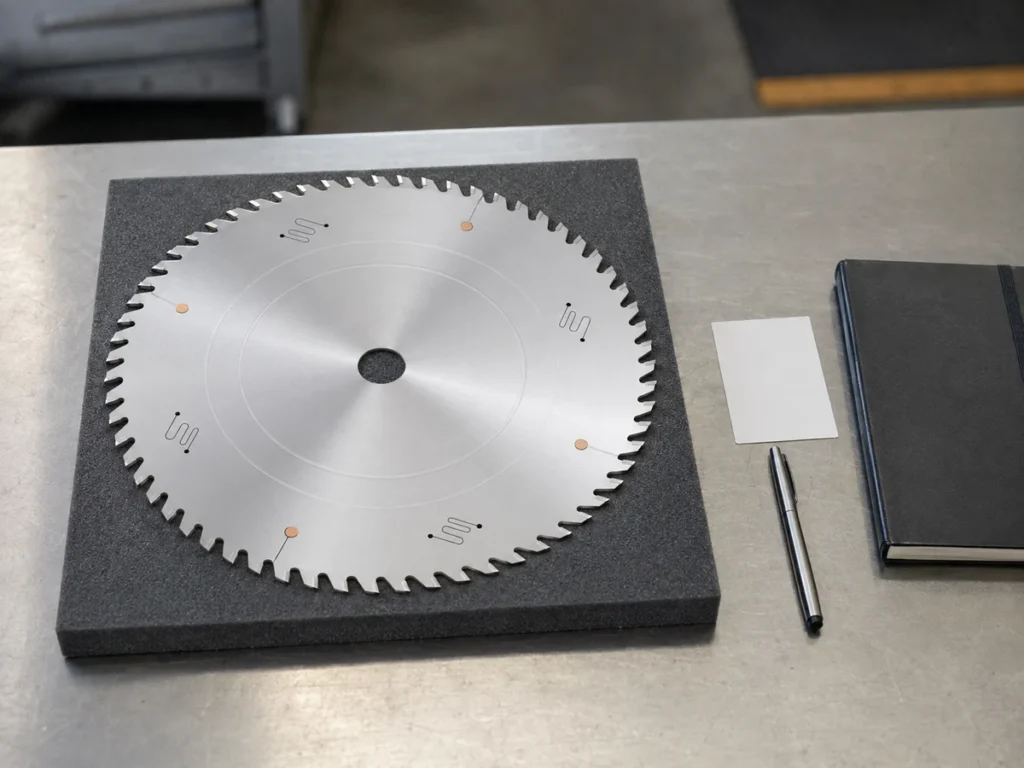
Trap 1: count becomes a geometry description
A tooth count tells you how many teeth are stated for the blade. It does not describe the shape of their cutting edges. Two proposed tools with the same count can still have different tooth designs, dimensions and application instructions.
A quotation saying “120-tooth aluminum blade” leaves the geometry unresolved. Ask for the manufacturer’s grind or tooth-configuration entry and the exact product code. Do not identify a grind from an overview photograph that lacks a clear, correctly oriented tooth detail.
Keep count as a separate comparison field. Our tooth-count guide explains the distinction between count and idealized circumferential spacing. That spacing calculation does not choose the tooth shape for your application.
A useful correction to this quote is simple: add a technical sheet reference. If the supplier cannot identify the tool beyond its diameter and tooth count, keep the selection pending rather than treating an incomplete description as an approved substitute.
Trap 2: read aluminum saw blade tooth geometry codes
Catalogs use abbreviated names for tooth configurations. Read those names using the manufacturer’s own legend and product description. Do not assume a short code from one supplier has the same detailed geometry as a similar-looking code from another.
As a primary example, Freud’s LU5B3571 listing separates TCG grind from hook angle and tooth count. Its description identifies a flat-triple-chip design and a mechanical-clamping application. This is an example of reading fields together, not a recommendation to fit that blade to a JiurunCut machine.
Likewise, LEUCO’s TR-F K easyFix product page identifies a tooth configuration, negative hook angle and an application for thin-walled aluminum profiles. It also states a secure-clamping requirement and application notes. Keep those conditions attached to the product description.
A family name is a starting point for clarification. Ask the supplier which exact entry in the family is proposed, what technical-sheet revision supports it and whether there are application restrictions relevant to the stock you intend to cut.
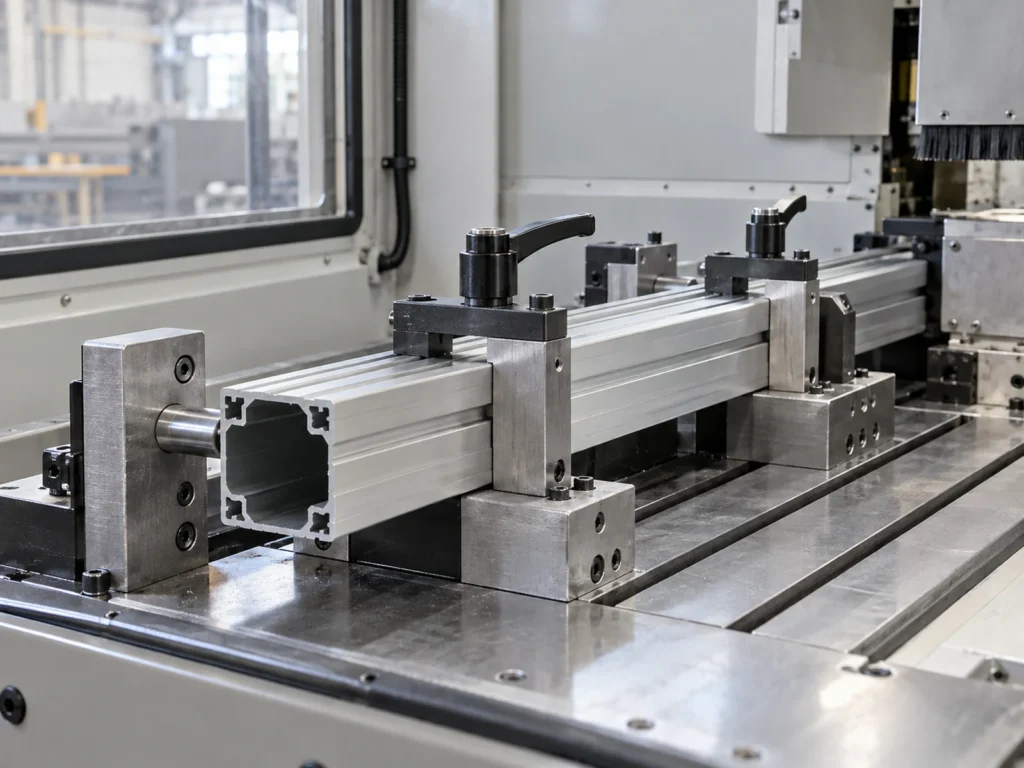
Trap 3: one angle becomes a universal rule
Hook angle is a further specification field. It should not disappear into a general description such as “fine teeth.” Request the stated sign and value from the tool supplier, together with the intended machine and workpiece arrangement.
The two catalog examples above show why a single rule is too broad: one listing describes a positive cutting angle, while the other describes a negative hook angle. Their product descriptions and application conditions differ. The comparison does not establish that either tool is interchangeable with the other.
Ask what supports the proposed selection for your actual part. Identify whether the workpiece is a solid section, a hollow profile or another product, how it is presented to the cutting head and which machine configuration is being reviewed.
Keep the response as an application-specific tool proposal. A catalog example, a familiar brand or a blade that physically fits a mounting is not enough to approve its use. Our blade-size guide covers the separate dimensional and mounting review.
An incomplete quote comparison
Imagine a fictional purchasing sheet with two offers. Both say “120 teeth.” Offer A attaches a product code, a technical sheet and a stated application. Offer B supplies only a photograph and the description “for aluminum.”
The equal counts do not make the offers equivalent. Offer A provides information that can be reviewed, but still needs confirmation for the proposed machine and part. Offer B has unanswered questions about tooth configuration, angle, tool dimensions and intended use.
A clearer decision note is: “Selection pending; request the full tool identity and application review for both offers.” This avoids turning a missing field into an assumption. It also keeps the technical decision separate from the price comparison until the proposed scope is understood.
Do not fill Offer B’s missing grind from the appearance of the photograph. A wide shot can show the blade as an object without proving the detailed cutting-edge geometry or its present condition.
Trap 4: “aluminum” becomes the whole application
Material identification matters, but the word alone does not describe the cutting job. Include the specified alloy and temper where available, the section drawing, wall or solid-section dimensions, orientation and any surface requirements that affect review.
For a hollow section, show the internal geometry and the cut plane clearly. Outside dimensions alone can leave the tool supplier without the information needed to understand the material encountered during the cut. Include representative stock and the approved drawing revision in a trial request.
Also describe the machine arrangement without guessing its capabilities. State the proposed model and configuration, then ask for confirmation of the blade and process combination. Do not transfer an application note from a different tool or machine simply because the stock is also aluminum.
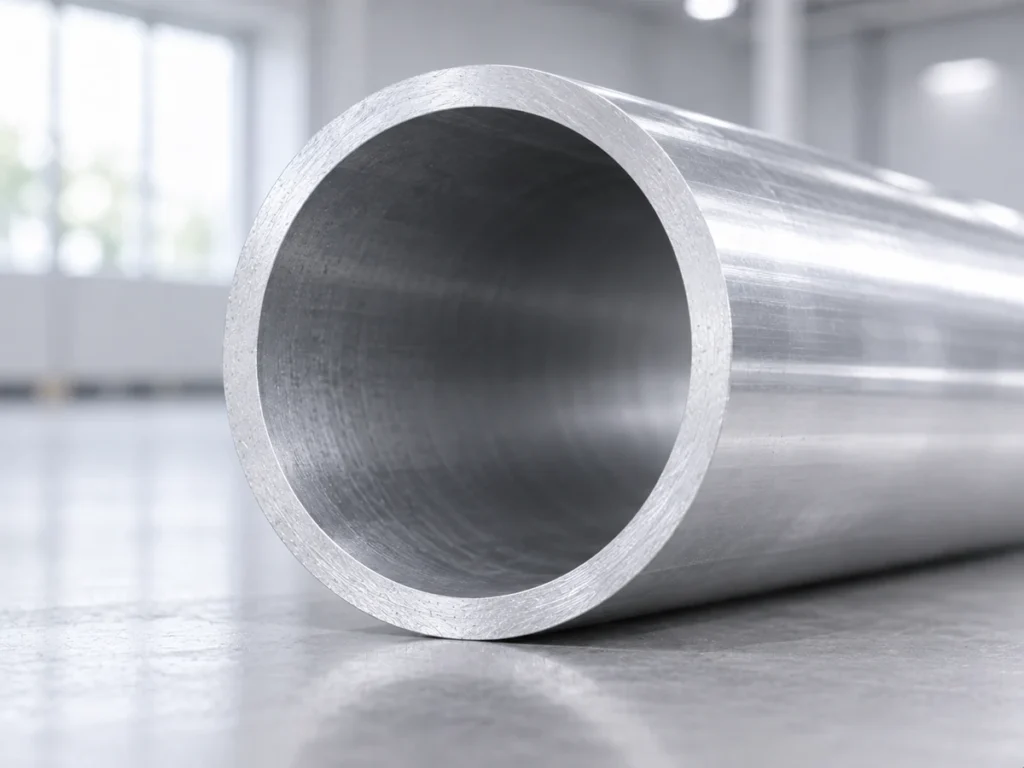
Trap 5: replacement becomes an unrecorded change
A replacement request should identify the previous approved tool and the proposed new tool. Keep geometry and application notes in the record along with dimensions, mounting details and the supplier’s instructions. Matching just diameter and tooth count leaves important entries unresolved.
Ask whether the replacement changes a documented setup or needs a new review. Preserve sample identity and actual inspection results when evaluating the proposal. Do not record an accepted cutting result until the agreed checks have been completed and approved.
Include servicing history when it is relevant. A label or an old purchase order may not describe the present tool condition. Use the appropriate supplier inspection and service process rather than assuming that the original specification alone proves a serviced blade remains ready for use.
Questions to send with your drawing
- Which exact blade product and technical sheet are proposed?
- What tooth configuration and hook angle does that sheet identify?
- What material, section and machine conditions apply to the proposal?
- Which dimensions and mounting details need confirmation?
- What evidence and approval are needed before the tool enters production?
Send the part drawing, stock description and proposed cutting arrangement through Contact JiurunCut. Request a review of the machine and tooling combination. Keep any missing technical information visible so the purchasing team knows which questions remain open.
Buyer questions
Does TCG mean any blade is suitable for every aluminum profile?
No. A grind description is one entry in a full tool specification. Review the exact product, its application notes and the proposed machine and stock together.
Can equal tooth counts prove two blades are interchangeable?
No. Count does not establish tooth design, hook angle, dimensions, mounting or application approval. Request the complete specifications for both products.
Can a machine video identify the correct tooth geometry?
A general demonstration usually cannot show the necessary details. Ask for the documented tool identity and the reviewed cutting arrangement rather than inferring them from a wide shot.
Does a catalog promise establish the result on my part?
It describes the supplier’s product and stated conditions. Your production decision still needs the relevant application review and agreed evidence for the actual part.