
Aluminum saw noise should be compared with a named measurement, an identified machine configuration and a stated operating condition. A number followed by dB(A) is an incomplete purchase specification when those details are missing.
For an industrial cutting inquiry, separate three questions: what the supplier reports, which equipment and job that report covers, and how your own workplace will be assessed. These five quote checks help purchasing and engineering teams request usable evidence before choosing a machine.
Three details to keep beside the number
- The quantity: sound pressure or sound power, with the full reported designation.
- The test: equipment version, operating condition and measurement method.
- The site review: installed layout, associated equipment and actual work tasks.
On this page
1. Identify the aluminum saw noise quantity
Sound pressure describes sound at a measurement point. Sound power describes the acoustic energy emitted by a source per unit time. Pressure at a microphone depends on distance and the surrounding acoustic environment; the two quantities therefore answer different questions. See Brüel & Kjær’s explanation of pressure and power.
Ask the supplier to copy the complete designation from its report into the quotation. Keep symbols, units and any weighting together. Do not shorten two differently named quantities into a spreadsheet column called “noise” and rank the smallest number.
Where the report uses Lp or Lw notation, retain that notation and its explanation. If the quotation only says “low noise,” mark the evidence as missing. A sales description is a starting point for a question, not a measured result.
Give your acoustic reviewer the original report rather than a retyped number without context. This also avoids losing footnotes, uncertainty information or conditions that change the meaning of the stated result.
2. Match the operating condition to the proposed job
An idle machine, a cutting operation and a complete production cycle are different report scopes. Make the distinction visible in the comparison. Include the profile drawing, material designation and intended cutting job in the inquiry, so the supplier can explain whether its available data cover that request.
Record the blade and tooling identification used in the reported configuration where available. Identify feeding, clamping and handling stages by name. Do not assume a demonstration of one section represents every tube, extrusion or batch arrangement.
The UK HSE recommends asking suppliers for comparable noise information under a standard test and the intended operating conditions. Its guidance also treats supplied output data as an aid to selection, since the noise experienced depends on other factors. See HSE’s guidance on choosing quieter equipment.
For your purchasing file, use one job description across all inquiries. If a supplier cannot provide a matching condition, record the difference explicitly. “Not available for this job” is more useful than an unexplained blank or a guessed value.
3. Request the supporting measurement record
A useful attachment lets your reviewer trace a statement back to the machine and the test. Ask for the report identifier, date, equipment version and the test method or code used. Keep the edition or revision where the supplier provides it.
For a pressure result, request the stated measurement positions and distances. For any result, preserve the report’s operating description, measurement duration, weighting and uncertainty information. The appropriate details depend on the measurement method; have a qualified reviewer resolve omissions instead of improvising a new test from this checklist.
Separate the report date from the quotation date. A recent quote can refer to an earlier equipment version. Ask whether the offered package matches the tested package, and retain the supplier’s written explanation of any difference.
Use a simple document status: received, clarification requested or unavailable. This makes the next action obvious to the buyer without presenting an incomplete data set as a verified comparison.
A comparison with missing information
This fictional example contains no measured values. It shows why a buyer may need clarification before ranking two offers.
| Offer description | Question before comparison |
|---|---|
| Offer A reports sound pressure at an operator position during cutting. | Which position, method, profile and equipment configuration does the report cover? |
| Offer B reports sound power while the machine is idle. | Can the supplier provide data on a comparable quantity and operating basis for the proposed job? |
The descriptions differ in both quantity and operating condition. Moving their numbers into adjacent spreadsheet cells would not resolve those differences. Keep each original statement intact and send a shared clarification request.
When the replies arrive, let the reviewer decide whether the evidence supports a comparison. Do not create a conversion between pressure and power from a photograph, an assumed distance or an unspecified workshop.
4. Define what the aluminum saw noise quotation includes
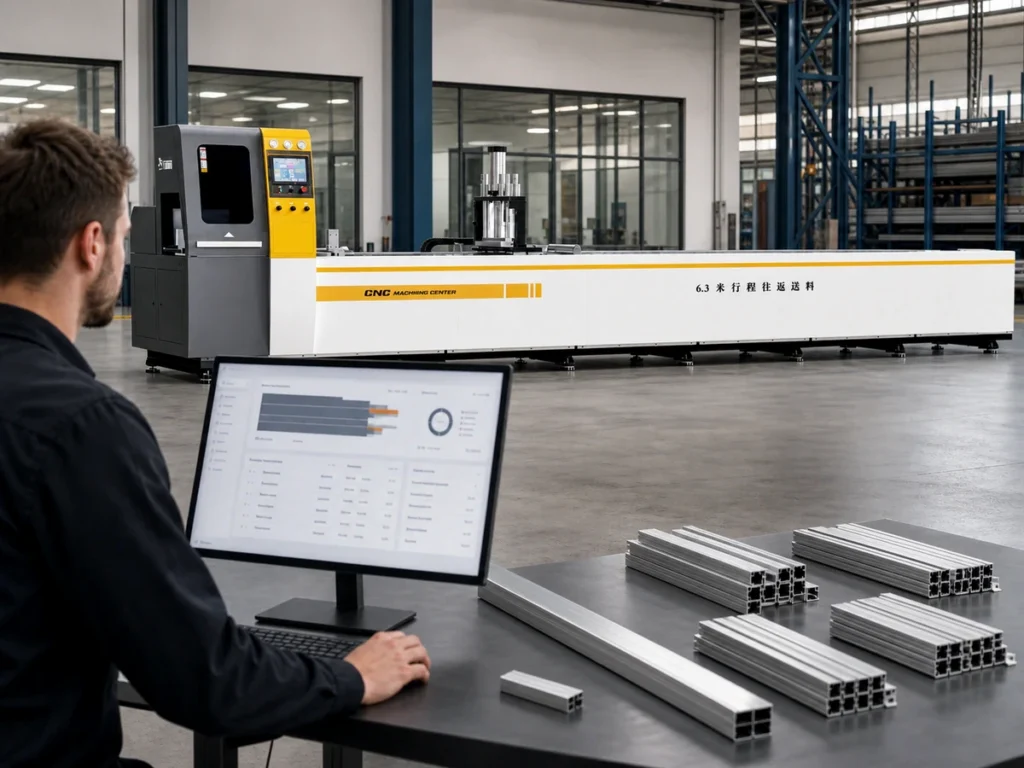
Compare a named equipment package, not just a model label. List the offered machine, infeed and outfeed equipment, chip collection and other associated units. Ask which items were operating during the reported test and which items are included in the price.
If an acoustic enclosure or another noise-control option is offered, request its identification and the evidence associated with that exact configuration. A closed-looking cabinet in a photograph does not establish a particular sound reduction.
Keep delivery scope and noise evidence in separate columns. An option may appear in a brochure without appearing in the quoted package. Conversely, a quoted accessory may need its own supporting documentation.
Review any installation and operating requirements through the supplier’s current documentation and your site’s qualified team. Do not alter guards or operating arrangements to imitate an image or to obtain a more favorable reading.
5. Plan the installed workplace review
Machine emission data do not describe a person’s entire workday. NIOSH distinguishes a sound level at a point in time from exposure accumulated over time; personal dosimetry follows a worker’s exposure, while sound level measurements can characterize areas or equipment. See NIOSH’s explanation of noise exposure measurements.
Give your site reviewer the proposed layout and task description. Identify where people load stock, supervise cutting, collect parts and perform other duties. Include nearby equipment in that description rather than treating the saw as the only activity in the area.
Agree who reviews the installed arrangement and which records must be supplied before the equipment handover is accepted. Keep workplace assessment, any required controls and staff arrangements with the responsible qualified team. This article does not set exposure limits or prescribe hearing protection.
Connect the review to your installation planning and factory acceptance checklist. The handover file should identify what has actually been checked and what remains for the destination site.
Prepare a clear cutting-machine inquiry
Send the profile drawing, material description, finished lengths, batch mix and proposed installation layout. Attach the noise-related information your reviewer needs, with the requested report scope and the name of the person who will assess the reply.
Ask JiurunCut to identify the proposed machine configuration and the documentation available for that offer. Use a comparable quotation request to keep commercial scope alongside the engineering questions. If a report or condition is unavailable, request a clear written statement rather than inserting an assumed result.
Send your drawing and cutting requirements to JiurunCut so the inquiry can be reviewed against a named job and equipment package.
Buyer questions about aluminum saw noise
Can two dB(A) numbers be compared directly?
Check the named quantity, operating condition and report basis first. The unit label alone does not establish a like-for-like comparison.
Does a machine video prove the noise level?
No. A demonstration can help identify visible equipment and operations, but its soundtrack is not a substitute for a documented noise measurement.
Should the purchase file contain only the supplier’s summary?
Keep the supporting report, the offered configuration and any clarification together. This gives the reviewer the context needed to assess the statement.
Is the quietest quoted machine automatically suitable for the site?
Selection also requires job fit and an installed workplace review. Keep those decisions tied to verified documentation and your site’s actual work arrangements.