
Thermal break aluminum cutting needs a review of the complete section and its materials. Identify whether the saw will cut an assembled profile containing an insulating strip or separate aluminum members. Send the system drawing, material information and representative stock before requesting a cutting recommendation.
Cutting suitability and building-system performance need different evidence. A neat end face does not establish insulation, connection strength or weather resistance. This guide helps prepare the purchase and sample review; it gives no universal blade, speed, clamping force or operating sequence.
Start with the actual incoming profile
- Show every material present in the section being cut.
- Define the required end condition and length reference.
- Keep the reviewed sample, configuration and result linked.
On this page
1. Identify the materials for thermal break aluminum cutting
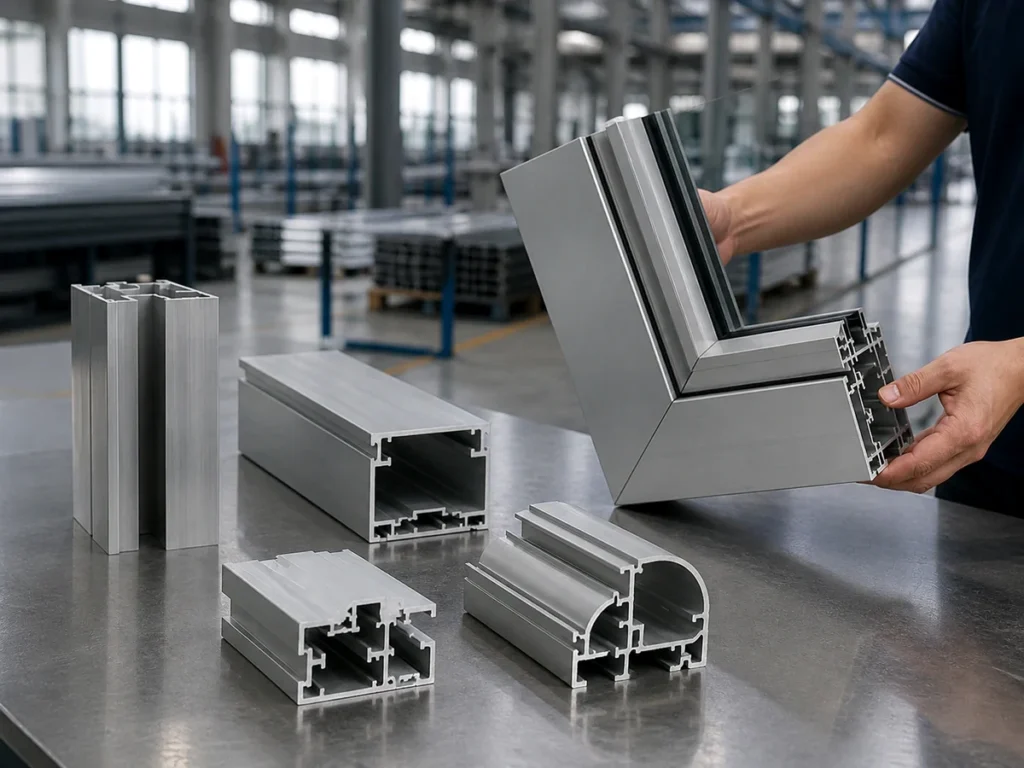
A thermal break is not simply an empty chamber in an aluminum section. For polyamide-strip systems, the insulating component belongs to the assembled section description. Mark it on the approved drawing rather than relying on a photograph’s dark areas.
Technoform’s insulating-profile overview describes polyamide-based components connecting aluminum parts in window, door and facade systems. It also lists different insulating materials. Use the identity of the actual component; do not assume one material description applies to every thermally broken profile.
The drawing should distinguish the aluminum portions, insulating elements and any other material present at the cutting stage. Obtain the applicable material and processing information from the profile or system supplier. A generic aluminum alloy designation does not describe the whole composite assembly.
Keep the section identifier and revision with these details. If two profiles share the same outside depth but use different internal arrangements, give them separate records. The supplier should be able to identify exactly which combination the inquiry covers.
2. Define what enters the saw
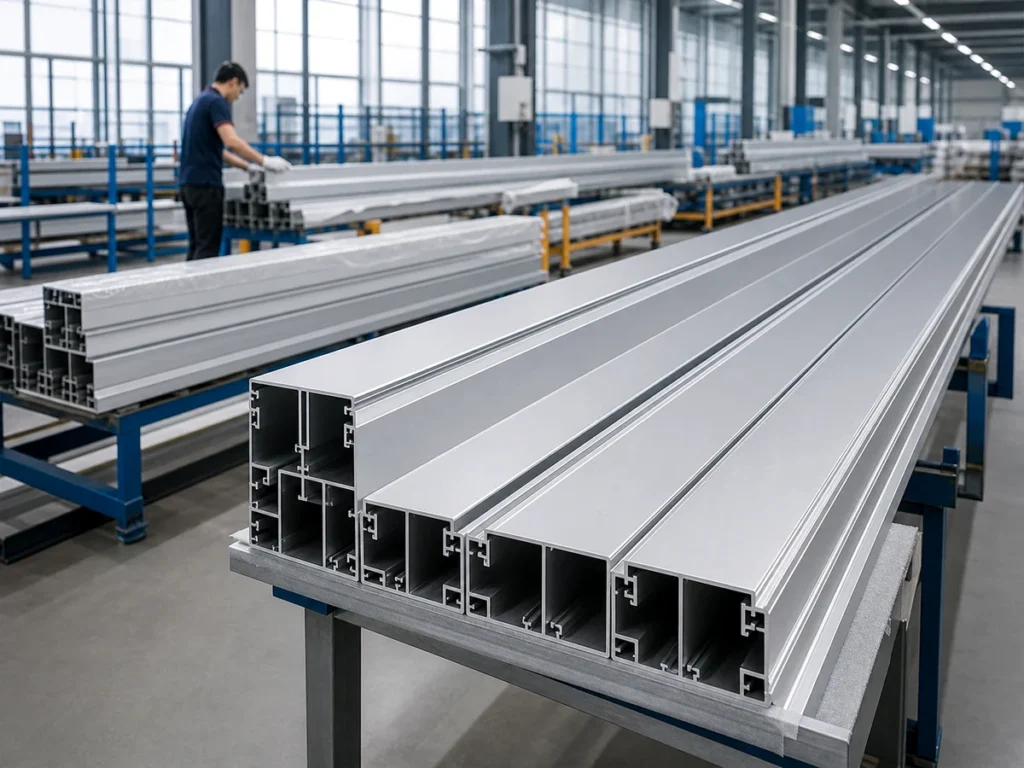
State whether the stock arrives as an assembled composite profile or as separate members awaiting assembly. These are different incoming conditions. A quotation for cutting separate metal pieces does not by itself establish suitability for the combined section.
Show the condition of the representative stock, including its finish and any protective film that remains in place. Identify the relevant faces and mark the orientation on the sample. Keep the information readable without requiring the machine supplier to infer a process from an assembly photograph.
Describe the operation before and after cutting at a scope level. If the job also needs drilling, routing, notching or other preparation, list those operations separately. The saw quotation should identify the requested cutting work and any additional work actually included.
For door-related members, our door-frame drawing checklist explains the distinction between opening dimensions, frame sizes and individual members. Use the chosen system’s fabrication documentation to release lengths and end details.
Keep manufacturing-stage questions with the responsible team. This article does not recommend changing the system’s assembly order. The purpose is to describe the approved incoming condition accurately enough for a machine and tooling review.
3. Describe the delivered end, not just the length
Specify the required cut length, its reference points and the geometry at both ends. For an angled member, identify whether the dimension follows a long point, short side or another approved reference. Include the profile orientation that makes those labels meaningful.
Then state how the complete end will be assessed. Separate the metal end condition from the condition of any insulating element and the relationship between the section’s components. Let the system’s approved acceptance information define what must be checked and what is acceptable.
Ask whether a dimensional check applies to an aluminum portion, the entire section or a later assembled member. A result measured at one feature should be labeled for that feature. It should not silently become a statement about every part of the composite profile.
For edge finishing, distinguish burr removal from a specified chamfer or other feature. Our deburring and chamfer guide explains this scope distinction. Do not apply a generic metal-edge requirement to an insulating strip without its supplier’s approved guidance.
Record unresolved requirements before the trial. Phrases such as “good finish” or “ready for assembly” leave the acceptance decision unclear. A labeled drawing reference and a defined check give both teams something concrete to review.
4. Request a review of tooling, restraint and support
Present the material combination, section geometry and required end condition together. Ask the machine and tooling suppliers to assess the intended job. Approval should identify the proposed configuration and the application it covers.
On its plastic-profile processing page, Technoform explains that sawing parameters and blade characteristics are matched to the plastic being processed, including wear considerations for glass-fibre reinforced materials. That source concerns plastic-profile processing; it does not prescribe a setup for your assembled aluminum composite.
The purchasing implication is to request an application-specific assessment. Do not copy a setting for a different material or infer that a standard aluminum blade has been approved for every insulating component. Keep the selected tooling recommendation with its source and covered profile.
Ask how the proposed equipment accommodates the section’s actual orientation and support needs. Keep any handling or restraint questions in the supplier’s review. This guide supplies no clamping location, force, support spacing or adjustment procedure.
Also define how cut pieces will be identified and received. If labeling, data handling or special collection equipment is required, include it in the scope discussion. A basic machine description does not confirm that these functions are included.
5. Record what the sample review actually demonstrates
A useful sample record identifies the stock, system drawing, insulating component and incoming condition. Add the machine configuration, tooling reference and the approved checks performed. Preserve enough detail to connect the result to the original request.
Label each reviewed piece and record its length and end requirements. Keep observations and measured results separate. For instance, a photograph can show the visible condition, while a recorded dimensional check answers a defined measurement question.
Do not call every planned check “passed” because the demonstration completed a cut. Record completed checks, open questions and deferred checks separately. Our factory acceptance checklist explains how to keep planned evidence and actual results distinct.
If an assembly review is included, name the assembly and the condition examined. A successful fit on one identified sample does not establish all system requirements. Connection, thermal and weather performance belong to their applicable evaluation and responsible authority.
Use a clear outcome: which application was reviewed, which requirements were demonstrated, and what remains to be resolved. Keep unsupported claims out of the purchase record. The next reviewer should understand the evidence without reconstructing the demonstration from memory.
6. Control changes after the review
Keep the released profile and component identities linked to the cutting job. If the incoming section, insulating material, finish or end requirement changes, route the change to the responsible reviewer. A similar appearance is not enough to establish that the earlier assessment still applies.
Record the drawing revision and the approved application range. For a later order, check that the actual stock and requested work remain within that range. Our batch-record guide shows how identity and disposition can remain connected.
Define who resolves discrepancies between the received stock and the released record. Keep held pieces distinct from accepted pieces until the responsible decision is recorded. This protects the clarity of the handoff without prescribing a universal production procedure.
Finally, maintain a separate file for system-performance documents. The cutting review, member inspection and building-product evidence may all be needed, but each answers its own question. Label their purpose so a sales conversation cannot turn one result into a broader claim.
Common questions
Can an ordinary aluminum cutting recommendation cover a thermal-break profile?
Ask for a review of the actual complete section and material combination. A recommendation for a different profile or separate metal members does not establish approval of the composite stock in your inquiry.
Can I identify the insulating material from a dark line in a picture?
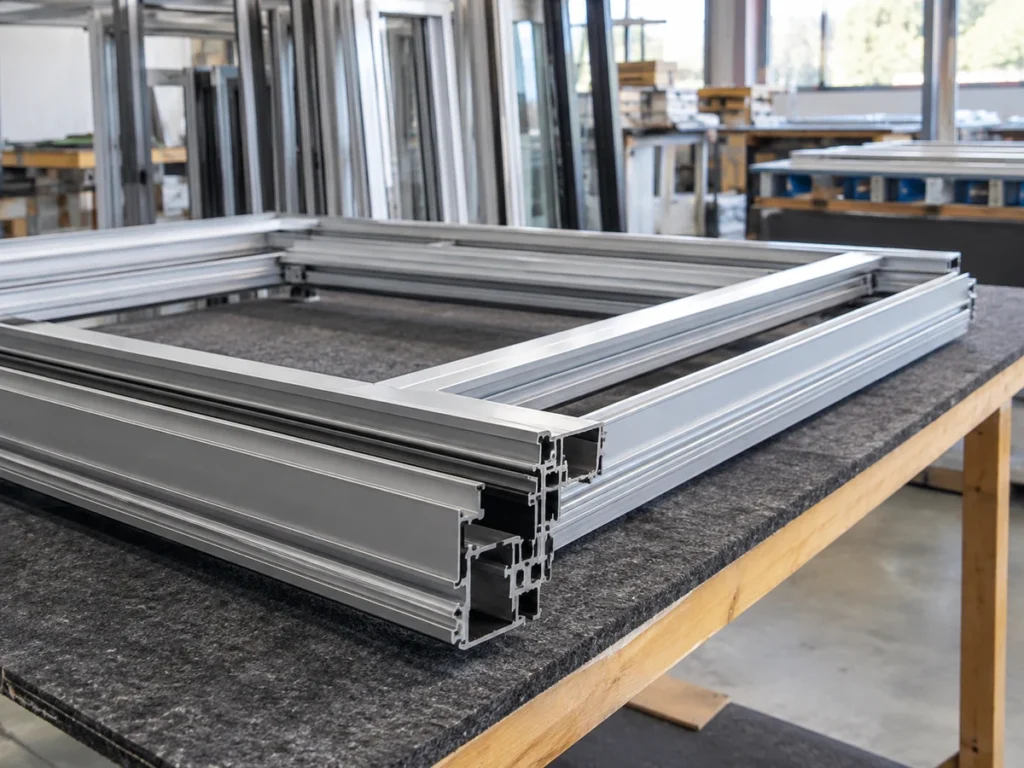
No reliable material identity follows from that appearance alone. Use the component identification, section drawing and supplier information. The illustrations in this guide are not verified thermal-break cross sections.
Does a clean cut prove insulation or connection performance?
It documents the end condition observed under the recorded circumstances. Thermal, mechanical and other system requirements need their applicable evidence. Keep those claims separate from the sample cutting result.
Send the complete section for an application review
Ask JiurunCut to review your cutting requirement. Include the system drawing, all materials present, incoming stock condition, end details and acceptance requirements. Request a recommendation for that documented application.