
Aluminum cutting machine spare parts should be identified against the actual machine and component, not chosen by appearance alone. Send the machine record, the available part reference and a clear description of the request. Ask the responsible supplier to confirm compatibility, supply scope and any required service work before ordering.
Three things to remember
- A machine model name is a starting point; its serial and configuration identify the installation.
- A symptom describes what happened, rather than proving which component caused it.
- Confirm the exact supplied item and its installation requirements before approving the order.
On this page
1. Which aluminum cutting machine spare parts record do you need?
Start with the machine model and serial number from its supplied records or identification plate. Include the purchase reference and any documented configuration changes. Keep unreadable or unavailable information marked as unknown. Do not turn a partial label into an invented identification.
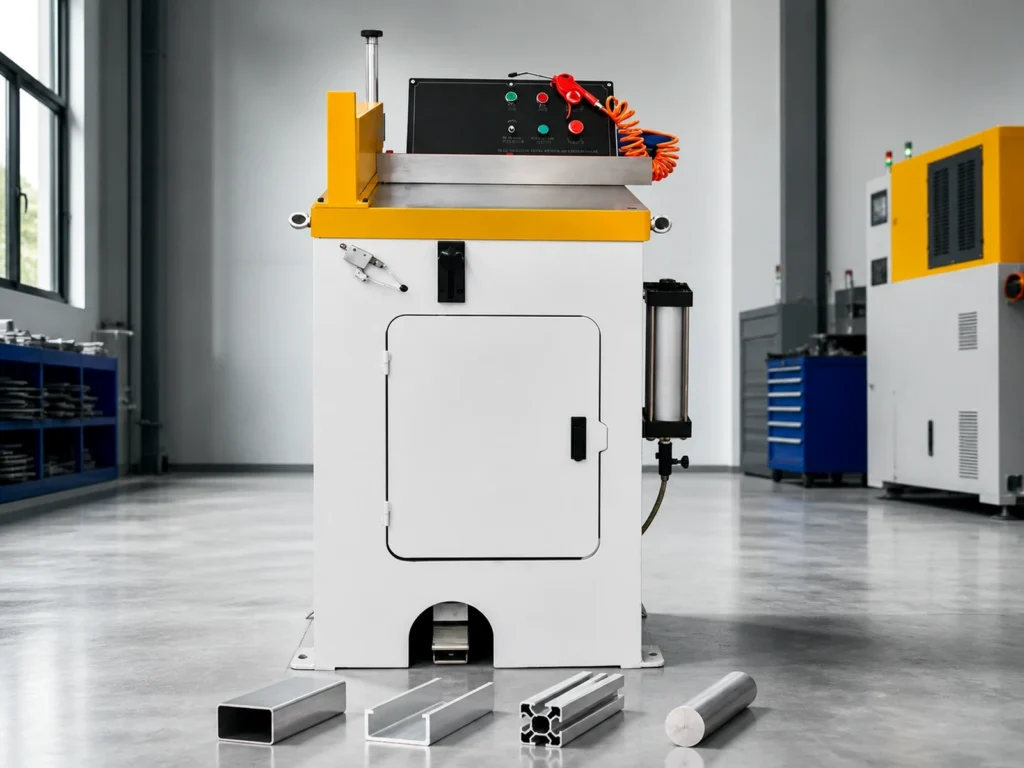
Two machines with a similar cabinet or model name may have different installed options. Give the supplier the record for the machine that needs support. A brochure image explains the product family, but it cannot confirm the component fitted to your particular installation.
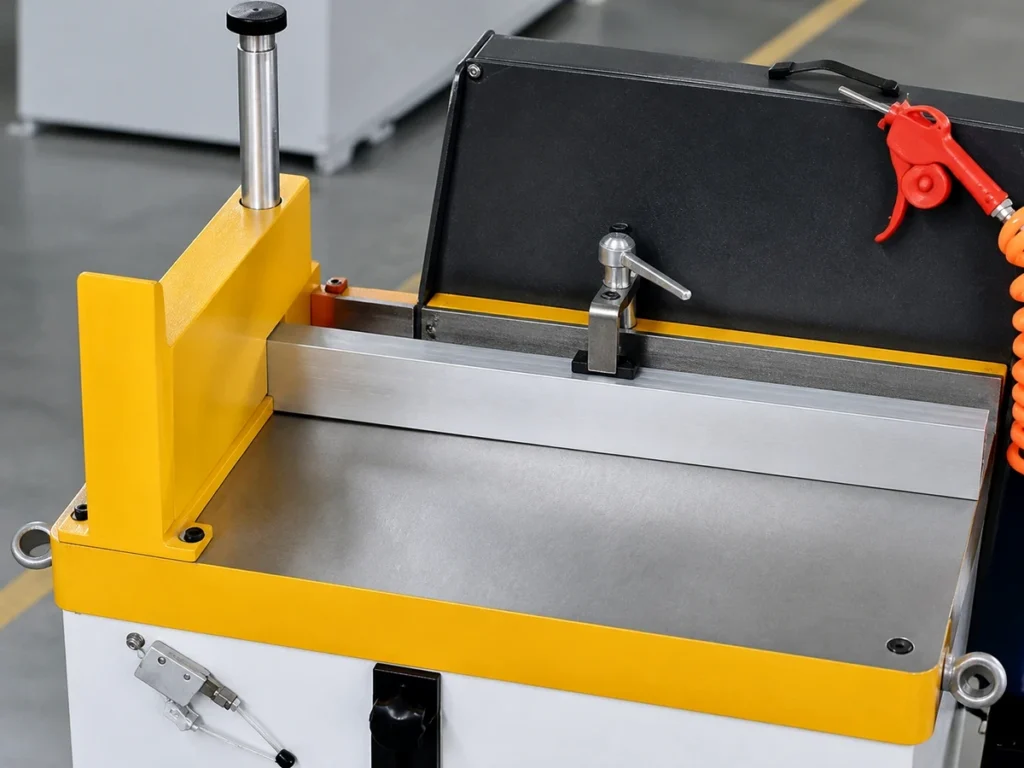
A useful overview photo shows the machine and the area involved. Add a readable identification photo when it is available through the approved access method. Keep the original image available so text can be checked without relying only on a typed transcription.
For a new machine purchase, ask how the supplied documentation identifies service parts and which records should be retained. Include that handover in the installation and site-readiness review, rather than waiting until a replacement is needed.
2. What identifies the requested component?
Use the approved parts list or service documentation if it provides an item reference. Record the component description, its location and any readable label or code. Explain whether the request concerns one item or a complete assembly. Include the document revision when quoting a drawing reference.
A number beside an exploded drawing can be a position marker rather than an orderable part number. Ask the supplier which reference is needed for ordering. Do not assume that every visible number has the same purpose or that one catalogue covers every installed configuration.
Component manufacturers can also require their own identifiers. For example, WEG’s W22 documentation identifies serial number, manufacturing date and spare-part description as ordering information. This illustrates the identification principle; it does not establish that a W22 motor is fitted to your saw.
Collect available details without opening or dismantling equipment just to create an inquiry photo. Any inspection, access or service work should follow the machine documentation and your site’s authorized procedure. If an identifier cannot be obtained that way, ask the service provider how to proceed.
3. What happened, and what remains unknown?
Describe the observed event in simple terms. Include when it began, the relevant job or setup and any message shown to the operator. State whether the request is for a confirmed worn item, a planned spare or help identifying a fault.
A symptom is not a diagnosis. For example, a reported stopping event does not, by itself, prove that a control, sensor or motor needs replacement. Keep the observation separate from the proposed component. Let the responsible service provider confirm the next review step.
Record recent documented maintenance or configuration changes that may be relevant. Add the available service history and the current machine status. Do not describe an untested adjustment as a successful repair. If a previous service report identifies a part, include that reference.
The maintenance planning guide helps organize these records. Use the machine manual and qualified service support for troubleshooting and return to operation; this order guide does not provide a repair procedure.
4. What exactly does the quoted replacement include?
Ask for the confirmed orderable reference, description and quantity. Clarify whether the item is a loose component, an assembled unit or a service kit. Check which related items are included and which are supplied separately. Keep that scope in the written quotation.
If the supplier proposes a replacement for a discontinued item, request the documented compatibility and any required changes. Physical fit alone is not enough to confirm the complete scope. Ask whether configuration, setup or qualified service work is required with the supplied item.
For aluminum cutting machine spare parts, distinguish availability from a confirmed dispatch date. Request the current lead time, delivery scope and applicable support information for the exact item. A general website statement about stock does not establish availability for your order.
Separate the commercial questions from the technical ones. Confirm the item first, then review price, freight and the quoted terms. If the technical identity changes during the discussion, revise the order reference before approving it.
| Topic | Confirmation needed |
|---|---|
| Identity | Exact reference for this machine and component |
| Contents | Included items and separate requirements |
| Replacement | Compatibility and any documented changes |
| Service | Required installation, setup and checks |
| Delivery | Current lead time and dispatch scope |
5. What happens when the spare arrives?
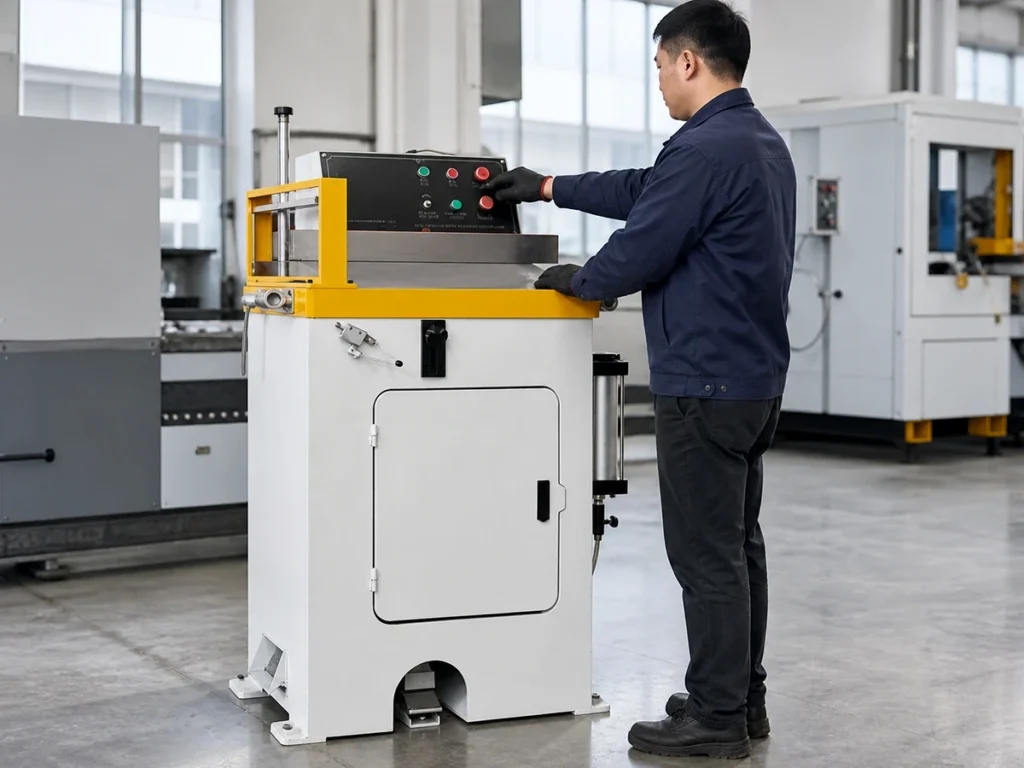
Check the delivered identification and quantity against the confirmed order. Retain the supplied documentation and packaging information with the machine’s service record. If a code or supplied item differs, ask the supplier to resolve it before treating the delivery as approved.
Record whether the part is stored as a planned spare or handed to qualified service personnel for installation. Follow the supplier’s storage requirements for that component. This guide sets no universal shelf life or storage conditions for mixed mechanical and electrical items.
After service work, retain the completed report and the checks required by the machine documentation. Link any replaced component to the machine serial and service date. Ordering the correct item and authorizing return to operation are separate decisions.
A simple request outline
Use the following fields as an inquiry outline. Leave unknown fields marked clearly so the supplier can see what still needs confirmation. Attach existing approved records; do not substitute a stock image for the machine or component needing support.
- Machine: model, serial, purchase reference and documented options
- Requested item: description, location, available code and parts-list revision
- Reason: planned spare, confirmed wear or observed issue needing review
- Evidence: actual photos, displayed message and relevant service record
- Scope to confirm: compatible item, contents, service requirements and current lead time
Common questions
Can I order from a photo alone?
A photo helps locate the item. The responsible supplier still needs enough machine and component information to confirm the exact compatible reference.
Is a drawing position number an ordering code?
Not necessarily. Confirm its meaning in the applicable documentation and ask for the orderable reference for your configuration.
Should every fault request include a replacement order?
No. State the observation and request service review when the cause or component identity has not been confirmed.
Does delivery approval mean the machine can restart?
No. Qualified service work and the required checks must be completed under the machine documentation and your site’s procedure.
Discuss your machine and service records
Contact JiurunCut with your machine identity and the available component or service reference. Explain whether you need a planned spare or help reviewing an observed issue. We can discuss the request and identify what information still needs confirmation.