
Compare aluminum saw cutting and tube laser cutting by the part you need to deliver. A circular-saw route deserves review when the job is mainly cutting stock to straight or angled lengths. A tube-laser route deserves review when cut contours or openings are important to the finished tube.
Confirm the actual geometry and complete process before choosing either.
This comparison concerns aluminum tubes and profiles. A flat-sheet laser, a tube laser and a circular saw have different workpiece arrangements. Their names alone do not show whether they can handle your drawing.
Five questions for the comparison
1. Compare aluminum saw cutting by the required features
Start with the drawing and separate the end cut from features in the tube wall. Identify straight ends, angled ends, openings, slots, holes and any machined or threaded features.
For a circular-saw route
The blade mechanically removes material at the cut. Review the saw’s offered straight or angle-cut configuration against the section, part length and end requirements.
If the job also needs holes or other features, list the operations that produce them. Do not assume a CNC length program supplies features that are absent from the offered machine scope.
For a tube-laser route
Ask whether the proposed system can produce the required contours in the actual section. Review the drawing with its supplier rather than treating a general statement about tube cutting as confirmation.
TRUMPF’s tube-laser documentation shows a contour-cutting route and optional integrated machining operations. That distinction matters: a feature produced by an added machining package is not the same operation as a laser cut.
2. Review the actual cross-section and handling
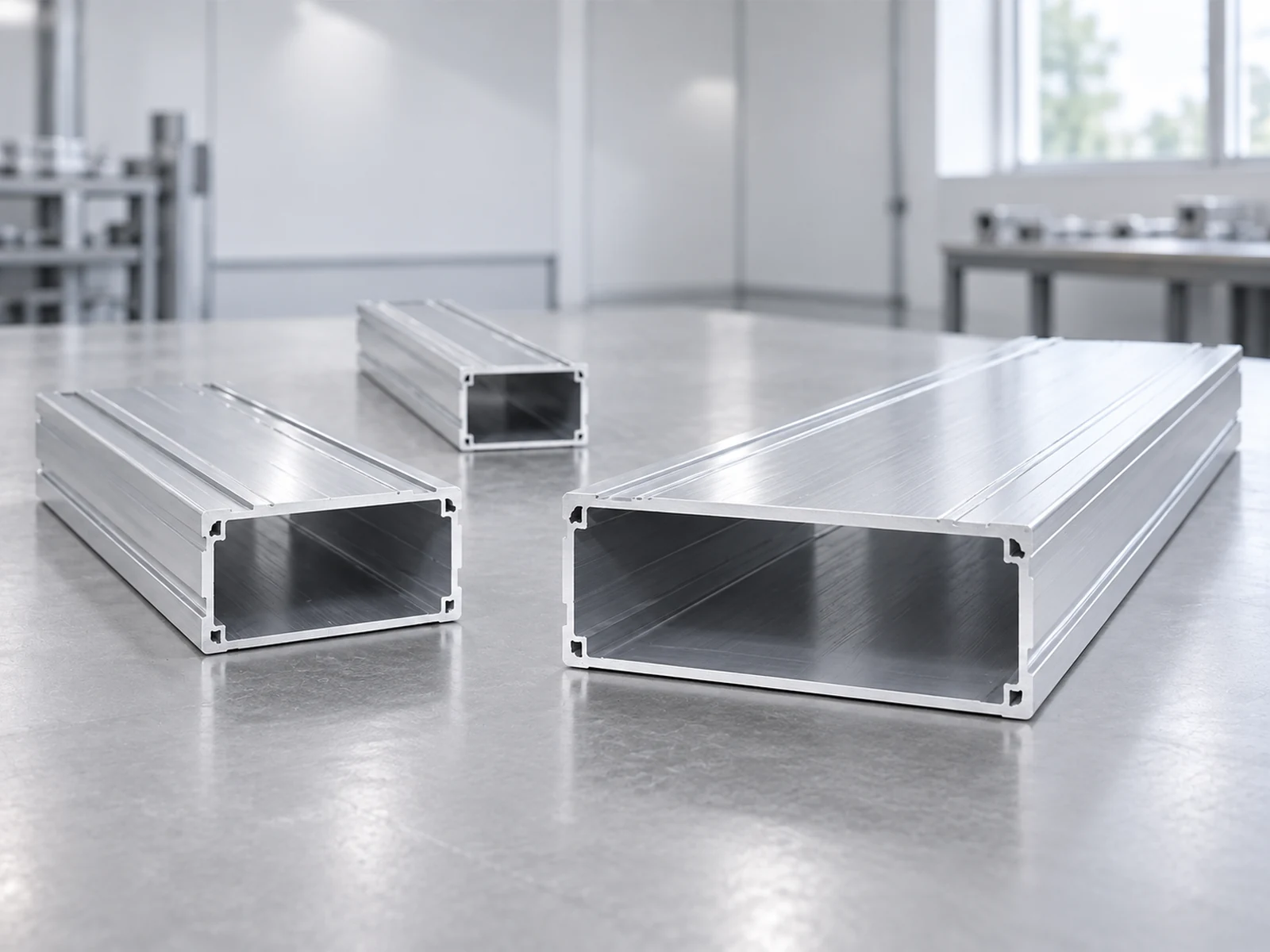
Give both suppliers the same profile drawing, material and temper, finish, stock-length information and part mix. A round tube, rectangular tube and complex extrusion should not be treated as interchangeable test pieces.
For aluminum saw cutting, review locating, clamping and support with the real section. Thin features, visible surfaces and long stock belong in that discussion along with the proposed blade and setup.
For a tube laser, ask the supplier to confirm the profile-handling arrangement and access to each required feature. Include the complete section, its orientation and any internal walls in the drawing review.
Published maximum sizes are screening information. The proposed setup still needs to accommodate your geometry, wall arrangement and part requirements. Do not choose a process from the outside dimensions alone.
Use one representative job pack
Keep the same drawing revision and material information in both reviews. If one supplier proposes changing a feature or splitting the job between operations, show that change clearly in the comparison.
A proposal based on a redesigned part may be useful, but its result must be reviewed against the new drawing. It should not be compared with the original route as though the delivered component were unchanged.
3. Specify the part condition you will accept
Define the length reference, end geometry, edge condition and visible-surface requirements from the drawing and quality plan. Include any condition needed by the next operation, such as fitting a joint or preparing an end for machining.
The processes remove material differently. TRUMPF’s laser-cutting overview describes a focused beam heating the material and cutting gas removing molten material in the relevant process. Circular-saw cutting removes material through blade contact.
This difference gives you questions for a part trial; it does not establish a universal quality winner. Examine the actual parts after the agreed process and handling steps.
For either route, record the observations and acceptance decision. If further edge finishing, cleaning or machining is required, include it in the route and cost rather than assuming the initial cut is the final condition.
Compare to the same acceptance requirement
A photograph of a clean edge does not establish the drawing’s dimensional result. Likewise, a length result does not describe every edge or surface requirement. Use the agreed checks for the features that matter.
The cutting-accuracy review guide explains why tolerance, measurement reference and repeatability should remain distinct in that record.
4. Map the route to a finished component
Write the full sequence for each proposal: receive stock, set up the job, cut, add any remaining features, inspect and deliver the accepted part to its next stage.
Integrated features can change how often a part is handled. Separate operations can use equipment already available at your site. Compare the actual arrangements offered for your order mix.
Two hypothetical part scopes
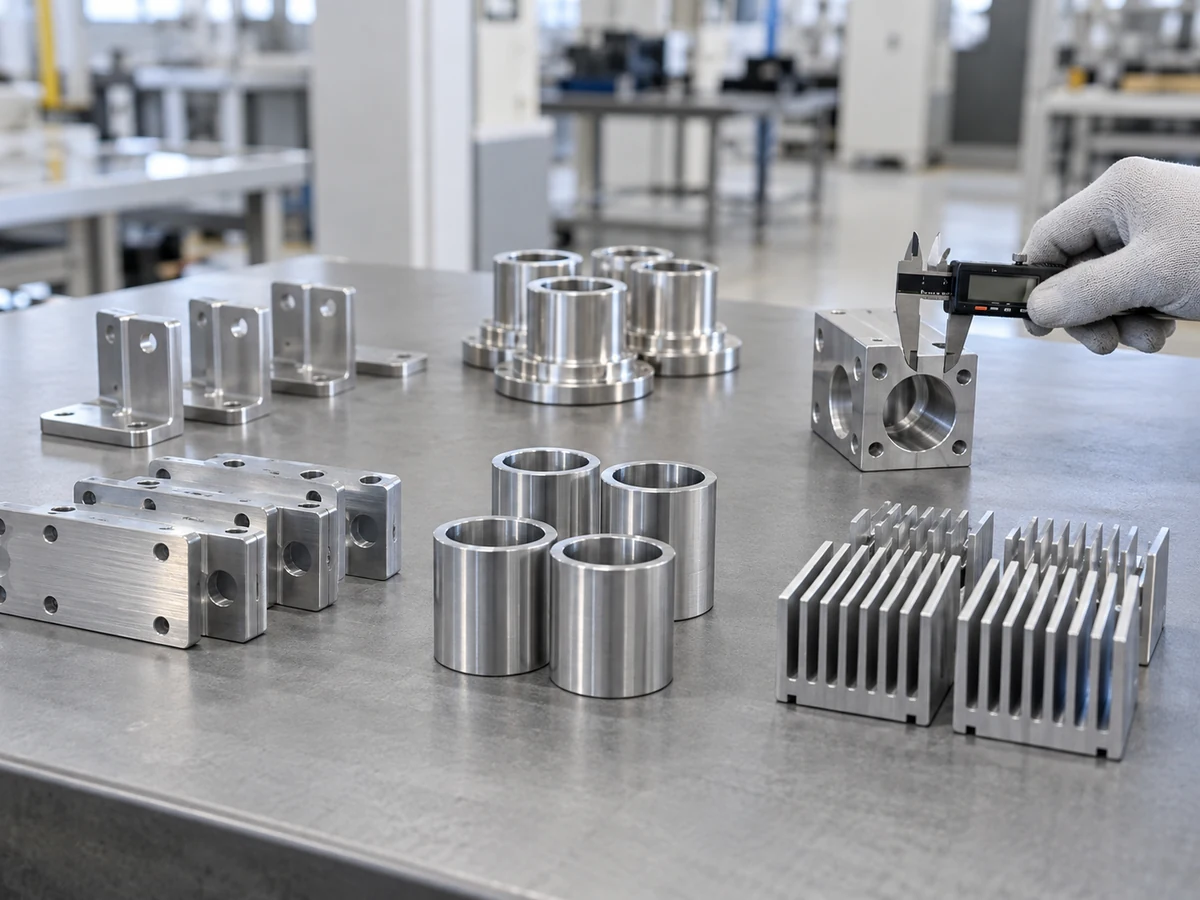
Part A: a hollow section needs a defined length and two straight ends. Review aluminum saw cutting against those requirements and compare any proposed alternative on the same accepted-part basis.
Part B: a tube needs end contours and openings in its walls. Review a tube-laser proposal alongside a saw-plus-feature-machining route. Confirm what each delivers before the next assembly stage.
These examples describe decision questions, not process recommendations for a specific drawing. They contain no claimed cycle time, tolerance or cost result.
5. Compare cost and output for the same complete job
Use accepted parts delivered through the agreed route as the comparison unit. Include setup, loading, cutting, remaining operations, inspection and normal collection within a clearly stated time boundary.
For aluminum saw cutting, include the blade-related and handling items that belong in the offer. For the laser route, include the specified consumables, gases and supporting systems. Obtain the actual requirements from each supplier.
Include material consumption, reusable remainder and rejected or reworked parts using the same accounting rules. The cost-per-accepted-part example shows why produced count and accepted count give different denominators.
Keep a short comparison record
| Question | Keep for both proposals |
|---|---|
| Delivered part | Drawing revision and included features |
| Configuration | Machine, options and handling scope |
| Quality | Checks, observations and acceptance |
| Process route | Remaining operations and handoffs |
| Batch result | Time boundary, accepted count and cost basis |
Is one cutting process always better?
No. A useful comparison answers which route fits the required component and your operating conditions. A lower advertised cutting time or a smaller nominal kerf does not resolve the complete job by itself.
Request a reviewed proposal and representative trial for the actual part. Keep changes in drawing, scope or configuration visible so the final choice remains checkable.
JiurunCut can review an aluminum saw cutting route for your profiles, tubes and cut-to-length blanks. Send the drawing, material, typical quantities and remaining operations. Discuss My Saw-Cutting Route →
References and scope
Primary references: TRUMPF, Laser Cutting and TruLaser Tube 5000 documentation. This is a process-review framework, not a machine-to-machine performance test. Images are illustrative.