
Battery tray side rail cutting needs a clear drawing, stable support and an agreed finished-part check. Send the extrusion section and finished-part drawing together. This five-part review helps you turn a rail design into a useful sample trial and a comparable machine quotation.
Three things to remember
- Keep the extrusion section and finished rail drawing linked.
- Confirm support and clamping around the section’s real load-bearing areas.
- Inspect the part for cut quality, dimensions and assembly fit.
On this page
1. Map each battery tray side rail to its assembly
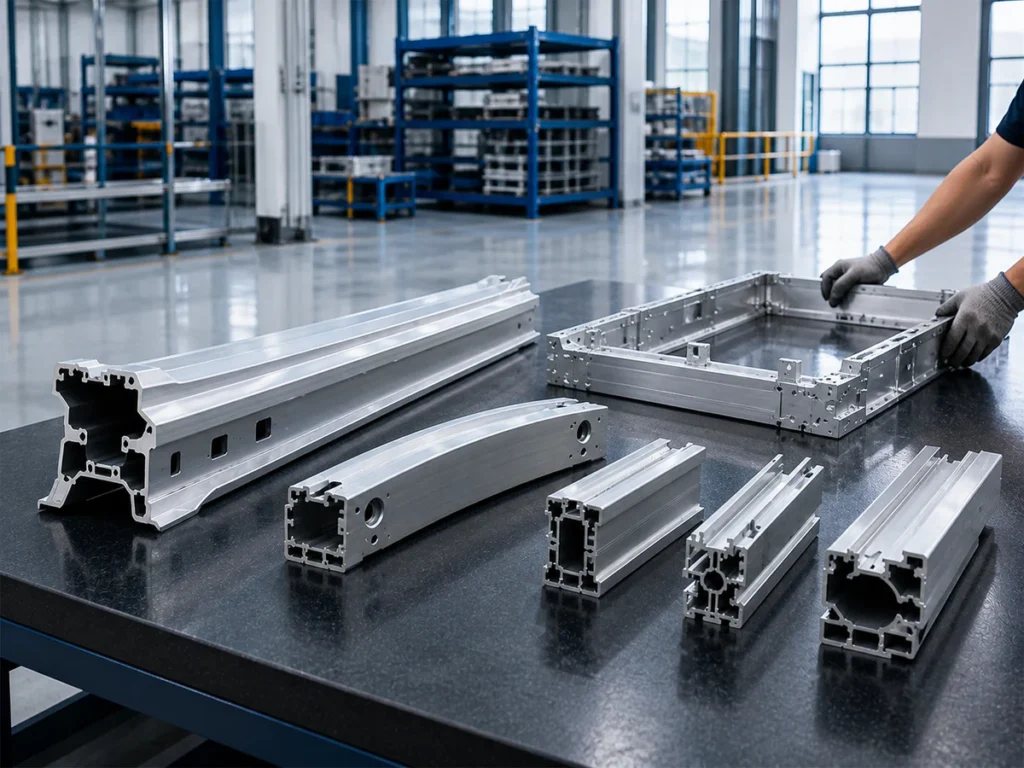
A side rail is not just a length of stock. Show how the finished piece fits the tray assembly and which edges, faces or joints control that fit. Mark any mirrored left and right parts clearly.
Keep the section drawing, finished-part drawing and part ID at the same revision. If a new extrusion revision changes a web or cavity, the support and fixture review may also need to change.
- Section drawing and finished-part drawing
- Orientation and handedness
- Mating faces and reference dimensions
A practical example: two battery tray side rail parts may have the same nominal length but opposite end orientations. Give each a separate part ID. Mark the face that meets the tray, the finished-length endpoints and the required end condition. Ask the trial team to check both parts together, so a reversed rail is caught before a complete batch is cut.
2. Review support on the actual section
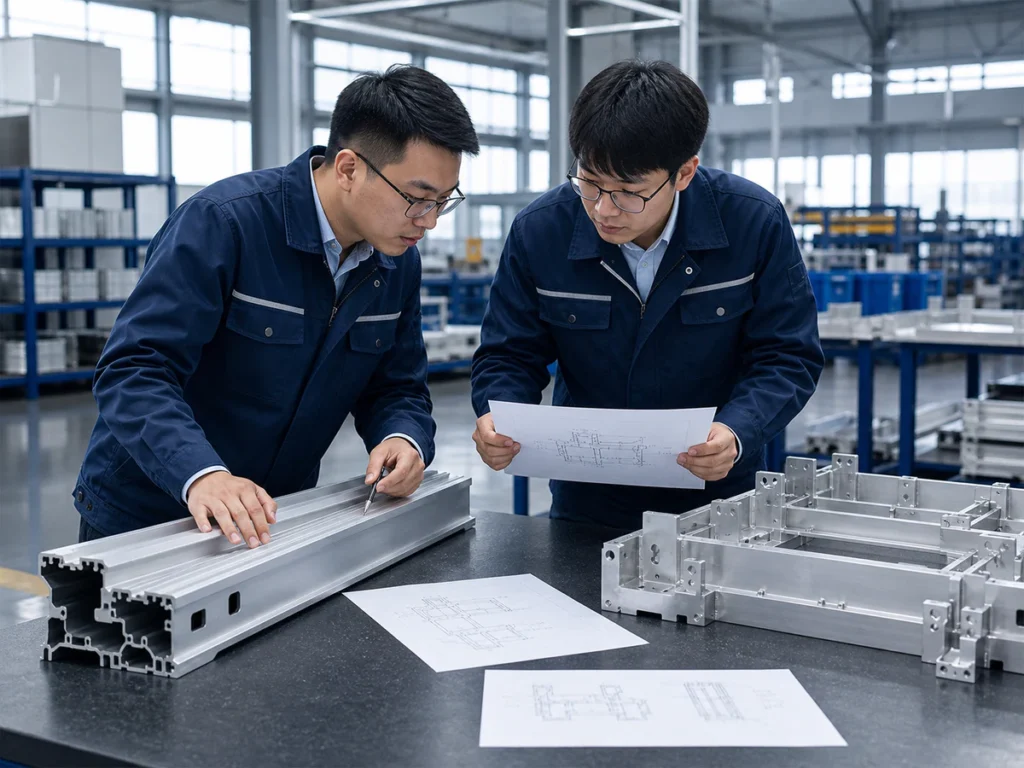
The proposed contact points should be checked against cavities, reinforced webs and visible faces. A generic width-and-height envelope does not show where the part can be held without moving or marking it.
Include the incoming stock length and finished-part range so the supplier can review feeding and support beyond the cutting zone. The extrusion cutting guide provides a broader explanation of these inputs.
3. Define the finished dimensions
Specify the cut-length datum, end condition, angle if used, acceptable cut face and any visible-surface requirement. Explain which dimensions are confirmed by cutting and which belong to later machining or assembly.
Avoid assigning the complete tray’s structural or crash performance to a saw-cutting trial. That performance needs the appropriate downstream design and validation process.
- Cut dimensions and orientation
- Cut-face and surface condition
- Assembly-fit check after handling
Profile
Information to send: Section, material and stock length
Question to ask: Where do support and clamp contacts belong?
Finished rail
Information to send: Datum, handedness and cut requirements
Question to ask: How will the part be inspected after cutting?
Assembly
Information to send: Mating faces and sample fit
Question to ask: What remains for downstream validation?
4. Test a representative batch
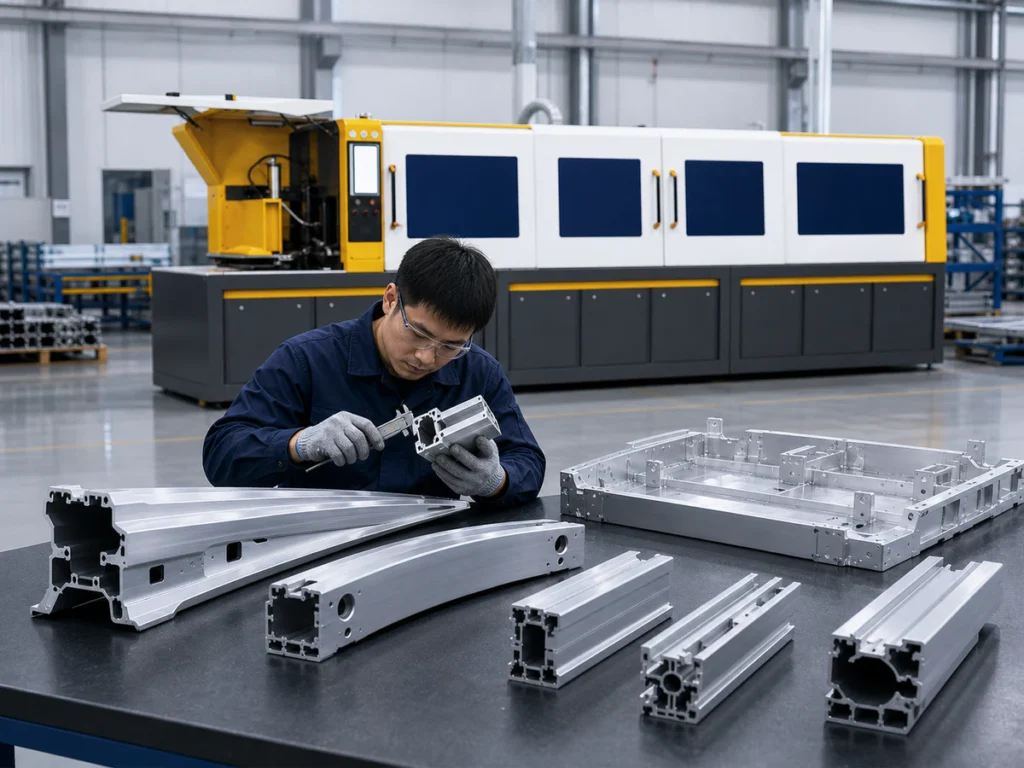
Ask for samples from a typical and a demanding rail where the production mix warrants it. Identify the fixture, support and operator actions used. If the job repeats, check pieces from different points in a run.
Record any change between rail families. A result from one section should not be transferred to another without checking the contact and measurement plan.
5. Connect the trial to the quote
The quotation should name the machine direction, any profile-specific fixtures, feeding supports and sample acceptance plan. Leave open issues visible rather than treating them as approved.
See JiurunCut’s EV aluminum cutting application for related crash beam and structural profile considerations.
Common questions
Can the same fixture cut every tray rail?
Only after each section and its contact points have been reviewed. Different rail families may need adjustments.
Does a cut sample prove crash performance?
No. It can support dimensional and surface review of the cut part; vehicle and assembly performance require separate validation.
What if the tray design is still changing?
Share the current revision and identify unsettled dimensions. Update the trial and quotation when the design changes.
Discuss your cutting requirements
Send your battery tray side rail drawing, extrusion section and typical batch size. Mark the surfaces and dimensions that control assembly fit. JiurunCut can review the cutting requirements and discuss a sample plan before finalizing the equipment scope.
For machine operation examples, browse the Jiurun machinery video channel. Use a trial with your own part to confirm the proposed setup.
References and scope
This article concerns saw-cutting review of aluminum components; it does not claim vehicle-level performance or model-specific machine capability. Recommendations require a review of your drawing, sample and production requirements.