
An aluminum profile cutting changeover is complete when the next part is accepted, not when the program is selected. Match each profile family to its fixture, supports and current drawing. These five checks help you organize mixed batches without losing part identity or releasing an unchecked setup.
Three things to remember
- Identify profile families and the equipment each requires.
- Keep the correct drawing and program revision attached to every batch.
- Measure changeover and first-piece approval separately from cutting time.
On this page
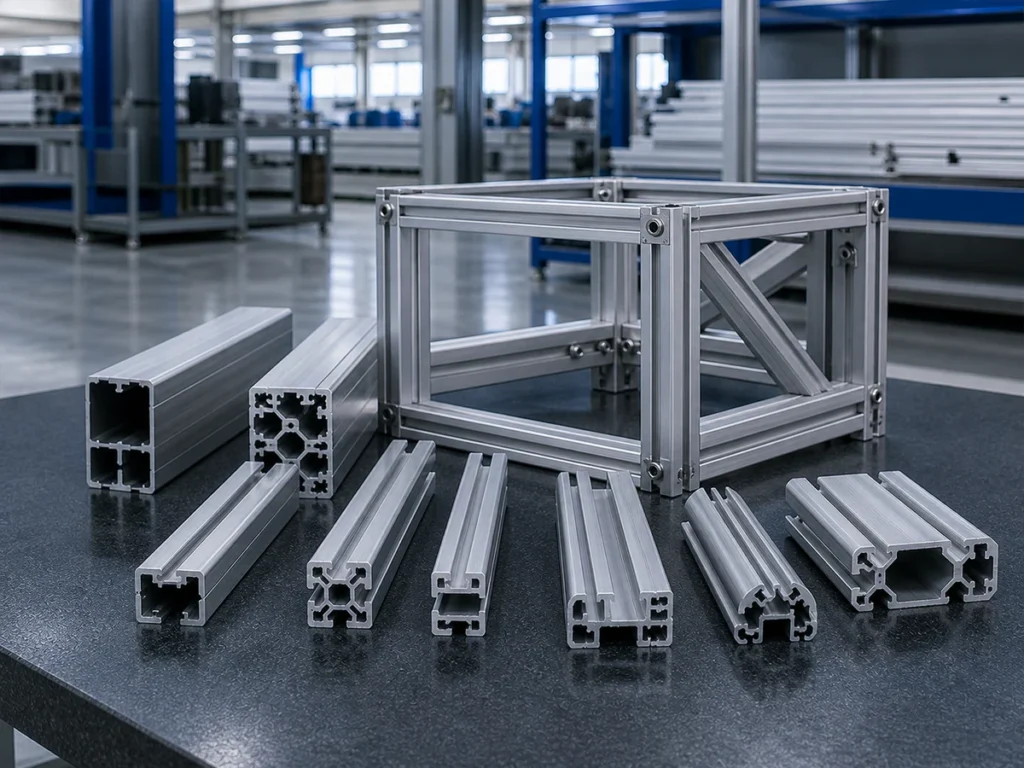
1. Map the aluminum profile cutting families
A mixed order may contain sections that look similar in a rack but need different clamps, supports or length references. Assign a clear part number to each cross-section and finished-part drawing.
Group parts that genuinely share a setup, then mark the point where the fixture, angle or collection arrangement changes. Do not group parts merely because they have the same outside width.
- Cross-section and drawing revision
- Fixture and support ID
- Cut direction, angle and visible face
Track one complete changeover. Start the clock at the last accepted part of batch A. Stop at the first accepted part of batch B. Record fixture exchange, stock movement, program selection, trial cuts and inspection separately. This shows where an aluminum profile cutting shift loses time and which equipment or planning change might help.
2. Make the setup reproducible
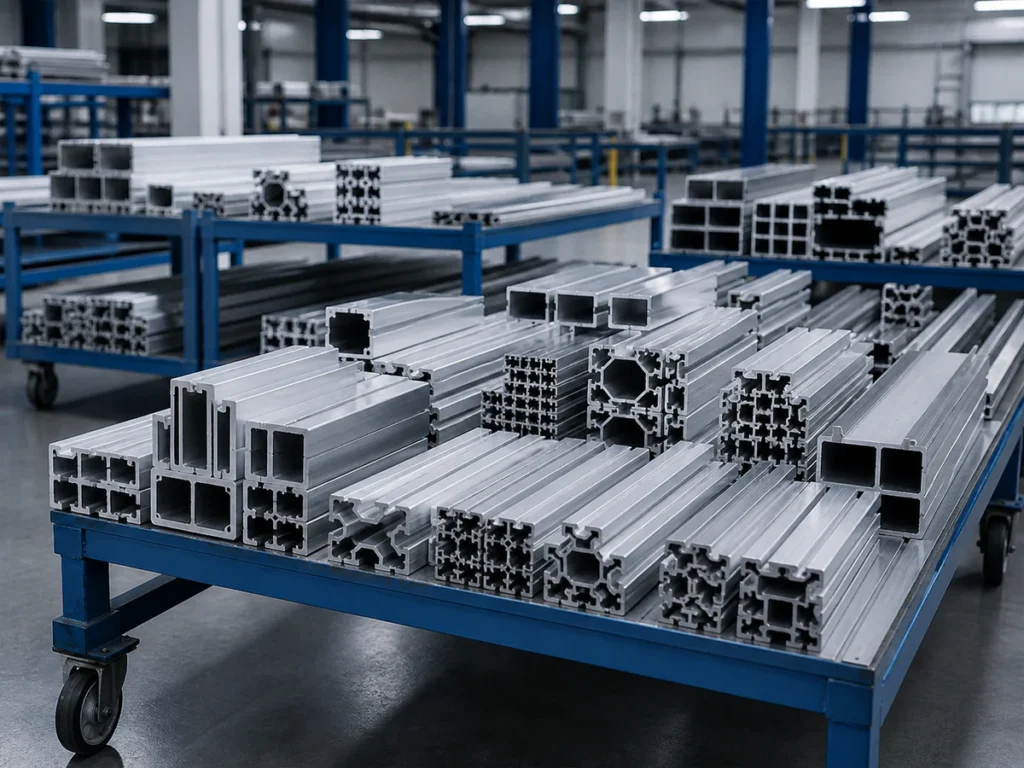
Write down which physical items and program selections change. Include stock guide positions, clamp contact areas, stops, discharge and the measurement reference. The operator should be able to check the setup without relying on memory.
Where the process uses stored programs, distinguish a program name from an approved part revision. A program should not be assumed correct just because it ran successfully on an earlier order.
- Program and part revision
- Mechanical setup points
- Operator confirmation before the first cut
3. Release the first piece deliberately
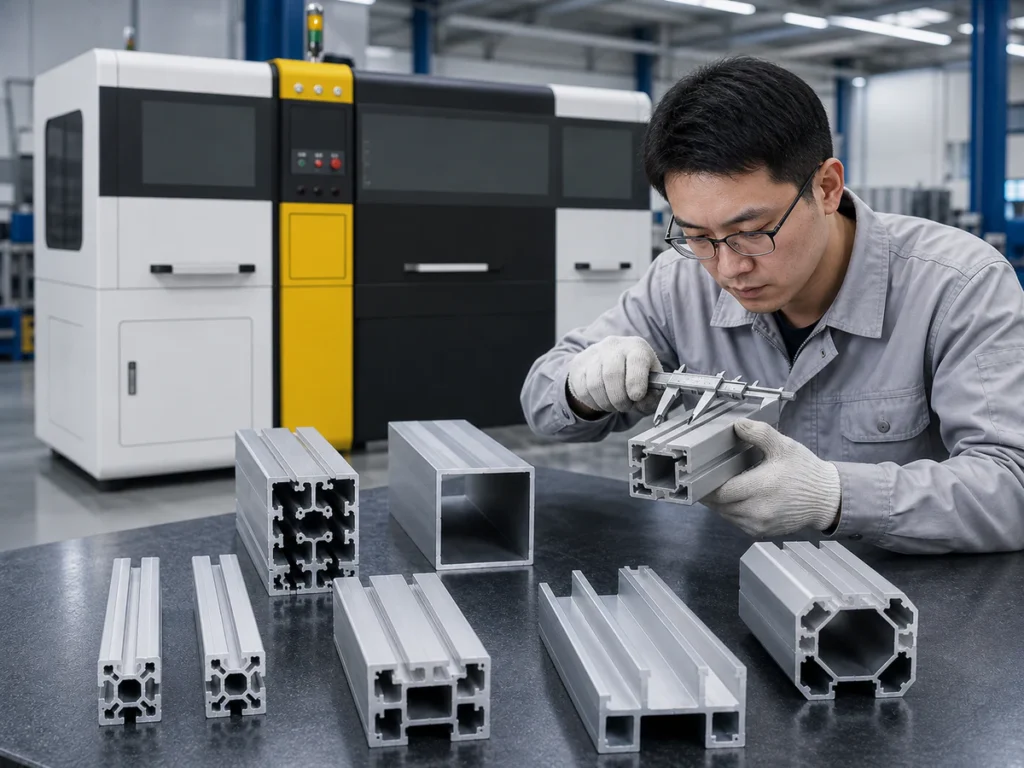
A first-piece check links the new setup to the current drawing. Measure the agreed length and angle and inspect the cut face, clamp marks and any required assembly fit. Keep the part identified until approval.
If the piece fails, record the adjustment and check a new piece. This prevents an unrecorded correction from being treated as proof that the original setup was stable.
Job identity
Information to send: Part, drawing and program revisions
Question to ask: Can the operator confirm the current combination?
Physical setup
Information to send: Fixture, guides and discharge position
Question to ask: What changes between profile families?
Approval
Information to send: First-piece record
Question to ask: When may the next batch be released?
4. Measure the full batch transition
Count time from the final good part of one batch to the first accepted part of the next. Include fixture exchange, program selection, material movement, trial cuts and inspection. A blade-only cycle time does not describe a mixed shift.
Track discarded setup pieces separately from normal kerf and tail material. The material-waste guide can help keep these categories distinct.
5. Compare options with a real changeover
Ask the supplier to demonstrate one representative changeover, not just a continuous run of the easiest profile. Compare the effort for frequent small jobs with the benefit of automation on longer batches.
The industrial profile application page shows the broader section and production questions that support this review.
Common questions
Should we always group jobs by profile?
Grouping can reduce changes, but delivery priority and part traceability still matter. Use the actual production plan.
Does a saved program eliminate first-piece inspection?
No. The physical setup, stock and drawing revision still need to match the job.
What time should be compared between machines?
Compare complete changeover to first accepted piece as well as steady cutting time.
Discuss your cutting requirements
Send two or three representative profile families, their typical batch sizes and your changeover sequence. Include the fixture changes and first-piece checks. We can review whether the proposed aluminum profile cutting setup fits your actual production mix.
For machine operation examples, browse the Jiurun machinery video channel. Use a trial with your own part to confirm the proposed setup.
References and scope
This article is a production-planning guide. It does not claim a particular changeover time for any machine. Recommendations require a review of your drawing, sample and production requirements.