
Window sill drainage machining is a separate scope decision from cutting an aluminum extrusion to length. A saw quotation may deliver correctly sized sill blanks while leaving the drainage openings, end preparation, cleaning and assembled water-path check to another workstation or supplier. Before comparing prices, identify the approved window system and state exactly which of those deliverables the seller must hand over.
A buyer may receive two attractive prices for “cut window sills” and assume they describe the same part. One price may cover a measured, mitered extrusion only. The other may include system-specific machining and identification for a frame kit. The difference becomes visible late, when a fabricator cannot assemble or release the sill without additional work. This guide turns that ambiguity into a practical request for quotation and sample-approval plan.
Window sill drainage machining is a scope decision
Window drainage is designed as part of a window system, not inferred from the outline of a loose extrusion. The Fenestration and Glazing Industry Alliance (FGIA) explains that many windows use frame or weather-seal drainage pathways and that those pathways must remain clear. This is a useful reason to preserve the approved route through fabrication and assembly; it is not a universal slot size or a specification for a JiurunCut saw.
Fabrication methods vary by system. Alumil’s punching-tool library lists drainage machining for several casement and sliding-window applications, while Schüco describes profile machining equipment that can perform angled drainage work. These manufacturer examples establish that drainage features may require a defined machining operation. They do not authorize copying one manufacturer’s locations or tools to another system.

Define the four possible handover states
Cut blank. The supplier cuts the named profile to an agreed length and end geometry, controls the cut face, and identifies the piece. Drainage slots or holes are excluded unless expressly listed. The buyer should approve the cut datum, angle, length method and marking position before production.
Machined sill member. The supplier also performs the system-approved drainage and any other specified machining. The quote must name the drawing revision, feature locations, orientation, tool or fixture responsibility, inspection method and treatment of burrs or loose chips. Do not accept a promise of “standard drainage” without an approved drawing.
Matched frame kit. A sill may be delivered with matching jambs, head, connectors, gaskets and labels. The kit boundary adds part completeness and fit checks, but it still does not prove that an assembled window has passed a water test.
Finished window assembly. Assembly, glazing, sealing and product-level tests require a separate acceptance scope. A supplier of saw-cut members should not be asked to warrant the water performance of a completed window it did not build or test.
Write the chosen handover state in the purchase order. If the project needs both cut blanks and fully machined sills at different phases, create two line items rather than applying a vague common description.
Freeze the system information before the saw trial
Start with the window-system owner or authorized fabricator. Request the profile code, section drawing, revision, finish, designated interior/exterior face and allowed stock source. Ask which member is the sill and whether left/right or inward/outward variants exist. A visually similar extrusion can still have a different chamber, gasket seat or corner interface.
Then define the cut itself: finished part length or reference length, which face is the length datum, angle and end orientation, permitted burr and surface condition, and how the first piece will be measured. Record whether drainage machining occurs before or after cutting. If the feature is referenced from a cut end, changing the saw datum can shift its location even when the feature tool has not changed.
For the drainage operation, obtain the approved feature drawing or fabrication manual and state who owns it. Include the feature type, position, orientation, inspection access and permissible change process. Avoid inventing a hole count or dimension from a photo or a competing system. If the buyer has no approved system detail, quote a cut-only blank first and hold the machined-member option until the responsible designer releases the detail.

Compare three production routes on the same deliverable
Route A: saw cut only, then machine elsewhere. This works when the buyer or its approved fabricator already controls the punching or milling operation. Compare the saw quote with the additional transfer, setup, machining, cleaning and inspection costs. Define where responsibility passes if a blank is wrong before the downstream operation.
Route B: one supplier cuts and arranges separate machining. Request a named process route and one accountable inspection record, not just a bundled price. Confirm whether the supplier’s subcontractor uses the approved drawing, how revisions are released and who replaces a damaged or mis-machined sill.
Route C: a configured cell provides both operations. An integrated or adjacent process may reduce handling, but the quotation must identify the actual supplied stations and their acceptance tests. Do not infer drainage-machining capability from a saw model name or from a general machine video. Ask for a sample using the exact profile and approved feature drawing, then compare total accepted output and handover evidence.
The cheapest route depends on volume, variant changes, existing tools and the cost of a failed handoff. Compare all three against the same accepted member, rather than comparing a cut-only blank with a machined kit.
Approve a sample without overstating what it proves
A useful trial contains the exact profile code and finish or an explicitly approved substitute, the current drawing revision, enough pieces to check both ends and required variants, and a record of the actual process steps. Inspect the cut-end shape and surface first. Then inspect drainage features only if they are in the supplier’s scope. Confirm their orientation and location against the authorized drawing, remove loose chips where specified and check that a subsequent joint or gasket does not block the intended path.
Keep the acceptance layers separate. A dimensional check can release a cut blank. A feature inspection can release a machined sill. A frame fit check can release a kit. Any water-performance claim belongs to the applicable assembled-system validation plan, with its own responsible party and method. A photo of an extrusion, a single dry fit or a saw demonstration cannot substitute for that validation.
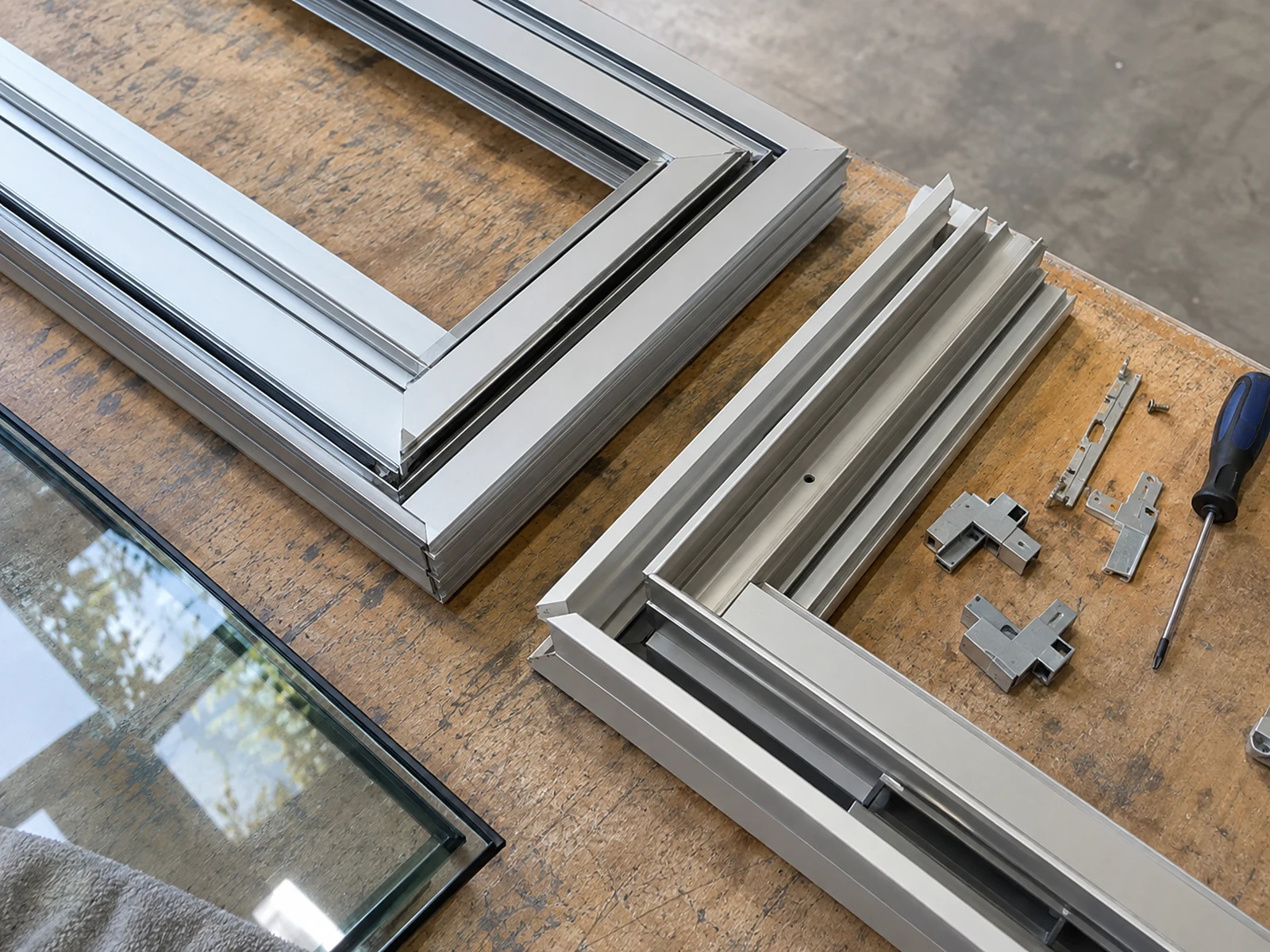
Price and change controls that prevent a late surprise
Ask every bidder to separate extrusion supply, saw setup and cutting, drainage machining, fixture/tooling, sample inspection, cleaning, labeling, packing and delivery. State whether the price includes the approved system documentation and who pays for a revision that changes the feature location or member orientation. For mixed frame sizes, distinguish the setup charge from unit cutting and machining charges.
Set a change gate for a new extrusion die, a different profile revision, a new window-system supplier or a different drainage detail. The buyer and fabricator should decide whether the previous sample remains representative. Keep an approved first piece and a traceable revision record so a later disagreement can be resolved against the exact order, rather than against an informal description.

Suggested RFQ wording
“Quote the approved aluminum window sill profile [profile code and revision] in the stated lengths and end orientations. Price cut-only blanks and, as a separate option, cut-and-drainage-machined members to the attached system drawing. Identify the operation owner, datum and inspection method for each feature, required cleaning and labeling, sample quantity, tooling charge, change-control rule and acceptance boundary. Do not include assembled-window water-performance claims in the saw-cut member acceptance unless a separately defined system test is contracted.”
This wording is a procurement starting point, not a substitute for the system manufacturer’s fabrication manual. If the approved drawing is missing, resolve that ownership before ordering drainage machining.
General equipment footage
The following Jiurun Machinery channel video is general aluminum-saw equipment footage. It is included to show equipment context only. It does not demonstrate this window-sill material, drainage machining, the quoted configuration, a customer job, a trial cut or any water-performance result.
Questions to close before placing the order
Does every window sill need the same drainage cut? No universal pattern should be assumed. Confirm the specified system, member variant and approved fabrication detail.
Can an aluminum saw quote include drainage machining? It can if the seller explicitly includes an approved machining operation and acceptance method. The word “saw” alone does not define that scope.
What should the buyer accept first? Release the cut blank against its own cut criteria, then any machined feature against the system drawing, and finally the frame or window against the separate assembly criteria.
For the broader decision about retained window-frame work, see our window-manufacturing saw purchase guide. For a cut-sample plan across frames, sashes and beads, use the window-frame saw trial guide. If you are preparing a specific sill inquiry, send JiurunCut the approved profile code, drawing revision, annual quantities, cut lengths and a clear statement of whether drainage machining belongs in the required deliverable. We can then discuss a saw-cut scope without presenting unverified system performance as a machine claim.