
Weather station aluminum mast tube cutting is a part-level purchasing decision. A station may use a fixed mast, a telescoping pole, a modular tripod or a separate sensor crossarm. The height of the installed system is not a saw-cut length. Before asking a saw supplier for a quote, the station maker must release the individual tube drawing, the stock condition, the interface owner and the first-off acceptance method.
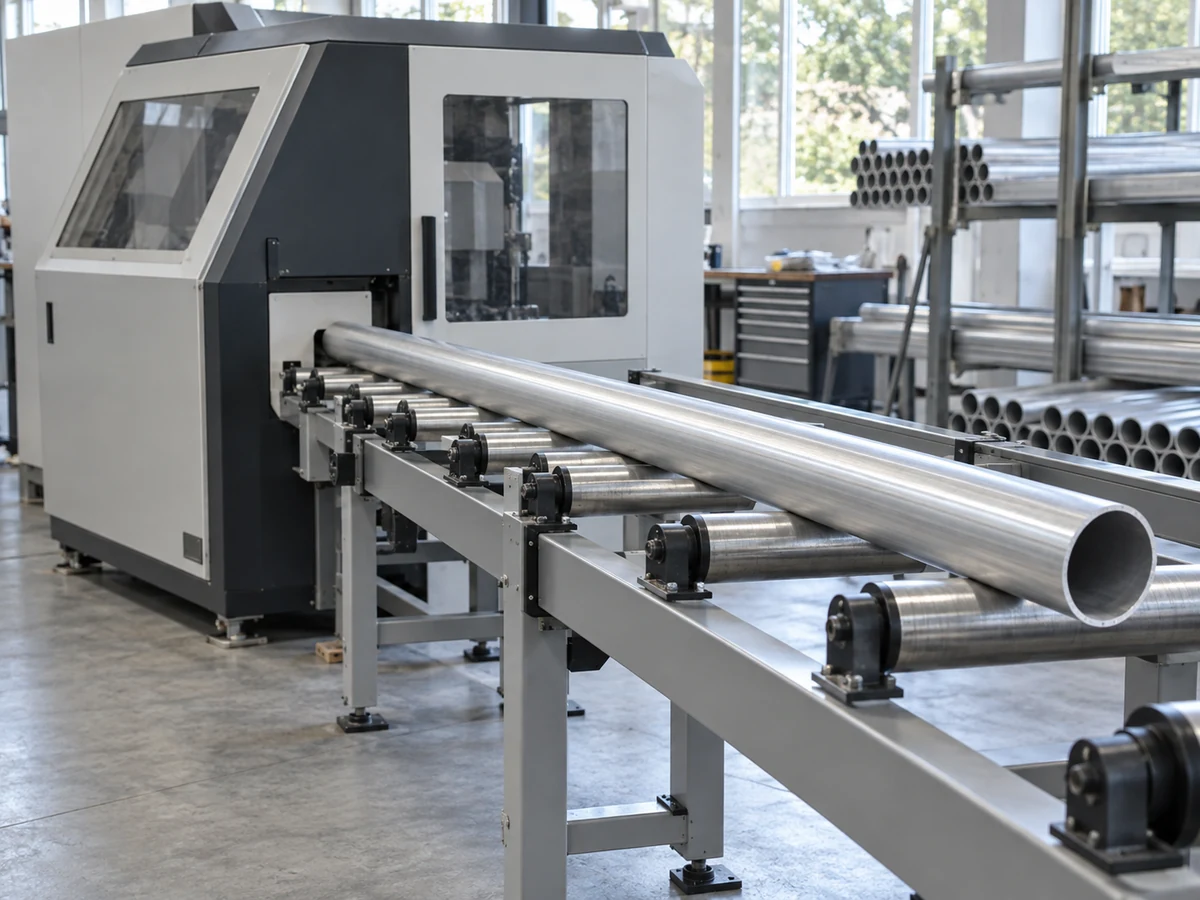
Identify the mast route before buying cutting capacity
Manufacturer examples show why “mast” cannot be treated as one universal part. Dyacon describes a modular aluminum weather-station tripod with multiple pipe segments, locking features, legs and guying. Columbia Weather Systems describes a telescoping anodized-aluminum vehicle mast supplied with separate steel brackets and a sensor package. Campbell Scientific describes an aluminum-pipe sensor crossarm supplied with a separate stainless mounting kit. These are examples of different product architectures, not Jiurun customer projects or evidence that any one supplier uses a saw for every member.
Ask first whether the buyer needs a complete weather station, a certified mounting assembly, a prepared mast kit, or loose tube blanks made to an approved drawing. A completed station includes electrical, sensor, mounting and site responsibilities outside a tube-cutting quote. A telescoping unit may already arrive finished; cutting a replacement tube without the system maker’s approval can change overlap, locking or cable interfaces. If only finished assemblies are purchased, an in-house saw may have no retained mast work to justify it.
Turn the system drawing into a released tube schedule
Request a revision-controlled bill of materials that distinguishes outer tube, inner sliding tube, fixed riser, crossarm, tripod leg and any pipe stub. For each candidate saw-cut member, record the material designation and condition, section drawing, outside diameter, wall thickness, incoming stock length, required blank length, quantity per assembly, annual and batch mix, end shape, visible-face finish and downstream operation. Record who owns each drawing and who accepts the member after cutting.
Keep at least three dimensions separate. Overall erected height includes overlap, brackets and the ground or vehicle interface. Functional extension is the released motion of a telescoping assembly. Cut blank length is measured between specified end datums on one loose tube. None can be substituted for another. If a segment contains spring-button holes, slots, bushings, cable passages or a fitted end, state whether the saw receives raw stock or an already processed component. The saw quotation should cover only its retained cutoff step and the agreed handoff condition.
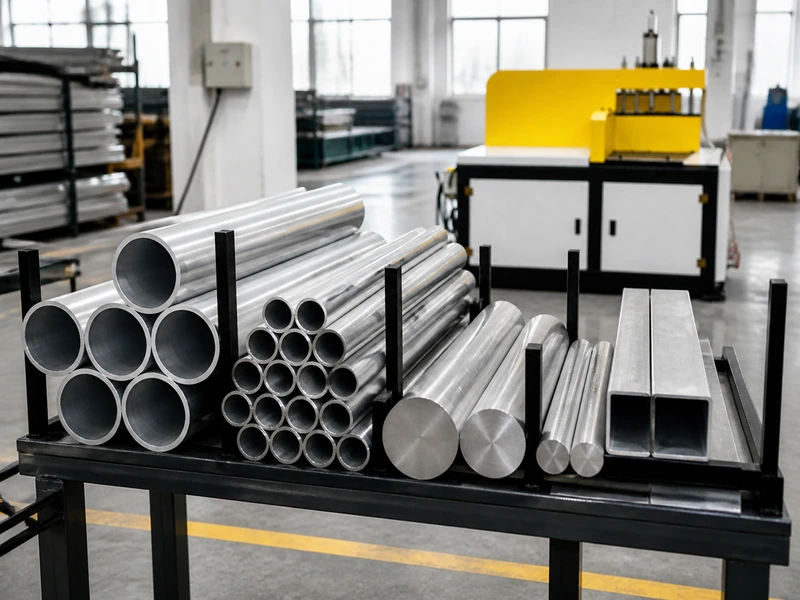
Check whether the tube can be supported without damage
For round hollow stock, the buying team should send a physical sample as well as a section drawing. Check whether the proposed infeed and outfeed can carry the full stock length, whether a short final piece remains supported, and where the clamp contacts the tube. A thin wall can deform under an unsuitable contact face. An anodized or otherwise finished exterior can be marked by handling. A nested telescoping section may also demand an intact internal edge so a mating tube, insert or bushing can be fitted later. These are trial questions; a catalog image does not validate a fixture.
At a stopped setup review, identify the reference surface, stop position, blade-path clearance and offcut route. The machine supplier should show how the proposed arrangement maintains length reference as stock and batch sizes change. Compare a retained first-off cut with the released drawing after unclamping. Specify who decides whether end burr, wall deformation, surface scuffing and length variation are acceptable. Avoid transferring a feed repeatability claim into a finished-part tolerance claim.
Specify each end and interface, not just the tube diameter
A mast segment can have two square ends, a prepared socket interface, or an end intended for a later joining or forming step. A crossarm can have its own attachment and sensor-mount interfaces. The drawing should name each end, its orientation and inspection datum. A photograph of a complete tripod or station does not establish an angled cut. Where a special angle is approved, provide the angle direction and method for checking it; do not infer a generic 45-degree miter.
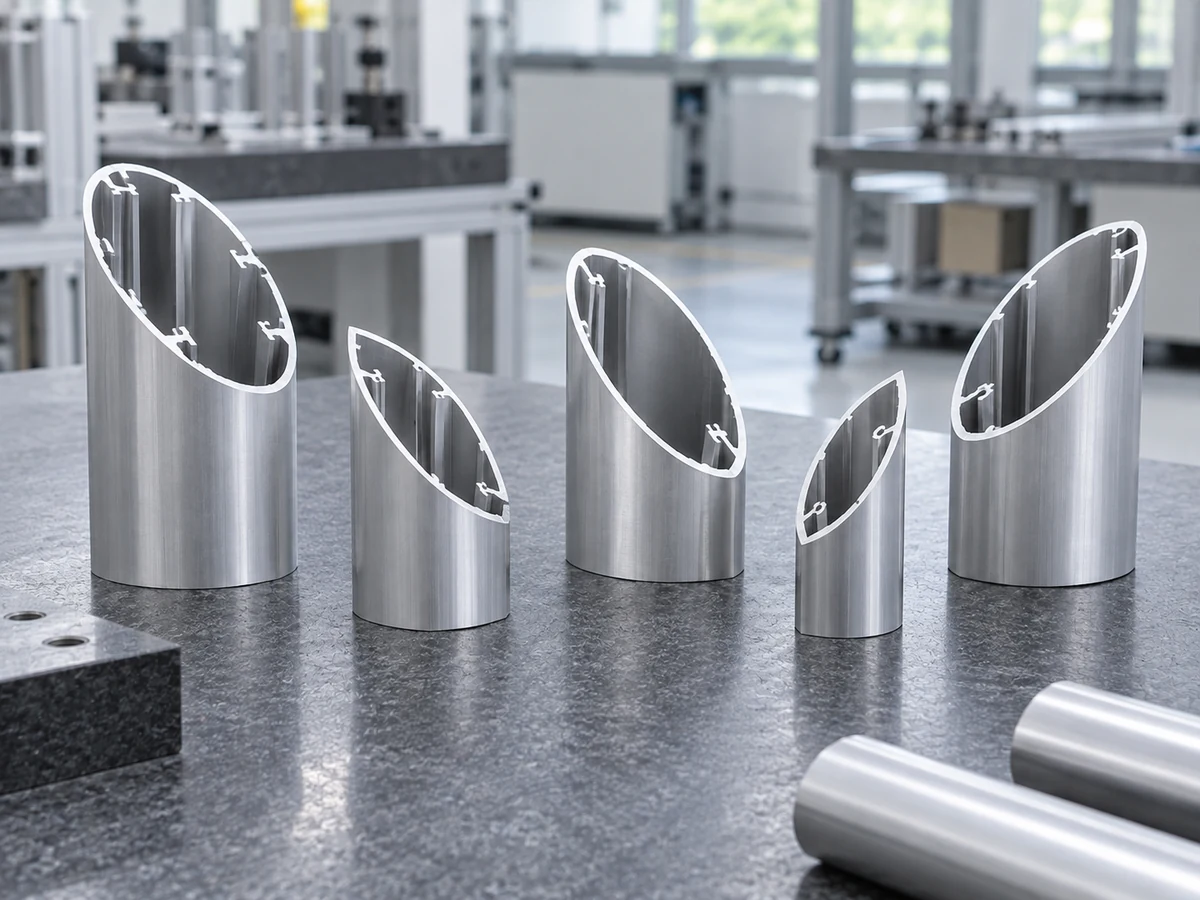
Keep holes, slots, inserted joints, fasteners, protective caps, brackets and sensor wiring as separate operations or purchased components unless an approved process plan explicitly allocates them to the proposed equipment. The cut-face check should address the downstream mating part, but a good cutoff alone does not prove telescoping action, locking security, wind resistance, grounding, sensor alignment or instrument accuracy. Those decisions stay with the station designer, component maker and installer.
Compare the three sensible purchase routes
| Route | When it fits | Evidence to request |
|---|---|---|
| Finished mast or station | The system maker owns fit, locks, sensors and installation. | Approved product configuration and installation documents; no buyer-owned blank assumed. |
| Prepared tube kit | A specialist delivers cut members with agreed secondary features and identification. | Revision, member list, inspection report, finish protection and assembly receiver. |
| In-house cutoff | The OEM retains repeatable loose-tube blank work and controls downstream operations. | Stock samples, cut schedule, representative trials, labor and total process cost. |
Price comparisons should use the same accepted handoff. A machine-only price omits floor space, material support, tooling, scrap, first-off inspection, operator time, maintenance, secondary machining, finishing and the cost of associating each tube with the correct kit revision. A prepared-kit quote may already include some of these. List inclusions and exclusions before judging the lowest nominal piece price.
Run a representative first-off and handoff review
Choose at least one actual section and a cut length from each materially different family: a large outer tube, a smaller nested tube and a crossarm if those are retained in-house. Include the shortest usable offcut and the longest incoming stock when they affect support. Have the responsible engineer approve the datum and acceptance limits before the trial. Record the delivered stock condition, setup, measured length, end condition and surface after release from the clamp. If a tube is later anodized, drilled or fitted, define whether the first-off is accepted before or after that stage.
Pack and label accepted blanks by family, hand, revision and lot so that outer and inner members cannot be mixed. A sample fit can reveal a problem but should not replace the full approved assembly and installation checks. Keep a retained first-off and a change record if stock, fixture or cutting sequence changes.
Send a bounded weather station aluminum mast tube cutting RFQ
Send the saw supplier the released tube drawings and actual samples, material and finish state, stock lengths, blank lengths and tolerances, batch quantities, end conditions, protected faces, downstream operations and the person responsible for first-off approval. State whether the proposal should cover the mast tube only, crossarm tube too, or a mixed member portfolio. Ask for a written workholding concept, support envelope, sample-trial assumptions, changeover plan and inclusions. Exclude sensor design, electrical work, site anchoring and weather-station certification from a cutoff quote unless a separate qualified party is explicitly responsible.
Related equipment video
This video from the Jiurun Machinery channel shows a general aluminum cutting equipment scene relevant to material positioning and cutoff discussions. It does not show a weather-station mast, the tube or configuration specified here, an approved customer project, a qualifying trial or weather-station performance.
Ask Jiurun to review the actual cut member
If your approved design retains loose aluminum mast or crossarm tube cutting, review Jiurun’s industrial profile cutting options and send the tube drawings and samples. Jiurun can discuss an equipment proposal against those released inputs. The station designer and system supplier remain responsible for mast fit, mounting, sensors and installed performance.