
Walk-in freezer door threshold cutting is a valid aluminum-saw inquiry only after the door maker identifies a released aluminum member that is actually cut from stock. The word “threshold” can describe an extruded sill, a fabricated plate, a heated subassembly, a floor transition or a bought-in part. Those routes do not share one cutting machine or one acceptance test. This guide helps a walk-in door OEM or approved component supplier decide whether a retained straight-stock cutoff step exists, then write a useful RFQ for that step. It does not design a freezer door, heating circuit, seal or food facility.
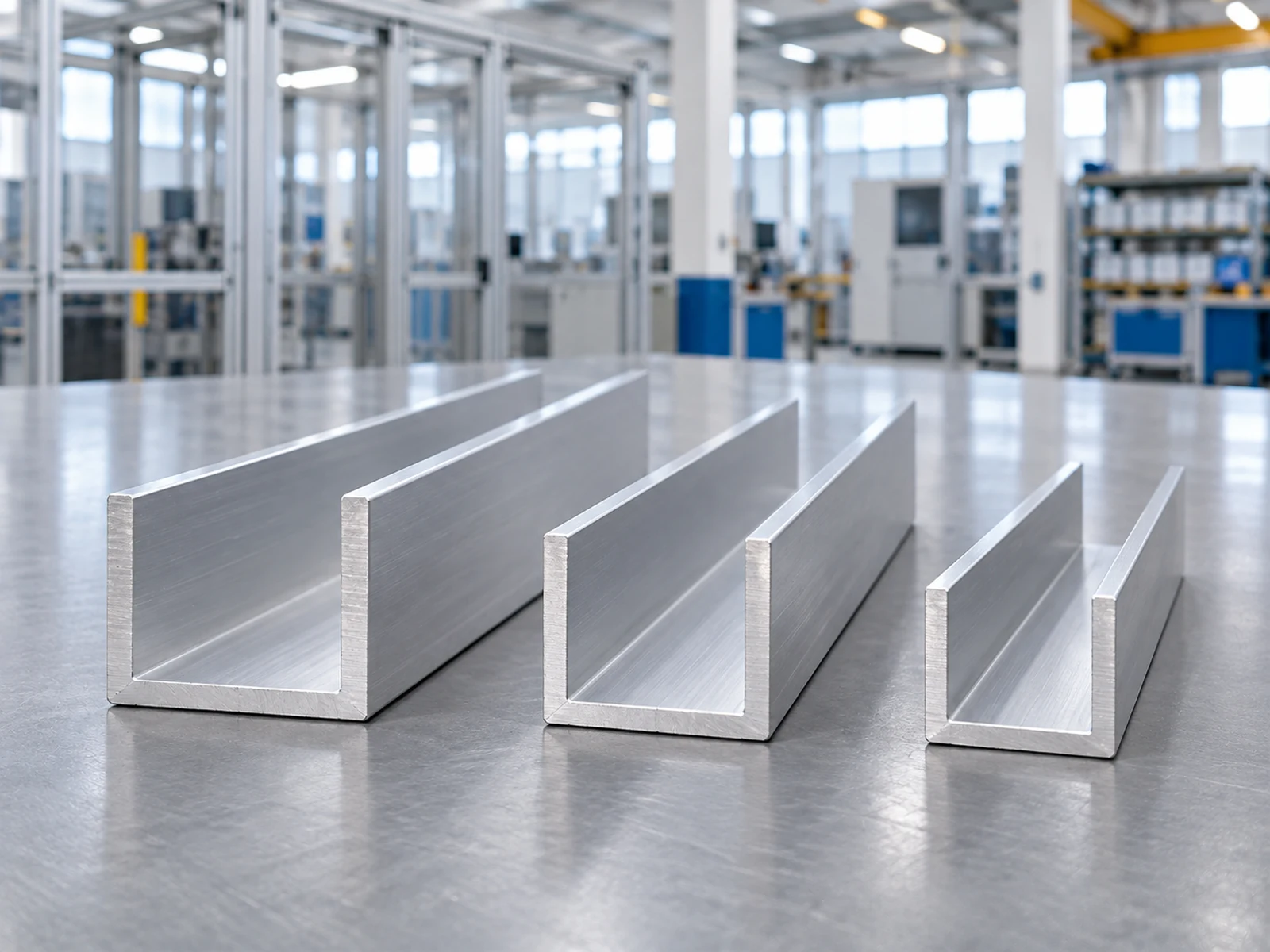
Start with the approved threshold construction, not the opening width
Manufacturer documents show why a single generic cutoff assumption fails. Norlake’s walk-in specification describes a threshold plate made from fiberglass-reinforced plastic or extruded aluminum, with an anti-sweat heater under the threshold. Norbec’s hinged-door description includes a profiled aluminum sill with a double heating wire and also lists independent threshold options whose heater wire is covered by an aluminum plate. Coldmatic’s drawing library separates a freezer swing-door heated threshold detail from several swing-door sill and sliding-door frame details. These are examples of different proprietary door systems. None supplies a universal Jiurun saw setting or permission to interchange parts.
Ask the door-system owner for its approved part drawing and bill of materials. Is the deliverable a straight extruded aluminum blank, a plate blank, a prepared sill containing features, or an entire heated threshold assembly? Does the supplier buy that part complete? If the released route is FRP, a formed plate or a complete purchased assembly, do not count it as aluminum extrusion-saw demand. If there is a straight aluminum profile cut in-house, name that member and its receiving station. The distinction prevents the purchase volume of whole walk-in doors from being presented as saw-cut extrusion volume.
Separate a cut blank from the heated door system
A saw can be trialed against a released blank length, end angle, edge condition and visible surface on a known stock form. The finished threshold has more interfaces: floor elevation, door sweep or gasket, jamb connection, drainage or cleaning geometry, possible heater wire and access for later service. A cut face that measures correctly does not show that the heating, sealing, condensation control, slip resistance, hygiene or installed door performance is acceptable. Those claims belong to the door-system designer and the relevant acceptance authority.
| What the order calls a threshold | Likely receiving unit | Cutoff RFQ decision |
|---|---|---|
| Complete heated sill assembly | Profile or plate, heater, covers and connection details | Ask whether any approved blank is still cut in-house |
| Extruded aluminum sill stock | Identified section at a specified incoming length | Quote a trial on the actual released section and finish |
| Fabricated aluminum plate | Sheet or plate blank with later forming or fitting | Keep its fabrication route separate from profile cutoff |
| FRP threshold or bought-in part | Approved non-extrusion component | Exclude from an aluminum-profile saw workload |
On a phone, swipe the table sideways. Keep the unit of comparison the same: a raw blank against a raw blank, a prepared sill against a prepared sill, or a complete bought-in assembly against the total in-house route. A lower price for a short profile is not a lower cost for a heated, installed and accepted threshold.
Translate the door schedule into a physical blank
The nominal door opening width is not automatically the cutoff length. Sill ends may enter jambs, meet a corner feature, stop at a seal, terminate under an independent cover or be trimmed after another operation. A recessed sill and a surface threshold can have different physical boundaries. Use the released member drawing to identify each end plane, the length datum and the direction of any asymmetric section. Do not subtract a guessed clearance from a catalog opening width.
For every blank row, specify the door-system family and revision, stock form, section drawing, material and temper when released, finish, incoming length, finished length, quantity per door, left/right orientation, visible face, end form and receiving condition. Separate the sill extrusion from the plate cover, heater carrier, cap, gasket retainer and jamb member. If a supplier sends a kit, require its member identities rather than one overall “threshold length.” A buyer can then reconcile the proposed cut list with the door BOM before a trial begins.
Ask the owner to mark any surfaces that the saw must not contact. A threshold may have a narrow lip, open channel, textured face or visible anodized finish. If a cover or gasket later engages an edge, burr acceptance on that edge should be explicit. If a heater path lies inside or below the installed assembly, the blank drawing should identify the permitted machining boundary. The saw vendor should neither invent heater routing nor assume a convenient clamping face is harmless to that route.
Trial the actual section and support it as it will run
Send representative production stock rather than a convenient substitute extrusion. A U-shaped channel can spread or tip if it is held on thin legs. An asymmetric profiled sill may have no broad surface parallel to its length datum. A plate uses a different support and cutting route. The trial record should show the incoming section revision, locating face, clamp contact, supported span, feed direction, end restraint and finished-piece handling. Use the shortest and longest real blanks, including a finished-surface sample if the production finish changes contact limits.
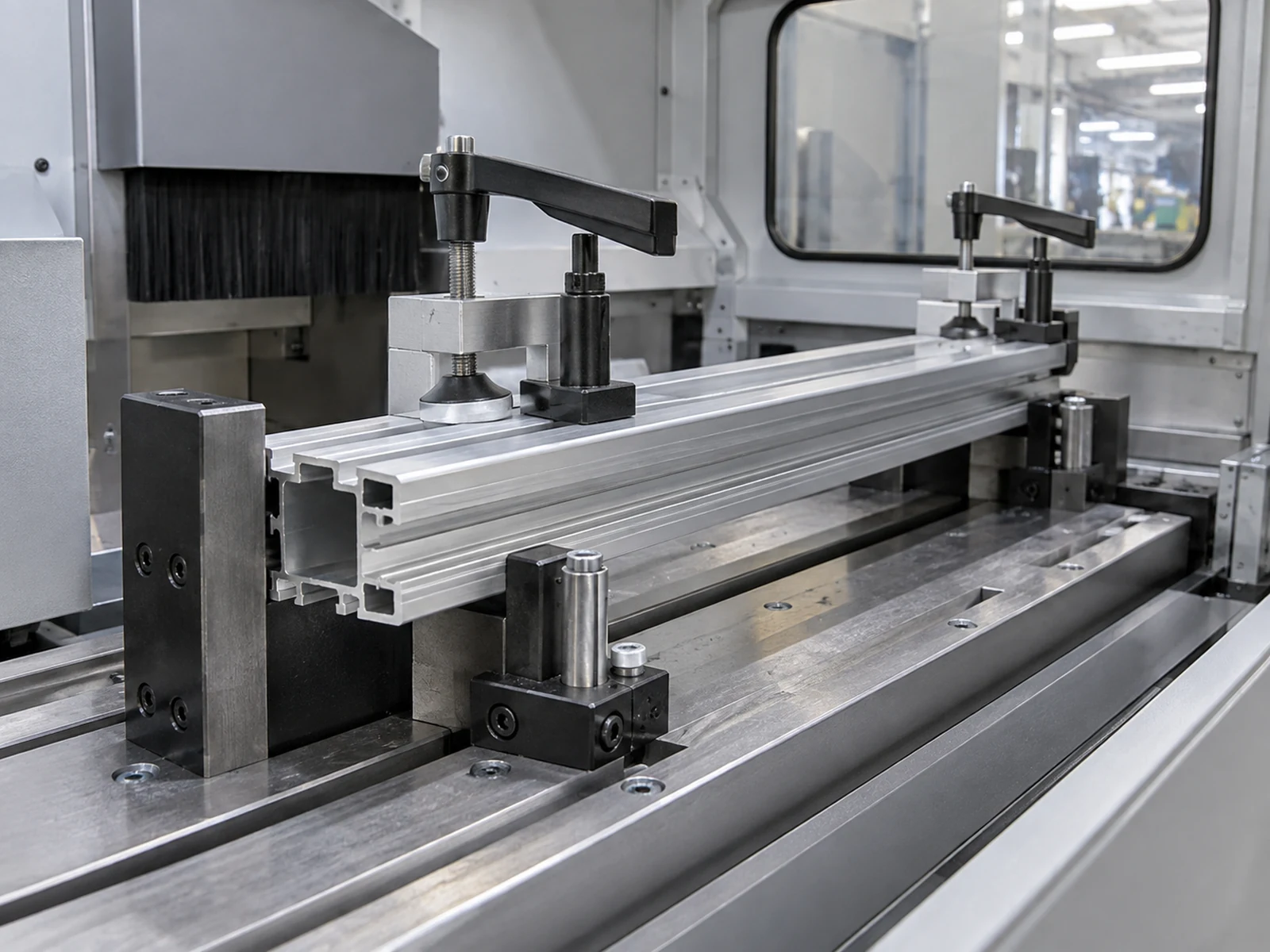
Record first-off measurements on a labeled blank. State where length is measured, whether end squareness or an angle applies, how a burr is evaluated, and whether the visible finish has marks. Check how the last short piece is retained and how chips are cleared before the part reaches a heater or gasket assembly station. A sample photo can aid discussion, but the acceptance result should be tied to the actual part drawing and measurements.
When several sill families share a saw, do not quote one nominal cycle as the whole output. Include loading, fixture changes, first-off checks, sorting and traceability. A high-volume straight extrusion and a low-volume left/right shaped sill may have different changeover burdens. Request an observed trial or documented process plan for the hardest representative section, not only the simplest stock in the package.
Keep heater, seal and floor interfaces with their owners
Norlake locates heater wire under its specified threshold; Norbec describes a profiled sill with double heating wire and separate threshold options. These statements show that heater integration is system-specific. The saw supplier can identify and measure the cut blank. The door maker must decide how its wire, cover and service access remain within the released design, then verify the assembled door. The installer or project authority addresses the floor and site interface. Put each of those owners in the purchasing record.
Likewise, a threshold can meet a door sweep, gasket or jamb at several points. A smooth cut end alone cannot confirm a seal, frost-control result, cleanability or walking-surface performance. Ask the door maker for its accepted end condition at the blank stage and for the later assembly test it will perform. If the existing system is bought as a complete heated sill, a saw quotation should not promise that substituting a cut profile preserves the product’s stated performance or approvals.
Use the supplier drawings for the exact system and revision. Coldmatic publishes separate heated threshold and sill details, which is a practical reminder that “step,” “flush,” “sweep” and “recessed” descriptions can refer to different assemblies. Treat the words in a sales schedule as search clues; rely on the approved part drawing for the actual saw task.
Inspect the cut end without overstating the evidence
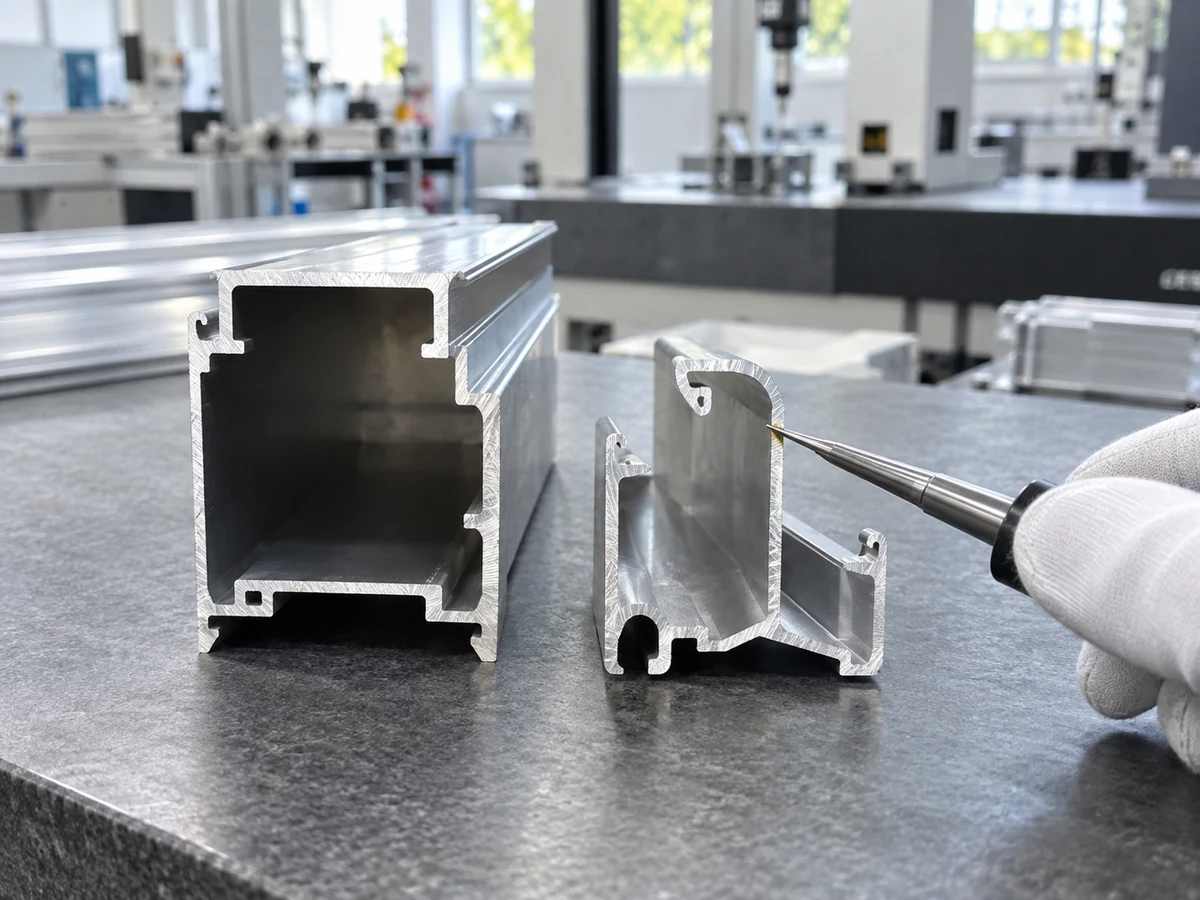
Define the acceptance stage before measuring. Is the blank inspected immediately after cutoff, after deburring, after coating touch-up or after the heater cover is fitted? Specify the dimensional datum, allowed end form, edge and surface limits and the inspection tool appropriate to the released drawing. A buyer should receive the accepted first-off sample and subsequent lot records with stock and drawing revisions. If edge finishing remains with the door maker, the blank supplier’s scope should say so plainly.
Traceability matters when a family contains look-alike sections. Keep part number, handedness, finish, length and drawing revision on the batch label. Segregate an approved aluminum sill extrusion from a generic U-channel and from plate cover stock. If a trial uses a substitute only to discuss basic machine access, mark it as a non-qualification demonstration and require a later trial on actual stock before relying on the quote for production acceptance.
Compare three purchasing routes at the same handoff
First, a door maker can buy the completed approved threshold assembly. Its quote may include heating, covers, hardware and documentation, leaving incoming inspection and installation interfaces to the buyer. Second, it can buy prepared aluminum sills and add the remaining system parts. Third, it can cut released extruded stock itself. That last route includes material yield and offcuts, saw time, fixture investment, blade and consumables, first-off and batch inspection, deburring, finish protection, labeling, scrap, storage and transfer to assembly. Add any later drilling, heater integration, gasket fitting and final test before comparing its total with a purchased unit.
Use the actual door mix and production period. A freezer line may contain both heated and unheated threshold families, plus FRP or plate options; a single average “aluminum sill” count conceals the difference. Ask the supplier to show which rows it will cut and which it excludes. If no straight approved aluminum member remains in the factory, a profile saw may have no role in the threshold decision even though the overall door uses aluminum elsewhere.
Walk-in freezer door threshold cutting: seven RFQ checks
- Released system: name the freezer-door family, approved threshold drawing and revision.
- Stock route: identify extruded aluminum, fabricated plate, FRP or complete bought-in assembly without combining their volumes.
- Blank identity: give the actual section, material, finish, incoming length, handedness and number per door.
- End definition: mark both physical end planes, datum, angle, visible face, and accepted burr or surface condition.
- Representative trial: provide real production stock and test the shortest, longest and hardest-to-hold members with documented contacts.
- System boundary: assign heater, cover, gasket, jamb, floor connection and assembled-door acceptance to the named owner.
- Comparable quote: request accepted blank output and all remaining work before comparing with prepared or complete thresholds.
A useful opening inquiry is: “We are evaluating cutoff of approved aluminum threshold extrusion [part and revision] for walk-in freezer door family [ID]. Attached are the released section, blank drawing, length mix, finish and first-off criteria. Please propose support and clamp contacts for actual stock and identify what leaves the saw station. Heater routing, door sealing, floor interface and final system approval remain outside the saw trial unless separately assigned.”
Related Jiurun cutting-equipment footage
The video below is an actual Jiurun equipment example used for general discussion of workholding and cut-part review. It does not show a freezer sill, this threshold stock, an approved machine configuration for the job, a customer trial, heater integration or freezer-door performance.
Send the actual threshold member package
Start with the stock-form decision. If the released part is an extruded aluminum blank, send the drawing, sample and accepted end condition to the cutting-equipment supplier. If it is FRP, a plate fabrication or a complete heated sill, keep that route in the appropriate purchase package. Jiurun’s cold-storage door frame guide covers related frame members, while its industrial profile cutting overview gives broader equipment context. For a real retained cutoff step, send Jiurun the released blank package so the team can assess the stated cutting operation without claiming the completed freezer-door system has been qualified.
Source basis: Norlake walk-in specification, Norbec hinged-door threshold options, and Coldmatic’s door-detail library. These sources demonstrate different proprietary routes; they do not verify Jiurun compatibility, a specific material or an assembled-door result.