
Veterinary oxygen cage door frame cutting starts with a scope decision. If an equipment maker has released an aluminum perimeter frame for a transparent treatment or oxygen-therapy door, a saw supplier can quote the frame members. The saw supplier cannot infer the door section, opening fit, gasket compression, or oxygen performance from a photograph. Those belong to the equipment maker’s approved design and validation process.
One product example shows why the distinction matters. Snyder Manufacturing’s avian treatment cage information describes an acrylic door with an anodized aluminum frame, while also distinguishing its treatment-cage door fit from an ICU door. The example shows that aluminum can be part of a door assembly; it does not establish a universal section, seal design, or cutting tolerance.

Veterinary oxygen cage door frame cutting: define supply scope
A buyer may need a complete approved door, a frame kit with hardware, or cut aluminum members for assembly in its own plant. Mixing those scopes creates a misleading machine RFQ. A complete door supplier owns the assembled fit specified in the purchase contract. A saw or cut-parts supplier can own only the dimensions and condition of the released aluminum blanks, plus any agreed secondary work.
- Finished door or approved kit: specify the opening, door family, panel and hardware revision, cleaning and service requirements. The door OEM resolves assembled fit under its acceptance plan.
- Cut aluminum frame members: specify released section and member drawings, datum, end treatment, quantity and inspection plan. The buyer or designated assembler resolves door fit.
- Machine to cut members in-house: provide profile samples, a cut list, cycle and changeover assumptions, and first-off acceptance method. The buyer or designated assembler resolves door fit.
For a machine quote, identify the approved profile and its finish before requesting a model. A machine photograph is not enough to prove that a long, thin wall, hollow section can be clamped without distortion or that its finished end will suit the next operation.
Build a door-frame cut list from the released assembly
Start with the approved door drawing and bill of materials. The clear opening, transparent panel, hinge, latch, gasket carrier, corner connector, and trim can all change the required frame-member length. Record whether each dimension is an outside frame size, a visible opening, a panel cut size, or an individual extrusion blank. They are not interchangeable.
For every member, identify the part number and revision; actual aluminum alloy, temper and finish if controlled; section drawing; straight or mitered end; cut length and tolerance; reference face; orientation; quantity per door; and any protected cosmetic face. State whether length is checked before or after deburring or coating. Where a corner connector or screw feature controls the joint, show its location from an unambiguous datum. The supplier should not invent a tolerance or take one from an unrelated cage design.
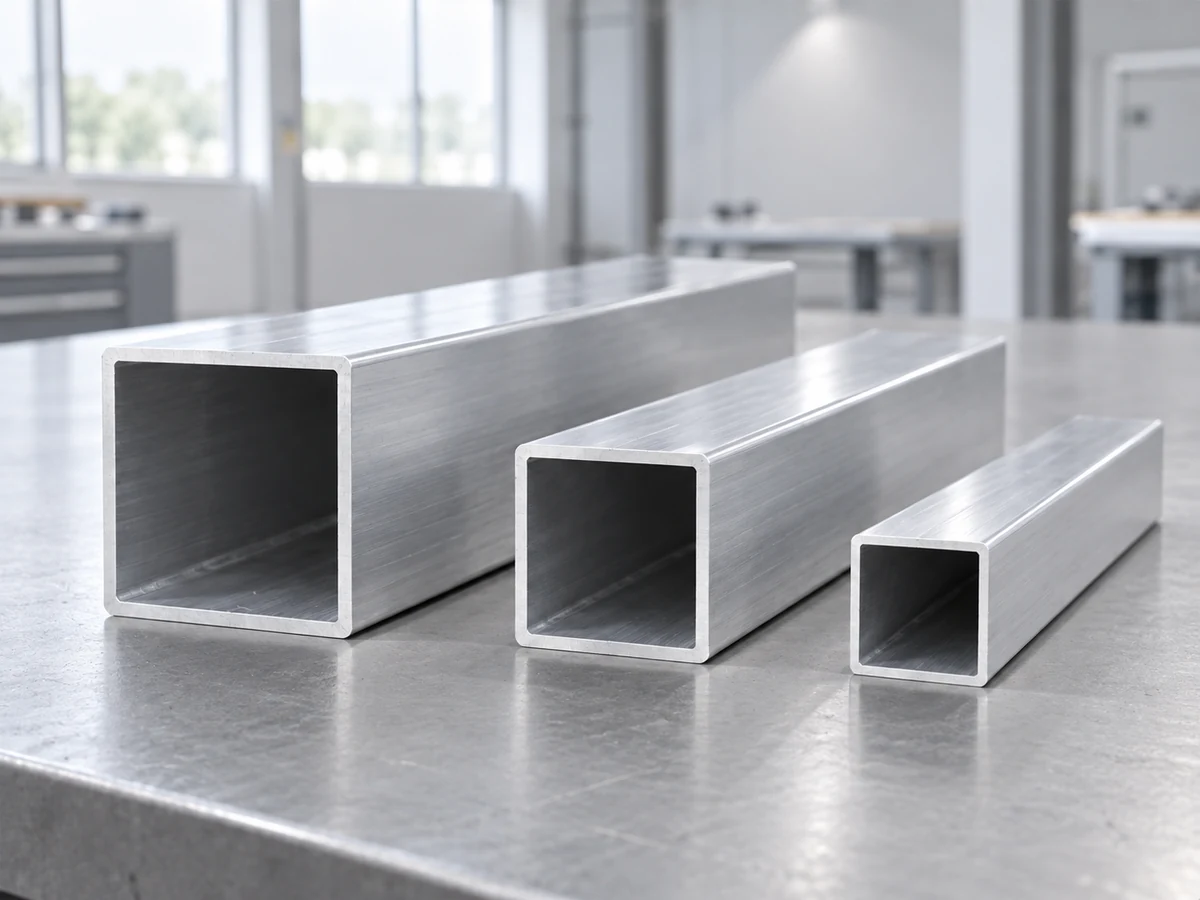
If the actual frame uses a channel, lip, or gasket land, a generic square tube photograph is only a visual aid. Send the real section drawing and a physical sample. Confirm which face is visible, where a clear panel sits, and which edge is used as the measurement datum. A dimension from the wrong face can produce a blank that meets a length number yet fails to assemble.
Keep acrylic, gasket and hardware decisions with the assembly owner
The transparent panel may be acrylic or polycarbonate depending on the approved product. The Shor-Line oxygen therapy door document describes a polycarbonate door with a foam gasket and adjustable vents. That is a distinct construction from an aluminum-framed acrylic example. Use the actual bill of materials rather than assuming one company’s panel, seal or hardware specification applies to another.
A door-frame cut plan should show the available clearance to the panel, the gasket carrier and the latch or hinge fasteners. But a cut member alone cannot demonstrate gasket compression, leak behavior, airflow control, suitability for animals, or clinical performance. Those require the finished assembly and the product owner’s own test and approval process. The frame supplier can flag a fit concern and supply measured blanks for that process.
Choose the cutting setup around the section and first-off checks
Ask the saw vendor to demonstrate the proposed setup on the buyer’s released extrusion or a representative sample of the same section and finish. Record stock support at infeed and outfeed, fence and stop references, blade approach, clamp contact faces, cut orientation, and chip removal. Hollow or thin wall sections can shift or mark if a clamp contacts an unsupported face. A fixture recommendation should therefore reference the actual sample and the cosmetic requirements, not a generic equipment category.
Check the first-off member for overall length from the specified datum, angle or squareness as applicable, burr and edge condition, and visible-face damage. If the joint is mitered, check the intended left and right orientation. If holes, slots, bending or coating occur later, identify whether the cut end is their datum and whether extra allowance is required. Record the accepted first-off before producing the batch; agree on when to recheck after setup changes, blade changes, or a new extrusion lot.
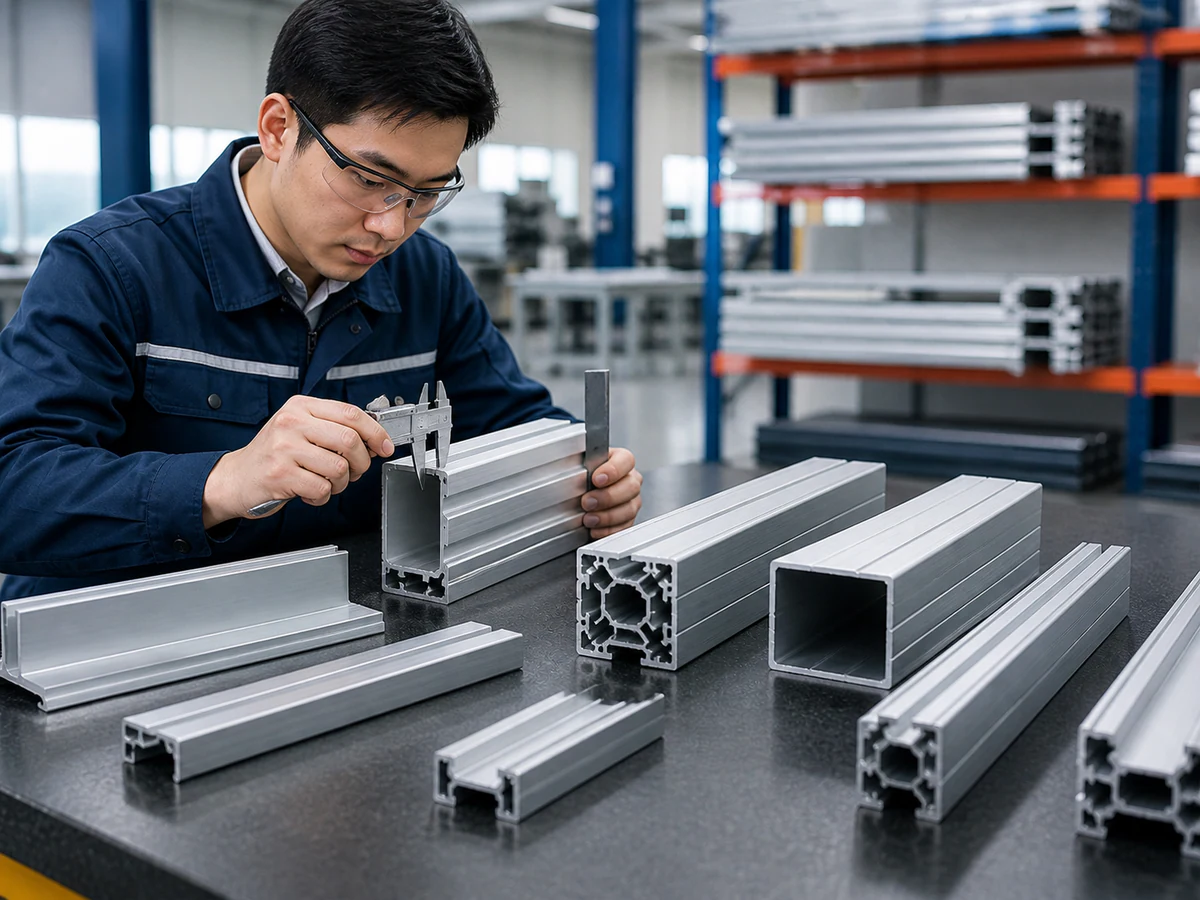
The buyer should then assemble the accepted first-off with its own panel, corners, gasket and hardware. Record any interference or gap against the released door drawing and decide whether the root cause is the cut blank, the extrusion, the connector, or an assembly part. This avoids treating every fit issue as a saw accuracy problem.
Ask for a quote that can be compared fairly
Send the same drawing revision and sample set to each bidder. Include cut lengths and yearly or batch quantities, the number of unique profiles and changeovers, finish protection needs, and whether the quote is for cut parts or for a machine. Ask bidders to state which operations are included: measuring, cutting, deburring, cleaning, labeling, packing, setup and first-off inspection. Identify who provides consumables and who owns scrap during trials.
For a machine RFQ, request the fixture concept, blade specification basis, feed and stop method, operator steps, and an acceptance demonstration on the approved profile. Compare the measured first-off and repeat samples with the buyer’s tolerance, and separately compare changeover effort and maintenance access. A claimed speed or accuracy figure from another section should not be treated as the result for this door frame.
For a cut-parts RFQ, request a sample pack with part labels and inspection records. Include the shipping protection needed for cosmetic surfaces and the method for separating left and right mitered pieces. If the OEM has several door sizes, supply a size matrix that maps each finished door to its member part numbers. This is more reliable than asking a vendor to scale a frame from an overall opening dimension.
What the related equipment video shows
Use a demonstration video to discuss where the extrusion is supported, referenced and clamped. Make a machine decision only after the vendor has reviewed the released section and the acceptance sample. For a broad view of possible equipment categories, see Jiurun’s aluminum cutting equipment range; the final configuration is application-specific.
RFQ checklist for the next conversation
- Released door assembly and frame-member drawings with revision, datum and cut-list matrix.
- Physical approved extrusion sample, finish requirement and cosmetic-face marking.
- Panel, gasket, corner, hinge and latch interface dimensions that affect blank length or end condition.
- Cut quantity, batch mix, changeover frequency, downstream operations and pack-out requirements.
- First-off measurement plan and assembled-fit handoff to the door OEM.
Next step: send Jiurun the released aluminum section, cut list, target quantity and first-off criteria through the contact page. We can review a cutting route or equipment demonstration against those inputs. Your door engineering team remains responsible for finished assembly fit, sealing and product acceptance.