
Vertical garden aluminum stand cutting is a cut-blank procurement problem only after the stand architecture is released. A freestanding unit may use uprights, floor feet, crossmembers and connectors, but a saw quote should cover only the aluminum members the OEM will actually cut. It cannot be inferred from a finished planter photo whether the manufacturer buys a complete support kit, buys prepared members, or cuts raw stock in-house. Start the RFQ with that make-or-buy decision, then list each released part family and its downstream operations.
As one public product example, JUWEL describes an aluminum stand that supports a vertical garden without wall mounting and can be installed on one or both sides. Its assembly instructions distinguish the base element from extension elements and state that the aluminum stand is for the base element. That is an architecture warning for buyers, not a claim that Jiurun has cut, tested or supplied JUWEL parts. Confirm the rules of your own design before specifying a saw.
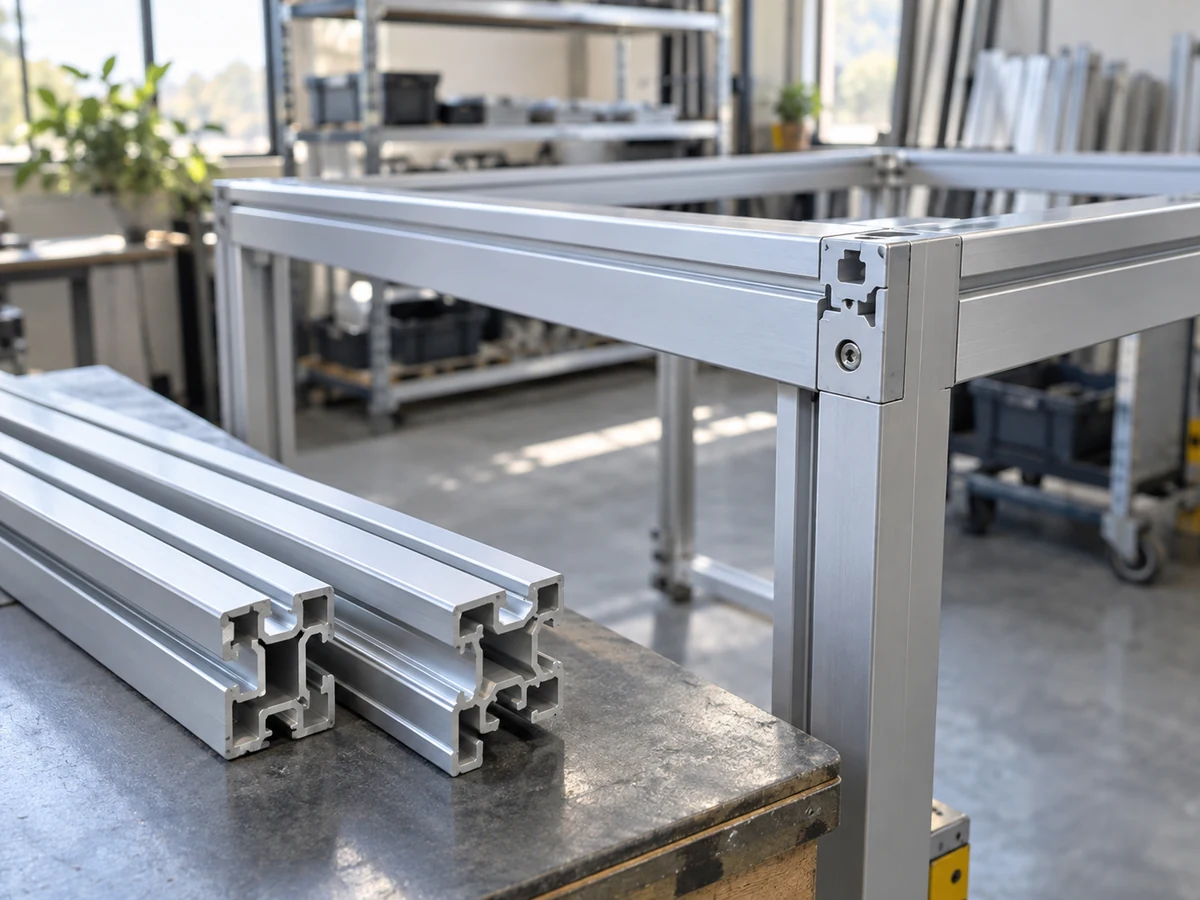
Vertical garden aluminum stand cutting: seven RFQ checks
1. Name the exact stand configuration
Define whether the order is a single-sided base, a back-to-back pair, or another approved layout. Identify the number of uprights and feet per sellable unit, any left/right or front/rear variants, and the revision that controls the kit. A drawing for the garden module alone does not release the support members. If an extension module is not approved for a stand, do not quietly add its apparent height to a cut list. Ask engineering for the approved load path, connector positions and floor contact arrangement; the saw supplier should not design those elements from a product photograph.
2. Separate saw cuts from other fabrication
For each member, mark whether it arrives as extrusion, hollow tube, formed section or a purchased finished part. Record the stock profile, nominal length, cut length, end geometry, quantity per kit and downstream owner. Straight blank cutting may be a saw operation; drilling, tapping, machining a connector pocket, bending, welding, coating and final assembly require their own routing and acceptance. A saw trial showing a neat end face does not prove the completed stand is stable or suitable for the intended load. Keep those approvals with the product manufacturer.
3. Resolve the reference and tolerance chain
Do not request a single “stand length tolerance” for unlike parts. State whether cut length is measured over the longest edge, between square end planes, or against a mating datum after an angled cut. Identify the foot-to-upright and upright-to-module interfaces that set assembly fit. Put the drawing revision, permitted length variation, squareness or angle criterion, burr limit and inspection method against the relevant part number. If a connector hides the end face, the functional issue may be seating and hole alignment rather than cosmetic appearance; if the end is exposed, edge appearance may also matter. Use the approved drawing to set values instead of importing a generic saw brochure tolerance.
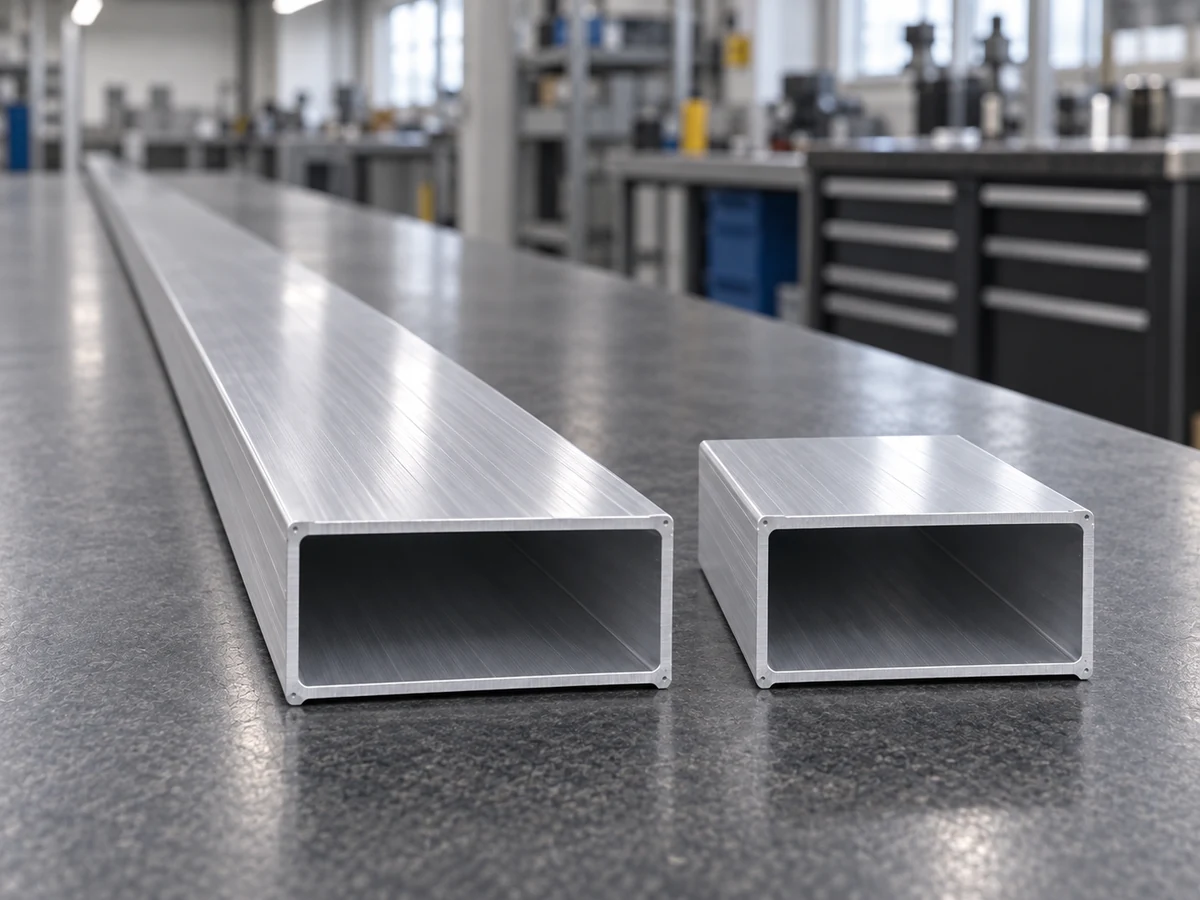
4. Confirm profile support and clamping
A tall, thin-wall upright and a short floor foot may not sit in the same fixture. Send cross-section drawings and physical samples, with slot openings, wall thickness, finish side and any delicate lips identified. Ask where the stock is supported before and after the blade, which faces are used for location, and how clamp force avoids crushing or marking. For open profiles, a seemingly firm clamp may still distort the section near the cut. If the line uses a sacrificial insert or shaped jaw, include that setup in the quotation and trial record rather than presenting a bare machine cycle as the production result.
5. Show the actual length mix and yield objective
Provide a kit bill of materials and realistic batch mix: long uprights, short feet, crossmembers if present, and any variant lengths. The vendor can then evaluate stock-length utilization, remnant handling, changeovers and labeling. A nominal maximum feed length alone does not reveal whether short parts can be produced economically or safely. Distinguish material yield from good-part yield: a nested pattern that saves stock but creates wrong-variant picking or finish damage is not a useful saving. Quote setup, saw time, inspection and scrap with the same released mix.
6. Decide where the finish is protected and checked
A visible stand may arrive anodized or coated, while another design may finish after cutting. State that sequence explicitly. For finished stock, specify the allowable contact faces, protective film handling, chip removal and packaging before parts rub against each other. For unfinished stock, do not price a cosmetic standard that engineering has not requested. Ask for acceptance samples under the intended stock and blade condition, then inspect both the cut face and the long visible surfaces. Do not infer coating durability or corrosion performance from a cut test.
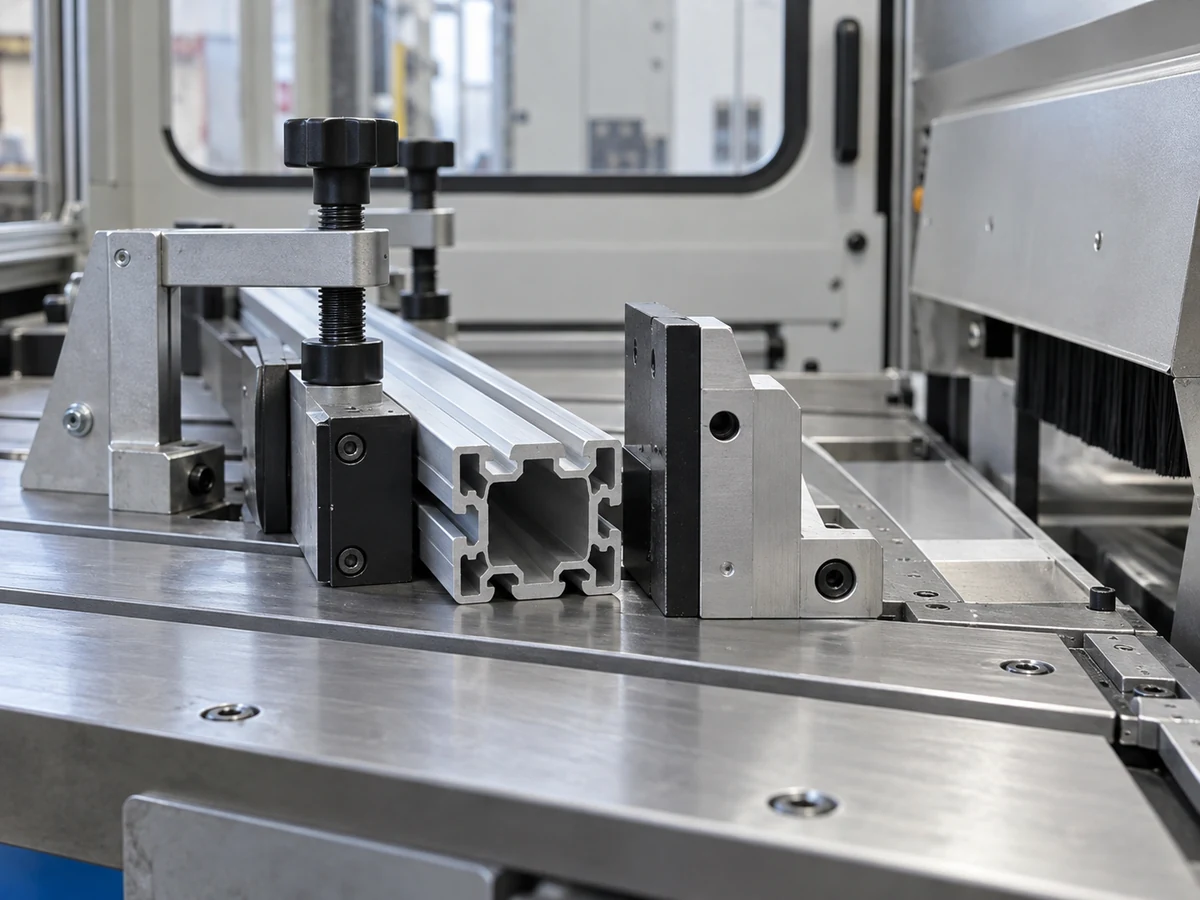
7. Agree the release, trial and handoff evidence
A useful saw trial uses representative production profiles and the most difficult approved members, not only an easy straight bar. Record the sample lot, stock condition, drawing revision, clamp arrangement, cut settings, measurement method and number of accepted pieces. The final handoff should identify parts by number and revision, count kits and individual blanks, separate left/right variants, protect the finish, and name who completes drilling or assembly. If the trial uses substitute stock, label it as a setup illustration and leave product-specific acceptance open until the real profile is tested.
Choose the purchasing route before comparing machines
If the OEM buys a complete stand, its immediate question is supplier fit and documentation, not saw capacity. If it receives pre-cut members, it needs a receiving and assembly check. If it cuts stock in-house, it should compare a manual saw, a semi-automatic station and an automatic feed process against its real profile mix, cut quality criteria and annual volume. “Automatic” is not a substitute for knowing the fixture, operator touch points, part presentation and inspection workload. The modular extrusion example from 80/20 shows that fastening and joining choices change the downstream route; it does not establish the design or parts used by JUWEL or by your project.
This is where a profile cutting machine discussion becomes useful: provide the parts and the cut-blank acceptance method, then ask the equipment supplier to show which profiles and operations it can actually handle. Do not combine specifications from unrelated machine models into one promised configuration.
A practical sample and acceptance sheet
- One controlled drawing and part number for each upright, foot and optional crossmember; identify what is bought complete.
- A bill of materials with kit quantities, length variants, stock form, finish state and material ownership.
- The measuring datum for length and angle, approved cut-face and burr criteria, and the gauge or method used to check them.
- Photos or samples of the real cross-section, including fragile edges, slots and the face that must remain unmarked.
- The intended lot size, stock length, remnant policy and labeling/packing rules for left/right or revision variants.
- A trial plan that records fixture, blade and inspection conditions and leaves structural validation with the product owner.
Keep the cut trial and the assembled-product approval separate. A good blank can still be drilled incorrectly or installed on an incompatible module; conversely, an assembly concern cannot be solved by claiming a faster saw. The manufacturing quotation should make the handoff between these steps visible.
See the related machine scene
The following video is from Jiurun Machinery’s own channel. It shows a general aluminum cutting equipment scene. It does not show this vertical garden stand, its exact stock, a particular model configuration, a customer order or measured performance for the proposed cut kit.
Send a stand cut-blank RFQ
Send your released stand drawings, profile samples or cross-sections, bill of materials, finish sequence and acceptance criteria through JiurunCut’s contact page. Specify whether you need a complete kit supplier, prepared members or an in-house saw process. That lets the equipment discussion begin with the parts you truly retain and the checks your downstream assembly needs.