
UV flatbed printer aluminum frame cutting is a cut-member purchasing question only when the printer OEM has released an aluminum extrusion route for a table, support or cover structure. The saw supplier needs the actual rail drawing and stock, not the printer’s overall dimensions or advertised print area. The OEM remains responsible for the assembled machine, including printhead motion, bed support, vacuum holding, UV curing and electrical safety.
There is no universal aluminum frame for every flatbed printer. A model may combine cast, fabricated, machined and purchased structures. For example, Roland DG lists separate printer-unit, bed and printing dimensions for its VersaOBJECT CO flatbed series. Those are useful system references, but none is a cut instruction for an individual rail. This article is for OEMs and approved frame fabricators that already have an extrusion drawing. It does not describe a Roland product as a Jiurun customer or a Jiurun cutting trial.
Begin with the released table-frame member schedule
Identify each possible saw-cut aluminum member by function: side rail, cross rail, bed support, guard frame or a different approved part. Mark parts that are extrusions separately from castings, sheet components, machined plates, linear guides, belts and bought assemblies. A machine with a long print bed can still have multiple rail segments, joints and prepared modules; the bed dimension alone does not reveal the stock length, cut length or receiving stage.
For every extruded member, send the current cross-section drawing, alloy and condition, finish at the cutting stage, part number, revision, cut quantity per machine, length datum, tolerance and end condition. Distinguish left and right variants even when the nominal lengths match. Include the mating connector or bracket drawing where an end cut must clear hardware. The saw quotation should state whether it delivers loose blanks, members prepared for later machining, or a checked assembly.
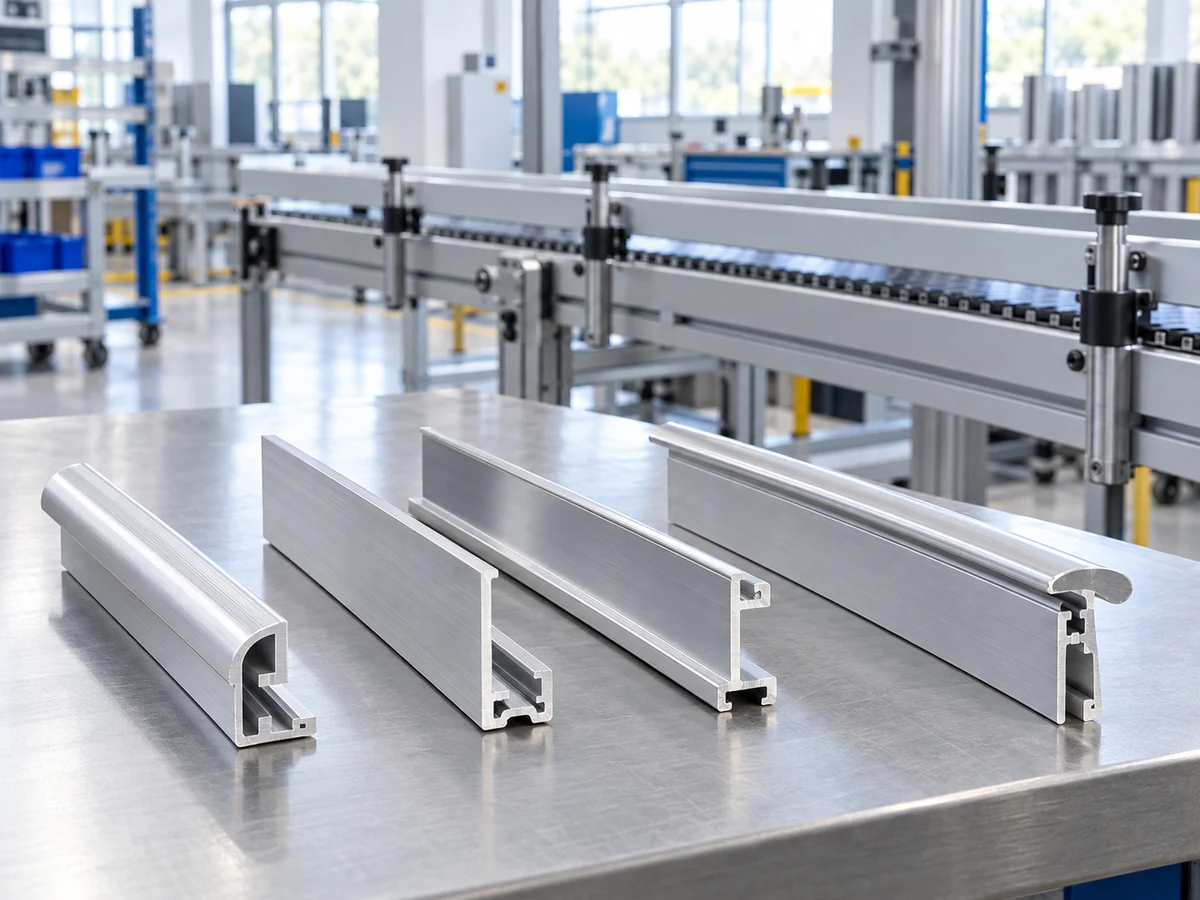
Quote the same accepted stage
Ask each supplier to price the same delivery state. Long stock leaves all cutting and identification to the receiver. A saw-cut blank adds controlled length and end condition. A prepared rail may include holes, slots, tapping or protective finish. An assembled table frame adds joining and its own acceptance checks. A low blank price cannot be compared directly with a complete frame price unless the remaining work, scrap, fixtures, inspection, packing and handling are included.
Define who purchases the stock and who owns first-off approval, secondary machining, finish protection, rework and lot traceability. Name the receiving workstation. If the OEM needs a kit for one machine, provide a member list and label scheme so that a set can be checked before it reaches the assembly station. Keep linear guides, vacuum plumbing, printhead hardware and electrical equipment outside a saw-cut blank quotation unless explicitly included by another supplier.
Trial the actual extrusion and its support surfaces
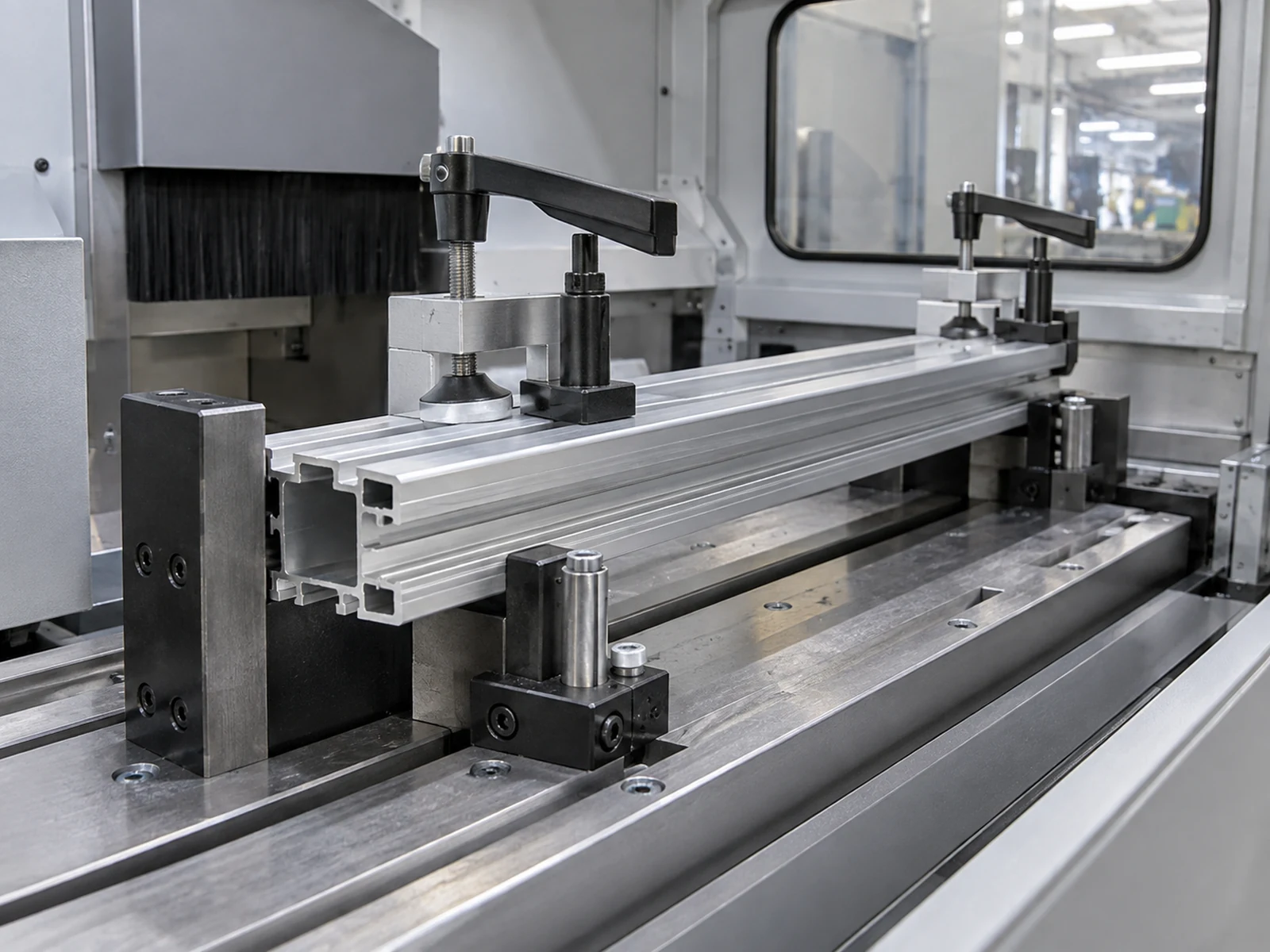
A slender or open section may deflect under an unsuitable clamp, and a hollow rail may need support at particular faces. Supply a representative sample of each released section. Show which surfaces may contact the fence, stop, supports and clamps, including any cosmetic or coated faces that must be protected. Ask the cutting-equipment supplier to review long-stock feeding, short offcuts, orientation and blade approach with the OEM before judging a machine from envelope dimensions.
Witness a first-off cut using the approved stock and a proposed saw configuration. Record the profile and batch, fixture, blade, orientation, setup and cut position. Check the piece against the drawing after it leaves the fixture. The trial should establish whether the proposed process can make the agreed blank; it cannot establish the final printer’s bed flatness, carriage alignment, print registration or output quality.
Inspect the blank against the next interface
The receiver should know which cut features matter before the rail is drilled, joined or installed. The first-off report may cover length from the defined datum, end squareness or specified miter, visible burrs, local deformation, surface damage and part identity. Use the drawing’s actual tolerance and inspection method. Do not copy a generic saw accuracy figure into the rail specification. If a rail must meet a cross-member, state whether acceptance is on the individual blank, a dry-fit pair, a prepared frame or a fully assembled table.
Separate cut-stage evidence from later system evidence. A measured blank can still be installed incorrectly or paired with the wrong guide, drive or bed component. The OEM must define those assembly and operating checks. EFI describes production flatbed printers holding media to the table with a vacuum system; that is a printer-level function, not a property demonstrated by a saw-cut rail. The cited manufacturers are context for scope only.

Send a quote package the saw supplier can answer
- Released frame-member drawings and revision, with the exact extruded stock identified separately from cast, sheet and purchased parts.
- Member schedule showing quantity per printer, cut length, datum, orientation, end condition and labeled kit identity.
- Stock sample or complete section drawing, material condition, finish state, expected batch mix and available incoming lengths.
- Approved support and clamp contact surfaces, minimum and maximum part lengths, short-part cases and any surface-protection requirement.
- First-off trial plan and the drawing-based checks to be witnessed on the accepted blank.
- Clear delivery state: loose cut blanks, prepared members or joined frame, with remaining operations assigned to an owner.
For a UV flatbed printer aluminum frame cutting RFQ, ask the supplier to list assumptions rather than silently choose a profile, fixture, tolerance or assembly scope. Compare machines or subcontract quotes using the same actual stock mix, production period and accepted stage. A useful answer is a documented route from released drawing to inspectable blank, with the printer’s performance assessment still owned by its builder.
Frequently asked questions
Can printing area be used as a rail cut length?
No. Printing area, bed size and printer envelope describe different system extents. Use the released member drawing and its measurement datum to specify a saw cut.
Does a square cut prove table flatness?
No. A square cut is one possible blank-level check. Table assembly, guides, bed support and motion must be assessed separately by the printer OEM.
Should every rail use one saw fixture?
Only if a witnessed trial on the actual range of profiles and lengths supports that choice. The least supported and most damage-sensitive approved section deserves explicit review.
See a related aluminum cutting process
The following video is from Jiurun’s YouTube channel and shows a Jiurun aluminum cutting machine. It is a general equipment demonstration. It does not show a UV flatbed printer, either cited manufacturer’s machine, the stock or fixture specified in this RFQ, a customer order, or verified performance for this application.
Next step: send the released extrusion drawings, member schedule and first-off criteria to discuss a saw trial for your actual aluminum frame blanks.