
Utility cart aluminum tube cutting starts with a member list, not a cart drawing alone. For a commercial kitchen cart, the saw quotation should cover only the straight, approved tube blanks. The fabricator still has to decide how formed corners, cross supports, shelves, welded joints and casters will be made and checked. Release those boundaries before asking a cutting-machine supplier for a cycle-time or tolerance promise.
One manufacturer example shows why this split matters: PVI describes an all-welded aluminum utility cart with a 1 × 1 tube frame, two T-bar center supports, round front corners and plate casters. That description is a market example, not a Jiurun customer project or a cutting trial. Its mixed features mean the same cart cannot be reduced to one saw setting.
Utility cart aluminum tube cutting: which members belong in the RFQ?
Start with the frame drawing and bill of materials. Mark every straight hollow square-tube rail, upright and cross member that can be cut from stock. Give each member its own section, wall, alloy/temper, finish condition, blank length, end geometry and quantity. If a member is bent, formed, notched, drilled or welded before or after cutting, identify the separate operation and who owns it.
Do not assume a T-bar support is the same section as a square-tube rail. Do not treat a round front corner as a straight miter unless the approved drawing specifically does. Shelves or decks, welded assembly, surface finishing, caster plates and completed-cart load performance belong to their respective design and fabrication checks.
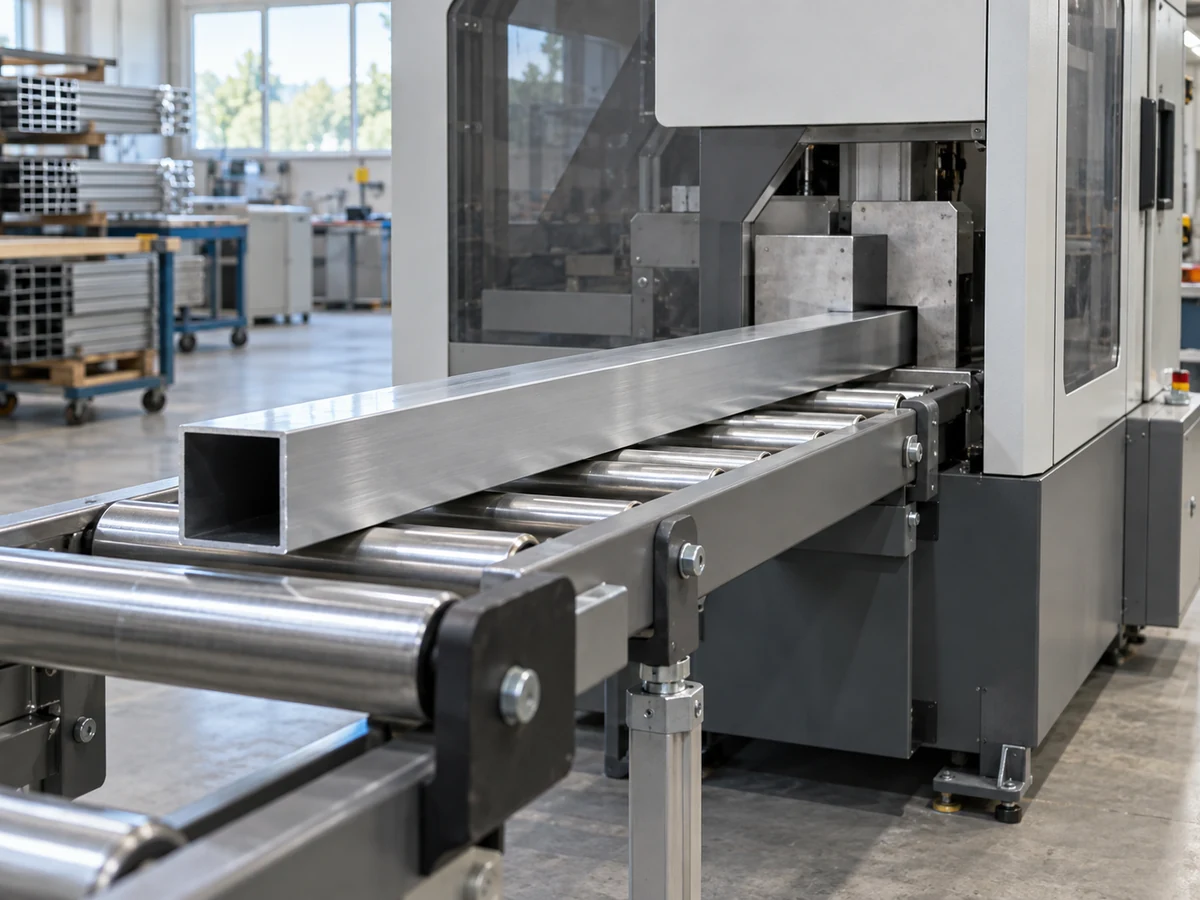
Define the blank by the joint it must enter
A cut length is useful only when its measurement datum is unambiguous. For each rail and upright, identify whether length is measured outside-to-outside, from a stop face, or between mating faces. Specify whether ends are square or angled and which face must remain the visual reference after assembly. If the welded frame uses a gap or allowance, the fabricator should state that allowance rather than asking the saw supplier to infer it from the finished cart dimensions.
Ask the frame builder to confirm the fit-up order. A short cross member trapped between two uprights can require a different acceptance check from a long perimeter rail. Decide which end faces are cosmetic, which will be welded, and what burr or edge condition the downstream process can accept. Keep the drawing revision and sample identity on the cut-list package; a changed corner or shelf interface can change the released blank length.
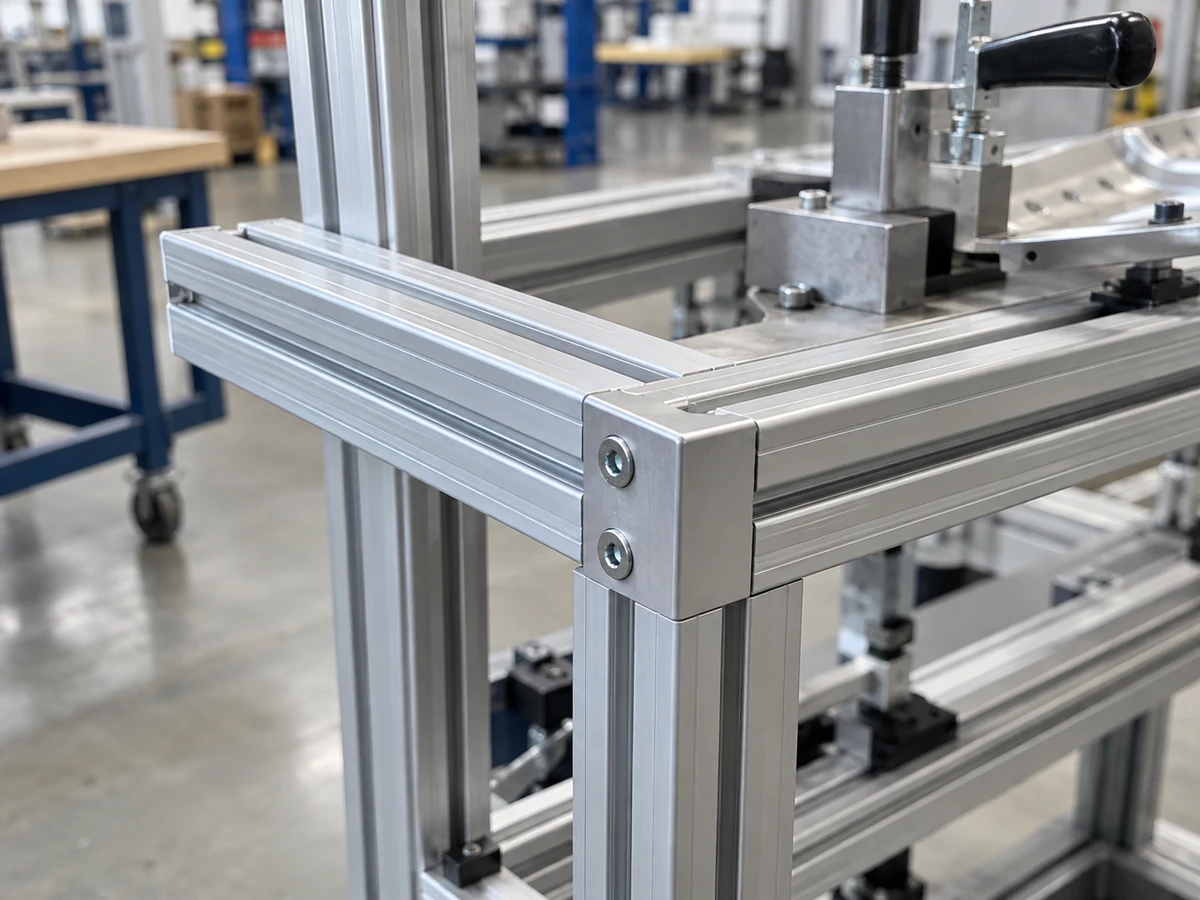
Test the cutting route on the approved stock
Before comparing machines, supply the actual tube section or a clearly labeled representative sample. Confirm how the wall is supported at the clamp, how the profile is oriented, how the long stock is fed, and how short pieces are caught and identified. A saw that produces a clean sample on another extrusion has not established this cart blank’s accepted output.
A useful trial records the sample drawing revision, stock condition, blade and fixture details, stop or feed datum, cut orientation, measured length, end squareness or angle where relevant, burr condition and handling damage. The buyer and fabricator should agree on acceptance limits and the inspection method before the trial. Welding heat distortion and the strength of the finished cart require separate validation after cutting.
What to send for a comparable quotation
- Released geometry: drawing revision, member IDs, tube section and wall, length datum, end form and quantity by member.
- Material and handling: alloy/temper, incoming stock length and straightness, finish or protective film, cosmetic faces and packaging expectations.
- Downstream boundary: which party bends, drills, welds, finishes and mounts casters; any fit-up allowance approved by the frame builder.
- Acceptance plan: sample count, measurement method, burr and surface criteria, and who signs off the cut kit.
- Production context: batch size, part mix, changeover frequency, available infeed/outfeed space and operator handling limits.
For machine selection, compare the accepted cut kit and operator flow rather than nominal blade size alone. The right route may differ between one-off prototypes and repeated batches of mixed rail lengths. Send the cut list and representative stock to JiurunCut for an application review; the team can discuss a suitable cutting route against the approved requirements. Browse the machine range as a starting point, then verify the chosen configuration on your own section.
Watch a related equipment demonstration
The following video from Jiurun Machinery shows a related aluminum cutting-machine scene. It does not show this utility cart, its approved material, a customer order, a validated model configuration or accepted cart-part performance.
Next step: for utility cart aluminum tube cutting, release the straight-member cut list with a drawing revision and inspection criteria, then ask for a sample plan. Keep the finished cart’s weld, hygiene, caster and load checks with the cart fabricator.