
Tool rack aluminum profile cutting starts with the rack drawing, not a generic list of extrusion lengths. A wall rail, a freestanding frame and a mobile tool cart can all use slotted aluminum members, yet they need different cut lists and assembly checks. AluFab shows T-slot profiles used for tool racks and carts with hooks, shelves and mesh. That is a useful application example, not a specification for your rack. This guide helps buyers define a saw-cut member kit that can be checked before quotation.
1. Tool rack aluminum profile cutting: define the delivered kit before comparing quotations
Ask whether the supplier is quoting cut profiles only, cut and drilled members, a bagged hardware kit or a fully assembled rack. List hooks, mesh panels, shelves, casters, feet, brackets, anchors and end caps separately. The rack designer should specify how the finished structure is mounted and what loads it must carry. A saw-cutting quote does not establish a safe load rating or wall-anchor design.
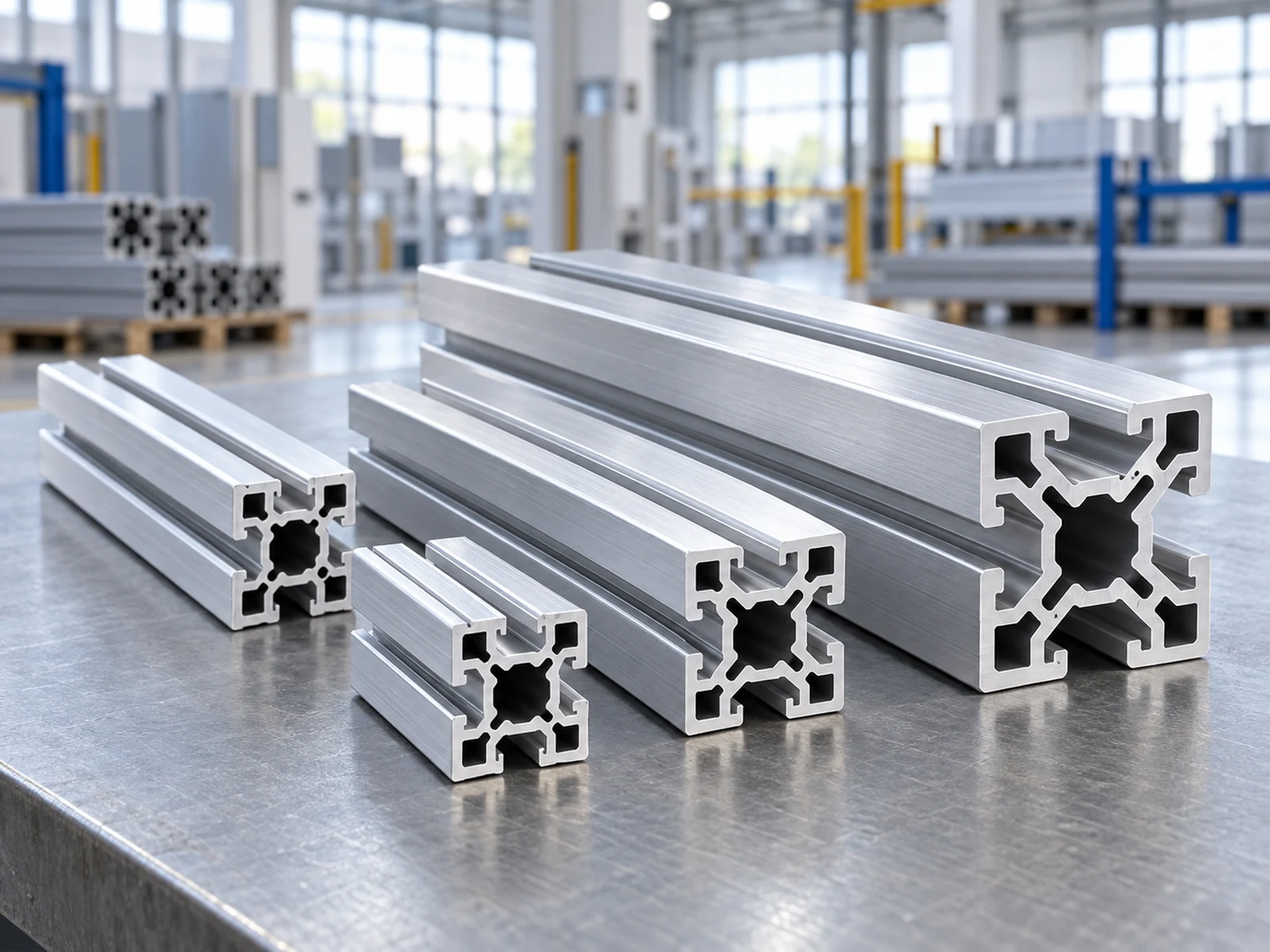
2. Identify every section and its slot direction
Give each upright, crossbar, hook rail, base rail and brace its own part number. Include the supplier’s actual profile drawing or section reference. The slot direction may matter because hooks, sliding nuts or panel fasteners have to enter and travel along a particular face. Mark which faces are visible and which ends need access for hardware insertion. A length that looks correct on paper can still be unusable if a bracket closes the slot before the hanging hardware is installed.
For each member, state quantity, finished length, end form, cut-angle convention and whether the dimension is measured along the long edge, short edge or centerline. Make square and mitered ends distinct line items. Specify any finish that must be protected. Do not infer these details from a rack photograph.
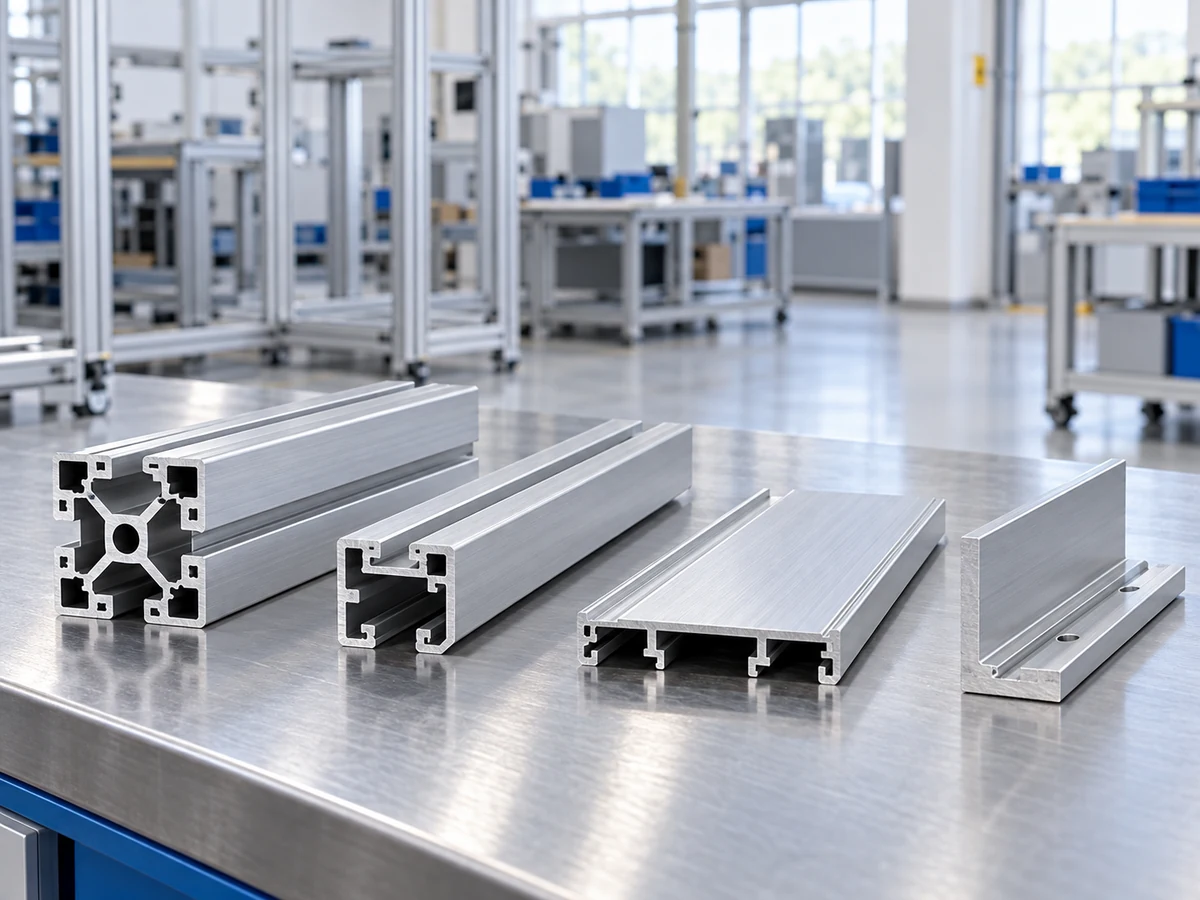
3. Check hook clearance and usable rail length
The drawing should show the first and last usable hook position, bracket locations, end caps and any mesh or shelf interface. Leave an explicit allowance where a sliding fastener must enter from the end. If the rack mixes fixed hooks and adjustable hangers, identify which holes or slots are made after cutting. The buyer should check the actual hook and fastener geometry in a trial assembly. Cutting a rail accurately does not by itself confirm that a hook clears the adjacent upright, shelf or tool handle.
4. Plan a first-off trial with the actual hardware
Before a production batch, cut one representative short rail, one long rail and the member with the most restrictive slot or angle. Assemble them with the intended brackets, hooks, fasteners and panel material. Confirm the measured cut datum, mating ends, sliding-nut access, visible-face condition and the rack’s intended assembly order. Record any change to the drawing and quotation before releasing the whole kit. Structural loading and mounting checks remain with the rack designer and installer; the first-off cut trial is a fit check.
For thin slot lips or a finished surface, request a workholding and surface-protection plan. The sample should reveal whether clamping marks, burrs or chips interfere with hardware insertion. The final acceptance criteria should be written into the order rather than assumed from a machine demonstration.
5. Pack cut members so a kit can be counted
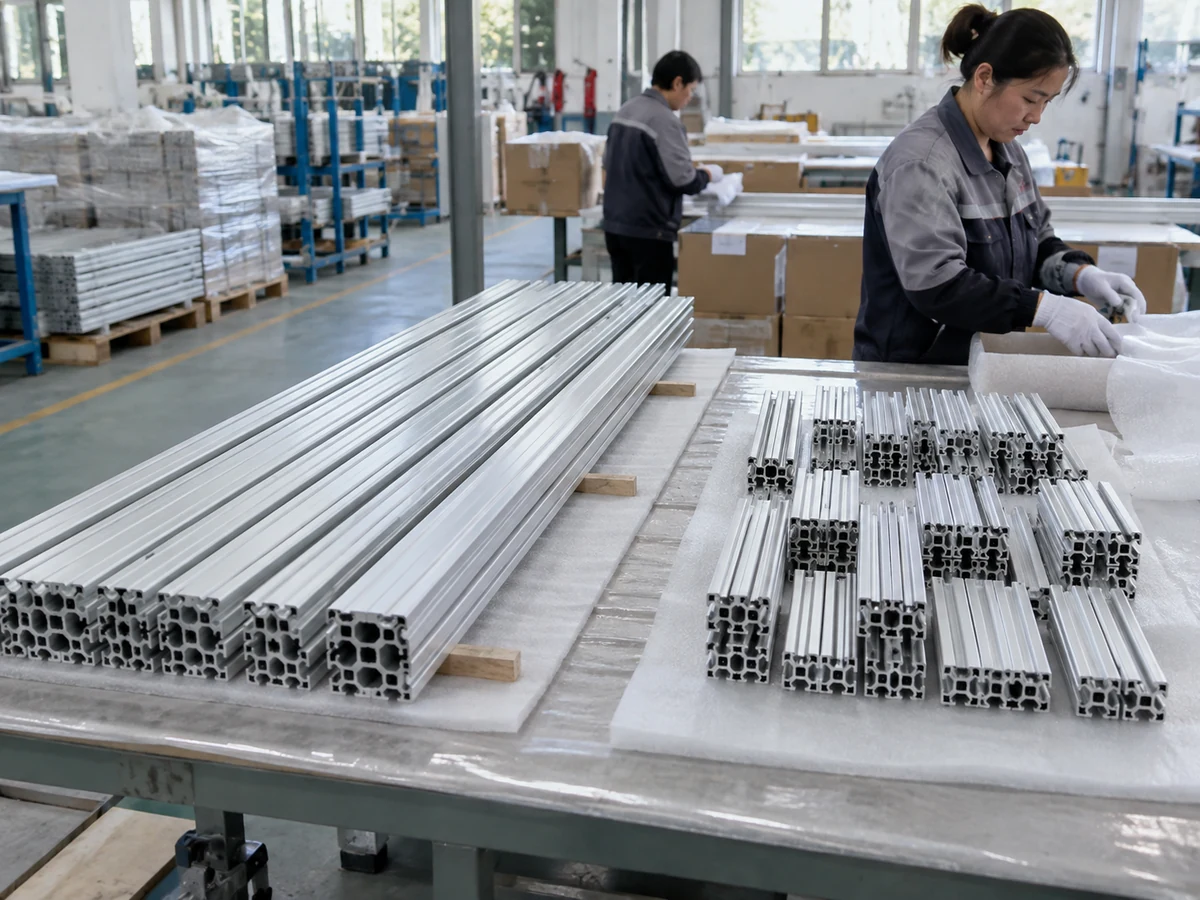
Label bundles by part number, profile type, finished length and quantity. Keep mirror-image or angle-cut parts identifiable. Protect visible faces and exposed ends during handling, and separate short offcuts from accepted members. If drilling, tapping or counterboring happens in a later operation, preserve the part number through that handoff. A packing photograph can suggest a handling method, but it is not evidence that your tool rack order was packed or inspected this way.
6. Send one comparable tool rack cutting RFQ
For a tool rack aluminum profile cutting RFQ, attach a revision-controlled drawing and a line-item cut list. State whether you need only cut members or later operations as well. For every line, provide the section reference, quantity, length datum, end angle, surface requirement and acceptable inspection method. Add the actual hook, bracket and fastener references where they affect slot access. Ask suppliers to identify exclusions and sample requirements in their replies.
Compare quotations at the same delivery stage: member cutting, machining, hardware supply, assembly and packing are different scopes. A lower price for bare cuts is not directly comparable with a bagged, labeled kit. The AluFab application page illustrates tool-rack use of T-slot profiles, while the Robeck extrusion catalog illustrates the range of slot-compatible profiles and accessories. Your chosen profile drawing and hardware list control the actual quote.
Related saw demonstration
The Jiurun Machinery video below shows a general aluminum-cutting machine and feed context. It does not show this tool rack, its profile selection, a customer order, a validated cut trial or a load test.
To discuss a cut-member kit, send your revised drawing, profile sections, hardware interfaces and quantity to JiurunCut through our contact page. You can also review our aluminum cutting equipment before describing the cut stage you need.