
A replacement blade from an independent supplier may look interchangeable with the blade already running on an aluminum saw. The buyer still has two separate decisions: whether the proposed tool can be mounted and operated on the installed configuration, and whether it produces accepted parts on the actual job. A catalog diameter or a lower unit price answers neither question alone. This guide sets out a practical approval route for a factory buying a third-party aluminum saw blade. It is a purchasing and trial framework, not an approval of any particular blade for a Jiurun machine.
Start with the installed saw, not a catalog match
Identify the machine by its serial number and as-installed blade interface. Ask the machine supplier or the approved machine documentation for the permitted blade envelope, mounting arrangement, operating speed, flange and pin details, guarding clearance, and any application restrictions that apply to that unit. Record the currently approved blade designation as a reference, but do not assume that its printed dimensions describe every mounting feature. If the machine has been modified, confirm the current configuration before ordering.
Send the blade supplier the machine model and serial, the approved interface drawing or supplier-confirmed data, the actual rotation direction and speed, and the workpiece family. Request a blade drawing and written application recommendation. A LEUCO circular-saw-blade inquiry form, for example, asks for machine maker and model, operating RPM, feed, flange diameter, blade diameter and bore, rotation, tooth configuration and workpiece. A Freud aluminum blade listing shows that blades advertised for the same broad material can differ in diameter, kerf, body thickness, bore and tooth count. These are examples of information to compare; they are not substitute approvals for this installed saw.
Make the fit review a written gate
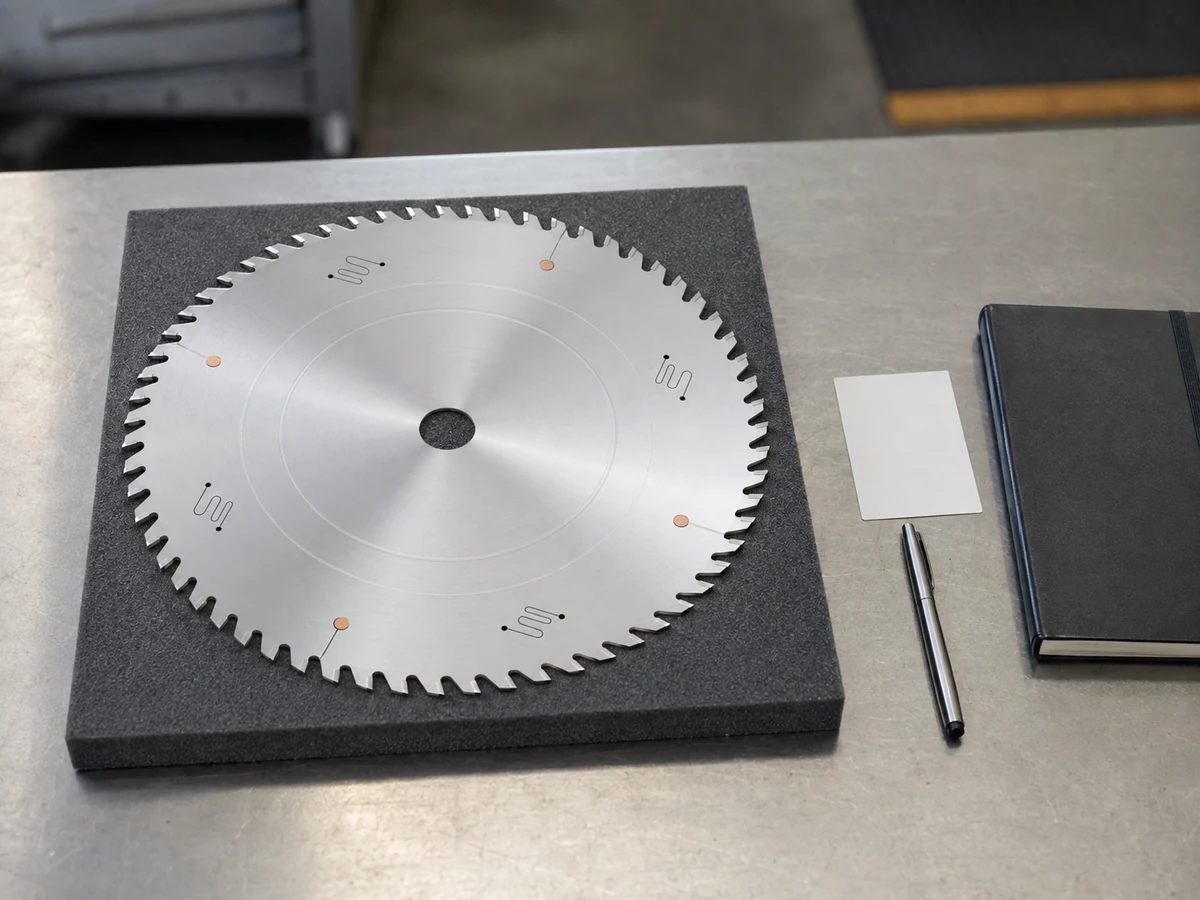
Put the offered blade specification next to the machine’s confirmed limits. Check the outer diameter and allowable range; bore and any locating or drive holes; blade body thickness and kerf; flange contact and clamping arrangement; maximum rated blade speed against the machine’s operating speed; rotation and tooth orientation; and clearance throughout the guarded travel. Also check the supplier’s intended material, section form and cutting application. The Kanefusa aluminum-window blade catalog lists separate locating-hole patterns and dimensions across its range, illustrating why a nominal diameter by itself is an incomplete purchase description.
Do not machine a bore, add an unapproved ring, remove a guard, or rely on a visually similar bolt pattern to make a blade fit. If a proposed blade falls outside documented limits, stop that candidate and ask the machine and blade suppliers to resolve the discrepancy in writing. Where a machine supplier’s acceptance of an alternative consumable matters to the purchase contract or support arrangement, obtain that answer for the specific machine and blade before production use. Do not infer that every independent blade automatically voids support or that every such blade is approved.
Price the whole trial, not only the blade
Compare candidates at a defined purchasing boundary. Record the blade price, delivery and spare availability, any supplier-recommended service or sharpening route, trial consumables, operator time, expected material consumed in qualification, and the disposition of trial parts. If the blade changes kerf, revise the stock-to-part and remnant calculation for the representative cut list. If it changes cut-end quality or tool life, use measured trial results and service records rather than a supplier’s general claim. A cheap first blade can be expensive if it creates extra rejects or a difficult replenishment path; an expensive one still needs an accepted result.
Keep the independent blade question separate from the machine’s initial blade-delivery quantity. Our blade supply order-field guide covers what is included with a new machine. The present decision concerns an alternative replacement for an identified installed saw and the approval evidence needed before routine use.
Trial on the real section and acceptance criteria
Choose representative workpieces that expose the job’s difficult cut: thin walls, wide faces, multiple chambers, visible finish, or a profile that is prone to movement. Use the same released material condition, drawing revision, support and clamp setup for the baseline and candidate blade unless a controlled adjustment is part of the proposed operating package. Agree who may change feed, speed or lubrication, and record those settings. A blade trial that silently changes several machine variables cannot isolate the reason for a different result.
Before cutting, agree the sample size and the acceptance method for length, squareness or angle, burr or edge condition, visible-face marking, and downstream fit, as applicable to the actual order. Record the first-part check, a stable-run sample and a sample after the blade has been used for an agreed interval. Do not invent a universal tolerance or blade-life target; use the buyer’s released drawing and the suppliers’ approved application limits. Preserve rejected pieces and note why they failed. Count accepted parts, not just machine cycles, when comparing the trial.
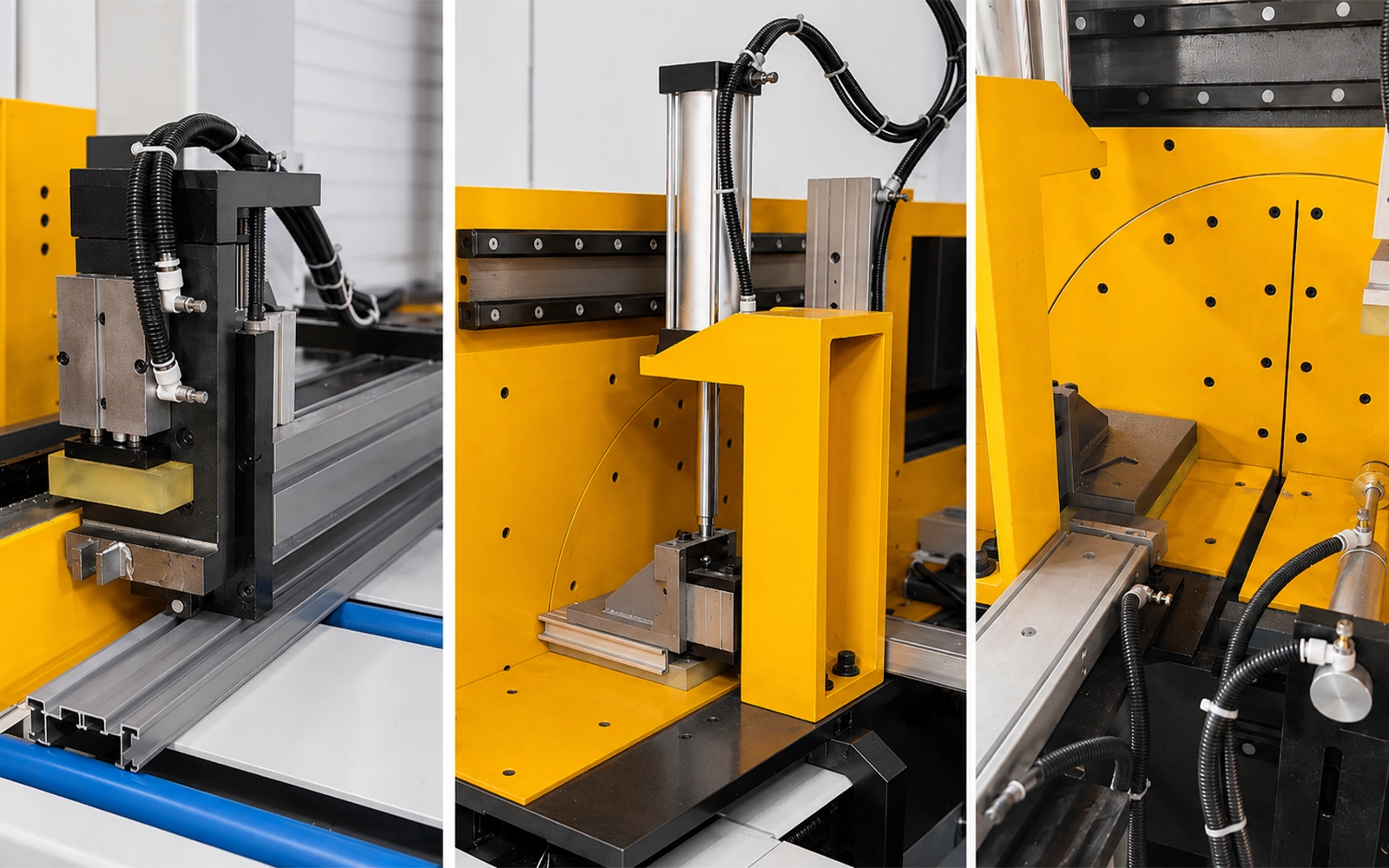
The video below is general equipment footage from the Jiurun Machinery YouTube channel. It shows a saw operating; it is not evidence of a third-party blade, the illustrated machine’s blade interface, this article’s workpieces, a customer trial or a performance result.
Separate approval, custody and replenishment
Assign three sign-offs. Engineering or the machine owner confirms the machine-to-blade fit and the allowed setup; production and quality confirm accepted parts from the controlled trial; purchasing confirms supplier identity, exact blade code, lead time, return terms and replenishment route. A blade that passes one gate but lacks another should remain a trial item, not become an unnoticed production substitute.
Record the first approved blade’s supplier, part number, drawing or revision, dimensions, machine serial applicability, trial report, allowed workpiece families, and any settings that form part of approval. Label trial and released stock distinctly. When a sharpened or revised blade comes back, check whether its geometry and traceable identity remain within the approved route. If a supplier proposes a different blade, decide whether the change requires another cut trial; do not treat the shared word “aluminum” as change control.
| Decision | Evidence to request | Release condition |
|---|---|---|
| Keep the established blade | Current approved part and accepted production record | Supply and service remain adequate for the job |
| Trial an independent blade | Machine interface confirmation, blade drawing and controlled part samples | Fit and accepted-cut gates pass on the specified job |
| Reject or defer the candidate | Documented mismatch, unresolved support condition or failed sample | Issue is resolved and a new approval decision is recorded |
Questions to put in the RFQ
- Which exact blade code and revision are offered, and what are its outer diameter, bore, kerf, body thickness, locating features and maximum rated speed?
- Which machine serial and installed flange/guard arrangement has the machine supplier confirmed for this tool?
- For which aluminum grades, section geometries and cutting conditions does the blade supplier recommend it?
- Who supplies the sample blade, supervises the installation, owns trial scrap, and records approved settings?
- What drawing-based cut and downstream-fit criteria decide acceptance, and who signs the result?
- How will replacement, sharpening or a later supplier revision be identified and requalified?
Send Jiurun the actual machine serial, current blade information, representative section drawings and target cut criteria when asking about an installed Jiurun saw. We can then discuss the machine-side interface and the trial scope for that identified unit. The decision to approve any alternative blade should rest on the documented configuration and measured accepted parts, not the appearance of the blade or a generic catalog description.