
A rod-pair order should start with four entries: equipment model, approved drawing revision, mating clamp, and pair identity. Without them, two clean saw-cut bars cannot be assigned to the correct teleprompter mount. Teleprompter aluminum rod cutting therefore starts at the kit record: identify each member, control its end finish, and keep the pair traceable until the rig owner checks the assembled fit.
Two published equipment references show why the model belongs at the top of the order. A Glide Gear TMP 500 description refers to a 15 mm rail system; Autocue’s Pioneer box contents list 19 mm rods in some configurations. These are different products, not interchangeable options for one order. The maker’s approved part or the released drawing for the actual assembly controls the cut.
Translate the kit record into a cut-part drawing
A saw can supply a straight blank with specified length and end condition. A finished support rod may also need holes, threads, inserts, surface finish or a named mating clamp. Put those later operations on the drawing and assign an owner. If the order is for an approved replacement part, confirm compatibility with the equipment maker before substituting a cut bar. A clean saw cut does not establish that the part will carry a camera, monitor or counterweight safely.
For a custom assembly, identify each rod’s position and function. Note whether the pair is interchangeable or whether a left and right member have different ends. Give the drawing revision, material specification, hollow-tube or solid-bar form, outside diameter, wall or bore where relevant, straightness, finished length and permitted end treatment. A photograph is useful for orientation; it is not a dimensional release.
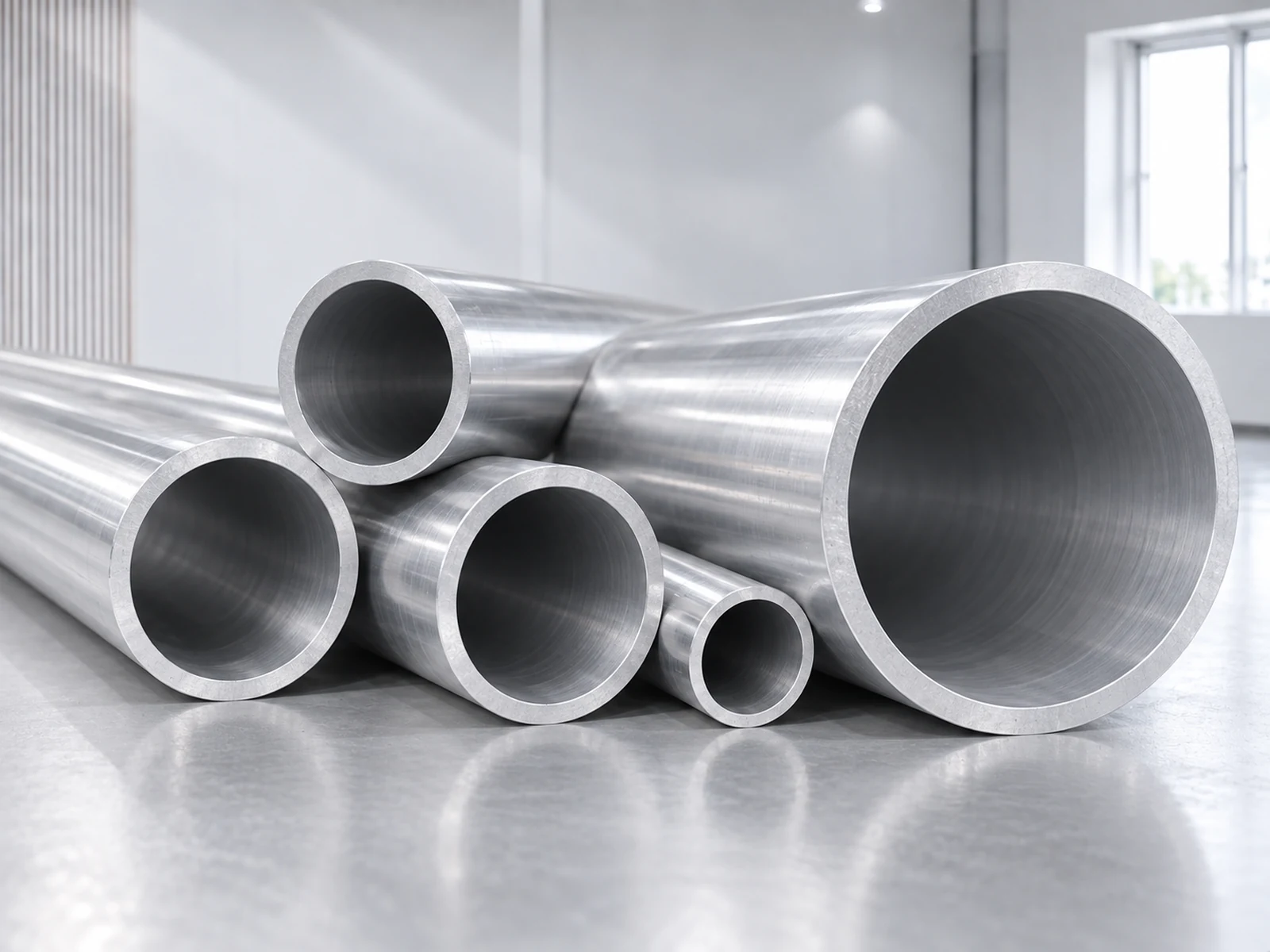
Follow one rod through the cut, then compare the pair
At the machine, the operator needs a stable reference face and a support path that does not let small stock roll, bow or move when the blade enters. Ask which jaw surfaces contact the tube or bar, whether they can mark a sliding surface, and how the offcut is supported. The quoted setup should show the actual section and its intended orientation; a general machine photograph cannot establish a suitable fixture.
Inspect a first-off against the drawing before running the lot. Measure from the named datum, examine both ends for burrs and deformation, and check any specified squareness or surface condition. If a later operation creates threads or holes, record whether inspection is before or after that operation. Keep the sample and its revision identity with the trial record.
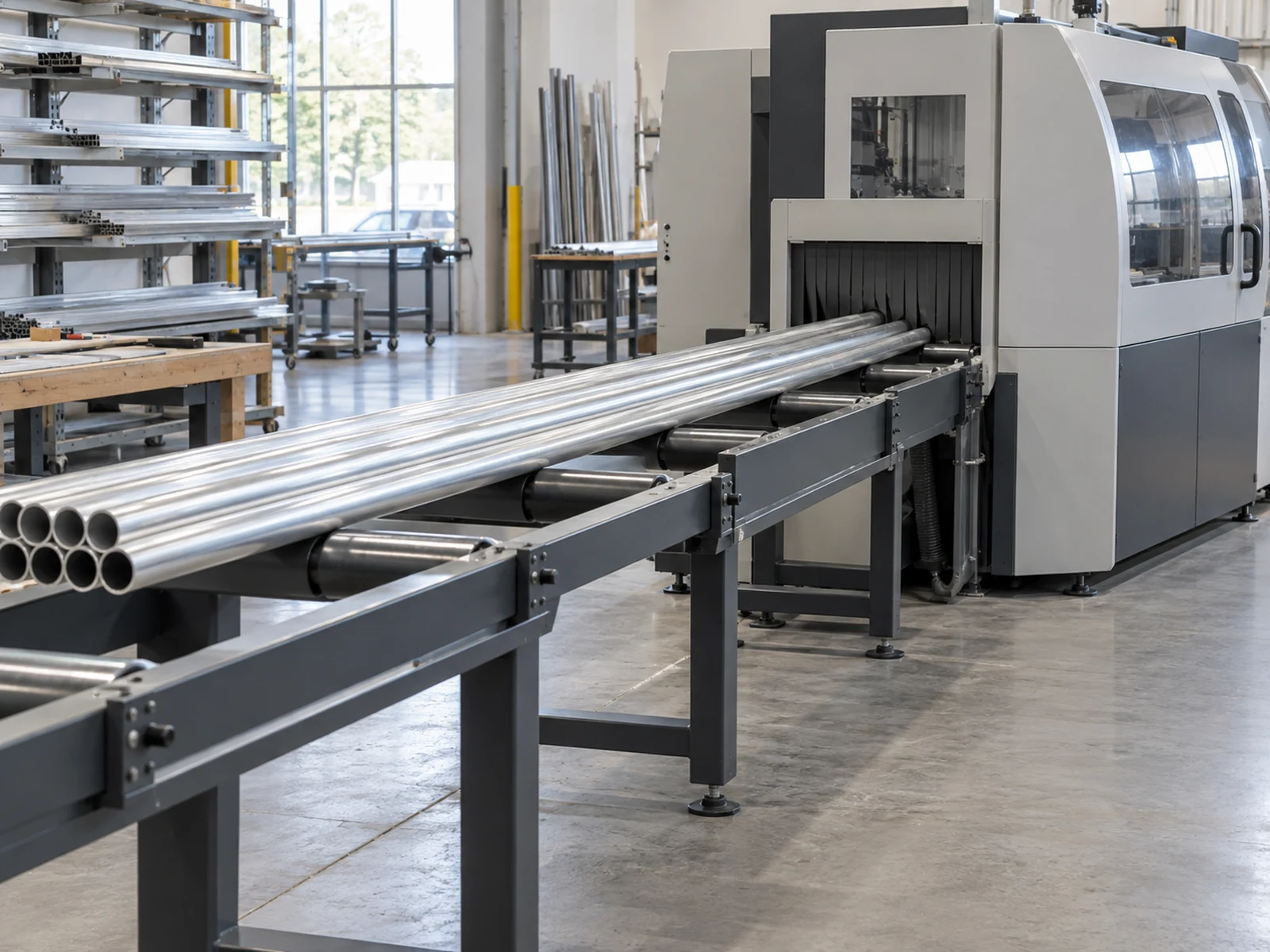
The Jiurun Machinery video shows general aluminum cutting equipment in operation. It illustrates a machine process only; the visible material is not identified as teleprompter stock, and the footage does not verify this article’s dimensions, configuration or performance.
Keep accepted rods together until the mount check
Put the two accepted members side by side and verify the drawing revision, end treatment, finish and any match requirement together. If the assembly uses unequal rods, label the positions instead of relying on appearance. Separate first-off, rejected and accepted parts so a mixed bin cannot turn a passed inspection into the wrong kit. Specify the protection needed between parts during handling.

The final check belongs at the actual mount. Confirm insertion, clamp contact, spacing and clearance with the approved carriage and accessories. Autocue’s Pioneer setup guidance illustrates that the rods work inside a larger assembly; its instructions apply to that system, not every teleprompter. The responsible maker or designer validates balance, loads and safe use. A saw trial can document a defined cut part, not certify the complete rig.
Teleprompter aluminum rod cutting: specify a paired trial
For a machine evaluation, provide one released drawing for each distinct rod, a sample of the approved stock, quantity per assembly, batch size, required secondary work and the inspection method. Ask the supplier to identify the included support and clamping arrangement, witness the first-off cut, and show how accepted pairs will be labelled. Price cutting, secondary operations and assembly inspection separately when different parties perform them.
If the saw trial passes but the mounted pair does not fit, preserve the measured parts and find the failed interface before recutting. A wrong rod diameter, changed end feature or unapproved accessory cannot be corrected by repeating the same length cut. For a related but different camera component, see the camera slider rail guide; its rail acceptance criteria do not transfer to a teleprompter mount.
To discuss a saw process for an approved rod design, send JiurunCut the end view, the mating-clamp drawing and the required pair quantity. We can review stock support and a first-off cut against those inputs while the system owner retains assembly approval.