
Street-light mounting arm extrusions are easy to describe as “aluminum tubes,” but that label is too thin for a saw-cut quotation. A pole arm can be a straight cut tube supplied to a fabricator, a tube prepared for welding to a clamp or luminaire adaptor, or one member in a bent or tapered assembly. The saw-cut blank is only one stage. Before asking for a machine recommendation, define the exact part the cutting station must deliver and the later operations it must leave possible.
This guide is for buyers evaluating a separate aluminum cutting station for straight, released stock. It does not establish that every street-light arm is extruded, that a saw supplies a complete arm assembly, or that any JiurunCut model is approved for a particular drawing. Bring the actual tube, approved drawing and downstream process to a supplier review.

Street-light mounting arm extrusions: where the blank ends
The product route matters. Hapco’s aluminum light-pole specifications describe pole arms made from seamless extruded 6063 aluminum tube, then heat treated after welding. Genlyte’s Lumec M10 description identifies an extruded-aluminum tube welded to a cast-aluminum pole adaptor, with a separate extruded luminaire adaptor. These are examples of different product designs, not specifications for a JiurunCut job or proof that the pictured stock follows either design.
Ask the arm manufacturer which object will be accepted at the saw outfeed. If the answer is a straight blank, record its section, cut length, end orientation and surface condition. If the required deliverable is a welded, drilled, bent or finished arm, split the subsequent work into named operations. A quotation for a saw must not silently inherit the cost, capability or acceptance responsibility of those other stations.
1. Identify the actual tube section and material state
Send the cross-section drawing and a representative physical sample. Include outside diameter or other profile geometry, wall condition, length of incoming stock, material designation, temper, surface state and the release point from upstream processing. The examples above use particular materials and fabrication sequences; your own procurement record must state its own approved values.
Where a decorative or adaptor profile differs from a round structural tube, list it separately. A clamping concept that suits one smooth circular section cannot be assumed to locate a tapered, oval, ribbed or already attached assembly. Ask for a machine-fit review against the actual contact surfaces, rather than deriving capacity from a product-family name.
2. Define the blank length from the next operation
A finished arm’s overall projection is not necessarily the cut length of its starting tube. A welded adaptor can overlap or insert into a tube; a bend can change the relationship between stock length and installed reach. The responsible fabrication engineer should issue the approved blank drawing and any machining or forming allowances. Do not add a generic allowance in the saw RFQ and call it a finished-arm dimension.
State where length is measured: from which cut face, at which material condition and before or after which operation. If two ends have different references, name both. Include the quantity and tolerance on the saw-cut blank only when they are approved for that stage. Record an acceptance gauge or measurement method so a supplier trial can be judged against the same definition.
3. Separate square cuts from angled or shaped interfaces
A straight tube may need a square end for a later weld fixture, an angled end for a specified joint, or an end that a separate machining operation will shape. Mark each family on the drawing. A saw’s available angle range, physical support and clamping layout must be checked for the actual tube and required datum. The presence of an angle control alone does not prove that a particular arm end can be cut within tolerance.
Keep formed curves, tapering, drilled holes and weld preparations outside the saw-cut commitment unless a proposal explicitly includes the relevant equipment and evidence. When a supplier describes a “complete arm,” ask which components and operations are included and which are expected at your plant or a subcontractor.
4. Show how long stock will be supported and transferred
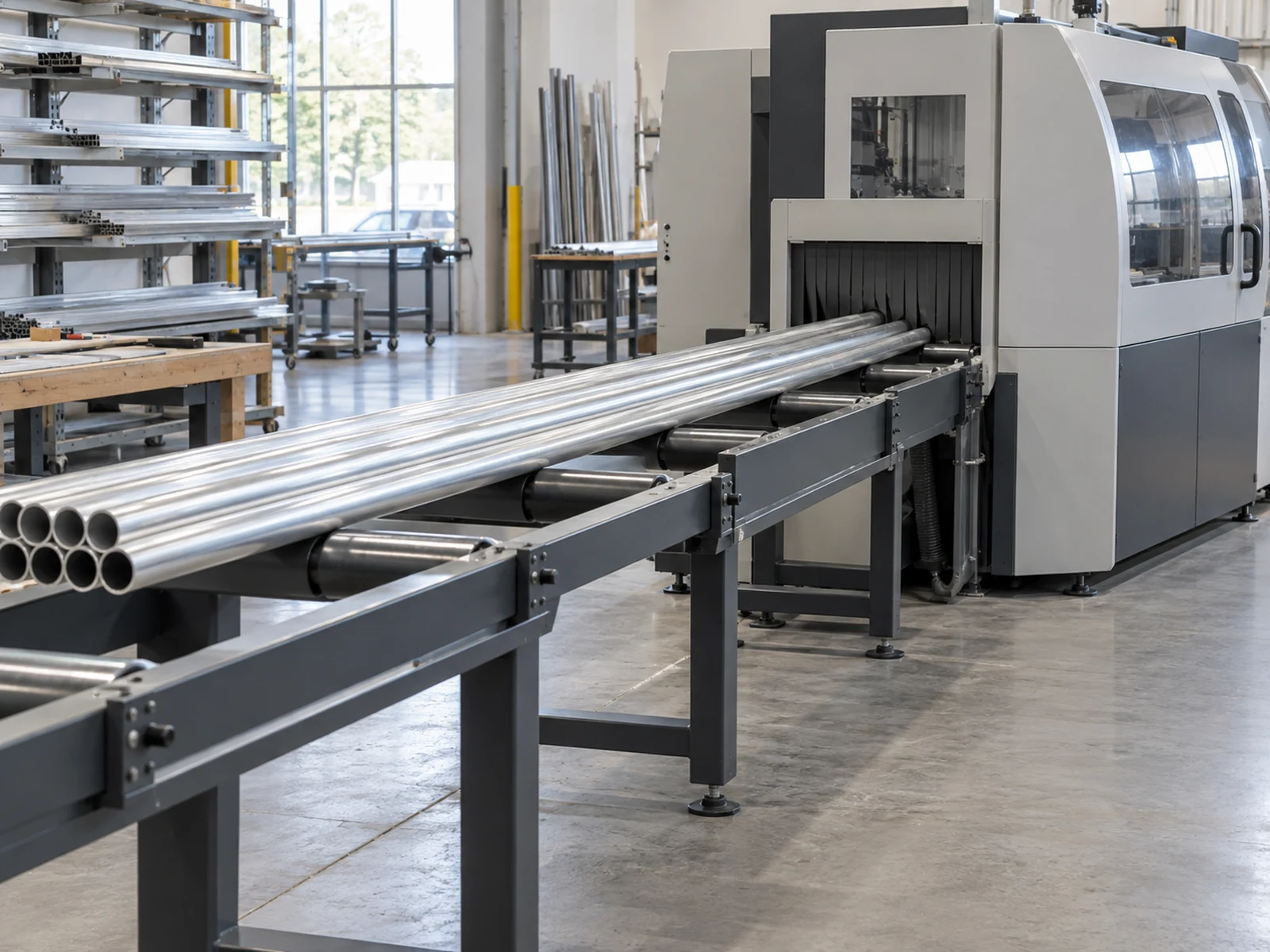
Street-light arm blanks may be long enough that loading, infeed support, outfeed support and part removal matter more to the purchase decision than the isolated cutting stroke. Give the incoming stock length range, straightness limits, bundle size, usable handling space and required outfeed sequence. Describe whether operators will present single lengths, batches or prepared stock from a rack.
Ask the supplier to show how the actual section is supported as the cut approaches the end of the bar and how the remaining stock is retained. The planned arrangement should also protect the specified visible surface and keep the cut piece identifiable for the next operation. Do not treat a generic video or equipment photograph as proof of your site’s space, staffing or throughput.
5. Preserve the receiving fabricator’s end and surface requirements
Describe burr limits, edge condition, face squareness or angle reference and handling marks in terms the receiving process can inspect. A welding fixture may need repeatable seating; an adaptor joint may need a particular end clearance; a coated visible member may require surface protection. The actual accepted conditions belong on the drawing or agreed inspection plan.
Specify whether the saw-cut face is final, will be machined later or will be covered by a joint. This distinction can change what should be checked at the saw and what remains for downstream fabrication. Avoid using a polished sample image or a broad “clean cut” claim as a substitute for a defined acceptance method.
6. Quote the real part mix, changeovers and batch handoff
Supply counts by section, length, end type and batch size. Separate routine repeats from low-volume variants. The purchasing comparison should include loading, setup, cutting, inspection, labeling and transfer to the next operation, not just one cutting cycle. If stock must be segregated by alloy, finish or revision, explain how the production team keeps those batches apart.
Request a defined cut-list format and a sample output label or traveler. This lets the saw supplier and the receiving fabricator agree on which blank belongs to which pole-arm assembly. A purchasing estimate based on a single ideal section may be misleading when a real order alternates tube sizes, end orientations and short batches.
7. Design a representative cutting trial
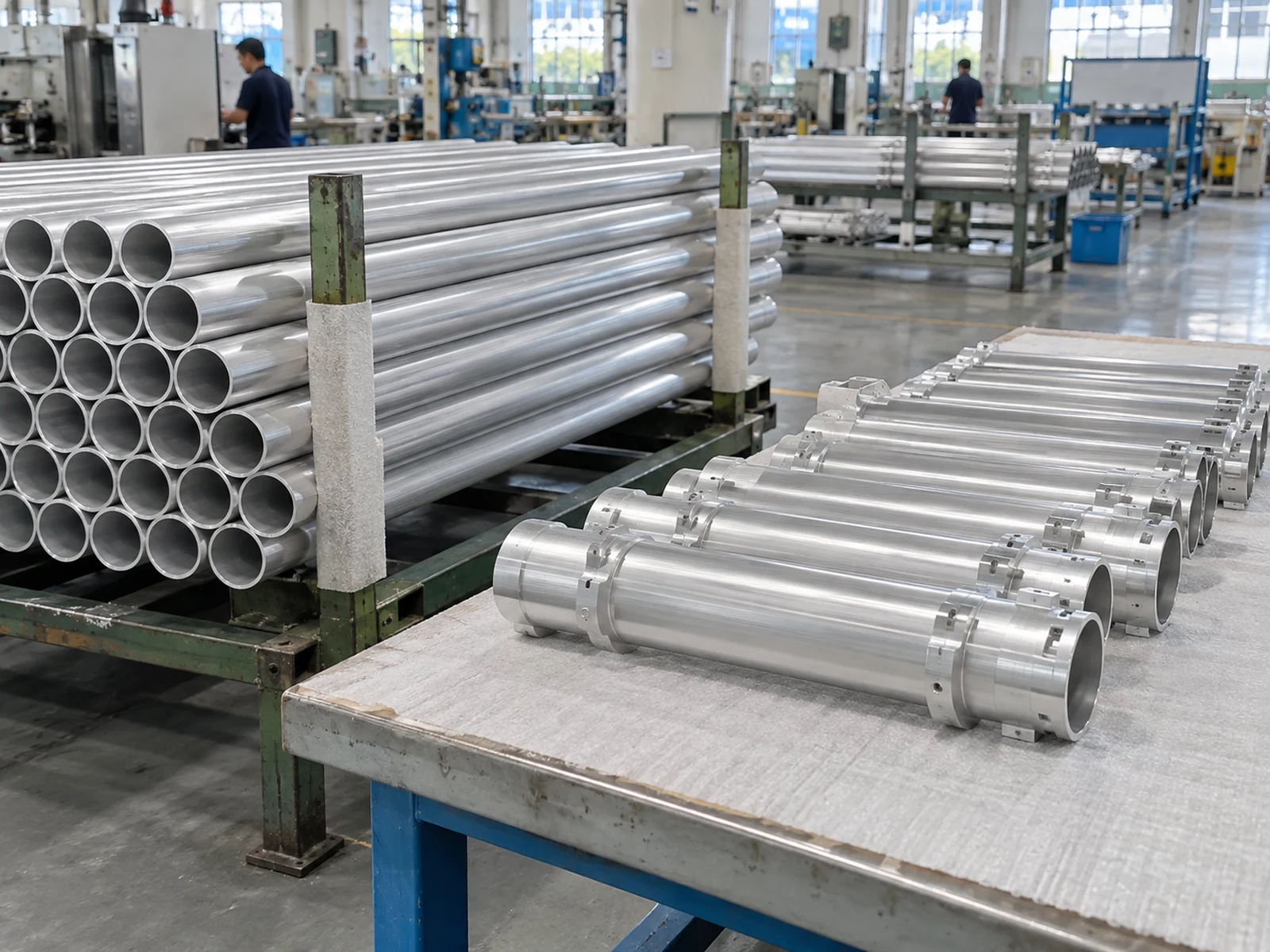
Choose samples that resolve purchase uncertainty: the longest released stock, a section at the clamping limit, a short blank if relevant, and any distinct end orientation. Use approved material and the real receiving-process datum. Before the trial, write down the measured blank characteristics, inspection tools, surface observations, operator steps and the exact machine configuration to be reviewed.
Record observed results separately from required values and from supplier estimates. Note setup changes, supports used, any secondary deburring and the condition of parts delivered to the next station. The JiurunCut sample-cutting trial checklist provides a useful structure for keeping input, configuration and measured output together. A passing trial on one round tube does not approve every arm profile, weld route or later assembly operation.
See a JiurunCut saw demonstration
The following video from JiurunCut’s own channel shows an aluminum-saw equipment view and an operating example. It is included to illustrate the kind of machine inquiry discussed here. It does not show this article’s street-light mounting arm, approved tube, customer project, confirmed model configuration or measured performance. Request a trial on your own released stock for those questions.
Send an RFQ for the cut blank, not an assumed complete arm
For street-light mounting arm extrusions, send the approved blank drawing, physical section, released material state, incoming lengths, end references, batch mix, handling limits and receiving-process checks. Name all later welding, bending, drilling, finishing and assembly work, with a clear indication of what is outside the proposed saw station. Ask the supplier to identify the exact quoted machine and support configuration, trial material, acceptance measurements and exclusions.
Review the JiurunCut aluminum cutting machine range for an equipment discussion, then contact JiurunCut with your arm-blank drawings and sample plan. A specific blank definition makes the quotation comparable and leaves the finished pole-arm design with the team responsible for it.