
A stadium LED ribbon can run around an entire seating tier, but the length shown on a venue plan is not automatically the length of a saw-cut aluminum member. The display cabinet, its receiver, the building attachment and the service gap are different parts of the assembly. A stadium LED ribbon support rail should enter a cutting quote only after the display integrator identifies the rail that is actually supplied as straight stock.
For example, Artixium describes a stadium fascia system whose cabinets locate on specially designed U-shaped receivers. Another supplier may provide a complete die-cast cabinet and mounting package, leaving no separate extrusion for a saw supplier to cut. The useful purchasing question is therefore not “How many metres of LED ribbon?” but “Which metal member is our cut blank, and who approves its interface to the cabinet?”
Define the stadium LED ribbon support rail at the cabinet connection
Ask for the approved cabinet drawing, receiver or support-rail section, mounting pitch and the end treatment at the first and last cabinet of a run. On the Artixium example, position pins meet U-shaped receivers; that is a useful illustration of why a channel opening and pin engagement matter. It is not a universal stadium detail, and it is not evidence that Jiurun has cut that product. The display vendor must identify the exact profile and tolerances for the project. That approved stadium LED ribbon support rail drawing, rather than a visual match, becomes the saw-cut reference.
Mark the part boundary on an exploded view. Is the quoted piece a long receiver extrusion, a short splice, a bracket, a cabinet extrusion, or only a site-installed steel support? If the screen supplier delivers a certified integrated rail and cabinet system, sourcing a lookalike aluminum channel independently may defeat its fit and warranty assumptions. Keep that purchase decision with the system designer.
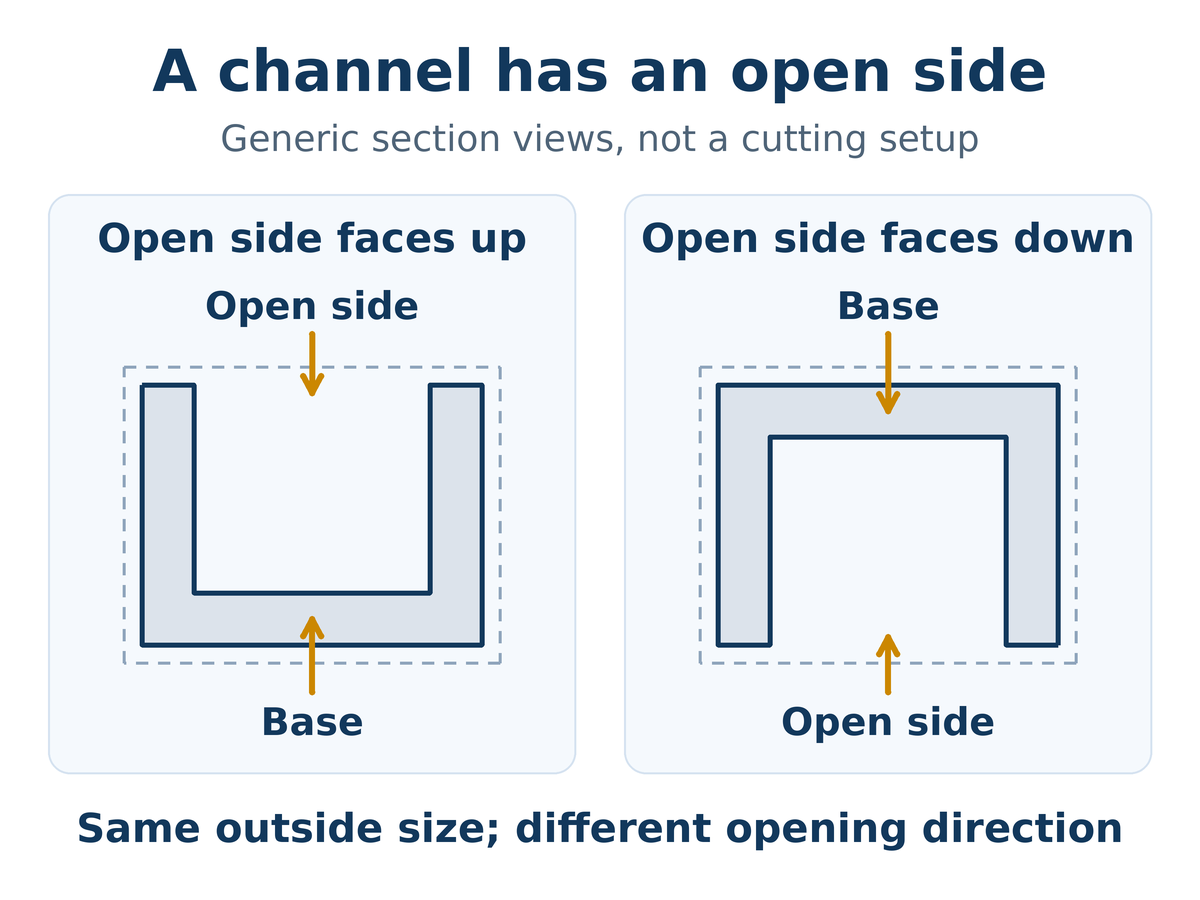
Convert a curved fascia into named straight members
Many ribbon displays follow a tier or fascia that turns around the venue. That does not authorize cutting every support member to a single plan radius. The display integrator needs to say whether the physical build uses straight, faceted cabinet positions; curved modules; bent metal; or a mixture. A circular centreline length, an architectural elevation and a straight extrusion cut length are three different dimensions.
Break the run into approved member types: a standard straight bay, a transition bay, a corner or curve segment, and a terminal piece. Record which drawing revision governs each type. If the receiver is straight between cabinet positions, dimension its cut length between agreed datums and show the intended joint. If a member must be bent, rolled, machined to a curve, or drilled to a special pattern, put that operation outside a simple cross-cut quote until the responsible supplier confirms capability.
Uniview describes stadium ribbon displays as continuous LED fascia around seating tiers. That describes the visual result, not the fabrication route of a particular support rail. The route must be defined by the project design, including the ability to replace a cabinet later.
Make the ends work before approving the middle
A trial with only an easy standard-length bar can miss the two pieces most likely to cause trouble: the first receiver at a termination and the last receiver before a corner. Ask for an assembly drawing showing the first cabinet pin, the last cabinet pin, any splice and the access needed to lift or remove a module. Check whether a cut end exposes a channel that needs a cap, changes a drain path, or interferes with a retaining feature. These are design questions, not saw claims.
For each member type, specify finished length, end-face form, cut-face burr limit or acceptance sample, permitted surface marks, and the reference face used to measure length. A loose “cut to site measurement” note is insufficient when the cabinet pitch is fixed. If the profile has a coating or anodized visible face, agree on protection and deburring that do not damage the mounting edges. Any hole, slot, notch or weld preparation should appear as a separate operation with its own owner and inspection point.

Keep the saw trial inside the saw’s responsibility
A saw supplier can help establish whether the offered machine and fixture can hold a supplied extrusion, make its specified end cut and repeat an agreed inspection sample. The supplier cannot establish LED alignment, venue structural capacity, weather sealing or safe cabinet access by showing a clean cut alone. Those system checks belong to the display integrator and the project’s qualified design team.
For a meaningful saw trial, send a representative straight stock length and its actual section drawing. Include the shortest and longest proposed cut blanks, the end with the least clamping area, and the face that cannot be marred. Agree where the cut end will be measured and how burrs will be judged after any secondary finishing. If a splice sits near the blade exit, test the actual end condition rather than a convenient flat bar. Confirm safe workholding and access using the quoted machine’s manuals and site procedure.
The following Jiurun channel video is a general aluminum-saw equipment example. It helps a buyer look at stock presentation and the cutting area. It is not a stadium LED rail trial, an approval of a receiver section, or proof of any quoted machine configuration or performance.
What belongs in the request for quotation?
Give the saw supplier a small, controlled package: the approved extrusion section and alloy/temper if known; the display integrator’s receiver or rail part number; a cut list grouped by member type and revision; the cut-end drawing; the finish and visible-face rule; and the stock length supplied for the trial. Show whether scrap, splice stock and end caps are part of the order. State who supplies and inspects any drilling, bending, coating or site trimming after saw cutting.
Then ask for a witnessed sample on the hardest approved member, not a verbal tolerance promise. Record the sample stock, machine configuration, fixture, blade and measurement method used in that test. The drawing’s actual acceptance criteria should decide whether the cut blank passes. Keep trial evidence separate from later cabinet assembly evidence. If the display vendor changes cabinet pitch or receiver profile, treat that as a new drawing revision and recheck the cut list before making more parts.
Decide the supply boundary before buying saw capacity
There are three sensible outcomes. The display vendor may supply the complete cabinet and receiver package, so no separate saw-cut rail is purchased. The project may require straight aluminum receiver blanks cut from approved extrusion, with all interface machining and assembly done elsewhere. Or a specialist may deliver pre-machined, curved or coated members that a conventional saw trial cannot validate by itself. The correct route follows the released system design, not the appearance of a similar channel in a media library.
If your team has a released stadium fascia support-rail drawing, send JiurunCut the section, cabinet interface, cut list and acceptance sample requirement. We can discuss the aluminum saw and cut-blank boundary for that drawing. The display integrator remains responsible for cabinet fit, attachment, electrical work and the venue installation.
Sources for the assembly distinction: Artixium Sports LED brochure, THORITE fascia receiver description; Uniview LED sports display overview. These are examples from display manufacturers, not Jiurun project or performance evidence.