
A long frame member reaches the right length, but its drainage opening is now on the wrong side of the corner. The saw result may be dimensionally acceptable while the module-frame drawing is not. For solar module frame drainage holes, the first question is where the hole is created relative to cutting: in incoming stock, in a later punch operation, or in a prepared frame kit. That answer determines which dimensions the saw trial can verify and which belong to another process.
This guide concerns cut-to-length aluminum border-frame members for an approved photovoltaic module design. It does not specify a universal hole location, certify a module, or imply that a Jiurun saw punches drainage or grounding features. A module maker’s released drawing and process plan control the actual profile, end geometry, hole pattern and acceptance method.
Solar module frame drainage holes need an end reference
“A drain hole near the corner” is not a usable saw instruction. Identify the long or short frame member, its inside and outside faces, the end from which the feature is measured, the final cut-end shape, and the drawing revision. If a member is mitered, state whether a feature dimension uses the long point, short point or another controlled datum. If left and right members are mirror images, label them before a trial so a correct length on a reversed part cannot pass unnoticed.
On some frame routes the hole exists before the saw cuts the extrusion. In that case, a change in crop length or cut reference changes the hole-to-end distance on the finished member. On other routes, the approved hole pattern is made after sawing. The saw then hands over a member with an identified datum for the next station; it has not produced or approved the hole. If the route is not stated, hold the feature decision open in the RFQ rather than quoting a saw as though it performed every operation.
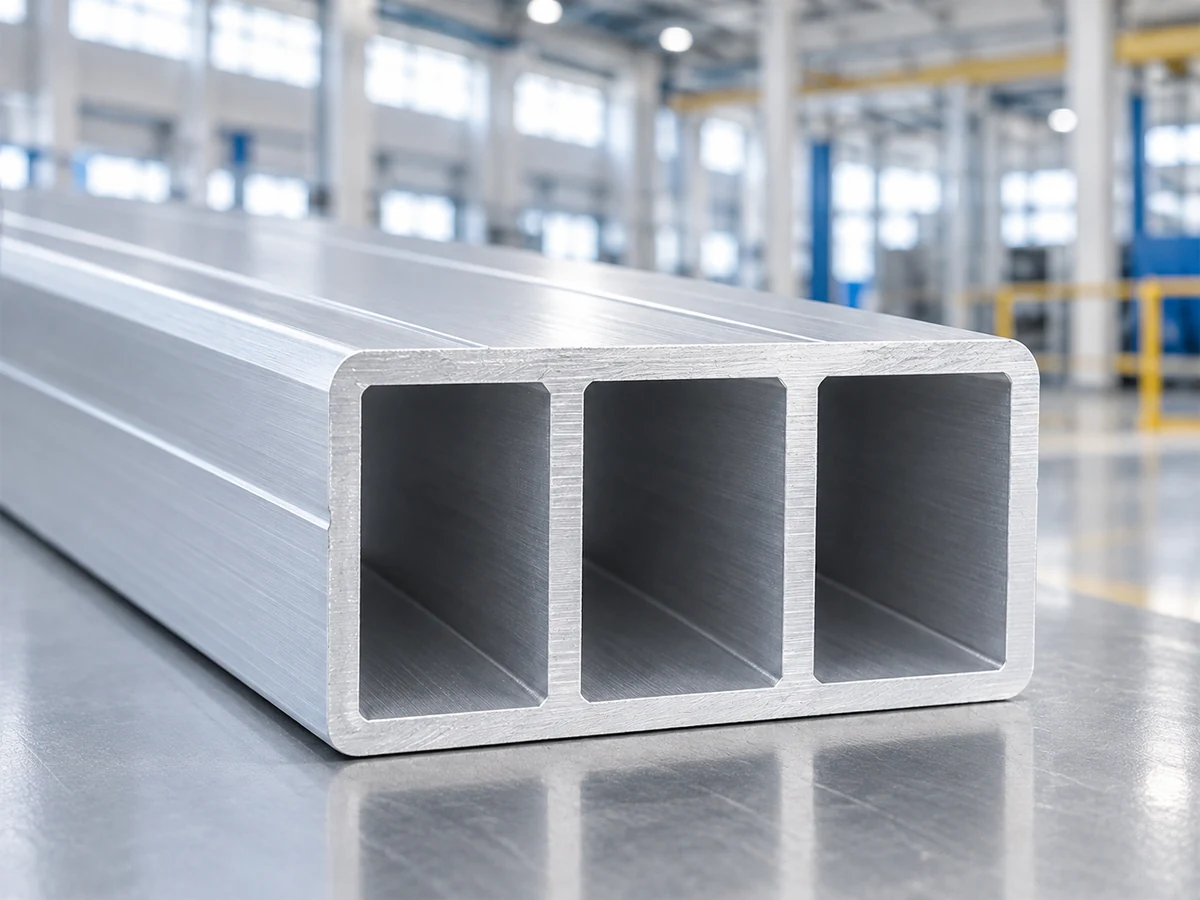
Separate the saw cut from the hole-making operation
Write the sequence next to the controlled member drawing. For pre-punched stock, record the incoming hole location and orientation, the required cut reference, and the accepted hole-to-end range on both long and short pieces. Include what happens if an incoming hole falls in the crop or in a rejected piece. For punch-after-cut work, record the saw-stage length and end condition, how the downstream station locates the part, and who measures the final hole pattern. Do not convert the punch station’s accuracy into a claim about saw accuracy.
A purchased prepared kit is another route: the kit supplier may already own cutting, punching, surface finish, grouping and feature inspection. The buyer should compare the accepted kit against any proposed in-house route, rather than comparing a bare saw cycle with a finished kit. Our solar module frame supply-route guide covers that broader purchase choice. This article addresses the narrower feature-to-cut-end handoff.

Use the actual module drawing to distinguish openings
Drainage openings, mounting holes and grounding provisions are different drawing features. One module maker’s instruction cannot be applied to another frame. For example, REC’s Alpha Pure installation manual describes drainage holes on its long and short frame sides, says they must stay open for water to exit, and distinguishes them from mounting and grounding holes. It also says hole shape and dimensions can vary by product or frame design. The manual is a product-specific example, not a dimension table for JiurunCut or a substitute for your released module drawing.
Ask the module-design owner which features must exist at the saw handoff and which must be checked only after punching, joining and mounting. The released drawing, not a machine label, specifies where solar module frame drainage holes belong. A visible opening in a bare member does not prove the assembled frame drains: a corner component or mounting arrangement could cover it. Keep the module-level drainage and electrical approvals with their responsible teams. The saw supplier can be asked to demonstrate the cut member and its measured end reference, not to sign off a finished module’s performance.
Follow two members through one representative trial
Choose one identified long member and one identified short member from the actual profile and stock condition. On each, record drawing revision, stock orientation, cut-end reference, measured length and end condition. If holes are already present, measure their positions from the approved end datum after cutting. If holes come later, label the blanks and transfer the agreed datum to the downstream feature check. Retain photos or inspection records of any reversed, damaged or rejected member; a single convenient good part is insufficient to test the handoff.
The photograph below illustrates an end-angle inspection, not a solar-frame acceptance test. A protractor image cannot establish where a drain hole will land. The actual inspection needs the released member drawing and a stated measurement method. Where a supplier proposes a machine, request a representative trial on the specified extrusion and finish, with the long and short member identifiers preserved through the result.

This Jiurun Machinery video shows an aluminum saw and profile-feed area, useful for discussing how a proposed cut would be presented and observed. It does not show solar module frame stock, drainage-hole punching, the configuration proposed for your project, an accepted trial, or module performance.
Release a feature-aware cutting brief
Send the saw supplier the approved extrusion and member drawings, profile sample, long and short member schedule, finish, end orientations, cut datums, quantities and intended hole-making sequence. Mark each drainage, mounting and grounding feature by its actual drawing callout and process owner. If a feature is pre-existing, include its incoming variation and finished hole-to-end acceptance. If it is made downstream, state the cut-blank handoff and the downstream locating reference. Identify who signs off the joined frame and the installed module.
Ask JiurunCut to review the aluminum cutting portion and propose a trial that returns identifiable long and short members with measurable cut ends. Then compare that saw-stage evidence with the separate feature and assembly inspection before releasing the production route. Send the drawing and profile details for a cutting-scope review; keep module design and certification decisions with the approved module program.