
Shower door track cutting is a part-level purchasing question, not a single dimension taken from a bathroom opening. A sliding enclosure may have a bottom threshold, a top header that carries rollers, wall jambs, and separate covers or channels. Each member can have its own profile, cut rule, finish and assembly role. An OEM asking for saw-cut aluminum blanks should name those members before comparing machines or subcontract quotes.
Manufacturer instructions show why this distinction matters. Kohler’s bottom-track guidance gives different treatment to its sliding and swinging door series. A Kohler sliding-door installation manual has separate steps for cutting a threshold and a header, including a warning to confirm the header measurement and remove debris from its roller tracks. These instructions describe particular products. They are not universal cutting allowances for another shower door.
Shower door track cutting starts with member identity
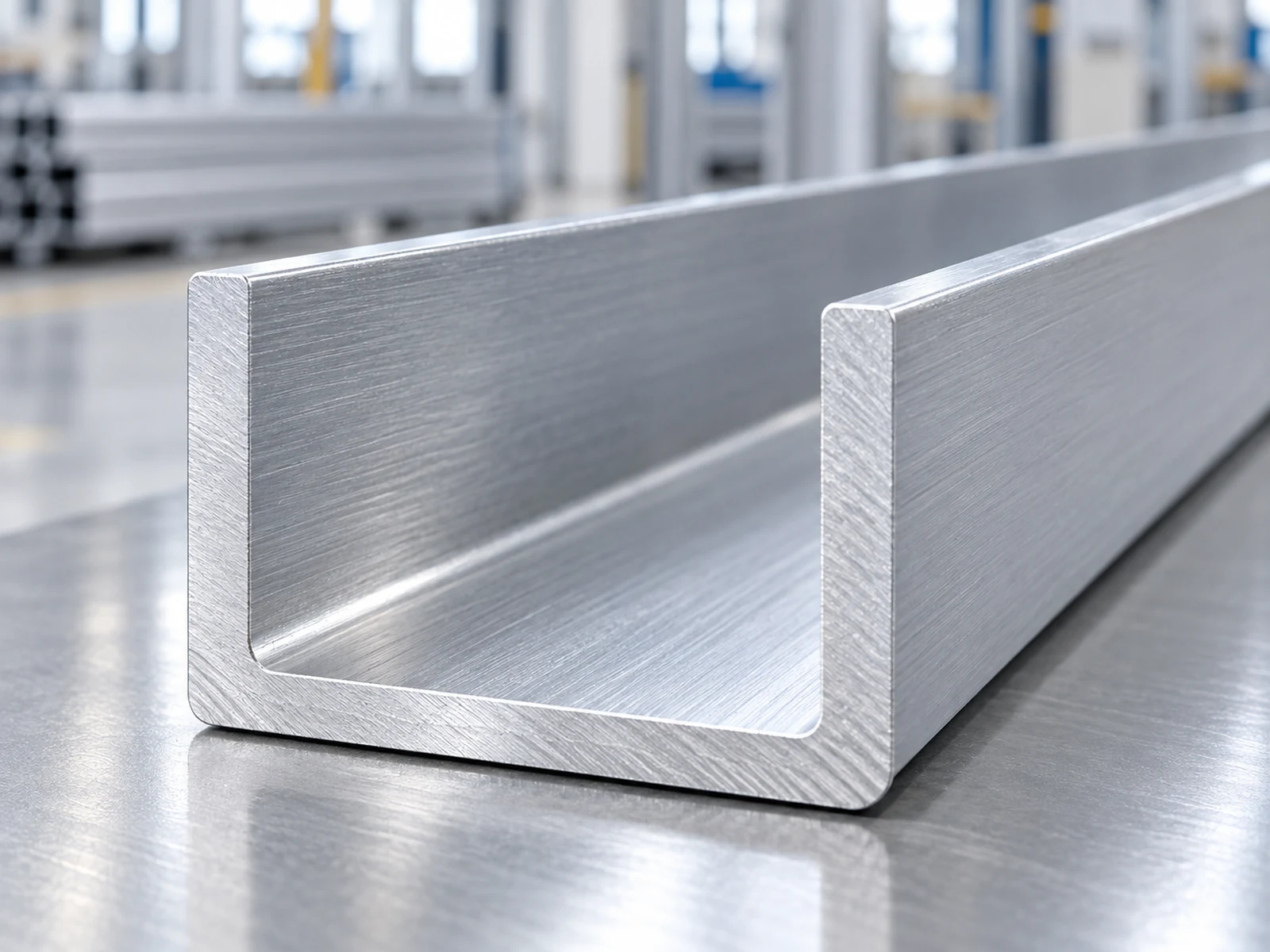
Ask the product owner for a released section drawing and part number for each aluminum member. The bottom track may guide water management and support a fixed panel; the upper header may locate rollers and span wall jambs; a cover may conceal fasteners. A generic description such as “60-inch shower rail” cannot tell a saw supplier which section is in the order or what length leaves its factory.
Record whether the quotation is for raw extrusions, cut and deburred blanks, drilled or finished members, a prepared track set, or a complete door kit. Identify glass, rollers, seals, fasteners and wall anchors separately. If the buyer purchases a finished kit and trims it on site, factory cut-blank capacity may be irrelevant. If the buyer makes its own kits, the stock length, member mix and trim policy become central to the saw trial.
Do not turn an installation measurement into a stock-cut rule
A wall-to-wall opening is an installation input. It is not automatically the finished length of every rail. In the Kohler manual above, the threshold is marked from one measured opening, while the header has its own later measurement and cut step. The manual’s dimensions, offsets and sequence belong to that specific door. Applying one model’s subtraction to another model could create a short member that no longer fits its mating hardware.
For a factory blank, the drawing should define the actual part length, datum, end angle and permissible end treatment. State whether the factory ships a fixed-length kit, an oversize field-trim length, or project-specific finished members. If a site fitter is expected to make the final cut, say how much stock is intentionally left and which end may be trimmed. Avoid putting field measurements into a production saw program until the product owner has released the corresponding rule.
Protect the channel, surface and mating end
A track’s end face can be hidden under a jamb or exposed next to glass or a cover. A burr inside a roller path, seal groove or snap-fit channel may create a different problem from a burr on an inaccessible outside edge. Identify all contact surfaces on the section drawing. Give the supplier a defined burr limit, finish condition, inspection method and packing requirement instead of the vague phrase “clean cut.”
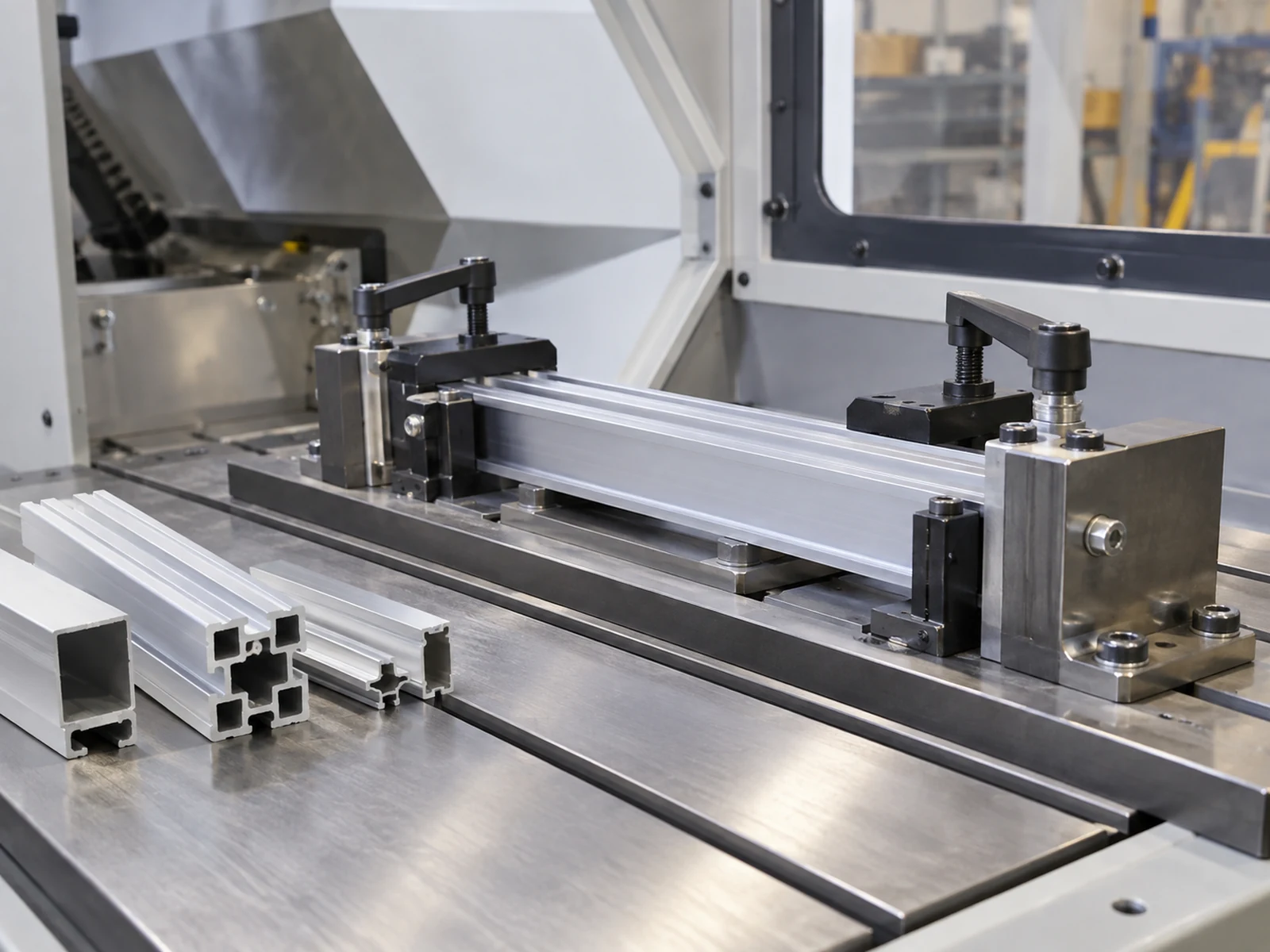
Clamping needs its own review. Thin lips and open channels may deflect if force is applied on the wrong face. A coated or anodized visible surface may need a protected contact pad or alternate locating face. The support arrangement should be checked on the actual delivered stock and on both short and long cut lengths. A sample with a different section cannot validate the production fixture.
Six items to send with a shower-track RFQ
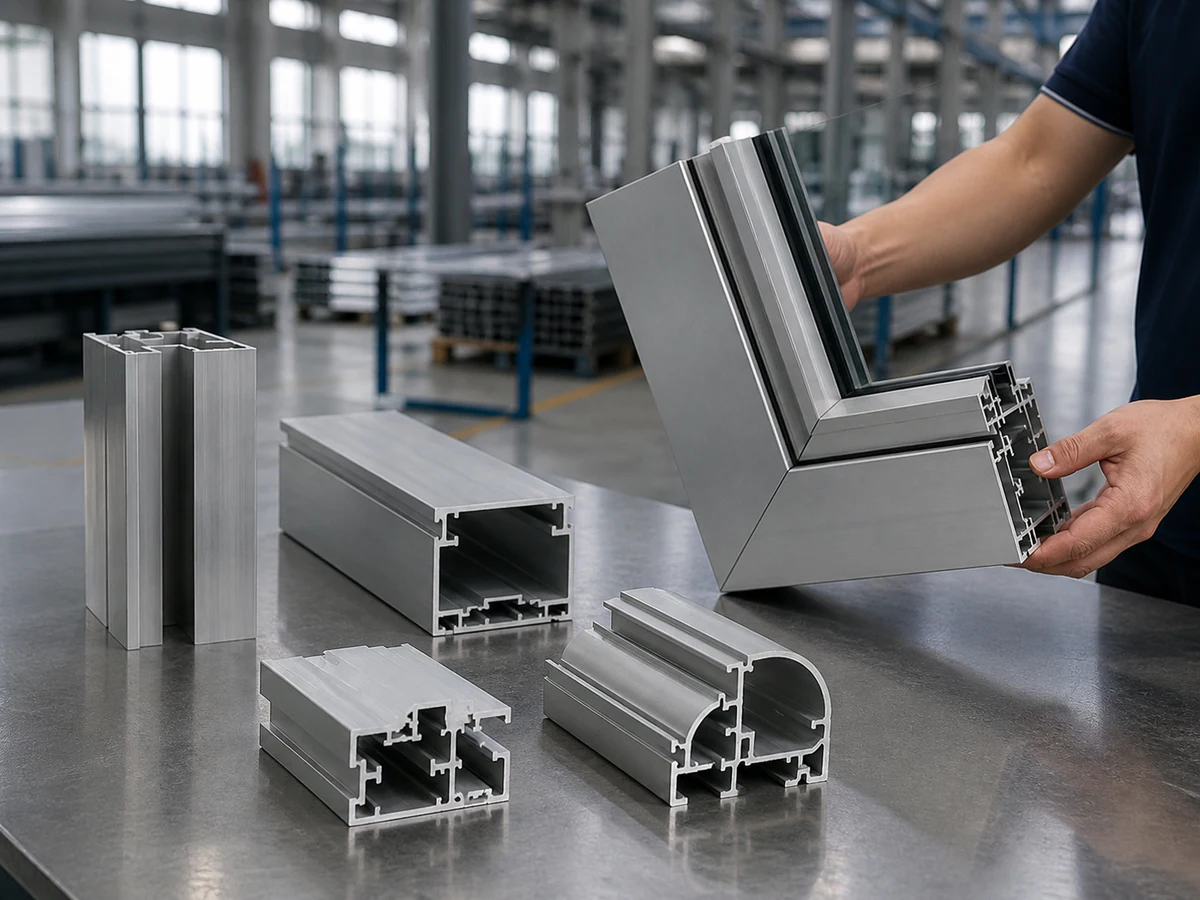
- Member list: separate header, threshold, jamb, cover and other cut aluminum parts by section and revision.
- Supply stage: raw cut blank, deburred and finished member, prepared set or complete door kit.
- Length route: stock length, factory final length, deliberate field-trim allowance and the end permitted for trimming.
- End criteria: datum, angle, burr, visible-surface protection and any post-cut drilling or finishing owner.
- Production mix: section counts, order quantities, changeovers, short remnants and packaging groups.
- Acceptance: first-off measurement, channel inspection, part labeling and receiving check for each member.
Ask the drawing owner to resolve conflicts between a nominal door size, an installation opening and a member’s released factory length. Include the actual extrusion stock and hardware that mates with it. A purchasing spreadsheet that combines unlike sections under one “track” line can conceal support changes and invalidate a per-piece cycle-time comparison.
What should the saw trial demonstrate?
Bring the actual header and bottom-track sections, including the finish condition proposed for production. Trial the ends and length range in the RFQ. Record stock support, clamp contact, blade and feed setup, first-off length and end angle, burr and chip removal, visible marks, and repeatability across realistic changeovers. Inspect inside the functional channels rather than only across the outside width.
A saw trial can support a decision about making specified cut blanks. It cannot prove door sealing, glass retention, roller travel, field installation fit or finished-enclosure safety. Those depend on the full product design and assembly process. The related fixture image below is a discussion aid for thin-wall support only; it does not show a Kohler or CRL shower track and does not certify any cut tolerance.
For inspection planning, distinguish a free blank measurement from an assembled fit check; our cut-part inspection guide explains why the two states should not be silently treated as one result. Keep the product owner’s installation instructions with the finished door rather than rewriting them as a generic saw parameter.
Related Jiurun equipment video
This Jiurun video shows an aluminum-angle saw working on a related profile. It is an equipment demonstration, not shower-door track cutting, a recommended model configuration for this article, a customer project or proof of the acceptance checks above.
Send the two track drawings
If your factory cuts aluminum shower-door track members, send JiurunCut the released header and bottom-track sections, length list, finish, allowed clamp faces, quality limits and batch mix. We can discuss a drawing-based saw trial for the cut members. The door designer and installer remain responsible for glass, hardware, sealing, installation and finished-product acceptance.