
Choose automatic aluminum cutting or semi-automatic equipment by comparing the work needed for your actual part mix. List loading, feeding, positioning, clamping, collection and changeover. The five checks below help you identify which steps the quoted configuration automates and which remain with the operator.
Three things to remember
- Write the operator’s tasks for every stage of a normal batch.
- Compare repeated runs and frequent small-batch changes separately.
- Confirm the supports, feeders and fixtures included in each quote.
On this page
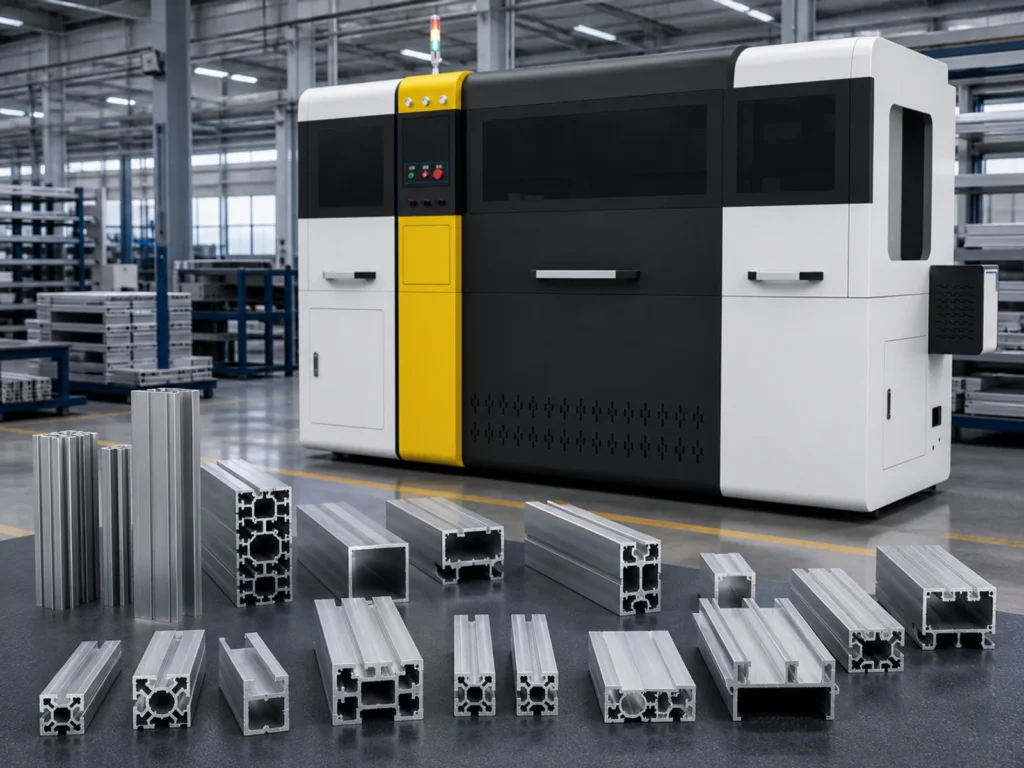
1. Map the work before choosing automatic aluminum cutting
A plant cutting a small number of frequently changing profiles has a different problem from one repeating the same long batch. Record part lengths, angles, daily quantities and how often tooling or programs change.
Then map a full shift: who brings stock to the cell, starts a job, removes pieces, identifies batches and deals with remnants. This is a more useful comparison than judging machines only by the control panel.
- Parts per batch and batches per day
- Profile and angle changes
- Current loading and collection time
Build a side-by-side work sheet. For the same batch, list every operator action in each proposed configuration. Mark actions as manual, assisted or automatic, then include first-piece approval and part collection. This makes an automatic aluminum cutting comparison useful even before you have reliable cycle-time data. Keep unmeasured time savings clearly labeled as estimates.
2. Define the semi-automatic sequence
The term may describe an assisted cutting cycle while the operator still measures, positions or feeds stock. Ask the supplier to show the actual sequence for one short part, one long part and a repeated batch.
A semi-automatic arrangement can be appropriate when flexibility and frequent intervention are expected. Its fit still depends on the part, fixture, safety provisions and required output.
- Who feeds and positions stock?
- Which actions are powered or programmed?
- How are finished parts and offcuts removed?
3. Check where automation starts and ends
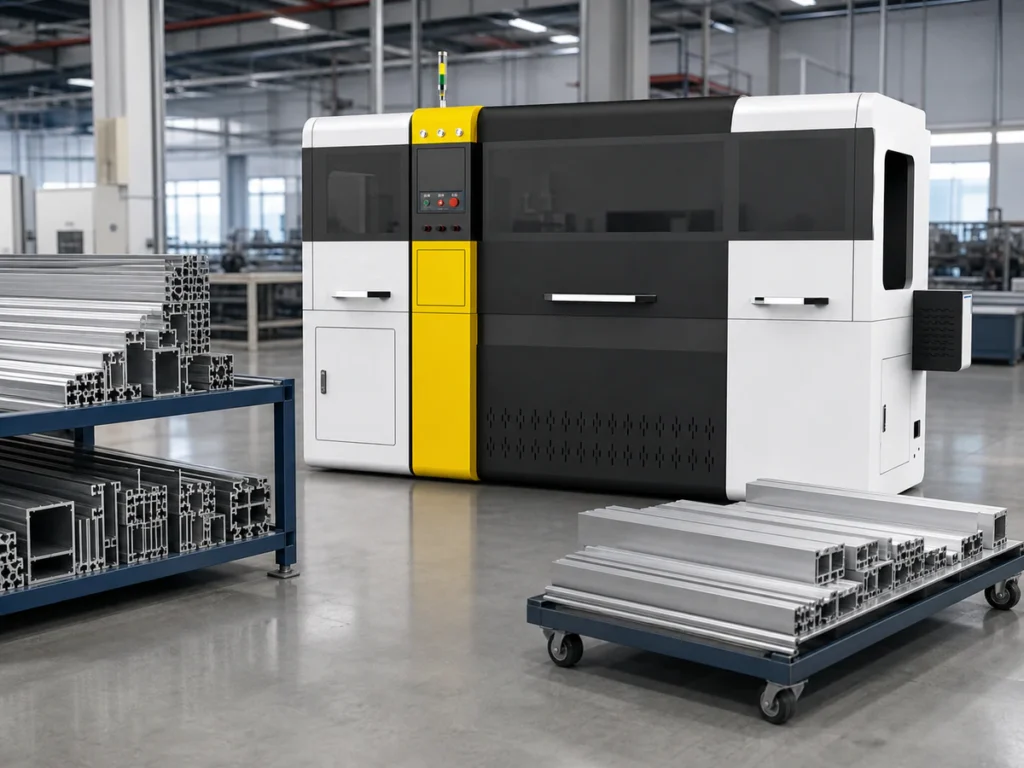
An automatic saw may automate a feeding or cutting sequence while material loading, batch selection or finished-part collection remain manual. Request a written list of included and optional equipment.
Ask how the system handles different profiles, short end pieces and the last part in a stock length. A demonstration should show the changeover as well as the uninterrupted run.
- Automatic feeding and length control
- Fixture changes
- Discharge and part identification
Normal batch
Information to send: Part count, stock and operator steps
Question to ask: What work is actually automated?
Changeover
Information to send: Profiles, angles and frequency
Question to ask: What fixture or program changes are needed?
Quotation
Information to send: Included feeder, supports and collection
Question to ask: Which items are optional and who installs them?
▶ Watch: Cutting Table & Profile Positioning
This video shows a machine setup example. Confirm the configuration against your own profile drawing and sample.
4. Compare output under the same assumptions
Do not compare a best-case cycle for one machine with a full shift estimate for another. Use the same parts, quantities, stock lengths, changeover frequency and staffing assumptions for both options.
Include inspection, rework and material handling. If these have not been measured, label them as assumptions rather than stating a guaranteed return on investment.
5. Test a batch and a changeover
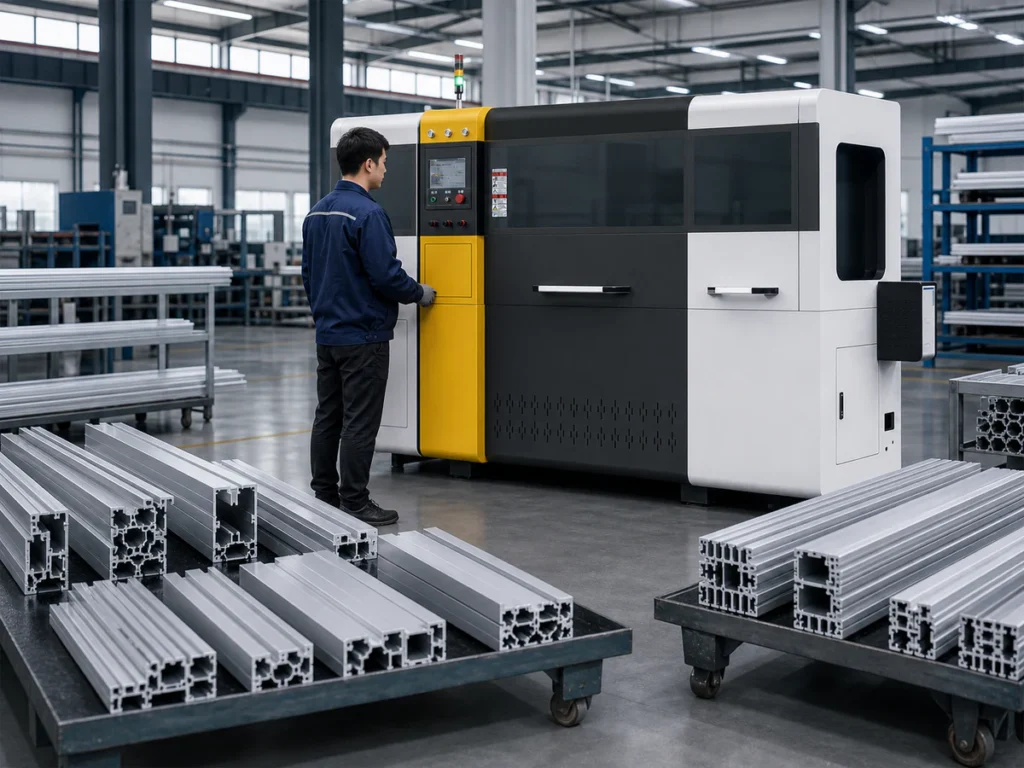
Run a typical batch and a planned changeover on each proposed setup where possible. Record operator steps, first-piece approval and the quality of later parts.
Review the semi-automatic product family and the automatic product family, then send the same cutting list to discuss a comparable configuration.
Common questions
Is automatic always faster for a mixed job?
Not necessarily. Changeover and handling can dominate short batches; compare the whole workflow.
Can I compare machines from brochure cycle times?
Use those figures only with their stated conditions. A representative part and agreed test method give a better basis for your job.
Does semi-automatic mean manual quality control?
Inspection requirements depend on your process. Ask how parts are identified and checked in either setup.
Discuss your cutting requirements
Share your cutting list, usual batch size and the manual steps you want to reduce. Include how often profiles change and how parts leave the saw. We can compare semi-automatic and automatic aluminum cutting configurations on the same production assumptions.
References and scope
Machine names describe broad equipment categories; functions and capacities must be confirmed in each model-specific quotation. Recommendations require a review of your drawing, sample and production requirements.