
A rowing machine can contain an aluminum monorail, but the name of the finished exercise product is a poor saw-cut specification. The buyer must identify the particular extruded member, its interface with the seat and frame, and which operations happen after cutoff. A saw supplier can help assess a blank-cutting process; it cannot infer a finished rail, load rating, or safe assembly from a product photograph.
Commercial examples illustrate why the boundary matters. Concept2 describes an aluminum-frame RowErg and publishes a 54-inch monorail length; that dimension is product information, not permission to cut a raw extrusion to 54 inches. WaterRower describes a hybrid wood-and-aluminum frame with an aluminum monorail. The two products suggest different purchasing and assembly routes. Neither description defines the profile, tolerance, temper, or cutoff method for a buyer’s own design.
First define what the saw is being asked to deliver
Ask whether the order covers raw aluminum cut blanks, machined rail members, a rail with an attached running track, replacement assemblies, or complete rowing machines. A blank supplier might control section support, length, squareness, burrs, and identification. A rail assembler may also control mounting holes, inserts, fasteners, surface treatment, and the seat’s rolling interface. Mixing those deliverables in one RFQ makes quotations impossible to compare.
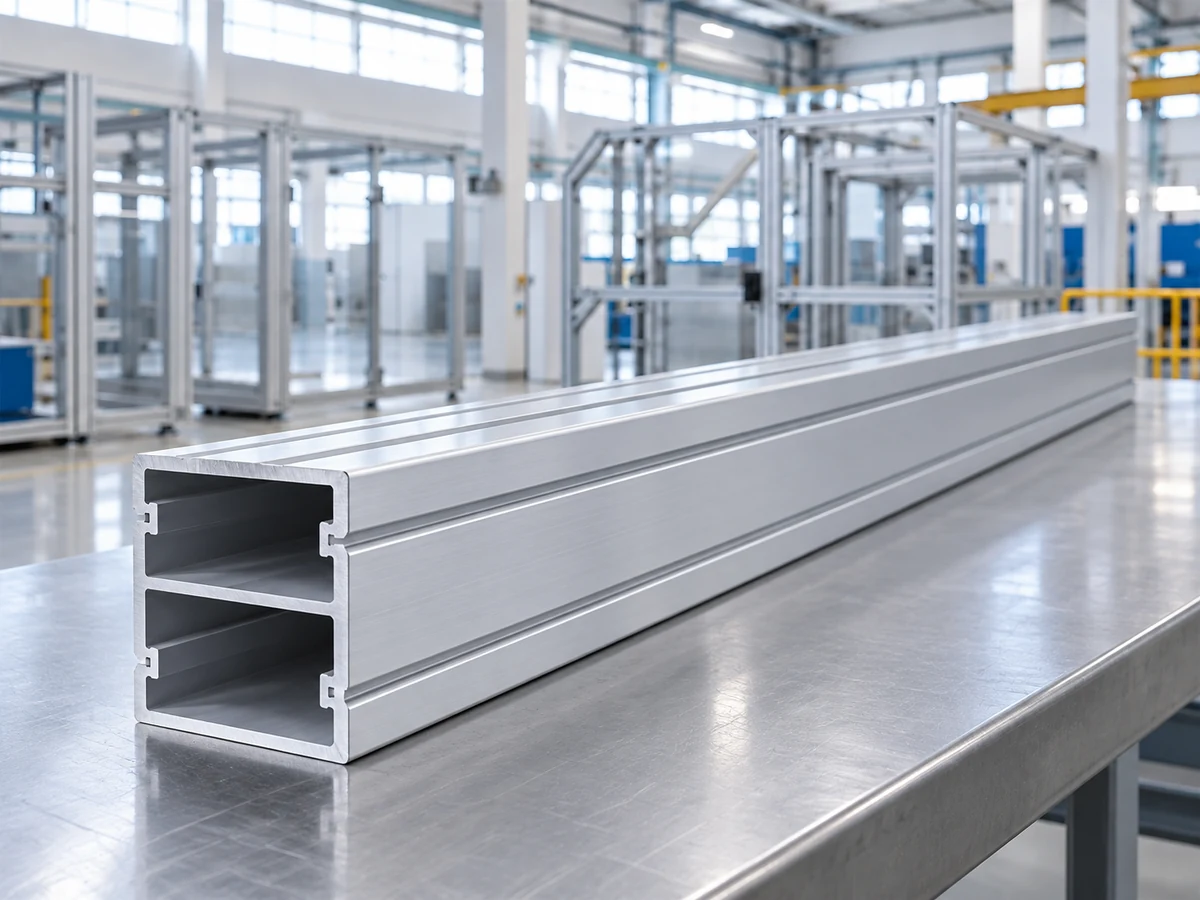
The featured photograph shows a multi-chamber aluminum extrusion in a workshop. It illustrates the kind of stock and section geometry a cutter may need to support; it is not a rowing-machine rail, approved design, or customer part.
Seven aluminum monorail blank-cutting checks for an RFQ
1. Separate product dimensions from blank length
Record the drawing revision and the cut blank length, including its tolerance and measurement convention. Keep product length, usable seat travel, and finished member length in separate fields. If machining or end caps follow cutoff, identify the allowance owner and the datum used to measure the final rail. Do not silently convert a published product dimension into a cut list.
2. Supply the actual extrusion section and material condition
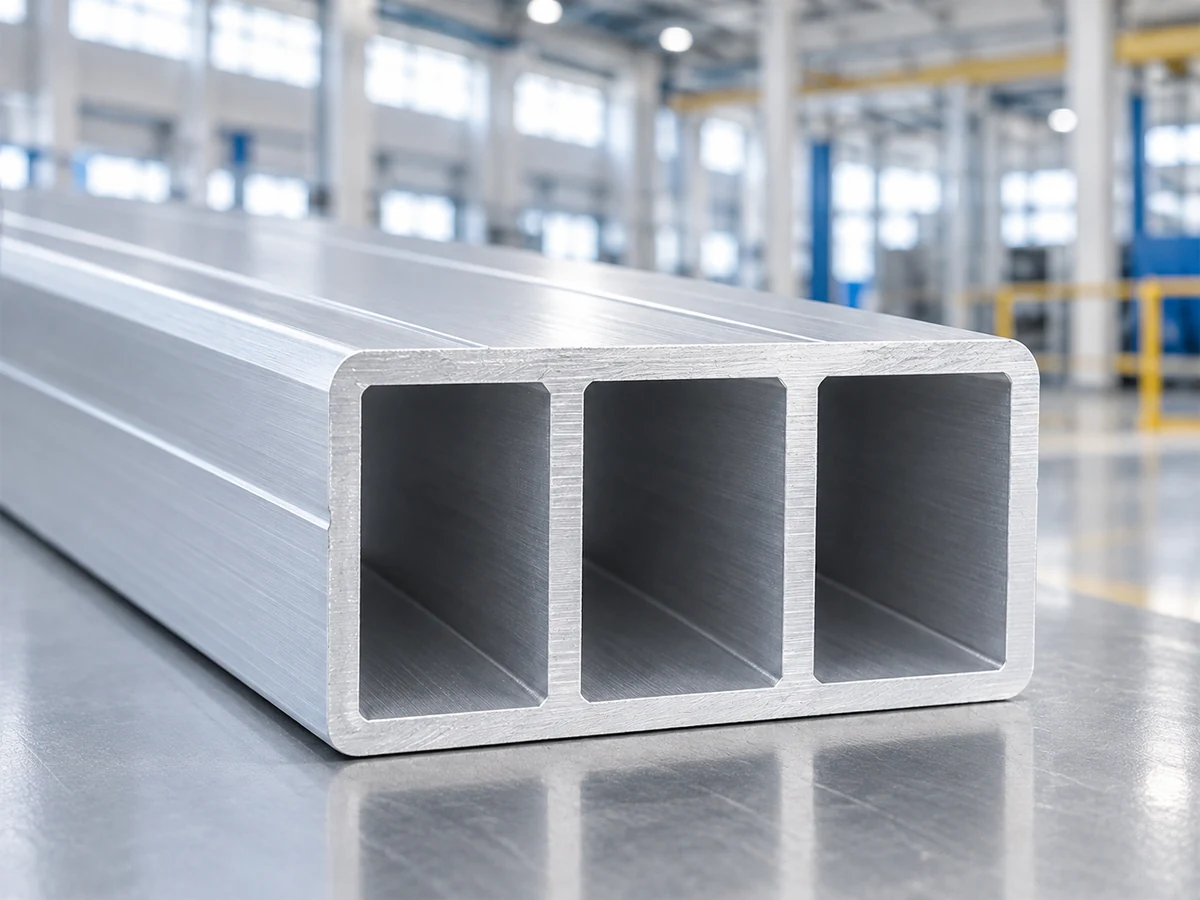
Send a section drawing with overall envelope, wall and cavity dimensions, straightness requirement, alloy, temper, surface condition, and whether the profile arrives bare, anodized, or otherwise finished. A hollow rail can have thin lips or internal webs that need support during clamping. The purchase drawing should identify the faces that must remain free from pressure marks. If the material is supplied by the customer, agree how incoming twist, bows, and mixed batches are handled before cutting.
3. Identify the seat-running surface and who supplies it
A seat may run on a separate track rather than directly on the aluminum extrusion. For example, Concept2’s seat-roller information refers to a stainless-steel track on its monorail. That product detail is a reminder to ask whether the buyer’s rolling surface is integral, bonded, attached, or installed later. The saw trial should protect the specified guide face and track attachment zone, but a clean saw cut alone does not verify roller fit, noise, or service life.
4. Mark the datum and end-joint features
Which face locates the rail in the frame? Which end is the front? State whether the saw-cut face is a final mating face or a machining allowance. Specify squareness, burr limits, and edge protection only where the drawing makes them relevant. Holes, slots, counterbores, inserts, and formed brackets are separate operations unless the quotation explicitly includes them. A reversible-looking extrusion can still need orientation control when one face will receive a running track or visible finish.
5. Describe the mix, stock length, and handling route
List each SKU’s annual and batch quantity, blank lengths, extrusion supply lengths, minimum useful remnant, and permissible changeover time. Long profiles need an agreed loading and outfeed arrangement; a narrow rail may also need special nest support. Quote a representative mix instead of timing only the easiest length. Include packaging rules that keep finish faces apart and make front/back orientation visible to the next station.
6. Define an acceptance trial on approved stock
Use the buyer’s actual profile, material state, and drawing to define a small trial plan. Measure length from the agreed datum at the saw and after any required downstream operation; inspect the end face, burr, deformation, cosmetic marks, and repeatability across first and later pieces. Record blade and clamp setup, stock batch, and deviations. A video of another saw or another extrusion cannot establish acceptance for this rail.

7. Compare complete rail purchasing with in-house cutoff
A low per-cut price is not automatically the lowest cost of a usable rail. Compare purchased complete members or rail assemblies with customer-supplied extrusion and in-house blank cutting. Include material yield, scrap and remnant ownership, secondary machining, track installation, finish protection, inspection labor, packaging, and replacement-part traceability. If the product is a hybrid frame, clarify whether the aluminum member is bought as a component while other frame parts follow a different supplier route.
What to send for a meaningful machine discussion
Send the controlled rail-blank drawing, a physical profile sample or section file, alloy and temper, supply and blank lengths, quantity mix, critical faces, end requirements, and the downstream process map. Mark any seat track or roller interface as a separate item unless it is truly part of the extrusion being cut. Jiurun can then discuss a relevant cutting and handling arrangement and a representative trial scope. Machine suitability and achieved cut quality must be confirmed against those actual inputs.
Video context: the following video from Jiurun’s own channel shows a general aluminum-profile sawing machine. It is an equipment illustration only; it does not show a rowing-machine rail, the pictured loading line above, an approved model configuration, or measured performance for this application.
RFQ handoff checklist
- Deliverable: raw blank, finished rail, or assembly
- Drawing revision, orientation datum, blank length, and tolerance
- Extrusion section, material condition, finish, and protected faces
- Running-track and seat-interface ownership
- Batch mix, stock lengths, remnants, and packaging
- Representative trial pieces and acceptance measurements
If you are sourcing the blank-cutting step, send Jiurun your drawing and production mix so the discussion starts with the correct extrusion and deliverable boundary.