
Rolling library ladder aluminum rail cutting begins with the hardware system, not a nominal bar length. A straight rail may look simple on a drawing, but the installed run also needs compatible rollers, brackets, end stops, splices and clearance at the wall. A cut that lands on a connector feature or leaves too little support at an end can turn an otherwise acceptable blank into unusable material. This guide helps a purchasing or fabrication team send a cut-blank RFQ that a saw supplier can actually assess.
The example system matters. Quiet Glide’s rolling ladder documentation describes solid aluminum rails and a specific splice and bracket arrangement. Another vendor may specify hollow tube, steel track, a different diameter or a different joint. Treat the approved ladder hardware drawing as the authority for your project. The cutting plan below is a method for asking the right questions, not a substitute for that drawing or for structural approval.
First identify the rail, not just the ladder
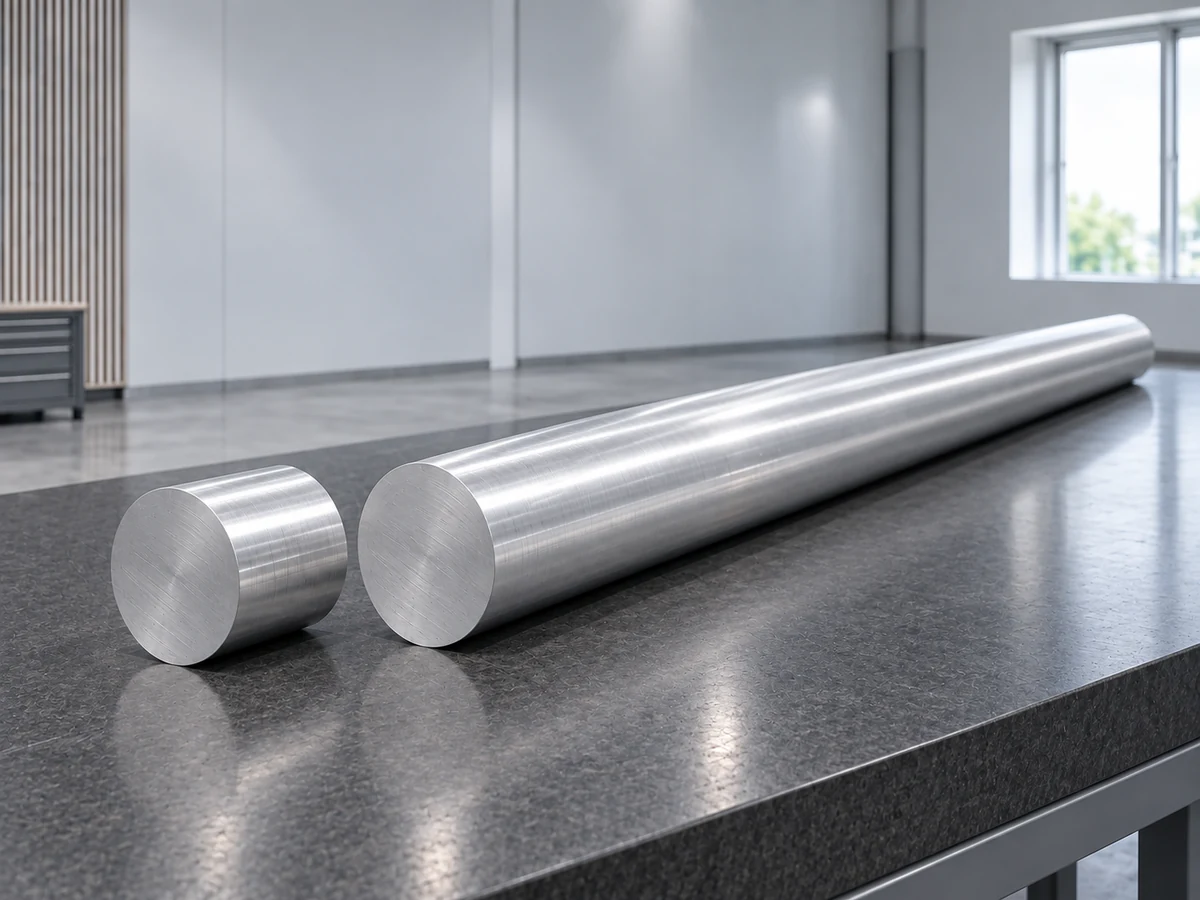
The horizontal track above the cabinetry is a different workpiece from the ladder’s side rails and rungs. For a solid round aluminum track, the buyer should attach the rail supplier’s section drawing, stock form and finish specification. Record the actual outside diameter, alloy and temper if known, straightness requirement, protective surface treatment and whether the stock already has factory-machined slots, bores or other connector details. Do not assume that a generic aluminum tube cutting setting applies to a solid bar.
Ask the hardware supplier which operations may be done by the saw shop. An off-the-shelf finished rail may be supplied as a kit whose ends and splice features are already prepared. In that case, a field length may be achieved by choosing approved stock pieces and a splice position, rather than by sawing a finished rail at an arbitrary location. A custom raw blank is a different purchasing route. Quote these routes separately so that price and lead time do not hide different scopes.
Rolling library ladder aluminum rail cutting: build the cut map
Start with the measured cabinet or wall run and mark the intended start and finish of the rail. Add the corner arrangement, if any, before calculating straight lengths. On the same sketch, locate every bracket, splice, end stop and ladder travel limit. Note the bracket’s relationship to the substrate and the roller path. The Quiet Glide instructions, for example, describe a rail splice using a pin and steel bar and call for brackets to be slid onto the rail before they are fixed. Those details are specific to that system; the drawing for your chosen hardware decides where a joint is allowed.
For each segment, give the supplier an end-to-end cut length with a datum and tolerance. Distinguish an exposed end from an internal splice end. A visible end may need a cap and a different cosmetic standard, while a splice end must seat against the connector without a raised burr or distorted edge. If the installation has a curved section, ask the hardware maker whether it supplies that section preformed and where a straight piece may join it. Do not convert a curved rail to a straight saw cut list without an approved joint drawing.
A useful schedule has one row per unique piece: segment ID; nominal length; quantity; left and right end type; finish; special feature; mating hardware reference; and inspection method. Include a revision number. If site measurement is pending, mark the affected dimensions provisional rather than asking the saw shop to infer them.

What the saw trial should prove
A machine choice cannot be made from a rail name alone. Send the actual stock sample and request a trial using its real outside diameter, section, alloy, surface condition and batch length. Solid bar creates a different cutting load and chip volume from thin-wall tube. The shop should confirm that the blade, feed, clamping and support arrangement are suitable for the supplied stock. A visually clean end on an unrelated sample is not proof of this rail’s performance.
For a round piece, the clamping plan should prevent rolling and marking. Specify which finished surface may contact the fixture and whether protective pads are allowed. Check support on both sides of the blade so a long blank does not sag and a short offcut does not shift. If several lengths are nested in one stock bar, agree on kerf allowance, trim allowance and the disposition of the final short remainder before calculating yield. A zero-tail or multi-piece claim is useful only after the actual stock and cut list are tested.
Ask the supplier to label the first-off sample and retain the setup record. Inspect length from the stated datum, square cut face, burr, edge breakout, surface marks and any visible distortion. For a splice end, test fit the manufacturer-approved connector and compare the joint transition with the ladder roller’s travel path. If the rail will be coated after cutting, confirm what edge preparation the finisher requires. If coating is already present, set a handling and cosmetic standard for the newly exposed end and nearby surface.
Keep the installation and cutting scopes separate
The saw shop can demonstrate a cut, but it cannot approve cabinet anchorage, bracket spacing, ladder loading or a proprietary joint simply from the bar sample. Those decisions belong to the ladder hardware supplier and the project designer or installer. The manufacturer instructions also set clearances relative to ceilings and cabinetry. Put those dimensions in the installation package, then send the resulting approved rail schedule to the cutter. This order prevents a precisely cut part from being wrong for the installed geometry.
Ask who supplies the splice kit, brackets and end stops. If the cutter receives loose raw bars only, it should not silently assume that a plain cut end is ready to accept a splice. If it receives pre-machined rails, it needs a drawing showing the permitted cut zone and how the part will be protected. If a saw trial changes the end detail, route the revision back through the hardware designer before releasing the full batch.

A practical RFQ checklist
- System: hardware manufacturer, rail part number, current drawing revision and whether the rail is supplied raw or as a finished kit.
- Stock: solid or hollow form, actual section dimensions, alloy and temper where specified, stock length, finish and acceptable handling marks.
- Geometry: installed run drawing, straight and curved portions, each segment length and quantity, end type and datum.
- Interfaces: approved splice, bracket and end-stop locations; pre-machined features; forbidden cut zones; and required assembly sequence.
- Trial: representative stock, proposed fixture and blade, first-off sample count, cut-face and length inspection, and connector fit check.
- Delivery: piece ID, revision, protective packing, separation of exposed ends, and whether finished rails travel with the hardware kit.
Request a quotation that separates setup and trial cost from production cutting, finishing or feature machining, inspection and packing. Ask for the minimum economic batch size and the expected yield from the stated stock length. This makes it easier to compare a supplier-cut kit with local cut blanks without mixing incompatible scopes.
How to review a sample before ordering the batch
Choose a first-off piece from the longest and shortest required lengths if support conditions differ. If the schedule includes both exposed and splice ends, sample each end type. Place the samples beside the approved rail drawing and label any feature that the saw shop did not create. Measure the same datum used in the RFQ; otherwise two parties can report different lengths for the same part. Record the instrument, method and acceptance limit rather than describing an end simply as “good.”
When a roller must cross a splice, the hardware supplier should validate the assembled joint. A smooth cut face by itself cannot establish roller compatibility. Similarly, a photo of a cutting machine cannot establish the permissible load of a ladder installation. Treat assembly fit and safety sign-off as separate gates before releasing production.
Video: related cutting equipment only
The video below is from Jiurun Machinery’s own channel. It shows a JR-455CNC aluminum profile cutting machine operating as a general equipment demonstration. It is a related view for feeding, clamping and cutting discussion. It does not show this solid library-ladder rail, a customer installation, a splice test or proven performance on the material described here.
Questions buyers often ask
Can a finished ladder rail be shortened on site?
Only if the hardware maker identifies a permitted cut location and supplies the end-treatment instructions. A field cut can remove a connector feature or expose a surface that the finish specification did not cover.
Is a round aluminum tube interchangeable with a solid rail?
No assumption of interchangeability is safe. Wall thickness, joint design, roller fit and the complete hardware system differ. Order the specified rail and test the actual stock before selecting a cutting setup.
What should the first-off sample include?
At minimum, the stated end-to-end length, end-face and burr inspection, surface-mark review and a fit check with the approved connector or cap. The acceptance limits come from the project drawing and hardware maker, not from a generic machine brochure.
If you are preparing a rolling ladder rail cut list, send JiurunCut the approved rail drawing, actual stock sample, segment schedule and required first-off checks. We can then discuss a saw trial and quotation around the material and scope you really intend to purchase. Contact JiurunCut.