
A robot mower garage aluminum frame can look simple on a cut list and still create a serious fit problem. The saw may deliver every aluminum member to length, yet a post can still intrude into the mower’s approach, a crossbar can block access to the charger, or a roof fixing can distort the baseplate. Before ordering an aluminum saw trial or a cut-parts batch, release the shelter drawing against the specific mower and charging station.
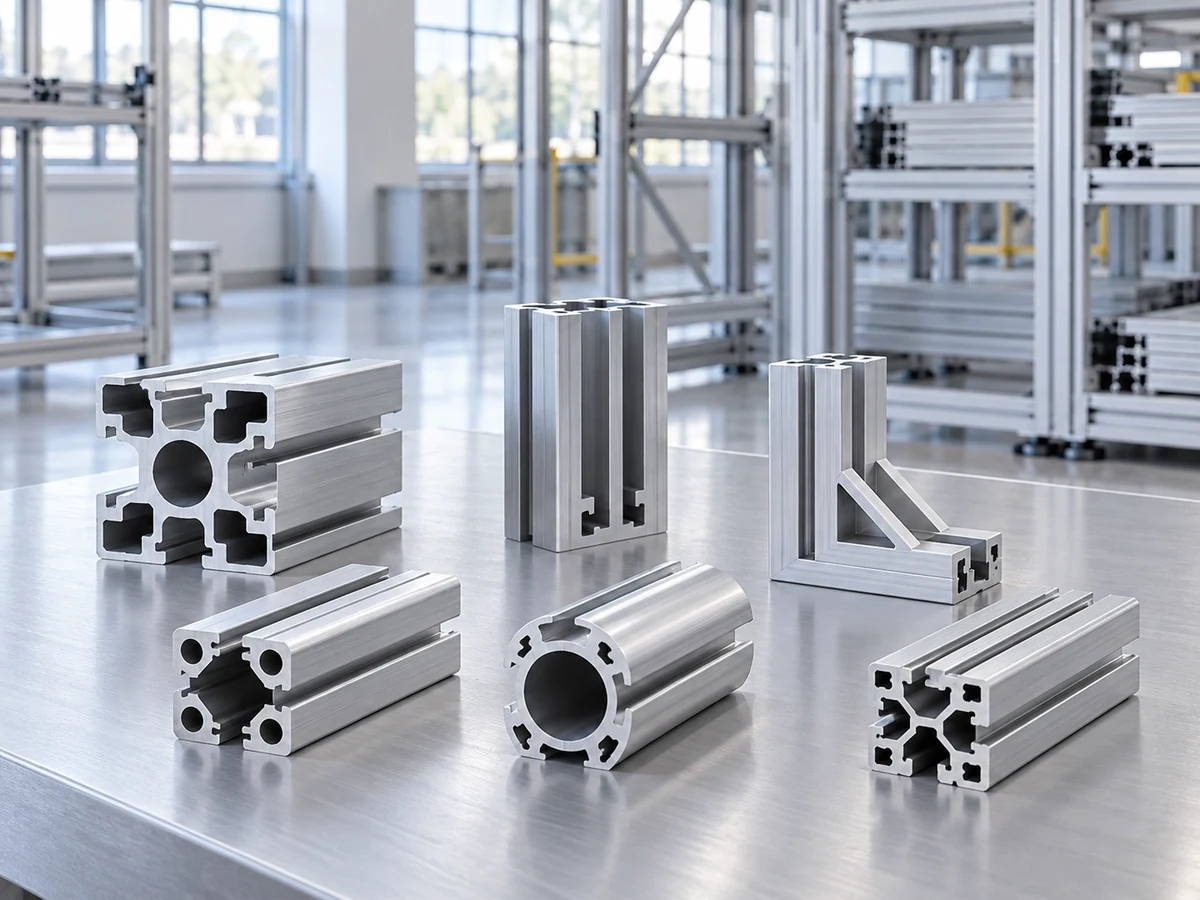
Featured image: a related automatic aluminum cutting machine with representative profiles. It is not a mower-garage production record.
This guide is for a buyer specifying straight aluminum frame blanks for a third-party shelter. It does not certify a garage for Husqvarna, Worx or any other mower. The mower maker’s instructions and an assembled docking check govern the final layout.
Start at the charging station, then draw the aluminum
Ask the garage designer for the exact mower model, station version, docking route and installation type. Mark the baseplate and the mower’s approach, exit and service envelope on one layout. A shelter can fit the parked mower but still interrupt its return to charge. Husqvarna’s current charging-station and mower-house guide calls for entry and reversal without obstruction, ventilation, drainage and access to connections. It also warns that alternative metal structures are not tested by Husqvarna and may interfere with operation. Worx’s Landroid Vision installation guide likewise treats a straight approach, level base and visible station marker as part of docking. Those are model-specific examples, not dimensions to transfer into another design.
Buyer decision: hold the aluminum cut list until the assembler signs a layout showing station datum, post locations, free approach, roof height, drainage direction and access path. The saw supplier can then assess the released profiles instead of guessing the mower envelope.
Robot mower garage aluminum frame: define the cut boundary
A saw quote can cover released straight posts, rails and braces. It should name each profile section, alloy and temper supplied by the buyer, cut length and tolerance, end form, visible-face orientation, quantity and identification method. Put the roof sheet, hinges, connectors, ground anchors, charger cable routing and weather sealing in separate lines. A cut length does not prove those assemblies fit or survive outdoor use.
For every rail that meets a corner, identify the end used as the assembly datum. If a bracket or connector later consumes length, show the finished reference span on the drawing. A miter, notch or drilled hole is a separate operation unless the chosen machine and trial have explicitly covered it. Do not let a supplier infer it from a photograph.
Use the sample to answer a cut question
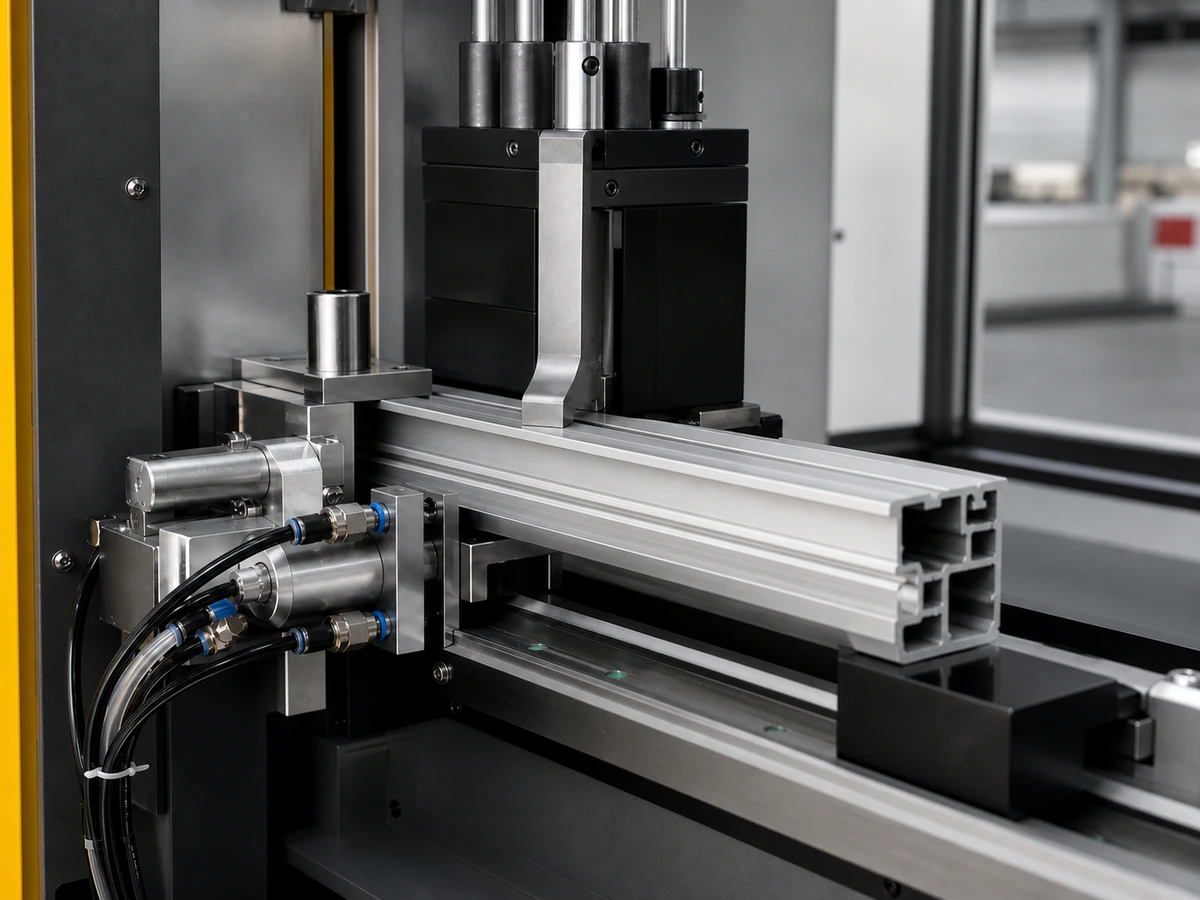
Send the saw supplier a short, labeled set that includes the widest and most awkward approved section, the longest member that must feed, and the shortest accepted piece. Ask how each is supported and clamped, where the length reference sits, and whether the finished face contacts a hard stop. Measure the resulting pieces against the drawing with the buyer’s agreed method. Record burr condition and any deformation at the clamp and end face.
If the shelter uses different sections for posts and roof rails, test each setup separately. A clean cut on one section says little about the other. Record the actual blade, fixture, feed setup and sample identification. The trial is evidence about cutting these samples under the recorded setup. It is not a docking, outdoor durability or signal-compatibility test.
Put one assembled check between cut acceptance and rollout
Build one shelter with the intended connectors and roof material. Position it around the actual station on a level installation surface, route the cable as planned, and run repeated approach, docking and departure cycles under the mower maker’s instructions. Open the access points and check whether the roof can drain without sending water toward the charger. Where the maker warns about metal near station signals, verify the complete installed arrangement. A saw-cut sample cannot settle that question.
Separate the records: cut acceptance records member length, end condition and quantity; assembly acceptance records fit and access; mower acceptance records the observed docking behavior with the actual model and installation type. If the assembled check fails, revise the drawing and identify the affected member IDs before placing the production cut order.
What to put on the RFQ
- Released frame drawing and bill of members, with revision and the station/mower model used for layout.
- Profile section drawings, material callout, stock form and maximum feed length for each member family.
- Cut-length datum, tolerance, end form, visual surface, deburr requirement and packing by member ID.
- Operations included in the quote: straight cut, miter, drilling or notching only where individually stated.
- Sample plan and measurement record for the hardest long, short and section-change cases.
- Explicit owner for connectors, roof, anchoring, wiring, assembled fit and live docking verification.
For a robot mower garage aluminum frame order, ask which supplier will supply the accepted blanks and which party will release the complete shelter. A low cut price is useful only when the buyer can assemble the delivered member set without recutting it.
Related cutting-machine footage
The following video is from Jiurun Machinery’s YouTube channel and shows related aluminum cutting equipment. It does not show a mower garage, the profiles in this article, a docking test or performance proof for the proposed shelter.
Request a quote for the released blanks
Send JiurunCut the member table, profile drawings and the most difficult approved samples. Ask for a cut trial and a quote that states machine scope, fixture assumptions, inspection method and excluded assembly work. If the shelter layout is still open, finish the docking and clearance check first so the cut list can be priced against one revision.