
Refrigerated display case sliding door track cutting is a small part of a much larger fit problem. A supplier may quote straight aluminum pieces for the top, bottom and vertical tracks, while the buyer expects a complete frame that will carry two moving doors, rollers, seals and hardware. If the drawing does not separate those deliverables, accurate sawn lengths can still fail at installation. This guide sets out the cut-blank information to release before asking for a saw trial or a price.
The examples below are about procurement and manufacturing scope. Hoshizaki’s RM-45-SD parts manual identifies a complete sliding track frame and separate top, bottom and vertical track profiles, alongside door profiles, rollers, gaskets and a spring. That is one manufacturer’s model-specific parts breakdown, not a universal section drawing or a Jiurun machine specification. The US Department of Energy’s display-case door retrofit guidance likewise says the chosen door and frame must be matched to the existing case and installed under the supplier’s instructions. A saw quote cannot substitute for that system design.
Table of Contents
Define whether you need track blanks, a frame kit or a complete assembly
Start with the item the purchasing team actually receives. A cut blank is an approved extrusion section at a specified end geometry and length. A machined member adds any released holes, slots, reliefs or local notches. A track kit may add matched corners, seals, covers and fasteners. A complete track frame is an assembly with a defined interface to the cabinet and doors. Put the required delivery level on the RFQ, because neither a finished frame nor a working sliding door follows automatically from a saw capable of cutting aluminum.
In the Hoshizaki example, the top track, bottom track and two vertical track profiles are listed separately from the complete sliding track frame. The door assembly has its own left and right door, roller hardware, gaskets and upper and lower door profiles. A buyer could therefore need replacement pieces, a set of released track blanks, or the OEM assembly. Confirm the model and drawing revision before assuming any of those routes is interchangeable. For the broader decision about making case frames in-house, see our refrigerated display case frame supply-route guide.

Release the actual section and its working faces
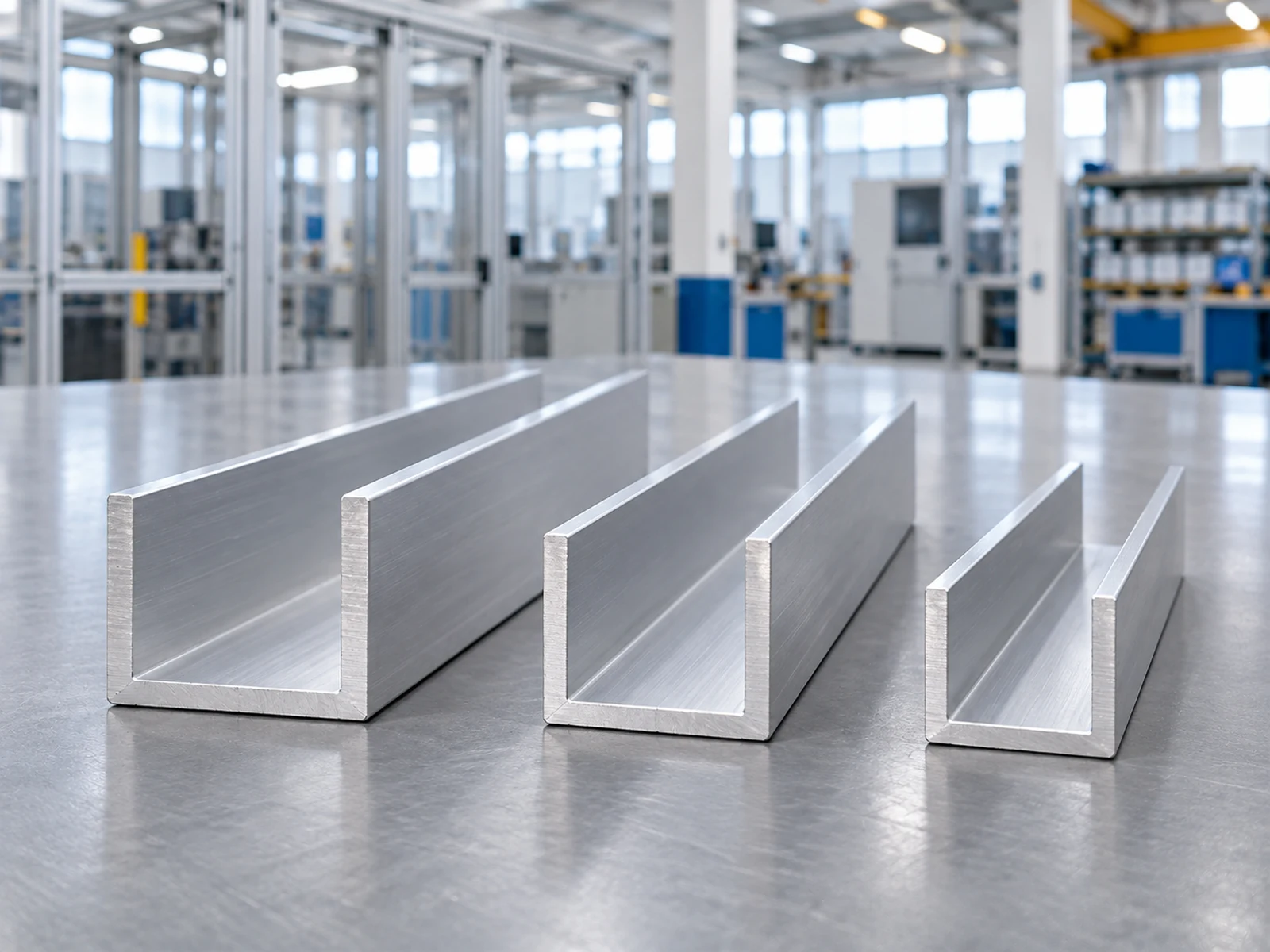
Provide an approved cross-section drawing or physical sample for each track member. Mark the door-running surface, roller path, seal groove, cover interface, fixing channel, drainage feature and visible face where those features exist in the chosen system. Record the stock’s alloy, finish and protective film when they affect clamping or handling. A generic description such as “aluminum U-channel” is insufficient: two channels with similar outside width can differ in wall thickness, internal clearance, lip shape or fastening detail.
Mark the installation orientation as well. State which side faces the refrigerated case, which edge carries the door and which surfaces may touch the saw table or clamps. Ask the extrusion owner to identify a sound support face and permissible clamp zone. The saw trial should check for movement, wall collapse, burrs and finish damage on the actual stock. A machine can hold the released section for a cut, but it cannot prove door clearance or seal compression by looking at the extrusion alone.
State the length datum for every top, bottom and vertical member
For each part number, specify whether the controlled length is the overall extrusion length, distance between the finished end faces, distance between corner seats, or a dimension derived from the cabinet opening. If the track fits beneath a corner piece or cover, show the overlap and identify the responsible party for setting the resulting cut length. Do not copy a nominal case width into the saw program. The case opening, the track frame outside dimension and the aluminum blank length are different measurements unless the approved drawing explicitly makes them the same.
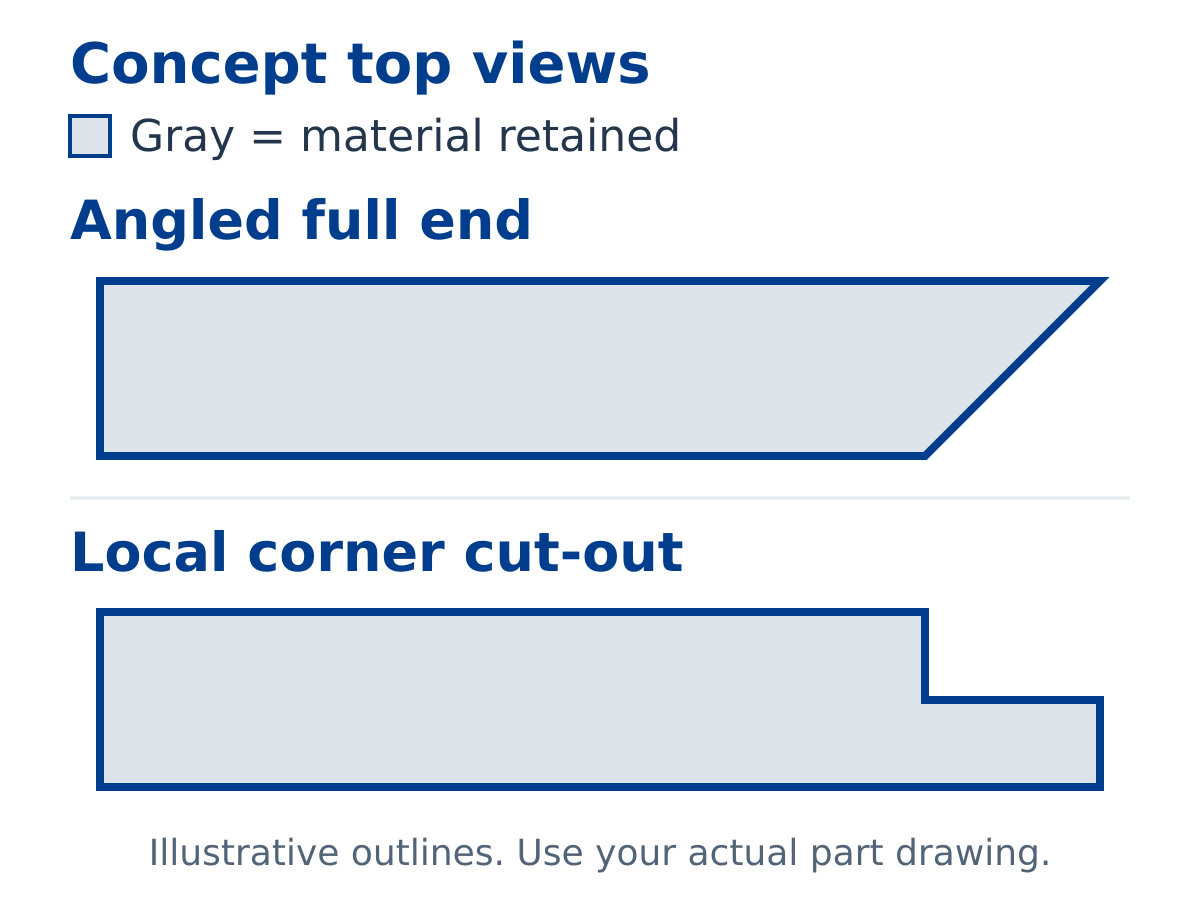
Label end A and end B. A square end, mitered end, local relief and stepped end are different operations; a profile can also require handed orientation even when its overall length matches another member. If the buyer wants replacement components for an installed case, record the OEM model, serial or revision as required by that supplier and survey the actual interface. Hoshizaki’s parts manual specifically asks for the model and serial number when ordering spares. That instruction is about the cited model; apply the equivalent identification rule from the selected equipment maker for another case.
Give the saw supplier a cut schedule that pairs each member with its section drawing, stock length, finished length datum, end shape, quantity, finish orientation and inspection method. Include the allowed variation from the approved design rather than requesting a generic “high-precision” cut. The customer or frame designer owns the functional tolerance stack through the track, door, roller and seal. A saw’s feed repeatability is not proof of a complete door’s fit.
Separate straight saw ends from local machining and assembly
Some track systems need corner reliefs, slots or holes after the primary length cut. A circular saw making an angled full end is not automatically a local-notch machine. If a notch is required, send its exact drawing, tool route and inspection requirement; then ask which station will make it. Do the same for fixing holes, drain openings, spring mounting and any cover retention features. Listing those features in the product drawing does not mean they are in the saw quotation.
After the blanks are accepted, the assembly route may still require joining the track frame, fitting covers, mounting gaskets and installing the moving doors and rollers. Keep these operations on a separate process and acceptance list. A display case may also have electrical, refrigeration or safety requirements outside a metal-cutting supplier’s scope. For retrofits, the Department of Energy guide calls for compatibility with the existing case and installation under the door or kit provider’s directions, with qualified refrigeration oversight. Do not use a sample cut as a refrigeration-performance or energy-savings claim.
Run a first-off trial that includes the mating system
For refrigerated display case sliding door track cutting, a useful trial begins with actual released stock and a traceable drawing revision. The operator confirms the supported and clamped orientation, makes a first-off top, bottom and vertical sample, and records the measured end geometry against the stated datum. Inspect any section deformation, exposed cut-face quality and finish damage before cutting a batch. Retain the sample and setup record so a later production lot can be compared with the same approved basis.
Then assemble a small set into the intended track-frame arrangement. Check corner closure, fit to the cabinet opening, cover engagement, fastener access and the running clearance of the specified doors and rollers. Fit the specified seal and check its installation, without treating a visual dry fit as proof of a validated seal or thermal result. If the first-off blank passes measurement but the door binds, do not immediately change the saw offset. Determine whether the cause is the section, frame squareness, hardware, assembly or cabinet interface.
For a track with rollers crossing a joint, inspect the running path at that joint and the transition between pieces. Our track profile joint guide explains why a dimensionally correct cut can still leave a poor rolling interface. Apply its questions to the actual approved display-door design rather than assuming every track uses the same joint.
Choose the supply route before sizing a saw purchase
If the case maker supplies an OEM track assembly, buying a complete replacement may be safer and faster than trying to reproduce a proprietary section. If the maker supplies released extrusions and drawings but needs repeatable blanks, an in-house saw can be considered for that defined scope. If the program requires machined holes, seals and completed frames, compare an integrated kit supplier with an internal multi-station route. The decision depends on retained volume, revisions, inspection resources and responsibility for assembly fit, not just a cut-per-minute claim.
For refrigerated display case sliding door track cutting equipment RFQs, provide the actual extrusion sample, cross-section envelope, finish, part mix, maximum and minimum blank lengths, end geometries and daily lot pattern. Ask Jiurun to identify a feasible support, feed, clamp and saw arrangement for the released stock, and which requested features require another machine or operation. Do not infer a machine model or accuracy promise from a related video or another customer’s job.
RFQ packet for refrigerated display case sliding door track cutting
- Case and door system maker, model, revision and whether the order is a new build or an approved replacement.
- Delivery level: raw cut blanks, further-machined track members, complete frame kit or assembled track frame.
- Separate part numbers and quantities for top, bottom and vertical tracks, plus any left/right or inside/outside variants.
- Approved section drawings or samples, alloy and finish, functional faces, clamp exclusions and protective-film requirements.
- Length datum, end A/end B geometry, allowable variation and first-off inspection method for each part.
- Corner, cover, seal, fastener, roller and door interfaces assigned to the responsible supplier or assembly station.
- Trial stock and mating components for a small fit check, with a drawing revision and acceptance sign-off owner.
A clear packet lets the saw supplier quote the cutting stage and lets the case designer judge the finished system. It also prevents a procurement team from buying a saw to solve a problem that actually belongs to an unreleased track design, a mismatched door kit or an incomplete assembly route.
Related aluminum-profile cutting video
The Jiurun clip below shows aluminum profile feeding and cutting equipment. It is a related process illustration only. It does not show an RM-45-SD track, a refrigerated case customer, an approved fixture, a trial for this application, or door, seal or refrigeration performance.
Send the released track packet for a cutting review
When the case maker’s section and part schedule are approved, send Jiurun the track profiles, drawings and first-off requirements. We can review the cutting step against real stock and identify what remains for machining, frame assembly and system fit. Keep the final installation and refrigeration acceptance with the qualified design and installation parties.
Source notes
Hoshizaki’s RM-45-SD parts manual (door assembly pages 9–12) provides the specific example of separate sliding track members, door profiles, gaskets and roller hardware. The US Department of Energy’s display-case door retrofit guide addresses case compatibility, sealing responsibility and qualified retrofit work. Neither source is a Jiurun product specification or a universal cut list.