
Rainscreen aluminum rail cutting is easy to under-specify. A facade package may name an L rail, vertical carrier, or horizontal support, yet a cutting supplier still needs the approved section, a usable length schedule, datum faces, finish requirements, and a clear boundary between saw work and facade engineering. This guide turns those inputs into seven practical RFQ checks. It is for buyers comparing cutting routes, not a design approval for any cladding system.
Rainscreen aluminum rail cutting starts with the approved system
“Rainscreen rail” can refer to different members. In SFS’s NV4 system description, horizontal profiles attach to vertical profiles, while the vertical L profiles connect to support brackets at fixed and sliding points. That is one manufacturer’s arrangement, not a universal section or a JiurunCut installation. Another project may have a different profile family and fixing path. The RFQ should start with the designer’s current approved drawing and bill of materials, then identify exactly which members are to be cut.
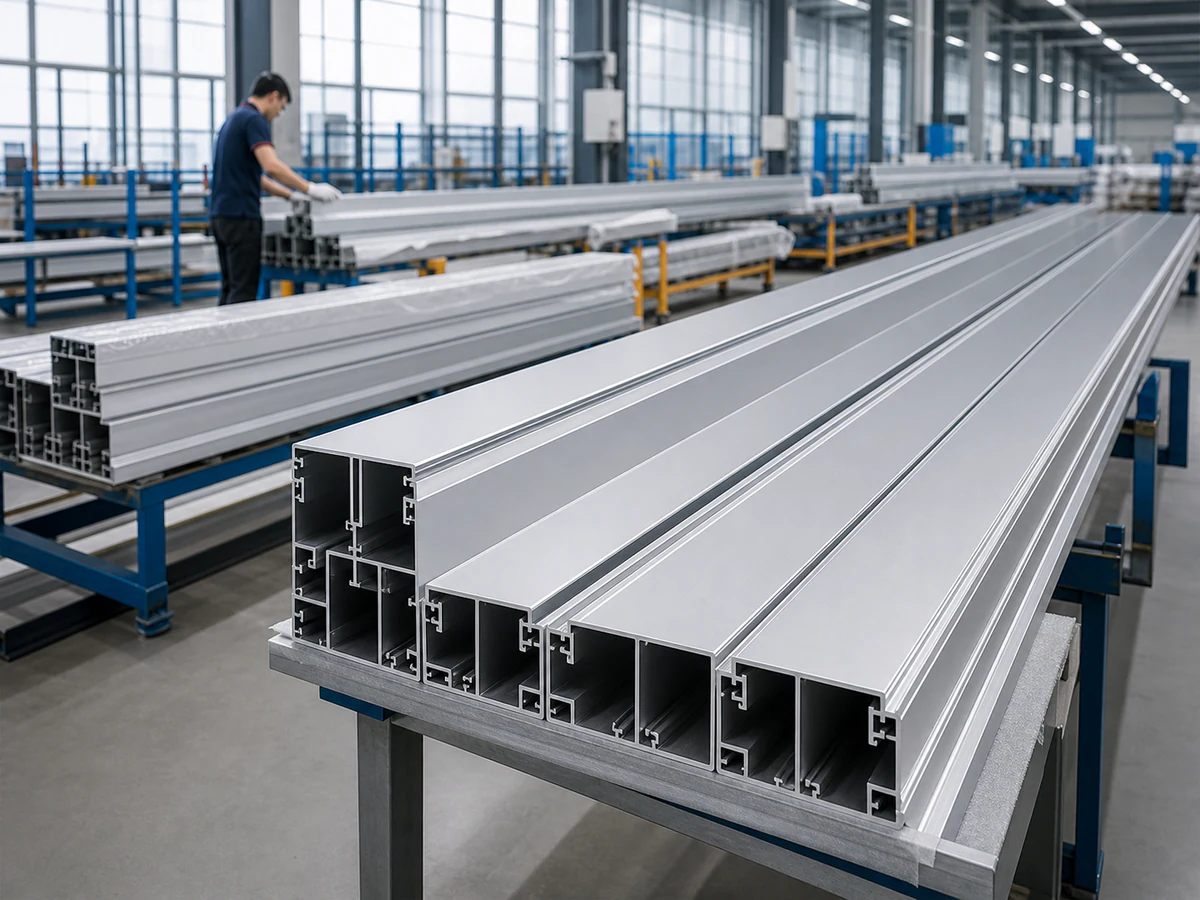
1. Separate the profile section from the cut-end shape
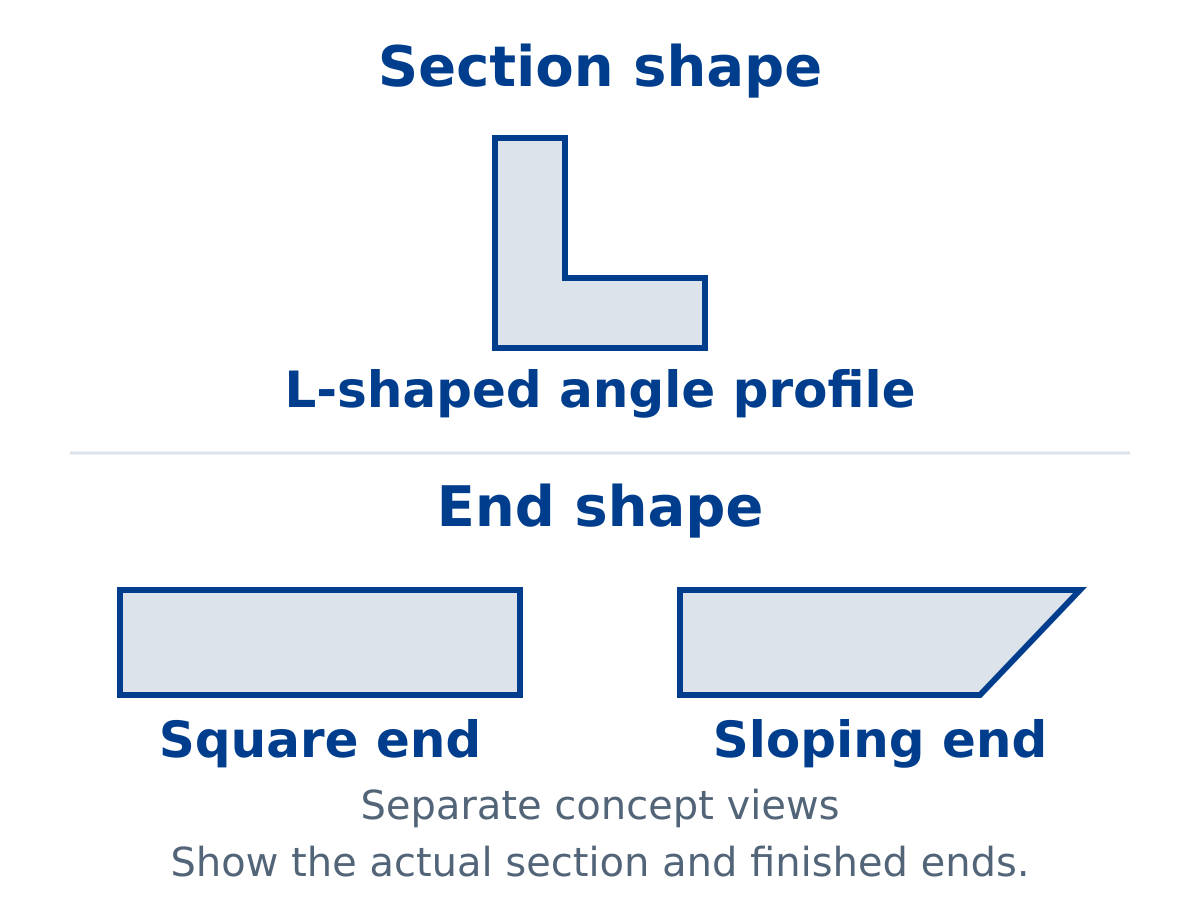
Ask for a dimensioned cross-section or manufacturer part number, including orientation, wall thickness, alloy and temper if specified, coating or anodizing requirement, and stock length. Separately define the end treatment: square, angled, notched, or left for a later fabrication operation. “L-shaped profile” describes a cross-section; it does not automatically call for a mitered end. Confirm both before quoting a saw, blade, clamp, or cycle.
2. Put each rail length on a revision-controlled schedule
For rainscreen aluminum rail cutting, a useful cut list has one line per part ID: rail type, drawing revision, finished length and tolerance supplied by the project team, quantity, zone or elevation, end treatment, finish state, and any marking requirement. Indicate whether length means overall tip-to-tip length or a dimension between specified datums. Show whether the saw supplier is buying stock, cutting customer-supplied lengths, or processing material already coated. If the design changes, issue a new schedule instead of silently mixing revisions in one batch.
Do not infer a cut length from panel module size alone. Bracket positions, designed joints, and the selected mounting system affect the usable rail layout. The facade designer or system supplier owns that layout; the saw supplier should cut to the issued drawing.
3. Mark fixed and sliding interfaces without inventing them
Fixed and sliding support points matter to the installation, but a saw-only quote does not establish their positions or structural adequacy. SFS describes fixed and sliding connections for its vertical subframe; its bracket spacing depends on project calculations and conditions. The buyer should state whether holes, slots, bracket marks, or identification labels are already defined on the approved drawing and whether those operations are inside the quoted scope. If the scope is cutting only, preserve the rail’s orientation and traceability so the downstream fabricator can identify the correct face and location.
Leave movement gaps, joint dimensions, fastening and anchorage decisions to the responsible project design team. A supplier’s saw trial or general video cannot validate wind load, fire strategy, corrosion compatibility, thermal movement, or code compliance.
4. Identify the datum and protect the visible face
Long, open or asymmetric extrusions may not sit against a fence the same way as a square tube. Specify the locating face and whether the rail can be flipped. Show the acceptable clamp-contact areas, protective-film condition, and which face is visible after installation. Ask the supplier to describe infeed support, outfeed support, and the first-off check for length and end condition on representative stock. Do not assume a generic clamping photograph proves that a specific L, Z, T, or hat section will run without marking or distortion.

5. Agree on first-off acceptance before production
Ask what the buyer will accept on a first-off part: the project-specified length datum and tolerance, squareness or end geometry, burr allowance, coating damage limit, straightness condition, part identification, and packaging method. The project documents should supply the numerical limits; a generic article cannot choose them. Confirm who signs off the sample, what happens to rejected parts, and whether inspection is recorded by rail ID or batch. A cut that meets a saw display reading may still fail the assembly if the wrong datum or orientation was used.
6. Compare cutting routes on delivered usable rails
Three routes often deserve comparison: manufacturer-supplied cut lengths, a specialist off-site saw supplier, and controlled site trimming. The best route depends on stock availability, approved finish, schedule changes, transport length, traceability, and the cost of rework. For example, SFS lists factory cutting as an option for one NV1 L-profile product; that statement applies to that product and does not imply every rail arrives cut to length. Compare quotes using accepted rail quantities, handling, inspection, packaging and delivery obligations, not only a nominal cut rate.
7. Send a complete RFQ package
- Approved system and rail part number or dimensioned section drawing, with revision.
- Part-by-part cut schedule: length datum, tolerance, quantity, zone, end geometry and finish state.
- Stock supply route, usable stock length, alloy/temper if specified, and coating or film condition.
- Location face, allowed clamp-contact faces, support/handling constraints and any sample stock.
- Explicit scope for drilling, slotting, marking, deburring, inspection, packing and transport.
- First-off acceptance criteria, sign-off owner and change-control process.
- Installation interfaces identified on approved drawings, with structural and code decisions retained by the responsible designer.
Send that package when requesting a cutting-machine recommendation or contract-cutting quote. It lets suppliers explain how they would hold and verify the actual section without pretending to approve a facade. If your rail detail is still changing, request a feasibility review and sample plan before asking for a final production commitment.
What the equipment video can and cannot show
The JiurunMachinery video below shows a general aluminum-profile saw and feed sequence. It can help you discuss feed, positioning and cut workflow. It does not show an approved rainscreen rail, the profile or finish in your RFQ, a customer installation, a witnessed first-off, or proven output and tolerance for your job. Confirm those points with your own drawings and representative trial.
Ready to review a rail schedule? Send JiurunCut your approved profile drawing, cut list and first-off criteria. We can discuss a suitable saw and sample-check route for the cutting scope you define.