
A portable wheelchair track ramp is an engineered assembly, not merely two lengths of aluminum. For a ramp manufacturer buying saw-cut extrusion blanks, a clear RFQ must identify the approved track profile, each member’s datum and length, the work that happens after sawing, and the person who will approve the finished system. This guide focuses on portable wheelchair track ramp extrusion cuts as a purchasing and production-planning task. It does not specify a safe ramp design or authorize a field modification.
For context, Handi-Ramp describes its portable channel-track ramps as extruded-aluminum products, while its folding portable ramps are a different assembly. That distinction matters: a channel-track blank, a folding-ramp side member, and a finished ramp cannot be treated as interchangeable just because each contains aluminum.
1. Confirm the exact ramp family before choosing a cut list
Start the RFQ with the product family and approved drawing revision. Is the purchase for a paired portable track, a folding platform ramp, a modular walkway section, or a replacement member for one existing assembly? Identify the manufacturer’s part reference, left or right track if applicable, finish, mating pieces, and the revision that controls the order. The saw shop should not infer these from a photograph of a ramp. A generic “aluminum ramp rail” description can hide different wheel-channel widths, lips, wall thicknesses, and joining details.
Ask the ramp designer or original equipment supplier to mark the surfaces that establish assembly fit. The saw supplier can then quote the stock, support, cutting, inspection, and packing operation against a defined part. Any change to the approved profile or assembly belongs with the ramp’s responsible engineer, not the saw operator.
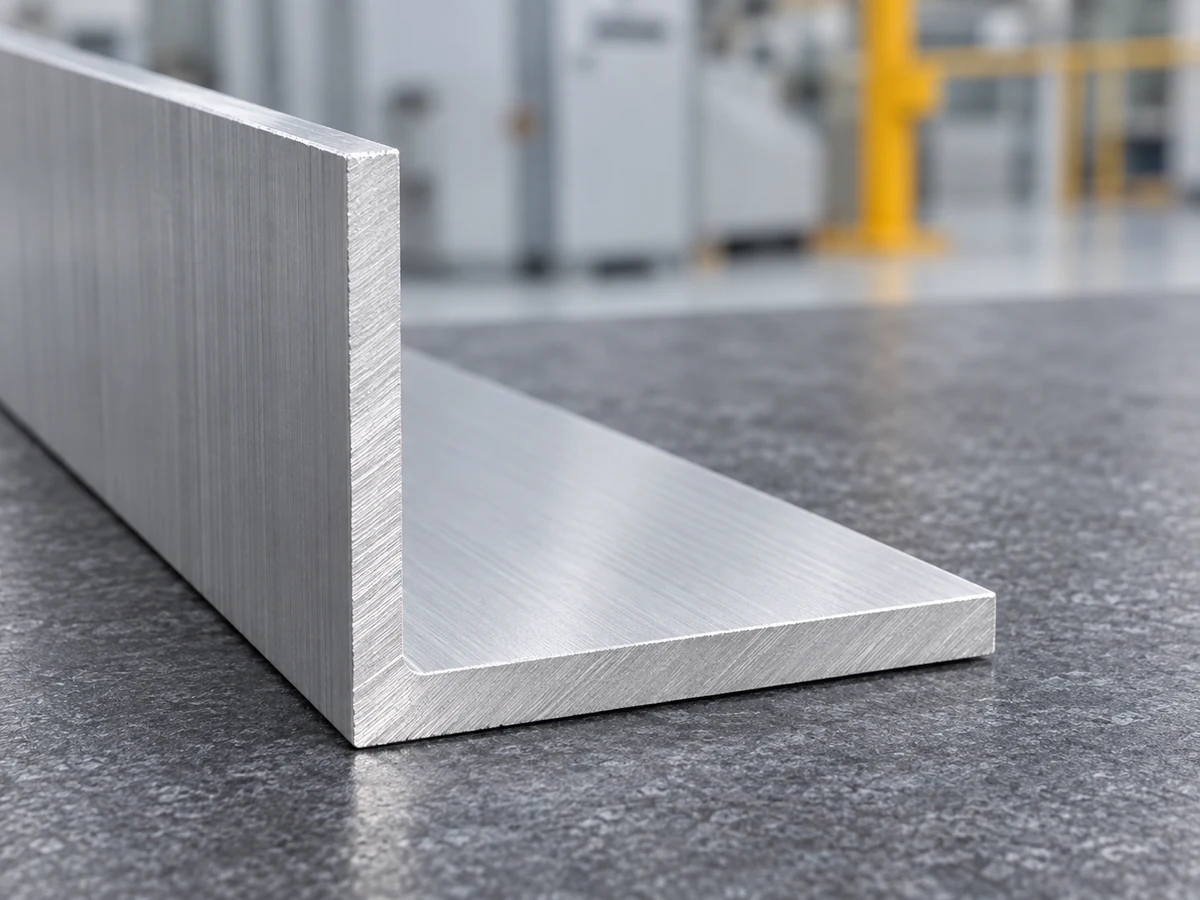
2. Define a saw-cut blank, not a finished ramp component
Write down the hand-off boundary. A saw-cut blank normally means approved extrusion stock cut to the specified length, with an agreed cut-end condition and identification. Holes, slots, hinge seats, connectors, welded features, surface treatment, assembly, and proof testing may belong to later operations. If the supplier must perform any of those, list them as separate deliverables with their own drawing, inspection method, and acceptance authority. Do not let a quote for cut blanks imply that the parts are ready to carry a mobility device.
Handi-Ramp’s modular access-system specifications describe side rails, treads, support assemblies, and handrails as different engineered elements. That document applies to its named system; it is useful evidence that a ramp assembly has more interfaces than a cut-length dimension. Use the actual approved drawing and system instructions for your own product.
3. Give the shop a cut-length datum and a usable tolerance
Specify whether length is measured at the longest point, a square-cut face, a formed tip, or between downstream features. State the datum face and the inspection temperature or method if that matters to your controlled drawing. For paired tracks, say whether the two blanks must be matched as a set and how they will be identified. For a miter or other non-square cut, provide the angle convention and the reference edge; do not force the supplier to reverse-engineer geometry from a final assembly length.
A useful tolerance is the one the next process needs. Record separate limits for overall length, cut squareness or angle, burr and sharp-edge condition, and any damage-free surface zone. Avoid copying a saw brochure’s positioning number into a finished-part tolerance. Machine feed repeatability, cut length on a particular section, and the assembled ramp’s fit are different measurements. If the drawing does not settle the acceptance criteria, request a first-off approval before volume cutting.
4. Show the profile cross-section and the clamping risk
Send a dimensioned cross-section or a sample length. Identify open lips, thin walls, internal ribs, and any face that must stay free of clamp marks. A wheel-channel profile can deflect if it is held only at one lip; another extrusion may require a shaped support or a sacrificial pad. The chosen support method depends on the real section and approved cut plan. Ask the saw supplier to explain where the stock rests, where it is clamped, and whether that contact can change fit or finish.
Also give the incoming stock length, straightness condition, and maximum practical part length. Long flexible sections need a stable path into and out of the cutting area. Short offcuts may need a different stop or discharge arrangement. These are process-planning questions, not evidence that any particular machine has already cut your ramp profile.
5. Agree on the cut-end condition before trial pieces
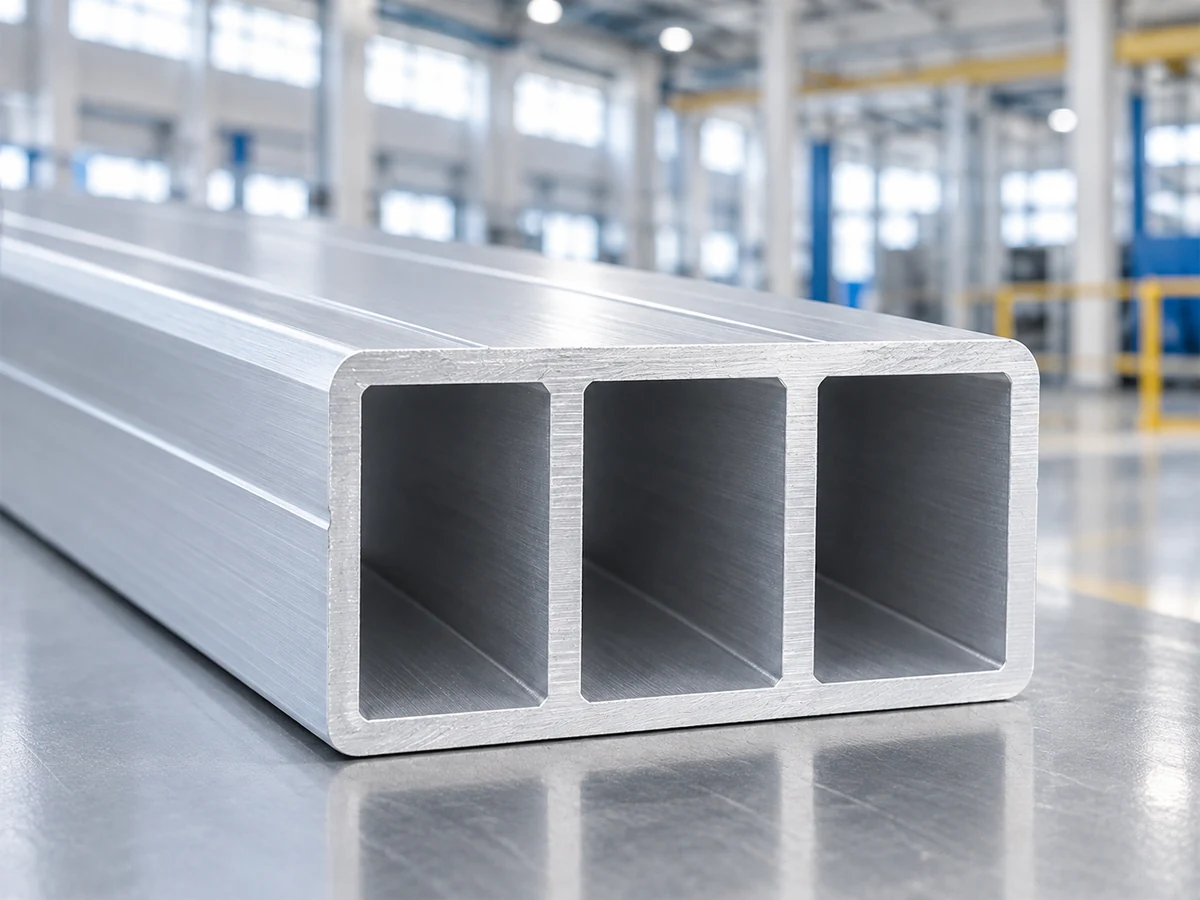
A visibly straight face may still have a burr, chip, crushed lip, or raised edge that interferes with a later connector. Ask which edges will be deburred at the saw stage, whether a post-cut cleaning step is included, and how the condition will be inspected. If a downstream process needs an untouched datum or extra machining allowance, say so before the first batch is cut. A generic promise of “clean cuts” is less useful than a marked sample or inspection note.
For a paired channel-track product, keep the matching process explicit. Mark which left and right members belong together, whether their end features face the same way, and who verifies the set after later processing. The ramp designer must decide whether any burr, edge treatment, or assembly change affects product safety. The saw-cell trial only validates the agreed blank-making step.
6. Separate finish protection from structural acceptance
State whether the stock arrives anodized, powder-coated, mill-finish, or with protective film. Mark visible surfaces and functional contact areas, then request packing that protects those surfaces during transport and kit handling. A part can meet length tolerance and still be rejected for scratches, dents, bent lips, or mixed revisions. Conversely, a good-looking part has not demonstrated that the full ramp meets its design or use requirements.
Keep the supplier’s certificate, first-off sample, or dimensional report tied to the actual purchase order and approved revision. Do not transfer a result from a different stock shape or another customer’s product to this order. If your organization requires a formal assembly test or regulatory review, assign that work to the responsible ramp manufacturer and qualified parties.
7. Ask for a controlled trial and a production hand-off
Before a repeat order, ask the saw supplier for a proposed trial plan using your approved sample stock. It should identify machine and fixture setup, first-off quantity, measured characteristics, inspection tools, rejected-part handling, and who accepts the result. If the trial changes the clamp pad, support, blade, feed plan, or datum, record the change with the sample results. Approving one cut sample does not approve an untested future profile or a completed ramp.
For production, agree on lot traceability, revision control, label text, pair or kit packaging, and the response to a mixed or damaged shipment. A simple acceptance sheet can list the drawing revision, blank length and tolerance, end condition, protected faces, count, and inspection record. That document keeps the saw-cell scope clear while allowing the downstream ramp builder to make its own assembly and safety decisions.

8. Compare the three buying routes
Complete approved ramp: choose this when the buyer needs a ready-to-use system with the manufacturer’s design, instructions, and acceptance process. Finished replacement component: choose this when a controlled repair requires an exact part and interface. Saw-cut extrusion blank: choose this only when the buyer or its contracted fabricator owns the downstream machining, assembly, validation, and product release. Compare quotations on the same scope, or a low blank price can appear to beat a complete approved component while excluding most of the required work.
For broader saw-cell procurement questions, see JiurunCut’s loading-ramp aluminum saw planning guide. It addresses a broader application; this page stays with portable channel-track blank interfaces and RFQ evidence.
A related JiurunCut equipment video
The video below is from Jiurun Machinery’s own YouTube channel. It shows a general aluminum-profile saw and feeding view. It is not a portable-ramp cut, a specified model configuration, a customer job, or a safety or performance test for any ramp.
RFQ checklist to send with your drawing
- Approved product family, profile drawing, revision, and responsible engineer.
- Exact extrusion stock, finish, incoming length, and sample piece.
- Each cut blank’s quantity, datum, length, tolerance, angle, and orientation.
- Protected faces, allowable clamp contact, burr and chip acceptance, and packing.
- Left/right pairing, downstream operations, and clear exclusion of assembly or product approval.
- First-off inspection plan, records, change control, and lot identification.
If you need to assess an industrial aluminum saw for this defined blank-cutting scope, send JiurunCut the approved extrusion section, sample stock, cut list, drawing revision, and proposed inspection criteria through our contact page. We can discuss the cutting operation and trial requirements; the ramp manufacturer remains responsible for the finished product and its release.