
Photo backdrop stabilizer bar cutting starts with a purchasing decision: do you need an aluminum blank cut to an approved drawing, or a finished bar with its gripping parts fitted? Those are different deliverables. A clean cut at the requested length does not establish that a backdrop will be held, protected or packed as intended. This guide gives equipment buyers and accessory OEMs a practical way to define the cutting job before requesting a saw or a finished assembly quote.
A backdrop stabilizer normally sits at the lower edge of a background. For example, Impact describes one of its own products as an aluminum stabilizing bar with a snap jaw and foam grip. That is a useful example of the distinction between a metal member and a complete gripping accessory. Its dimensions and construction are specific to that product; they are not specifications for your part or proof of any Jiurun machine result.
First define the item you are buying
Use three separate terms in the RFQ. A raw extrusion is stock that still needs cutting. A cut blank is the approved profile cut to a defined length and end condition. A finished clamp bar also includes whatever jaws, foam, caps, fasteners or other fittings your drawing calls for. If an RFQ says only “stabilizer bar,” one supplier may price a bare length while another prices the assembled accessory. Neither quote is comparable until the scope is fixed.
For a company considering an in-house aluminum saw, the cut blank is the useful boundary. Decide what must leave the saw, what is added afterward and who inspects the final grip. The saw can be evaluated against the profile and cut requirements; assembly performance needs a separate acceptance check.
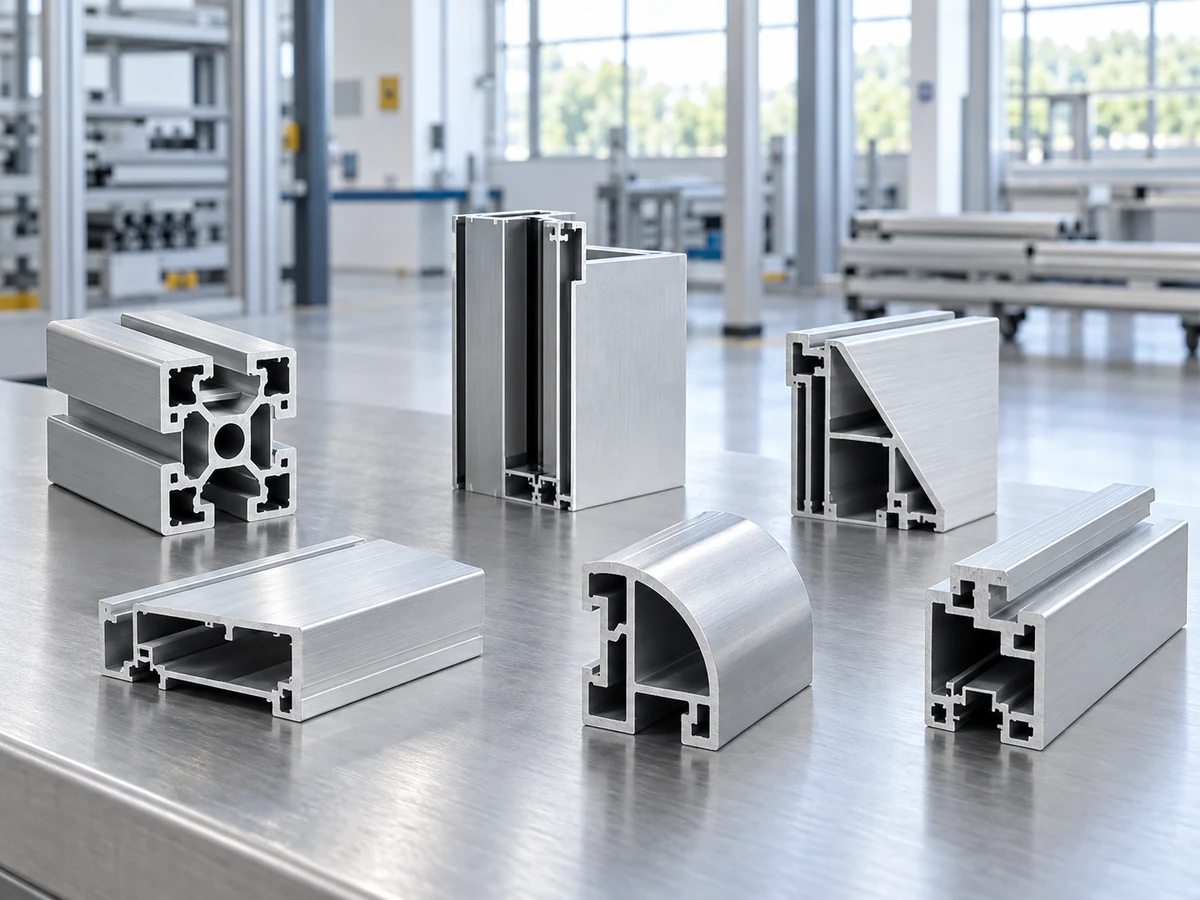
Seven RFQ checks before photo backdrop stabilizer bar cutting
1. What is the approved profile, not merely the outside width?
Supply a cross-section drawing or an identified sample. State the alloy and temper if they are part of your purchasing specification, plus wall thickness, open channels and any visible face. Two profiles with similar outside dimensions may need different supports or clamps at the saw. An unsupported open edge may mark or move during a cut. Do not infer section details from a product photograph alone.
2. Is the length a metal cut length or a finished assembly length?
Mark the two dimensions separately. A fitted end cap, jaw or protruding fastener can change the overall dimension without changing the sawn member. Give a datum, tolerance and measuring temperature if your drawing requires one. If the backdrop itself has a nominal width, do not silently turn that width into the aluminum cut length. Ask the accessory designer to release the bar drawing first.
3. Which end geometry must leave the saw?
Specify whether both ends are square, whether an end needs a bevel or relief, and which face establishes the angle. Show any later drilled, milled or deburred features as separate operations unless the quoted system actually includes them. An “end ready for assembly” statement should say which features and edge conditions are included. A sample with an agreed drawing is more useful than a general request for a perfect edge.
4. Where can the machine touch the part?
Identify the cosmetic surfaces and the concealed surfaces. If the profile has an anodized, coated or polished face, tell the machine supplier where it may be supported and clamped. State the permitted surface marks and the way they will be inspected. Protective film, soft contact material and handling can be part of a proposed workflow, but their suitability must be checked on the actual stock rather than assumed from a catalog photo.
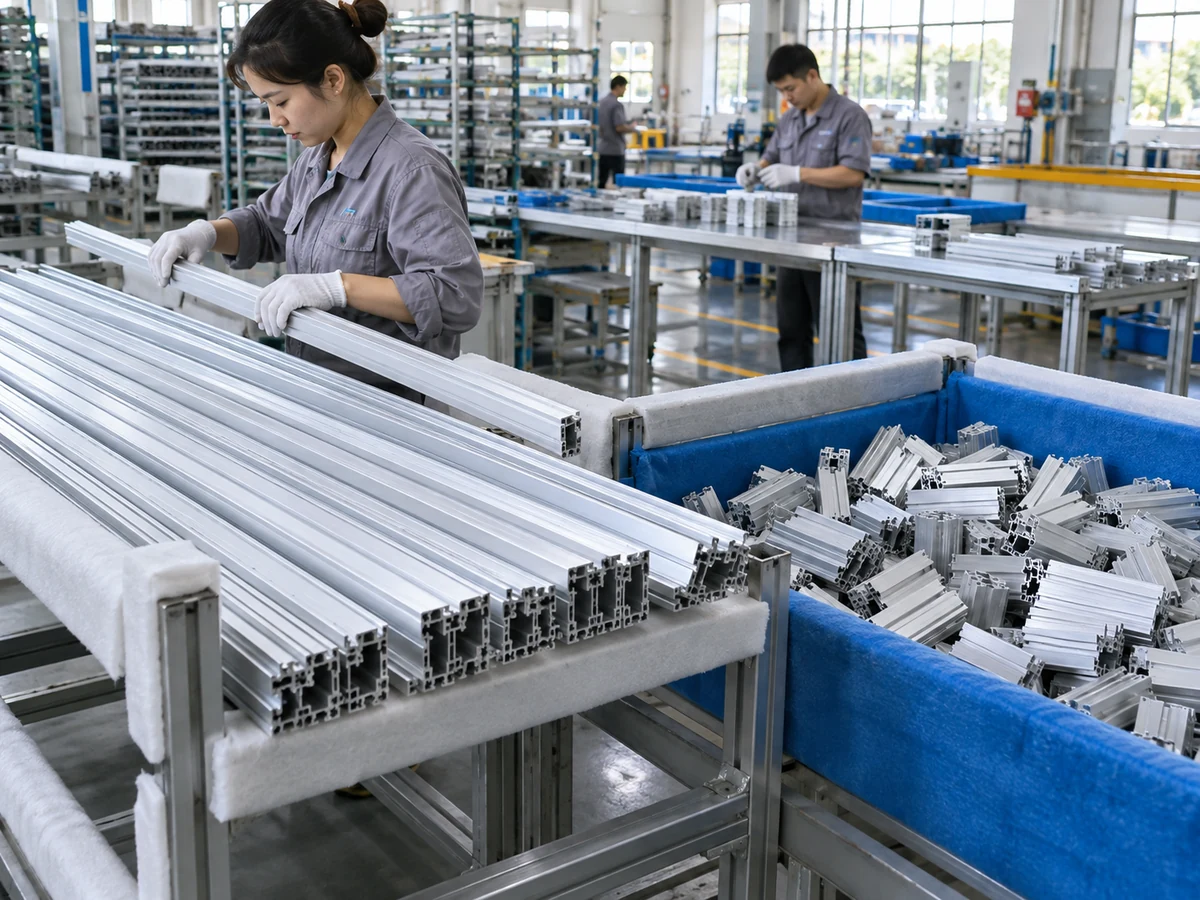
5. Is the acceptance point the cut blank or the working clamp?
For the blank, agree on length, end squareness, visible-face condition, burr allowance and traceability. For the complete accessory, add checks for grip, contact protection, assembled length and component retention as defined by its owner. A saw demonstration can support a cutting decision; it cannot certify a finished clamp that has not been built and tested. Keep these sign-offs on different lines of the inspection plan.
6. What is the batch and changeover pattern?
List stock length, target cut lengths, expected quantities per size and how often the profile changes. A recurring single section may justify a different feeding and positioning arrangement from small mixed batches. Include how short pieces will be identified and separated. The quote should explain the proposed loading, support, cut sequencing and collection path for your real mix of parts, without assuming that a headline machine speed equals useful output.
7. Who owns assembly and packaging?
Write the handoff point into the purchase order. If you buy blanks, name the party that installs the jaw, foam, end caps and labels. If you buy finished bars, require the supplier to identify the parts and assembly checks included in the price. Packaging should prevent the metal ends or visible faces from damaging neighboring bars in transit. Specify pack quantities and how variant lengths will be labeled.
How to compare a blank-cutting route with a finished-bar route
Scope
Cut aluminum blank: approved profile, cut length and defined end condition. Finished clamp bar: the cut member plus specified grip components and assembly.
Drawing to release
Cut aluminum blank: extrusion and cut-part drawing. Finished clamp bar: assembly drawing plus component specifications.
Acceptance point
Cut aluminum blank: dimensional, edge and surface checks. Finished clamp bar: those blank checks plus assembly and grip checks.
When each route fits
Cut aluminum blank: you control downstream fitting and need repeatable blanks. Finished clamp bar: you want one supplier responsible for the complete accessory.
The lowest unit price is not necessarily the lower production cost. Compare material yield, inspection, component sourcing, handling, changeover and rework at the same scope. If you will cut blanks in-house, ask a saw supplier to review the actual extrusion and cut list before selecting a configuration. JiurunCut’s machine overview shows the categories of aluminum cutting systems, while the application drawing determines which route merits testing.
What a useful sample-cutting trial should show
Bring the approved profile, a representative stock length and at least one cut length at the difficult end of your range. Agree on the datum and gauge before the trial. Record the setup, clamping contact, cut face, length measurement, handling marks and pieces rejected or reworked. If the finished accessory depends on a tight jaw or protective grip, assemble sample blanks afterward and inspect that interface separately. Do not treat a visually clean saw cut as proof of grip performance or field durability.
The video below is a general Jiurun aluminum-profile cutting equipment demonstration. It shows machine feeding and clamping scenes relevant to the cutting stage. It does not show this backdrop stabilizer bar, its approved profile, a customer project or validated results for the requirements in this article.
Copy this RFQ scope before asking for a saw recommendation
- Deliverable: raw extrusion, cut blank or finished clamp bar.
- Approved cross-section drawing or sample, material and finish.
- Stock length, required cut lengths, datum, tolerances and end geometry.
- Visible faces, allowable marks and burr or edge acceptance method.
- Batch quantities, variant count, changeover frequency and output target.
- Assembly components, owner and separate finished-product acceptance, if applicable.
- Packaging, labeling and inspection records required at the handoff.
Ready to evaluate the cutting stage? Send your approved aluminum profile drawing, cut list and production target through the JiurunCut engineering contact page. The team can review a suitable saw configuration and a sample-cutting plan for the material you actually intend to use. Keep any clamp assembly or finished-product performance requirements in the RFQ as separate checks.